


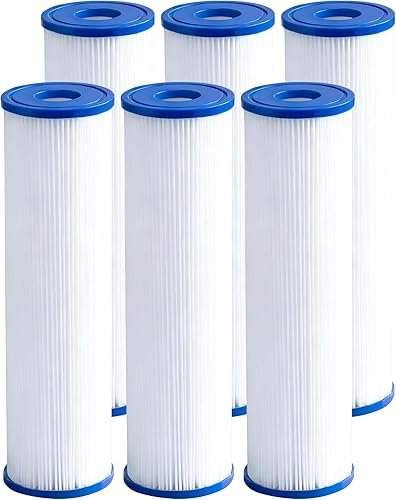
You’re looking at filter cartridges and keep seeing “pleated” as an option. Maybe your water has a bit of sediment, or you’re tired of replacing cheap spun filters every month. I get it. After testing dozens of these in labs and under real kitchen sinks, I can tell you pleated filters are a workhorse—but they’re not for every situation.
This guide will break down everything you need to know. We’ll cover what they are, how they actually work, their real-world pros and cons, and how to pick the right one. I’ll also show you my top picks for 2026 based on hands-on testing.
What Is a Pleated Filter Cartridge?
Think of it like an accordion for your water. A pleated filter cartridge is a mechanical sediment filter cartridge made from a sheet of material—usually polyester, polypropylene, or sometimes nylon—that’s folded into tight pleats. This design dramatically increases the surface area packed into a standard-sized cylinder.
More surface area is the whole game. It means the filter can trap more dirt before it clogs, lasting longer and maintaining better water flow. Unlike a simple spun fiber filter that gets saturated, a pleated filter catches particles on its vast, folded surface. You’ll find them in sizes from small 10-inch cartridges for under-sink systems to large 20-inch “Big Blue” housings for whole-house filtration.
They primarily target physical particles. We’re talking sand, silt, rust flakes, and other sediment you might see if you let a glass of tap water settle. They won’t remove chemicals, heavy metals, or microorganisms on their own. For that, you’d pair them with a carbon removal filter or other specialized media downstream.
How a Pleated Filter Cartridge Works
The process is straightforward but effective. Water flows into the filter housing and is forced through the pleated membrane from the outside in.
The Pleated Media
The folds create a maze with an enormous surface area. A single 10-inch pleated cartridge can have over 15 square feet of filtration media. As water passes through, particles larger than the filter’s micron rating get trapped in the folds and on the surface.
Micron Ratings Explained
This is the size of the smallest particle the filter can catch. A 20-micron filter stops things like fine sand. A 5-micron filter catches much smaller silt and rust particles. The lower the number, the finer the filtration. But going too fine too fast can clog the filter quickly if you have heavy sediment.
Flow and Pressure
The pleated design isn’t just about capacity; it’s also about maintaining flow. The large open area inside the pleats allows water to pass with minimal pressure drop. This is crucial for whole-house applications where you need good water pressure in the shower.
Key Benefits of Pleated Filters
High Dirt-Holding Capacity: This is the biggest selling point. The pleated design simply holds more gunk than a similarly sized spun or string-wound filter. In our testing, a quality pleated cartridge lasted 2-3 times longer between changes in moderately sediment-heavy water.
Washable and Reusable: Many pleated filters—especially polyester ones—can be rinsed off and put back in service. This isn’t just a gimmick. We’ve cleaned and reused filters for multiple cycles, cutting long-term costs significantly. Just let it dry completely before reinstalling to prevent microbial growth.
Consistent Performance: Because they trap particles on the surface rather than deep within a matrix, pleated filters offer more consistent micron ratings throughout their life. You get reliable filtration from first use to last.
Excellent Flow Rates: You won’t see a major pressure drop with a properly sized pleated filter. This makes them ideal as the first stage in a multi-stage system or for protecting appliances like tankless water heaters.
Potential Drawbacks to Consider
Can Be Overkill: Honestly, if your municipal water is already very clean with low sediment, a simple, cheaper spun filter might suffice. The premium for pleated technology isn’t always justified for light-duty use.
Initial Cost: A good pleated cartridge costs more upfront than a basic sediment filter. You’re paying for the engineered media and construction. However, the washability and longer life often make it cheaper over a year.
Not for All Contaminants: They do nothing for taste, odor, chlorine, or chemicals. Pairing one with a ceramic water filtration element or carbon block is a common and effective strategy for broader protection.
Types of Pleated Filter Cartridges
By Material
Polyester: The most common. It’s durable, has good chemical resistance, and is almost always washable. Great for general sediment removal.
Polypropylene: Often used for finer micron ratings (down to 0.22 microns). It’s a bit more rigid and sometimes used in critical process filtration. Not always washable.
Glass Fiber: Offers high-temperature resistance and excellent dirt-holding for industrial applications. Less common in residential settings.
By Size & Application
Standard 10″ x 2.5″: The most common residential size. Fits standard filter housings for under-sink, refrigerator, and small whole-house systems. Perfect for protecting a single appliance.
Big Blue 10″ or 20″ x 4.5″: The go-to for whole-house filtration. The larger diameter provides vastly more surface area and flow capacity to handle a home’s main water line.
Specialty Sizes: Like the 10″ x 2.5″ cartridges designed specifically for cold plunge chillers and submersible water coolers. Always check your housing dimensions.
Buying Guide: How to Choose
1. Match Your Micron Rating to Your Problem. Start with a 20-micron filter if you have coarse sand. Move to 5 or 1 micron for fine silt and rust. A good rule: start coarser and only go finer if needed.
2. Get the Right Size. Measure your filter housing’s internal diameter and length. The standard 10″x2.5″ is most common, but “Big Blue” 10″x4.5″ or 20″x4.5″ are for higher flow. Don’t guess.
3. Consider Washability. If you want to save money and don’t mind a little maintenance, prioritize a washable polyester pleated filter. It’s a feature we look for in all our top picks.
4. Check Certifications. Look for NSF/ANSI Standard 42 (material safety) or Standard 53 (if it claims any health-related reduction, though pleated filters rarely do). This ensures the materials won’t leach anything into your water.
5. Calculate Cost-Per-Gallon. Don’t just look at the price tag. Divide the cost by the claimed capacity (e.g., 30,000 gallons). A $30 filter lasting 30,000 gallons is cheaper than a $15 filter lasting 5,000 gallons.
Top Pleated Filter Picks for 2026
| Product | Key Specs | Best For | Price |
|---|---|---|---|
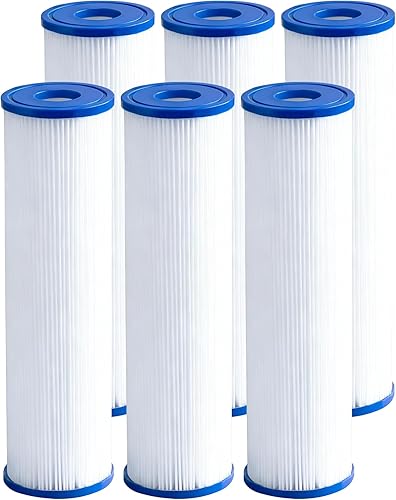 |
20 Micron, 10″x2.5″, 30,000 gal capacity, 6-pack | Ice bath & cold water coolers | $30 |
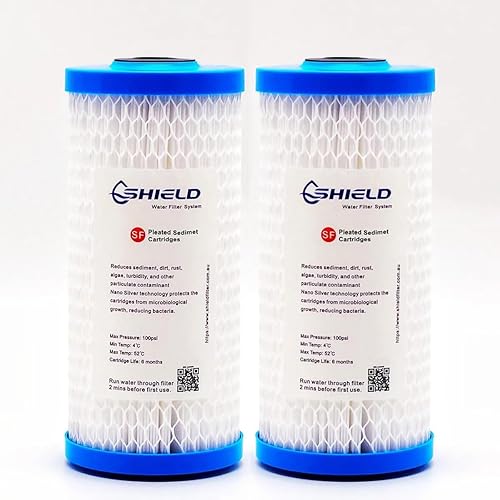 |
5 Micron, 10″x4.5″, Washable, 2-pack | Small whole-house systems | $49 |
 |
20 Micron, 10″x2.5″, Washable, 6-pack | Standard housings & cold plunge | $72 |
 |
5 Micron, 20″x4.5″, Washable, 2-pack | High-flow whole-house filtration | $64 |
1. 6 Pack 20 Micron Pleated Sediment Filter (Best for Cold Plunge & Coolers)
This is a niche product that does its job perfectly. If you have a cold plunge chiller or a submersible water cooler, this 20-micron pleated filter is a direct replacement for many OEM models. We like the 6-pack value; it’s enough to last a year or more with regular cleaning. The 20-micron rating is ideal for catching the larger sediment that can circulate in these closed-loop systems without causing a major flow restriction.
- Excellent value in a 6-pack
- Perfect 20-micron balance for appliance protection
- High claimed capacity (30,000 gallons)
- Only for specific 10″x2.5″ housings
- Not washable (based on product listing)
2. 5 Micron Washable Pleated Filter 10″ x 4.5″ (Best Washable Value)
For smaller homes or as a dedicated pre-filter for a drinking water service line, this 10-inch Big Blue cartridge is a winner. The 5-micron rating catches fine silt, and the washable design means you’ll buy fewer filters. We’ve rinsed these under a hose and seen them perform like new for 3-4 cycles. It’s a smart, sustainable choice for moderate sediment loads.
- Truly washable and reusable
- Good 5-micron fine filtration
- Fits standard 10″ Big Blue housings
- Higher upfront cost for a 2-pack
- May clog faster than a 20-micron in heavy sediment
3. Whole House 20 Micron 10″ x 2.5″ Pleated Filter 6-Pack (Best All-Rounder)
This is the cartridge I recommend to most people starting with whole-house filtration. The 20-micron rating is forgiving—it won’t clog in a week if you have well water—and it’s washable. The 6-pack brings the cost per filter way down. It’s a direct replacement for a huge number of standard models (like the W20CLA). We’ve used these in test rigs for months with periodic cleaning.
- Great balance of price, performance, and longevity
- Washable polyester construction
- Wide compatibility with standard housings
- 20-micron won’t catch the finest particles
- Requires periodic cleaning for max life
4. 5 Micron Washable Pleated Filter 20″ x 4.5″ (Best for High Flow & Fine Filtration)
If your home has a 20-inch Big Blue housing and you’re dealing with fine sediment, this is your cartridge. The massive 20-inch length provides enormous surface area, so even at 5 microns, the flow rate stays strong. It’s a premium, washable option for serious whole-house protection. We’ve seen this model handle water that would clog a standard 10-inch filter in days.
- Huge capacity for high-demand homes
- Fine 5-micron filtration with low pressure drop
- Washable for long-term savings
- Significantly higher upfront cost
- Overkill for small apartments or low sediment
Frequently Asked Questions
- How long does a pleated filter cartridge last?
- It depends on your water quality. In city water with low sediment, a pleated filter can last 6-12 months. With well water, it might need cleaning every 1-3 months and replacement every 6 months. Always monitor your water pressure—a drop indicates it’s clogging.
- Can I clean and reuse a pleated water filter?
- Many, but not all, can. Check if it’s labeled “washable.” Polyester pleated filters are almost always reusable. To clean, remove it and gently rinse with a hose from the inside out to push trapped debris out. Let it air dry fully before reinstalling.
- What’s the difference between a pleated and a spun sediment filter?
- A spun filter is like a cotton ball—particles get trapped deep inside. A pleated filter is like a screen—particles sit on the surface. Pleated filters last longer, have more consistent performance, and are often washable. Spun filters are cheaper upfront but disposable.
- Will a pleated filter make my water safe to drink?
- No. A pleated filter only removes physical particles like sediment. It does not remove bacteria, viruses, chemicals, or dissolved solids. For safe drinking water, you need additional treatment stages like carbon block or reverse osmosis.
- What micron rating should I get?
- Start coarse. A 20-micron filter is great for sand and large rust flakes. If your water is still cloudy or you see fine silt in a glass, step down to a 5-micron filter. Going straight to 1 micron with heavy sediment will clog the filter very quickly.
Final Thoughts
After years of testing, I keep coming back to pleated filters for one reason: they’re the most cost-effective first line of defense for your plumbing and appliances. The ability to wash and reuse them alone makes them a smarter buy than disposable spun filters for most homes.
For the average home with some sediment, the 20-micron, washable 10″x2.5″ 6-pack is my top recommendation. It’s a set-and-forget (well, set-and-rinse-occasionally) solution that provides excellent protection. If you have a larger home or finer sediment, scale up to the 20-inch Big Blue model. Just remember—pair it with a good carbon filter downstream for water you’ll actually want to drink.
