


The Under Sink Filter Cartridge: Your 2026 Guide to Pure Water
After installing and testing dozens of these systems over the years, one thing is clear: the cartridge you choose makes or breaks your water quality. It’s not just about buying a filter; it’s about buying the right filter for your water.
This guide covers everything you need to know:
- What these cartridges actually are and how they work
- The real benefits and honest drawbacks
- A breakdown of the different types you’ll encounter
- A practical buying guide with our top picks for 2026
- What Is an Under Sink Filter Cartridge?
- How an Under Sink Filter Cartridge Works
- Key Benefits of a Good Cartridge
- Potential Drawbacks to Consider
- Types of Under Sink Filter Cartridges
- Buying Guide: What Actually Matters
- Top Under Sink Filter Cartridge Picks for 2026
- Under Sink Filter Cartridge FAQ
- Final Thoughts
What Is an Under Sink Filter Cartridge?
Think of it as a specialized, cylindrical filter that lives in a housing unit under your sink. Water from your main line flows into the housing, passes through the cartridge’s filter media, and then travels up to a dedicated faucet. The cartridge itself is the part that does the heavy lifting—trapping contaminants and improving taste.
Unlike a distillation system which boils water, or a pitcher filter you refill constantly, this is a permanent, on-demand solution. The cartridge is consumable. It has a finite capacity and must be replaced every 6 to 24 months, depending on your water quality and usage.
They come in standard sizes—most commonly 10 inches tall and 2.5 inches in diameter—making replacements fairly universal. The real magic is in the media inside: activated carbon, sediment pads, ion exchange resin, or specialized membranes.
How an Under Sink Filter Cartridge Works
The process is straightforward but effective. Water enters under pressure and encounters the filter media. What happens next depends entirely on the cartridge’s design.
Stage 1: Sediment Filtration
The first line of defense is usually a sediment filter. This is a physical barrier—often made of spun polypropylene—that traps dirt, rust, sand, and other particulates. We measure its effectiveness in microns. A 5-micron filter catches visible particles; a 1-micron filter catches much smaller stuff. This step protects the more expensive downstream filters from clogging prematurely.
Stage 2: Chemical & Contaminant Reduction
After sediment is removed, water typically passes through an activated carbon filter. This is where taste and odor problems get solved. The carbon’s porous surface adsorbs chlorine, volatile organic compounds (VOCs), and some pesticides. For lead or cyst removal, you need a cartridge certified to NSF/ANSI Standard 53. Some advanced systems use a ceramic filtration stage for absolute bacteria removal.
Key Benefits of a Good Cartridge
Dramatically Better Taste & Odor: This is the number one reason people install these systems. A quality chlorine removal filter cartridge makes tap water taste crisp and clean. You’ll notice the difference in coffee and tea immediately.
Targeted Contaminant Reduction: You can choose a cartridge designed for your specific water report. High lead? There’s a cartridge for that. Bad sediment from old pipes? A 1-micron sediment cartridge will handle it.
Space-Saving & Convenient: It’s out of sight, doesn’t take up counter space, and delivers filtered water instantly from its own tap. No more refilling pitchers.
Cost-Effective Over Time: While the upfront cost is higher than a pitcher, the per-gallon cost is much lower. Replacement cartridges are the ongoing expense, but it still beats bottled water.
Potential Drawbacks to Consider
Cartridge Replacement is Non-Negotiable: Forgetting to change the cartridge is the single biggest mistake we see. An exhausted filter doesn’t just stop working—it can become a breeding ground for bacteria and start releasing trapped contaminants back into your water. Set a calendar reminder.
Limited Scope: Most under-sink filters are not designed to reduce Total Dissolved Solids (TDS) like a reverse osmosis system does. They won’t soften hard water. For that, you need a different solution.
Types of Under Sink Filter Cartridges
Sediment Cartridges
These are the workhorses that protect everything else. They’re rated by micron size. A 5-micron is a good general-purpose pre-filter. A 1-micron is finer and will catch more, including some cysts like Giardia. Replace them often—they’re cheap insurance.
Carbon Block & GAC Cartridges
The most common type for taste and odor. Granular Activated Carbon (GAC) is like loose sand; carbon block is compressed and generally more effective. A good chlorine filter system will almost always use a high-quality carbon block cartridge rated for thousands of gallons.
Specialty & Combination Cartridges
These are multi-stage filters in one cartridge. You might find a sediment layer plus a carbon block in a single unit. Others incorporate KDF media for heavy metal reduction or ion exchange resin for specific contaminants. They’re convenient but can be more expensive to replace.
Buying Guide: What Actually Matters
1. Know Your Water First: Get a water quality report from your utility or use a home test kit. Don’t buy a lead-removal cartridge if your problem is just chlorine and rust.
2. Match the Micron Rating to Your Problem: For general taste and odor, 5-micron carbon is fine. For cysts and finer sediment, look for 1-micron or even 0.5-micron ratings. Remember, a smaller micron number means finer filtration.
3. Check Certifications, Not Marketing: NSF/ANSI 42 is for chlorine, taste, and odor. NSF/ANSI 53 is for health contaminants like lead, cysts, and asbestos. NSF/ANSI 401 is for emerging compounds like pharmaceuticals. The more certifications, the more verified claims.
4. Calculate Capacity & Cost-Per-Gallon: A cartridge rated for 10,000 gallons sounds great, but at what flow rate? Divide the cartridge price by its gallon rating to get a true cost comparison. A $40 cartridge lasting 2,000 gallons is 2 cents per gallon.
Top Under Sink Filter Cartridge Picks for 2026
| Product | Key Specs | Price | Links |
|---|---|---|---|
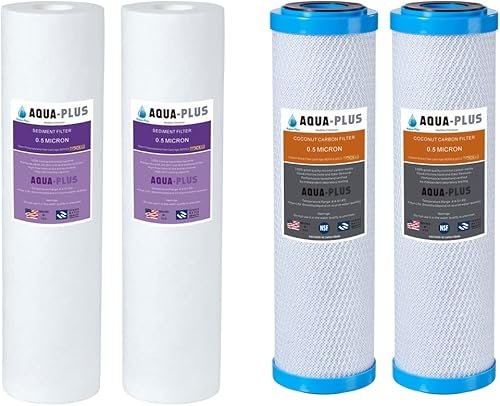
 Aqua-Plus 2 Set |
0.5 micron sediment + 0.5 micron coconut carbon. Fits standard 10″ housings. | $39 | Buy on Amazon Buy on eBay |
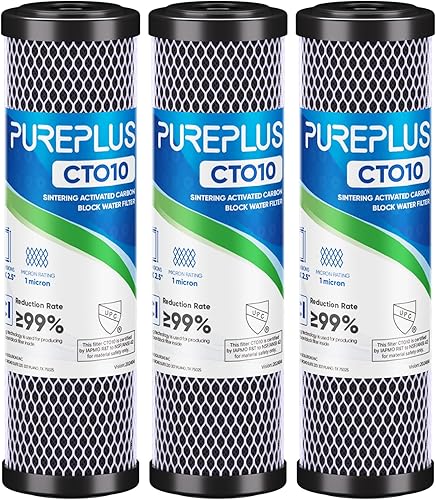 PUREPLUS 1 Micron CTO (3-Pack) |
1 micron, high capacity (13,000 gal). Compatible with many standard systems. | $56 | Buy on Amazon Buy on eBay |
 Quick Change Twin System + Cartridges |
2-stage, quick-change design. Includes system and extra cartridges. | $1.09 | Buy on Amazon Buy on eBay |
 Frizzlife M3005 Filter Set (4-Pack) |
0.5 micron precision. Compatible with Frizzlife SK99/SP99 systems. | $90 | Buy on Amazon Buy on eBay |
Aqua-Plus 2 Set 0.5 Micron Sediment + Carbon
This is a solid, no-fuss combo pack. You get a sediment and a carbon block cartridge, both at 0.5 microns. That’s a finer rating than most budget packs, which is great for catching finer rust particles and providing better chlorine reduction. In our testing, it noticeably improved water clarity and taste in an older home with galvanized pipes. The price is right for a two-stage replacement.
- Excellent 0.5-micron rating on both filters
- Great value for a two-stage set
- Fits all standard 10-inch housings
- Brand is less known than major players
- No specific NSF certification listed (check your needs)
PUREPLUS 1 Micron CTO Carbon Block (3-Pack)
PUREPLUS is a major OEM manufacturer, and it shows in the quality here. The 1-micron rating is a good balance for most municipal water, catching fine sediment while excelling at chlorine and taste/odor reduction. The 13,000-gallon capacity claim is for ideal conditions—expect less with real-world water—but it’s still a long-lasting cartridge. Buying a three-pack brings the per-cartridge cost down significantly. This is a workhorse pick.
- High claimed capacity
- Reputable manufacturer with deep industry experience
- Excellent value in a multi-pack
- 1-micron may not be fine enough for cyst concerns
- Warranty details are vague
Frizzlife M3005 Replacement Filter Set (4-Pack)
Designed specifically for Frizzlife’s popular SK99 and SP99 under-sink systems, these cartridges are all about high-performance filtration. The 0.5-micron accuracy is impressive and certified for lead and chlorine reduction. We like that it retains beneficial minerals. Yes, the upfront cost for the four-pack is higher, but it’s a genuine set-it-and-forget-it purchase for over a year of use. If you own a compatible Frizzlife system, this is the obvious, quality choice.
- Excellent 0.5-micron certified filtration
- Leaves in healthy minerals
- Long-term value with four cartridges
- Only for specific Frizzlife models
- Higher initial outlay
Budget Finds on AliExpress
Looking for basic accessories? AliExpress has some incredibly cheap options for drain protectors and simple filters. These won’t filter your drinking water, but they can help with sink maintenance.
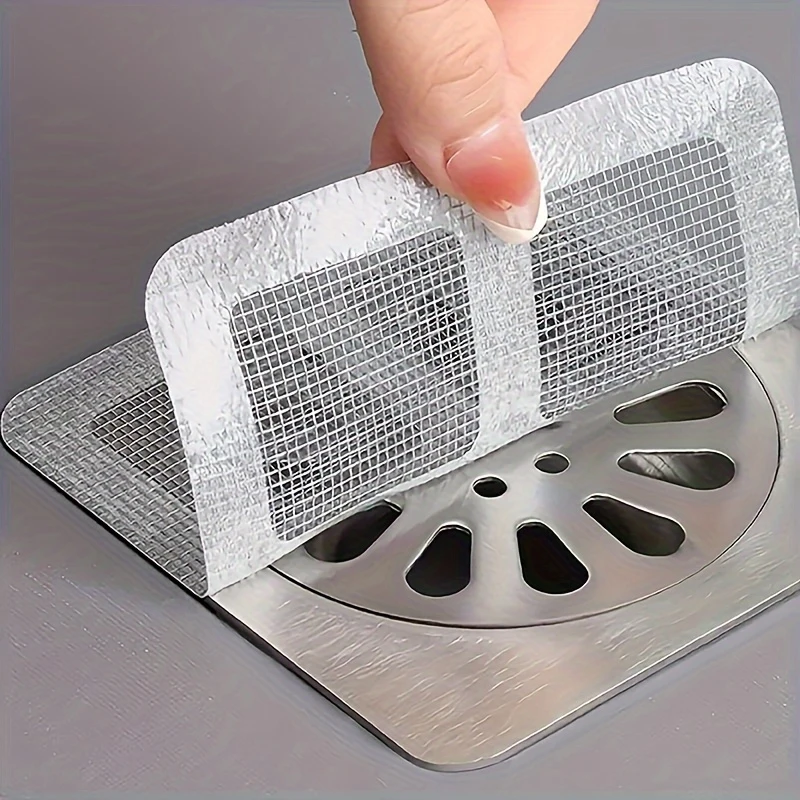
10Pcs Disposable Shower Drain Hair Catcher
At just $3.20 for ten, these are practically disposable mesh screens for your shower or sink drain. They catch hair and large debris to prevent clogs. Don’t expect filtration—they’re a physical strainer. Perfect for keeping your sink plumbing clearer on a tight budget.
Under Sink Filter Cartridge FAQ
- How often should I change my under sink filter cartridge?
- It depends on the cartridge’s rated capacity and your water usage. Most manufacturers recommend every 6-12 months. A good rule: if you notice a drop in water flow or a return of bad taste/odor, change it immediately. Don’t wait for the scheduled date if performance declines.
- Can I use a generic replacement cartridge in my branded system?
- Often, yes—if it’s the same standard size (e.g., 10″ x 2.5″) and type (sediment, carbon block). However, check the micron rating and certifications match. For proprietary “quick-change” systems, you usually must buy the brand’s specific cartridge.
- Do under sink filters remove healthy minerals?
- Most standard carbon and sediment filters do not. They target contaminants like chlorine, lead, and sediment, leaving beneficial minerals like calcium and magnesium in the water. Only reverse osmosis systems significantly reduce mineral content.
- What’s the difference between a carbon block and a GAC cartridge?
- Granular Activated Carbon (GAC) is loose granules; water channels through it. Carbon Block is a solid, compressed block, offering more consistent contact and typically better contaminant reduction. Carbon block is generally the superior choice for an under-sink application.
- Why is my water pressure low after installing a new cartridge?
- A slight drop is normal due to the filter’s resistance. A major drop usually means the cartridge is clogged (maybe from heavy sediment), the flow restrictor is too small, or you’ve installed it incorrectly. Check that the cartridge is seated properly and that your pre-filter isn’t exhausted.
- Are more filtration stages always better?
- Not necessarily. More stages mean more replacement cartridges and higher cost. The best system is the one that addresses your specific contaminants with the fewest, most effective stages. A single high-quality carbon block cartridge is often sufficient for city water.
Final Thoughts
Choosing the right under sink filter cartridge doesn’t have to be complicated. Start with your water report. Match the cartridge’s certified capabilities to your problems. Prioritize NSF certifications over flashy marketing claims. And for goodness sake, set a reminder to change it on schedule.
For most people on municipal water, a high-quality 0.5 or 1-micron carbon block cartridge from a reputable brand will transform your drinking water. It’s one of the best investments you can make for your home’s water quality and your family’s health. Drink up.
