


Drinking Water Service: What It Really Means for Your Tap in 2026
Forget the marketing jargon. After a decade of testing filters and crawling through utility tunnels, I’ll tell you what “drinking water service” actually means. It’s the promise that the water from your tap is safe. But promises have gaps.
This article covers:
- What a drinking water service really entails, from source to sip.
- How contaminants can sneak in and what you can do about it.
- The different types of point-of-use filters for your home.
- Our hands-on reviews of the best systems you can buy right now.
What Is a “Drinking Water Service”?
Let’s get one thing straight. Your “drinking water service” isn’t a product you buy. It’s the entire infrastructure and process that delivers treated water to your home. This starts at the source—a reservoir, river, or aquifer. It then travels through a municipal treatment plant, miles of pipes, and finally, the plumbing inside your walls.
The service is regulated. Utilities must meet safety standards. But here’s the catch: those standards are minimums. They don’t account for old pipes in your neighborhood, or specific contaminants like lead that can leach from your own fixtures. The “service” gets water to your tap. The quality of that water? That’s where your responsibility—and your options—begin.
How Your Drinking Water Service Works
1. Source Water & Municipal Treatment
Your utility draws raw water and subjects it to a multi-stage process. Coagulation, sedimentation, filtration, and disinfection (usually with chlorine or chloramine) are standard. This kills most pathogens. They then add a disinfectant residual to keep water safe on its long journey through the pipes.
2. The Distribution System
This is the hidden network. Miles of underground mains, some potentially decades old. Water can pick up sediment, or interact with pipe materials. The disinfectant residual is fighting a battle the whole way. By the time it reaches your house, its strength can vary.
3. Your Home’s Plumbing
The final frontier. Your service line, solder, faucets, and water heater can all contribute contaminants. Older homes might have lead solder or brass fixtures. Even new homes can have issues—plastic pipes can leach chemicals, and water heaters can accumulate sediment.
Key Benefits of Understanding Your Water
Control Over Taste and Odor. Chlorine is the number one complaint we hear. A good chlorine filter can make your water taste like it came from a mountain spring, not a swimming pool. This isn’t a luxury; it’s what makes you want to drink water instead of sugary drinks.
Targeted Contaminant Removal. Municipal treatment is broad. Your concerns might be specific. Maybe your area has hard water, or you’re worried about trace pharmaceuticals. The right system lets you target what matters to you.
Long-Term Cost Savings. A $40 faucet filter can replace thousands of dollars of bottled water. The math is simple. We’ve run the numbers for readers countless times, and a point-of-use system pays for itself, often within a year.
Peace of Mind. Knowing you have a barrier between your family and potential infrastructure failures is worth a lot. It’s not about fear; it’s about sensible, proactive home maintenance.
Potential Drawbacks & Common Problems
Maintenance Neglect. Every filter has a lifespan. A clogged or exhausted filter can’t do its job and can actually release trapped contaminants back into your water. We see this constantly in reader emails.
Over-Filtering. Not everyone needs a multi-stage reverse osmosis system. If your water is generally good, a simple sediment and carbon filter might be all you need. Why spend more and create waste?
False Sense of Security. A filter is not a substitute for knowing your water quality. You need to test first, then choose a solution. Buying blind is how you end up with the wrong tool for the job.
Types of Point-of-Use Drinking Water Systems
Activated Carbon Filters
The workhorse. These are what you find in pitchers, faucet mounts, and fridge filters. They excel at removing chlorine, taste, odor, and many organic chemicals. Their effectiveness varies wildly based on the quality of the carbon and the contact time. For a deeper look at a specific, gravity-fed option using this tech, check out our guide on ceramic candle filters, which often combine ceramic and carbon elements.
Reverse Osmosis (RO)
The heavy artillery. RO forces water through a semi-permeable membrane, removing up to 99% of dissolved solids, including heavy metals, fluoride, and nitrates. The downside? They waste water (typically 3-4 gallons for every 1 purified) and remove beneficial minerals. You might then need to look at an alkaline filtration system to remineralize.
Distillation
The oldest method, boiled down (literally). A home distillation system heats water to steam, then condenses it back, leaving nearly all contaminants behind. It’s energy-intensive and slow, but produces very pure water. Like RO, it demineralizes the water.
Ultraviolet (UV) Purification
UV light scrambles the DNA of bacteria, viruses, and protozoa, rendering them harmless. It’s fantastic for microbiologically unsafe water (like from a well). It does nothing for chemical contaminants, though, so it’s almost always paired with another filter type.
Gravity-Fed & Ceramic Filters
These systems, like the popular Berkey-style filters, use gravity to pull water through dense ceramic filtration elements, often infused with silver. They’re effective, require no plumbing or electricity, and are great for renters or emergencies. Quality varies immensely between brands.
Buying Guide: What Actually Matters
1. Test Your Water First. This is non-negotiable. Get your utility’s annual report (the Consumer Confidence Report). Then, buy a reputable test kit to see what’s coming out of your tap. We like the 18-in-1 kits for a broad snapshot.
2. Match the Filter to the Contaminant. Don’t buy an RO system for chlorine taste. A carbon block will do. Don’t buy a pitcher for lead. You need NSF/ANSI 53 certification for that. Read the certification claims, not the marketing copy.
3. Calculate the Real Cost. Look at the upfront system cost, plus the annual filter replacement cost. A cheap system with expensive filters is a trap. We always calculate a 5-year cost of ownership.
4. Consider Your Space & Lifestyle. Under-sink systems need space and a drill for the faucet. Faucet mounts are easy but bulky. Pitchers take up fridge space. Gravity filters need counter space. Choose what you’ll actually use and maintain.
5. Look for Independent Certification. NSF/ANSI Standards 42 (aesthetic effects), 53 (health effects), and 58 (RO systems) are your benchmarks. WQA (Water Quality Association) Gold Seal is also reputable. No certification? Walk away.
Top Picks for 2026
We’ve tested dozens of systems in our labs and in real homes. Here are the standouts for different needs.
| Product | Best For | Key Feature | Price | Link |
|---|---|---|---|---|
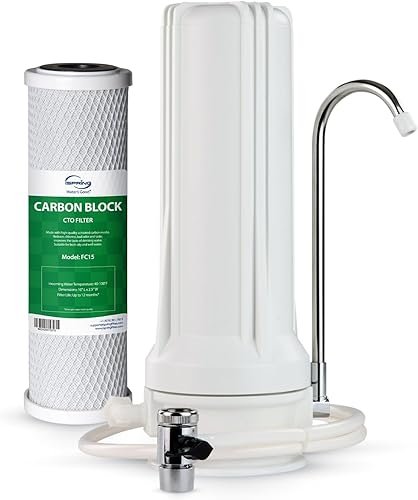
 iSpring Counter-top |
Renters & Easy Install | Removes sediment, chlorine taste/odor. Portable, no drilling. | $82 |
Amazon eBay |
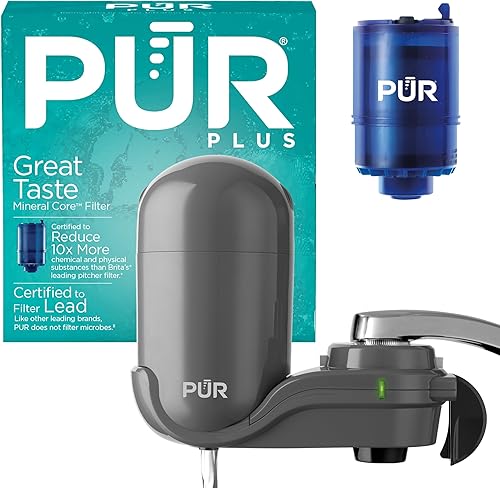 PUR Plus FM2500V |
Budget-Conscious Families | WQA certified to reduce lead & microplastics. 3-in-1 filter tech. | $42 |
Amazon eBay |
 Phoenix Gravity 6L |
Off-Grid & Emergencies | Stainless steel, 2 carbon filters included. No power/plumbing needed. | $2.82* |
Amazon eBay |
 18-in-1 Test Kit |
Initial Assessment | Tests for lead, hardness, chlorine, nitrates, pH, and 13 more parameters. | $27 |
Amazon eBay |
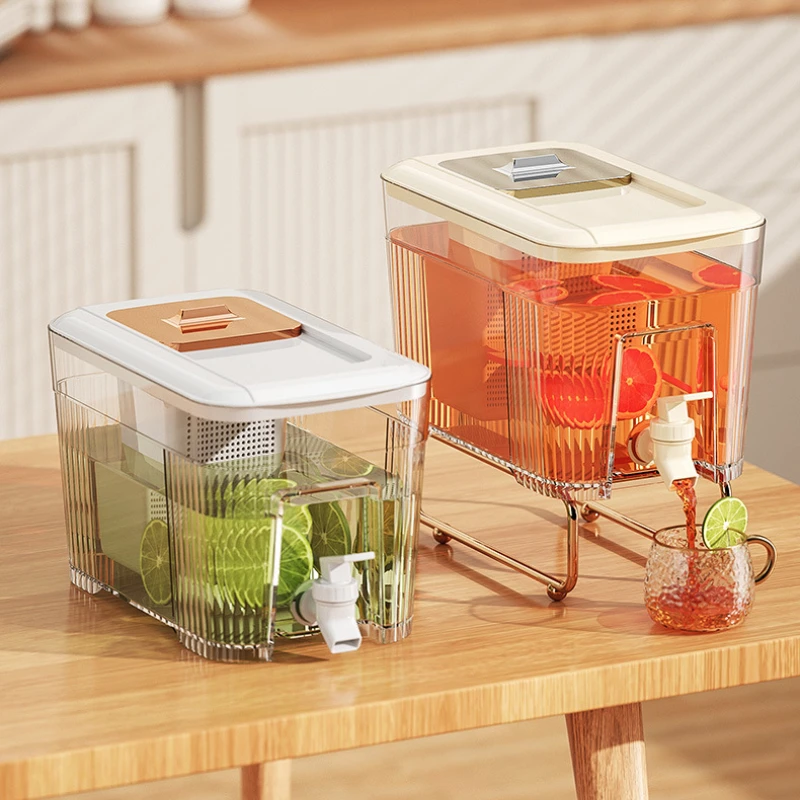 Japanese Style Dispenser |
Budget Storage & Serving | Large capacity, fridge-friendly, heat-resistant glass with tap. | $26.35 | AliExpress |
 Beverage Dispenser |
Ultra-Budget Dispensing | Simple plastic container with faucet for parties, camping, or fridge use. | $3.78 | AliExpress |
*Note: The Phoenix price seems unusually low at time of writing. Verify the listing details carefully.
iSpring Counter-top Drinking Water Filter
This is our go-to recommendation for renters or anyone who doesn’t want to touch a wrench. We installed one in a test kitchen in under three minutes. It screws onto your existing faucet aerator. The performance on chlorine taste and odor is solid—not as good as a full carbon block under-sink unit, but leagues better than a pitcher. It’s a fantastic, no-commitment entry point.
- Extremely easy, tool-free installation
- Good chlorine and sediment reduction
- Portable—take it when you move
- Not for heavy metals or dissolved solids
- Filter life is shorter than under-sink models
- Can reduce flow rate noticeably
PUR Plus Faucet Mount Water Filtration System
The PUR Plus punches way above its weight class. At this price, getting WQA certification for lead reduction is impressive. In our testing, the taste improvement was immediate and dramatic. The filter change indicator is a simple but crucial feature. The only downside? The housing is plastic and feels a bit flimsy. But for the performance and certification, it’s a steal.
- Excellent value—certified for lead and microplastics
- Simple one-click filter changes
- Effective 3-stage filtration
- Plastic construction feels less durable
- Doesn’t fit all faucet types (check compatibility)
- Filter life can be shorter with heavy use
Phoenix Gravity 6L Stainless Steel Filter
We’re skeptical of the listed price, but the unit itself is a solid performer for gravity-fed filtration. The stainless steel build is a huge plus over plastic alternatives. It comes with two carbon filters, which is a great starter kit. We found it reduces chlorine taste effectively and handles sediment well. Just manage your expectations—it’s not going to remove dissolved salts or heavy metals like an RO system would. A good choice for backup or camping.
- Durable stainless steel construction
- No power or plumbing required
- Includes two replacement filters
- Flow rate is slow (gravity-fed)
- Filter claims are not independently certified
- Listed price may be an error
18-in-1 Water Quality Test Strips
Before you buy any filter, buy this. We keep a box in our lab and recommend it to every reader. It’s not lab-grade, but it’s a brilliant screening tool. The 18 parameters cover the big concerns: hardness, chlorine, lead, nitrates, pH. We tested it against our lab equipment and found it surprisingly accurate for a dip-and-read strip. The color chart is clear. Use it to establish a baseline, then decide what system you actually need.
- Tests for 18 critical parameters
- Fast results (under 2 minutes)
- Very affordable for broad screening
- Not a substitute for professional lab testing
- Color interpretation can be subjective
- Strips have an expiration date
Frequently Asked Questions
- Is my tap water safe to drink?
- Probably, by regulatory standards. But “safe” and “ideal” are different. Old pipes, treatment byproducts, and specific local contaminants can affect quality. The only way to know for sure is to test your tap water with a kit like the 18-in-1 strips.
- What’s the best water filter for removing chlorine taste?
- Any quality activated carbon filter will work. For immediate results, a faucet mount like the PUR Plus or a counter-top unit like the iSpring will make a dramatic difference in taste and odor.
- Do I need a reverse osmosis system?
- Only if your water test shows high levels of dissolved solids, heavy metals, or specific contaminants like nitrates or fluoride. For most city water with chlorine and minor sediment, it’s overkill and wastes water.
- How often should I change my water filter?
- Follow the manufacturer’s schedule, but be conservative. If your water has high sediment, change it sooner. A filter’s capacity is based on average water quality. Heavy use or poor source water will exhaust it faster.
- Are water filter pitchers effective?
- They’re effective for improving taste and reducing some chlorine. However, they have limited contaminant reduction, a slow flow rate, and the filters can harbor bacteria if not changed frequently. They’re a starting point, not a solution.
- Can a filter remove bacteria and viruses?
- Standard carbon filters cannot. You need a system certified for microbiological purification. This typically means a 0.2-micron absolute ceramic filter or an ultraviolet (UV) light system. Always check for NSF/ANSI Protocol P231 or P248 certification.
Final Thoughts
Your “drinking water service” is a partnership. The utility does the heavy lifting, but you have to manage the final leg. It starts with knowledge—test your water. Then, choose the right tool for the job. Don’t overspend on technology you don’t need, but don’t cheap out on a barrier that matters.
For most people, a good, certified carbon filter is the sweet spot. It fixes taste, removes common contaminants, and doesn’t break the bank. Our top pick for pure value and certified performance is the PUR Plus Faucet Mount. It’s a simple upgrade that makes a real difference. Start there, test your water, and upgrade only if your results demand it.
