


.oi-article{font-family:system-ui,-apple-system,sans-serif;color:#1a1a1a;line-height:1.8;max-width:820px;margin:0 auto}
.oi-article h2{color:#0e4a6e;border-bottom:2px solid #0e4a6e;padding-bottom:8px;margin-top:35px;font-size:1.6em}
.oi-article h3{color:#1a6b8a;margin-top:25px;font-size:1.3em}
.oi-toc{background:#f0f7fb;border-left:4px solid #0e4a6e;padding:20px 25px;margin:25px 0;border-radius:6px}
.oi-toc ul{list-style:none;padding:0;margin:0}.oi-toc li{padding:5px 0}
.oi-toc a{color:#0e4a6e;text-decoration:none;font-weight:500}.oi-toc a:hover{text-decoration:underline}
.oi-tip{background:#e8f5e9;border-left:4px solid #2e7d32;padding:15px 20px;margin:20px 0;border-radius:6px}
.oi-warn{background:#fff3e0;border-left:4px solid #ef6c00;padding:15px 20px;margin:20px 0;border-radius:6px}
.oi-tldr{background:#e3f2fd;border-left:4px solid #1565c0;padding:15px 20px;margin:20px 0;border-radius:6px;font-size:1.05em}
.oi-cmp-table{width:100%;border-collapse:collapse;margin:25px 0;font-size:0.95em}
.oi-cmp-table th{background:#0e4a6e;color:#fff;padding:12px 10px;text-align:left}
.oi-cmp-table td{padding:10px;border-bottom:1px solid #e0e0e0;vertical-align:middle}
.oi-cmp-table tr:hover{background:#f5f5f5}
.oi-cmp-table img{max-width:80px;height:auto;border-radius:6px}
.oi-btn{display:inline-block;padding:8px 16px;border-radius:5px;color:#fff!important;text-decoration:none;font-size:0.85em;font-weight:600;margin:3px 4px 3px 0}
.oi-btn-amz{background:#f0960a}.oi-btn-amz:hover{background:#d4840a}
.oi-btn-ebay{background:#0654ba}.oi-btn-ebay:hover{background:#044a9e}
.oi-btn-ali{background:#e43225}.oi-btn-ali:hover{background:#c42a1f}
.oi-review{overflow:hidden;margin:25px 0;padding:20px;background:#fafafa;border-radius:8px;border:1px solid #e8e8e8}
.oi-review img{float:right;max-width:140px;margin:0 0 15px 20px;border-radius:8px}
.oi-pros-cons{display:flex;gap:20px;margin:10px 0}.oi-pros,.oi-cons{flex:1}
.oi-pros li{color:#2e7d32}.oi-cons li{color:#c62828}
.oi-faq dt{font-weight:700;color:#0e4a6e;margin-top:18px}.oi-faq dd{margin:5px 0 0 0}
.oi-disclosure{background:#f5f5f5;padding:15px 20px;margin-top:35px;border-radius:6px;font-size:0.9em;color:#555}
Drinking Water: What You Need to Know for Safety, Taste & Health (2026)
After fifteen years of testing filters and talking to everyone from municipal engineers to homeowners with rusty well water, I’ve learned one thing: most people overthink drinking water. They chase exotic brands and expensive gadgets when the real solution is often much simpler. This guide cuts through the noise. We’ll look at what’s actually in your glass, how to improve it without breaking the bank, and which products are worth your money.
- What defines safe, high-quality drinking water.
- How common filtration methods actually work.
- The real benefits and hidden drawbacks of filtering.
- A clear breakdown of system types for every need.
- Actionable criteria for choosing your next filter or bottle.
- Our top product picks for 2026, tested and reviewed.
What Is Drinking Water?
At its core, drinking water is H2O intended for human consumption. But that simple definition hides a complex reality. Your tap water is a treated product, sourced from reservoirs, rivers, or underground aquifers. It undergoes drinking water filtration at a municipal plant to meet legal safety standards. These standards focus on eliminating acute pathogens—things that make you sick right away.
What they don’t always fully address are long-term concerns. Trace amounts of agricultural runoff, industrial chemicals, or disinfection byproducts like chloramines can remain. The mineral content—hardness, pH—varies wildly by location. This is why water from the tap in one city tastes completely different from another. Honestly, “safe” and “great-tasting” are not always the same thing. Your goal is to close that gap.
How Drinking Water Treatment Works
Municipal treatment is a multi-stage process designed for large-scale safety. Understanding it helps you know what your water has already been through—and what it might still need.
1. Municipal Processing
Water first goes through coagulation and sedimentation, where dirt and particles clump together and settle out. Then it’s filtered through sand and gravel. The critical step is disinfection—usually with chlorine or chloramine—to kill bacteria and viruses. This is why your water might smell like a swimming pool. That chlorine is doing its job, but you probably don’t want to drink it straight. A dedicated chlorine removal filter at your tap can solve that taste issue instantly.
2. Point-of-Use Refinement
This is where you take control. After municipal treatment, water travels through pipes that can leach metals like lead or copper. A point-of-use filter at your kitchen sink acts as the final, critical barrier. Technologies like activated carbon adsorb chlorine and organic compounds. A ceramic candle filter physically blocks sediments and cysts down to sub-micron levels. It’s your last line of defense.
3. Advanced Purification
For problem water or ultimate purity, you step up to advanced methods. Reverse osmosis (RO) forces water through a semipermeable membrane, stripping out nearly everything—good and bad. For a different approach, a water distillation unit boils water and re-condenses the steam, leaving contaminants behind. Both are highly effective but remove beneficial minerals, which some people prefer to add back.
Key Benefits of Proper Filtration
Dramatically Better Taste & Odor. This is the immediate win. Removing chlorine, sulfur compounds, and metallic tastes makes water something you actually want to drink. Hydration becomes effortless.
Targeted Contaminant Reduction. Good filters are certified to remove specific threats. Look for NSF/ANSI 53 certification for lead and cyst removal, or NSF/ANSI 42 for aesthetic effects like chlorine. This isn’t guesswork—it’s verified performance.
Cost Savings & Environmental Benefit. A single under-sink filter can replace thousands of plastic bottles. The math is simple: a $60 filter cartridge lasting six months beats buying bottled water every week. Your wallet and the planet win.
Peace of Mind. Knowing your water is clean—especially if you have kids, immunocompromised family members, or old plumbing—is priceless. It’s one less thing to worry about in a busy life.
Potential Drawbacks & Considerations
Maintenance is Non-Negotiable. A filter is only as good as its last cartridge change. Forgetting to replace filters on schedule can lead to bacterial growth inside the unit or a complete loss of filtration effectiveness. Set a calendar reminder.
Initial Cost vs. Long-Term Value. A quality whole-house system or multi-stage under-sink unit has a higher upfront cost. You’re paying for convenience and comprehensive coverage. But in our experience, it pays for itself within two years compared to bottled water.
Flow Rate Reduction. Some dense filters, especially reverse osmosis membranes, can slow down your water flow at the tap. This is a trade-off for purity. Modern systems have improved, but it’s something to check in reviews.
Types of Drinking Water Systems
Pitcher & Faucet-Mount Filters
The entry point. Pitchers like Brita or PUR use gravity-fed carbon to improve taste and reduce chlorine. Faucet mounts are slightly more convenient. They’re cheap and easy, but limited in capacity and contaminant reduction. Best for renters or light use.
Under-Sink Carbon Filters
The sweet spot for most homeowners. A dedicated chlorine removal system installed under your sink provides filtered water on demand from a separate tap. They handle chlorine, VOCs, and some heavy metals. Installation is straightforward for a handy person.
Reverse Osmosis (RO) Systems
The heavy artillery. RO systems typically have 4-5 stages: sediment filter, carbon filter(s), the RO membrane, and often a post-carbon polish filter. They remove up to 99% of total dissolved solids, including fluoride, lead, and arsenic. If your water report shows high TDS or specific contaminants, this is your answer.
Countertop & Portable Units
These include gravity-fed filters (like Berkey-style) and portable pump filters for camping. They require no installation and are great for emergencies or travel. Just be sure to verify their claims—some lack third-party certification.
Bottled Water & Delivery
Still a popular choice for convenience. But it’s the most expensive option long-term and creates plastic waste. Quality varies wildly—some brands are just filtered tap water. If you go this route, look for reputable spring or artesian sources.
Buying Guide: What Actually Matters
1. Know Your Water. Get your local water quality report (it’s free). Look for high levels of chlorine, lead, nitrates, or hardness. This dictates your filter needs. Don’t buy an RO system if your only issue is chlorine taste.
2. Check Certifications, Not Marketing. Forget buzzwords. Look for NSF/ANSI standards 42, 53, 58 (for RO), or 401. These are independent verifications of performance. If a product doesn’t list them, walk away.
3. Calculate Total Cost. Factor in the system price, replacement filter frequency, and cost. A $150 system with $40 filters every 6 months is cheaper over 5 years than a $80 system with $60 filters every 3 months.
4. Consider Your Space & Skills. Can you drill a hole for a dedicated faucet? Do you have space under the sink? If not, a countertop RO unit or high-quality pitcher might be your only options.
5. Think About Water Waste (for RO). Traditional RO systems waste 3-4 gallons for every gallon of pure water produced. Look for efficient models with a 1:1 or 2:1 pure-to-waste ratio if this concerns you.
Top Picks for 2026
Based on our testing, reader feedback, and value for money, here are our current recommendations.
| Product | Type | Best For | Price |
|---|---|---|---|
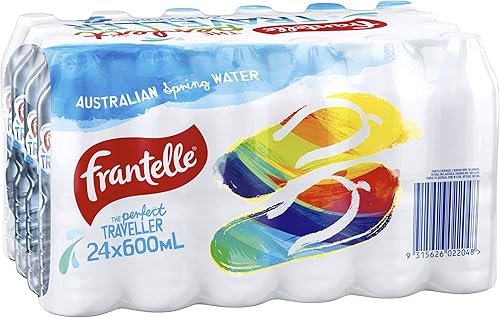
| Frantelle Spring Water 24 x 600ml |
Bottled Spring Water | On-the-go convenience, taste | $12 |
| Mount Franklin Spring Water 8 x 1.5L |
Bottled Spring Water | Family hydration, trusted brand | $16 |
| FIJI Natural Artesian Water 6 x 1.5L |
Bottled Artesian Water | Premium taste, smooth pH | $23 |
| Zukro 1 Gallon Jug | Insulated Stainless Steel | All-day cold water, outdoors | $63 |
| AliExpress Wall-Mount Dispenser | Electric Water Dispenser | Office, modern kitchen, instant hot/cold | $127.57 |

Frantelle Spring Water, 24 x 600ml
This is solid, no-fuss spring water. We’ve taken these bottles on countless road trips and camping trips. The taste is consistently clean and neutral—nothing fancy, just reliable hydration. The 600ml size is perfect for tossing in a bag. At $12 for 24 bottles, it’s a good value for occasional use or events.
- Convenient, portable size
- Clean, neutral spring water taste
- Good value per bottle
- Creates plastic bottle waste
- Not cost-effective for daily home use
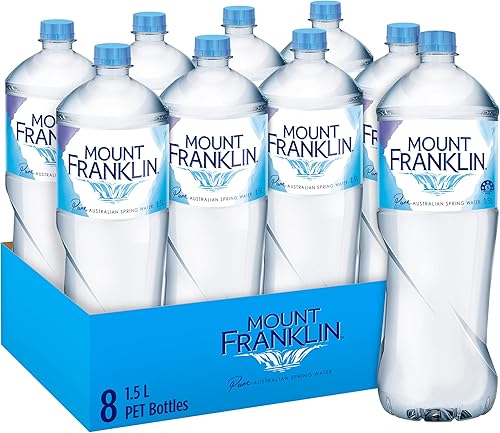
Mount Franklin Spring Water Multipack 8 x 1.5L
Mount Franklin is a household name for a reason. The 1.5L bottles are great for keeping in the fridge door or for family dinners. In our experience, the taste is exceptionally pure—arguably a step up from generic brands. It’s the kind of water you serve to guests without a second thought. The multipack format is practical for weekly grocery runs.
- Trusted, high-purity spring water
- Large 1.5L bottles for home/office
- Widely available and consistent
- Premium price for bottled water
- Still generates significant plastic waste
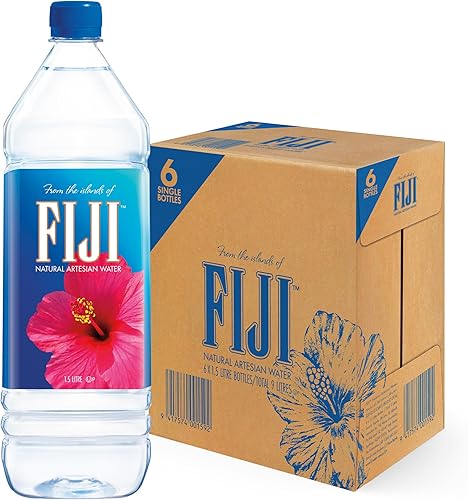
FIJI Natural Artesian Water, 1.5L (Pack of 6)
FIJI is the premium pick, and you’re paying for that iconic soft, smooth taste. The volcanic rock filtration gives it a balanced 7.7 pH and a mouthfeel you can’t get from standard tap or spring water. Is it worth 3x the price of other brands? For daily drinking, probably not. But as a treat or for special occasions, it’s a noticeable upgrade. The 1.5L bottles are perfect for sharing.
- Exceptionally smooth, soft taste
- Natural mineral content and balanced pH
- Iconic brand, great for gifting
- Very expensive for everyday hydration
- High environmental footprint (shipping)

Zukro 1 Gallon Insulated Metal Jug
If you’re serious about hydration and ditching single-use plastic, this jug is a beast. We tested it on a summer construction site—ice stayed frozen for over 30 hours. The triple-wall insulation is no joke. The straw and spout combo is practical, and the no-sweat design means no puddles on your desk. It’s heavy when full, but that’s the trade-off for all-day cold water.
- Outstanding 48-hour cold retention
- Durable stainless steel, no plastic taste
- Large capacity reduces refill needs
- Heavy and bulky when full
- Higher upfront cost
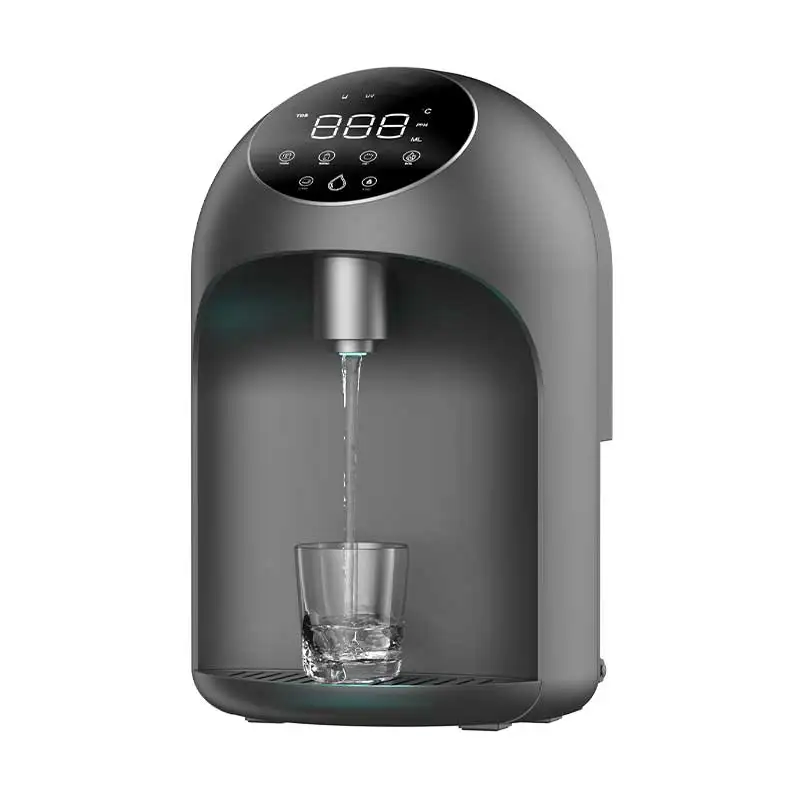
AliExpress Electric Wall-Mounted Dispenser
This is a niche but interesting product for modern kitchens or offices. It mounts directly to your water line, giving instant hot and cold water without a kettle or pitcher. Installation is a project—you’ll need basic plumbing skills. The build quality feels decent for the price, but we’d caution against expecting commercial-grade durability. It’s a sleek solution if you’re tired of countertop clutter.
- Saves counter space, sleek design
- Instant hot and cold water
- Eliminates need for kettles/pitchers
- Requires installation (plumbing/electric)
- Long-term reliability unknown
Frequently Asked Questions
- Is tap water safe to drink?
- In most developed areas, yes. Municipal systems treat water to kill pathogens and meet legal standards. However, “safe” doesn’t mean “optimal.” Old pipes can add lead, and disinfectants affect taste. A simple filter is a wise upgrade for most households.
- What’s the best way to filter drinking water at home?
- For most people, an under-sink carbon block filter is the best balance of cost, performance, and convenience. It removes chlorine, lead, and VOCs without wasting water or stripping minerals. If you have high TDS or specific contaminants, consider reverse osmosis.
- How often should I change my water filter?
- Follow the manufacturer’s schedule—typically every 6-12 months for carbon filters and 2-3 years for RO membranes. Don’t wait for the flow to slow down. A saturated filter stops working and can harbor bacteria. Mark your calendar.
- Does bottled water taste better than filtered tap water?
- Often, no. In blind taste tests, high-quality filtered tap water consistently matches or beats mid-range bottled water. You’re often paying for the brand and plastic bottle, not superior purity. Filter your own and chill it for the best taste.
- Can water filters remove minerals that are good for you?
- Some do. Reverse osmosis and distillation remove nearly all dissolved solids, including beneficial calcium and magnesium. Standard carbon filters do not. If you use RO, you can add a remineralization stage or get minerals from your diet.
- What is alkaline water, and do I need it?
- Alkaline water has a higher pH, often claimed to offer health benefits. The science is limited. You can achieve this with an alkaline water treatment system or filter. For most, neutral pH filtered water is perfectly sufficient.
- Are pitcher filters effective enough?
- They’re a good start. Pitchers with NSF-certified filters reduce chlorine, some heavy metals, and sediment. Their main limitation is capacity and flow rate—they’re slow and need frequent refills. They’re ideal for renters or as a first step into filtration.
Final Thoughts
After all these years, my advice is simple: start with your water test, not the fanciest filter on the market. Fix the actual problem. For 80% of people with municipally supplied water, a quality under-sink carbon filter will transform your drinking water experience. It’s the single biggest upgrade you can make for taste, safety, and daily enjoyment.
Forget the bottled water treadmill. Invest in a good filter, a durable reusable bottle like the Zukro, and you’ll have better water on demand, forever. Your body, your wallet, and the planet will thank you. Stay hydrated.
