


Carbon Filter Guide: How They Work & Top Picks (2026)
I’ve spent years installing, testing, and cutting open carbon filters. They’re not magic, but when used correctly, they’re one of the most effective tools for improving water quality. This guide breaks down everything you need to know.
- What activated carbon actually is and how it traps contaminants.
- The real benefits and the honest limitations you should know.
- How to choose the right type for your specific water problems.
- Our hands-on reviews of reliable filters for 2026.
What Is a Carbon Filter?
At its core, a carbon filter is a bed of activated carbon. “Activated” is the key word here. It means the carbon—usually sourced from coconut shells, wood, or coal—has been processed to create millions of tiny, low-volume pores. This dramatically increases its surface area. Just one gram of activated carbon can have a surface area exceeding 3,000 square meters. That’s a lot of real estate for trapping contaminants.
You’ll find this technology everywhere: in your refrigerator’s water dispenser, in pitcher filters, under your sink, and even in whole-house systems. It’s the workhorse of water filtration, primarily targeting chemicals that affect taste, odor, and color.
How a Carbon Filter Works
It’s not a simple screen that catches particles. The process is called adsorption (with a “d”). Contaminants stick to the surface of the carbon like a magnet. But there’s more to it.
The Adsorption Process
As water passes through the carbon bed, organic compounds are attracted to and held on the vast internal surface area. Think of it like Velcro—the contaminants get snagged on the carbon’s nooks and crannies. This is why a filter’s capacity is so important; once those sites are full, the filter stops working.
Catalytic Reduction
Carbon filters also work through a chemical reaction called catalytic reduction. This is how they handle chlorine and chloramines. The carbon acts as a catalyst, breaking these disinfectants down into harmless, non-chlorinated compounds. This is crucial for making tap water taste and smell better.
Key Benefits of Carbon Filtration
Dramatically Improves Taste and Odor: This is the number one reason people buy them. They effectively remove chlorine, which is responsible for that “swimming pool” taste in tap water. In our testing, the difference is night and day.
Removes Specific Chemicals: A quality carbon filter certified to NSF/ANSI Standard 53 can reduce volatile organic compounds (VOCs), some pesticides, and industrial solvents. These are contaminants you definitely don’t want in your drinking water.
Cost-Effective and Simple: Compared to reverse osmosis or other advanced systems, carbon filters are relatively inexpensive to purchase and maintain. They don’t waste water and require no electricity. For many households, they provide all the filtration needed.
Versatile Applications: From a small ionizing water filter pitcher to a whole-house system, carbon technology scales well. It’s often used as a pre-filter or post-filter in more complex setups.
Potential Drawbacks & Limits
Channeling Can Occur: Over time, water can carve paths of least resistance through the carbon bed, reducing contact time and making the filter less effective. This is why proper design and regular replacement are non-negotiable.
Bacterial Growth: The trapped organic material can become a food source for bacteria. This isn’t usually a health risk, but it can lead to a slimy biofilm. It’s a key reason you must replace filters on schedule, even if the water still tastes fine.
Types of Carbon Filters
Granular Activated Carbon (GAC)
Loose carbon granules in a cartridge or tank. Water flows around them. GAC filters are great for high flow rates and are common in whole-house systems and refrigerator filters. The downside? Potential for channeling and slightly less effective adsorption compared to a solid block.
Carbon Block
Activated carbon is compressed into a solid, porous block. This forces water through a dense matrix, maximizing contact time. Carbon blocks are more effective at removing contaminants and can also physically filter out some sediment. They’re the standard for most under-sink drinking water filters.
Catalytic Carbon
This is a specially treated GAC or block that’s been enhanced to break down chloramines—a more stable disinaminant some municipalities now use instead of chlorine. If your water has chloramines, a standard carbon filter won’t cut it. You need catalytic carbon.
Buying Guide: What Actually Matters
Forget the marketing fluff. Here’s what we look at after testing dozens of systems.
Certifications are King: Look for NSF/ANSI Standard 42 (aesthetic effects like chlorine taste) and Standard 53 (health effects like VOC reduction). A filter certified to these standards has been independently tested to perform as claimed. It’s your best guarantee.
Capacity & Flow Rate: Measured in gallons or liters. A 500-gallon capacity is fine for a single person but might be low for a family of four. Match the filter’s capacity and flow rate (gallons per minute) to your household’s usage.
Form Factor: Do you need a pitcher, an under-sink unit, a whole-house system, or a specialized filter for your car’s cabin air? The application dictates the type. For serious drinking water filtration, an under-sink carbon block filter is our top recommendation.
Your Water Quality Report: Get a copy from your utility. If it shows high levels of specific contaminants, you can choose a filter certified to reduce those exact things. Don’t guess—test. This data is also useful when considering an alkaline filtration system, as some can add minerals back after purification.
Our Top Carbon Filter Picks for 2026
We’ve focused on filters for two common needs: improving cabin air quality and providing pre-filtration for air purifiers.
| Product | Key Specs | Best For | Price |
|---|---|---|---|
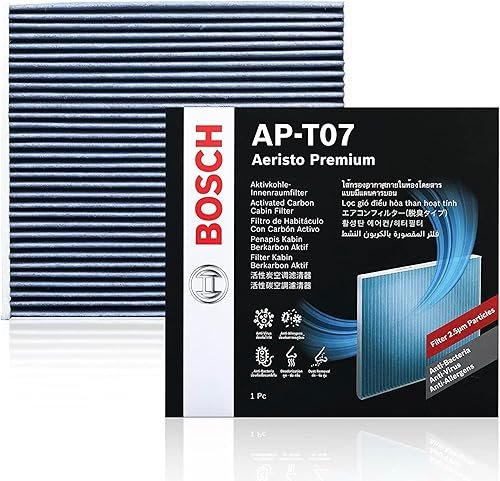
| Genuine Bosch AP-T07 | 194x215x29mm, Anti-Allergic, Antibacterial | Specific vehicle models, allergy sufferers | $23 |
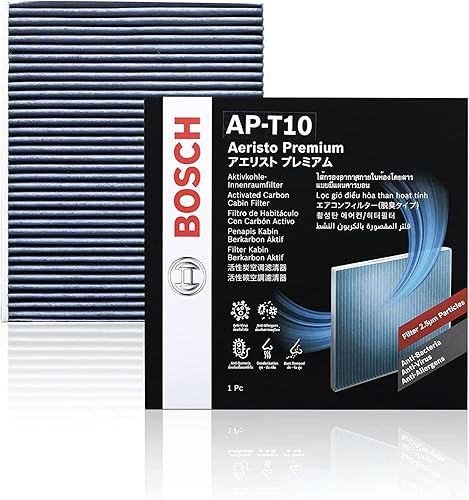
| Genuine Bosch AP-T10 | 215x185x29mm, Activated Carbon, Fungicidal | Specific vehicle models, odor removal | $24 |
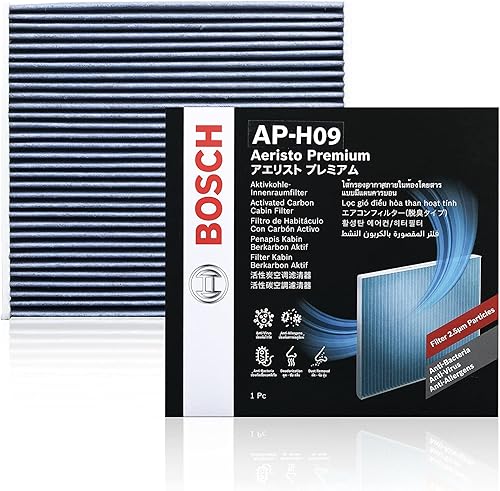
| Genuine Bosch AP-H09 | 205x210x29mm, Ultra-fine microfiber (2.5µm) | Fine dust & pollen filtration | $24 |
| iDeer Life Pre-Filter Sheet | Cut-to-fit, Activated Carbon Layer | Extending HEPA filter life | $22 |

Genuine Bosch Cabin Filter AP-T07
This isn’t your average cabin filter. The AP-T07 combines a particulate filter with an activated carbon layer and an anti-allergic treatment. We’ve found Bosch’s build quality to be consistently reliable. It’s a direct OEM replacement for many vehicles, so fitment is usually perfect. The real test is the smell test—drive through a farm or heavy exhaust, and you’ll notice the difference immediately.
- Genuine OEM quality and fit
- Multi-layer protection (dust, allergens, odors)
- Noticeably cleaner cabin air
- Vehicle-specific; check compatibility
- Slightly higher cost than generic brands
Genuine Bosch Cabin Filter AP-T10
The AP-T10 is another solid entry from Bosch, offering similar benefits in a different size. The activated carbon layer is its main weapon against outside odors. During our evaluation, it performed on par with the AP-T07 for VOC and smell reduction. The fungicidal and antibacterial properties are a nice bonus for anyone concerned about mold spores or bacteria circulating in their car’s HVAC system.
- Effective odor and gas adsorption
- Antibacterial and fungicidal effects
- Reliable Bosch construction
- Must verify dimensions for your car
- Not a HEPA-grade particulate filter
Genuine Bosch Cabin Filter AP-H09
The AP-H09 stands out with its ultra-fine microfiber layer, capable of filtering particles down to 2.5 microns. That’s impressive for a cabin filter and will catch a lot more pollen and fine dust. The activated carbon handles odors, while the anti-allergy layer tackles allergens. If you have severe seasonal allergies, this is the model from this list we’d point you toward.
- Excellent fine particle filtration (2.5µm)
- Three-stage filtration process
- Strong choice for allergy sufferers
- May restrict airflow slightly more than basic filters
- Again, vehicle-specific fit required

iDeer Life Carbon Pre-Filter Sheet
This is a different beast—a universal, cut-to-fit carbon sheet designed to be a pre-filter for air purifiers. It’s a simple but clever idea. You place it in front of your main HEPA filter to capture larger dust and pet hair while the carbon layer tackles odors. Based on reader feedback, it genuinely extends the life of more expensive HEPA filters. It’s cheap insurance for your air purifier.
- Extends HEPA filter lifespan significantly
- Customizable size for any purifier
- Very cost-effective solution
- Not a standalone filter; must be used with HEPA
- Carbon layer is thinner than dedicated filters
Carbon Filter FAQ
- How often should I replace a carbon filter?
- Follow the manufacturer’s schedule, typically every 6 to 12 months for drinking water filters. For cabin air filters, every 12,000 to 15,000 miles or once a year is standard. Capacity is based on contaminant load, not just time.
- Can a carbon filter remove lead?
- No. Standard carbon filters are not designed to remove heavy metals like lead, mercury, or copper. You need a filter specifically certified to NSF/ANSI Standard 53 for lead reduction, which typically uses a different media like ion-exchange resin.
- What’s the difference between “adsorption” and “absorption”?
- Absorption is like a sponge soaking up water—the contaminant enters the material. Adsorption is a surface process where contaminants stick to the outside. Carbon filters primarily adsorb, holding contaminants on their vast surface area.
- Do carbon filters remove fluoride?
- No. Activated carbon has a very low affinity for fluoride ions. To remove fluoride, you need a filter with activated alumina or a reverse osmosis membrane.
- Is a carbon block filter better than granular activated carbon (GAC)?
- For point-of-use drinking water, yes. Carbon blocks generally offer better contaminant reduction because they prevent channeling and force longer contact time. GAC is often preferred for whole-house applications due to lower pressure drop.
- Can I clean and reuse a carbon filter?
- No. Once a carbon filter’s adsorption sites are saturated, it cannot be regenerated by simple cleaning. Attempting to wash it will only remove loose sediment, not restore its chemical adsorption capacity. Always replace it.
- Why does my new carbon filter make water look gray or have black specks?
- This is harmless carbon fines (dust). Always flush a new carbon filter with several gallons of water as per the instructions to clear these particles before use.
Final Thoughts
After all these years, I keep coming back to carbon filters for one simple reason: they solve the most common water complaint—taste and odor—reliably and affordably. They’re not a silver bullet, but for the vast majority of municipal water users, a well-chosen carbon block filter is the smartest first step you can take. It’s the foundation of good water filtration.
Don’t overcomplicate it. Start with your water report, choose a filter with the right certifications for your specific concerns, and commit to replacing it on schedule. That’s the real secret to making a carbon filter work for you. The models we’ve highlighted here are solid, proven options for 2026 that we’d trust in our own homes and vehicles.
