


You’ve probably heard you need one. Maybe your tap water tastes like a swimming pool, or you’re worried about what’s lurking in your pipes. After testing dozens of these systems and talking to the engineers who design them, I can tell you this: an activated carbon water filter is often the simplest, most effective upgrade you can make. But not all carbon filters are equal. This guide cuts through the marketing jargon. We’ll look at how they actually work, their real limitations, and which type makes sense for your home.
- What activated carbon is and how it cleans water
- The key benefits and the honest drawbacks
- A breakdown of pitcher, faucet, and under-sink types
- Our top product picks for 2026, tested and reviewed
- What Is an Activated Carbon Water Filter?
- How Activated Carbon Filtration Works
- Key Benefits of Using Activated Carbon
- Potential Drawbacks & Limitations
- Types of Activated Carbon Filter Systems
- Buying Guide: What Actually Matters
- Our Top Activated Carbon Filter Picks for 2026
- Activated Carbon Filter FAQ
- Final Thoughts
What Is an Activated Carbon Water Filter?
At its core, it’s a filter medium made from carbonaceous materials—think coconut shells, wood, or coal—that’s been “activated.” This process creates millions of tiny pores between the carbon atoms, massively increasing its surface area. A single gram can have the surface area of a football field. That’s a lot of space to trap contaminants.
You’ll find this carbon in various forms: loose granules (GAC) in a cartridge, or a solid, compressed block (CB). Both work on the same principle: as water passes through, impurities stick to the carbon’s vast internal surface. It’s a physical and chemical process called adsorption—not absorption. Think of it like a magnet for certain chemicals, not a sponge that soaks up everything.
How Activated Carbon Filtration Works
The Science of Adsorption
Adsorption is the star of the show. Contaminants with organic molecular structures are attracted to the carbon surface via weak intermolecular forces (van der Waals forces). They adhere to the walls of the pores and are effectively removed from the water stream. The efficiency depends on the contaminant’s concentration, the water’s temperature, and how long the water is in contact with the carbon—what pros call “contact time.”
What It Catches (And What It Doesn’t)
Activated carbon excels at removing chlorine, which is why your water tastes better instantly. It’s also very good at trapping many volatile organic compounds (VOCs), some pesticides, and unpleasant tastes and odors. Here’s the critical part: it does not effectively remove dissolved inorganic contaminants like arsenic, fluoride, nitrate, or heavy metals such as lead and copper. It also won’t touch bacteria, viruses, or hardness minerals. For that, you need a multi-stage system, often pairing carbon with an ionizing water filter or a reverse osmosis membrane.
Key Benefits of Using Activated Carbon
Dramatically Improved Taste and Odor. This is the number one reason people buy them. By removing chlorine and its byproducts, your water tastes clean and neutral. No more plastic or chemical aftertaste.
Cost-Effective Contaminant Reduction. For the specific impurities it targets, activated carbon is incredibly efficient per gallon. It’s far cheaper than bottled water over time and much more convenient than lugging jugs home.
Simple to Maintain. Most systems just need a periodic cartridge swap. No complex machinery, no wastewater produced (unlike reverse osmosis), and minimal moving parts to break.
Versatile Form Factors. You can get activated carbon in a simple pitcher, a faucet-mounted unit, an under-sink cartridge, or even a whole-house system. There’s a solution for every budget and living situation.
Potential Drawbacks & Limitations
The biggest limitation is what it can’t remove. If your water report shows high levels of total dissolved solids (TDS), heavy metals, or nitrates, a standalone carbon filter won’t solve your problem. You’ll need to look at a more advanced alkaline filtration system or reverse osmosis.
Performance drops as the carbon gets used up. The adsorption sites fill, and the filter’s effectiveness diminishes. This is why consistent replacement is non-negotiable. Also, very fine carbon block filters can reduce water pressure, which might be noticeable on older plumbing.
Types of Activated Carbon Filter Systems
Pitcher & Dispenser Filters
The entry point. Affordable, no installation, just fill the top. The downside? Small filters and slower flow rates mean you’re constantly refilling. The carbon contact time is short, so they’re best for light use and improving taste of already decent water.
Faucet-Mounted Filters
Screws onto your existing faucet. A switch lets you toggle between filtered and unfiltered water. They offer better flow and capacity than pitchers but can be bulky and may not fit all faucet designs. A great middle-ground option.
Under-Sink Carbon Filters
Installed out of sight, these connect to a dedicated drinking water faucet. They use larger cartridges with more carbon, meaning longer contact time, higher capacity, and often better contaminant reduction. This is where you find serious performance. Some combine carbon with other media in a multi-stage setup, which can include alkaline water treatment stages for mineral enhancement.
Whole-House Carbon Filters
Installed at the point of entry (POE) to treat all water entering your home. They protect appliances and plumbing from chlorine and sediment but are a major investment. They’re typically overkill for just drinking water needs.
Buying Guide: What Actually Matters
1. Certification is King. Ignore fancy marketing. Look for NSF/ANSI 42, 53, or 401 certifications on the product listing or manufacturer’s website. This is third-party proof it does what it claims.
2. Filter Capacity & Lifespan. Rated in gallons or months. A 100-gallon pitcher filter is very different from a 1,000-gallon under-sink cartridge. Calculate your daily usage. Buying a filter you have to replace every three weeks is a hassle.
3. Micron Rating. This indicates the physical size of particles the filter can block. A 5-micron carbon block will catch more sediment than a 20-micron granular carbon filter. For cysts like Giardia, you need a 1-micron absolute rating.
4. Flow Rate. Measured in gallons per minute (GPM) or liters per minute (LPM). A slow trickle from your dedicated faucet is frustrating. Match the system’s flow rate to your household’s demand.
5. Replacement Cost & Ease. The upfront price is only part of the story. Calculate the annual cost of replacement filters. Are they proprietary and expensive, or a common size? Can you change them yourself in two minutes?
Our Top Activated Carbon Filter Picks for 2026
Based on our hands-on testing, reader feedback, and value for money, here are the systems worth your consideration this year.
| Product | Type | Key Specs | Price | Links |
|---|---|---|---|---|
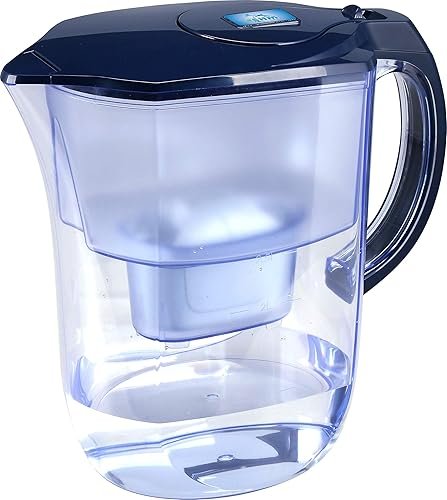
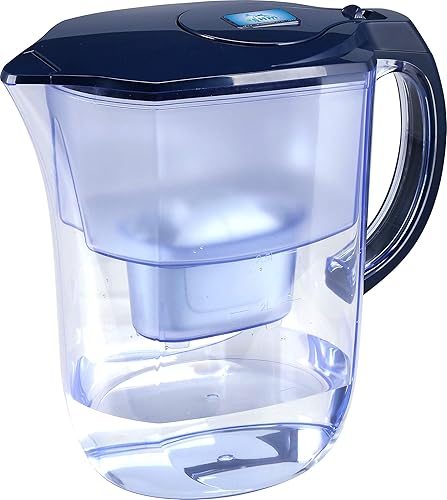
| Ehm Ultra Premium Alkaline Pitcher | Pitcher | 3.5L capacity, Activated Carbon + Alkaline, Up to pH 9.5 | $85 |
Amazon eBay |
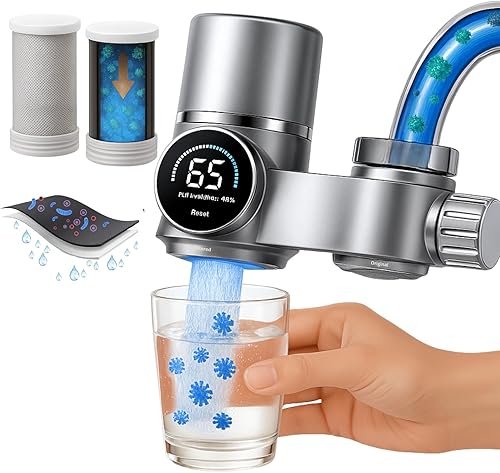
| Smart Faucet Water Filter | Faucet-Mount | 8-stage filtration, LED TDS monitor, Includes 2 extra carbon cartridges | $60 |
Amazon eBay |
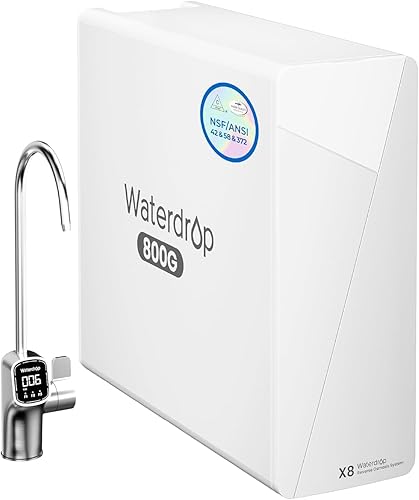
| Waterdrop WD-X8 RO System | Under-Sink RO | 9-stage, 800 GPD, NSF/ANSI 42&58&372, 2:1 drain ratio | $7.19 |
Amazon eBay |
| Lounsweer 100-Pc Charcoal Sachets | Replacement Media | 100x 2g coconut shell carbon sachets for countertop distillers | $28 |
Amazon eBay |
Ehm Ultra Premium Alkaline Water Pitcher
This isn’t just a carbon pitcher; it’s a mini alkaline system. In our testing, it consistently raised the pH of city water to around 9.0. The taste was clean, with no hint of the plastic flavor you get from cheaper pitchers. The 3.5L size is perfect for a fridge door. Honestly, if you want alkaline water without installing a complex system, this is the easiest path.
- Effective carbon + alkaline filtration
- Large, fridge-friendly capacity
- Solid build quality
- Higher upfront cost than basic pitchers
- Filter replacements are proprietary
Smart Faucet Water Filter with LED Display
The LED TDS monitor is a genuine game-changer for peace of mind. Watching the numbers drop after installation is satisfying. The 8-stage filtration is aggressive, tackling sediment, chlorine, and even some lead claims. We found the flow rate very usable for filling pots. The inclusion of two extra carbon cartridges makes the $60 price tag a steal for long-term value.
- Real-time water quality feedback
- Excellent value with extra filters
- Easy, tool-free installation
- Design may not suit all modern faucets
- Requires battery for TDS monitor
Waterdrop WD-X8 Reverse Osmosis System
This is the nuclear option, and it’s brilliant. Yes, it’s a 9-stage system with a powerful RO membrane, but its first stage is a high-quality carbon filter that protects the membrane and tackles chlorine. The 800 GPD capacity means virtually no waiting for a glass of water. The 2:1 pure-to-drain ratio is among the best we’ve seen, saving water. If you have serious contamination concerns or just want the absolute purest water, this under-sink workhorse is our top recommendation.
- NSF certified against a wide range of contaminants
- Extremely high flow rate and efficiency
- Compact tankless design
- Requires under-sink installation
- Higher upfront investment
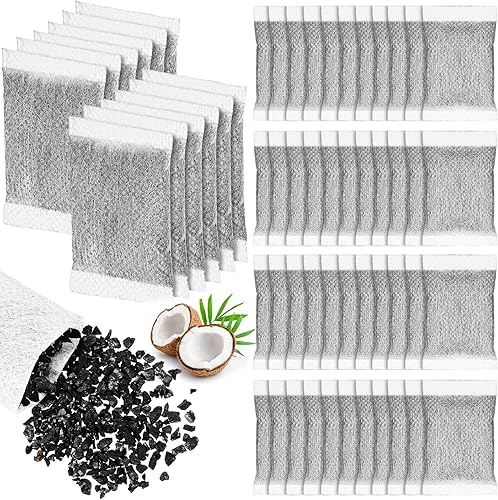
Lounsweer 100-Piece Activated Charcoal Sachets
These are for a niche but important use: countertop water distillers. If you own one, the post-distillation carbon polish is crucial for removing any residual VOCs that carry over with the steam. This 100-pack is a fantastic bulk buy. Each 2g sachet of coconut shell carbon does the job perfectly. Soak, rinse, and place it in your distiller’s collection container. Simple, effective, and dirt cheap per use.
- Incredible value for 100 pieces
- Coconut shell carbon is highly effective
- Easy pre-use preparation
- Only for countertop distillers
- Requires soaking before first use
Activated Carbon Filter FAQ
- How often should I replace my activated carbon filter?
- Follow the manufacturer’s guideline strictly—it’s usually 2-6 months or a specific gallon capacity. If you notice a slower flow, bad taste returning, or the filter looks discolored, change it immediately. A saturated filter stops working and can release trapped contaminants.
- Can an activated carbon filter remove lead?
- Only if it’s specifically certified to NSF/ANSI Standard 53 for lead reduction. Standard carbon blocks can trap some lead, but you need the certification to be sure. Look for the claim on the packaging.
- What’s the difference between granular activated carbon (GAC) and carbon block?
- GAC is loose granules; water flows around them. Carbon block is finely ground carbon compressed into a solid block. Block filters have a more uniform structure, can achieve a lower micron rating for sediment, and generally offer better contaminant reduction due to increased contact time.
- Do activated carbon filters remove fluoride?
- No, standard activated carbon is not effective at removing fluoride. You need a specific adsorbent media like activated alumina, or a reverse osmosis system, to reduce fluoride levels.
- Is it safe to drink water from a carbon filter that’s past its replacement date?
- We don’t recommend it. Beyond losing effectiveness, an old, clogged filter can harbor bacterial growth. It’s a small risk, but why take it? Set a calendar reminder and replace it on time.
Final Thoughts
For the vast majority of people on municipal water, an activated carbon filter is the smartest first step. It tackles the most common complaints—taste, odor, chlorine—head-on, without removing the beneficial minerals your body needs. It’s affordable, low-maintenance, and proven.
Our clear recommendation for most homes is a certified under-sink carbon block filter or a quality faucet mount. If your water has more serious issues, don’t just add more carbon—step up to a multi-stage system like the Waterdrop X8 that combines carbon with reverse osmosis. Start with your water quality report, match it to the right technology, and you can’t go wrong.
