


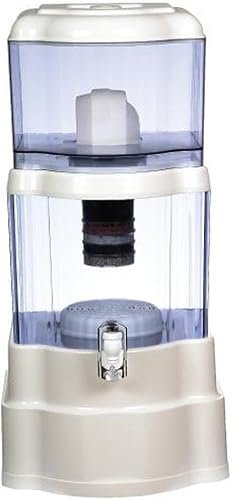
Clean, great-tasting water is something most of us take for granted—until we notice an unpleasant chlorine smell or an off-putting taste coming from the tap. Carbon water filters have been a trusted solution for decades, offering an effective, affordable, and environmentally friendly way to improve your drinking water. In this comprehensive guide, we’ll explore exactly how carbon filtration works, the different types available, what to look for when buying, and our top product recommendations for 2026.
What Is a Carbon Water Filter?
A carbon water filter is a filtration device that uses activated carbon as its primary medium to remove impurities, contaminants, and unpleasant tastes or odors from water. Activated carbon is a form of carbon that has been processed to have an extremely porous surface area—just one gram can exceed 3,000 square meters. This massive surface area is what makes carbon filtration so effective at capturing a wide range of contaminants.
Carbon filters work through a process called adsorption (not to be confused with absorption). During adsorption, dissolved contaminants in the water chemically bond to the surface of the carbon particles as water passes through the filter. Think of it like a magnet for impurities—the countless tiny pores in the activated carbon act as binding sites that trap pollutants while allowing clean water to flow through.
These filters are among the most widely used water treatment technologies in the world, found in everything from simple pitcher filters to sophisticated whole-house systems. They’re valued for their effectiveness, affordability, and the fact that they don’t require electricity or add chemicals to your water.
How Carbon Filtration Works
The Science of Adsorption
Understanding the difference between adsorption and absorption is key to grasping how carbon filters function. Absorption is like a sponge soaking up water—the substance penetrates into the material. Adsorption, on the other hand, is a surface phenomenon. Contaminants adhere to the outside surface of the carbon particles without actually being absorbed into them.
Activated carbon works because of its incredible surface area. During the activation process—where raw carbon materials like coconut shells, coal, or wood are heated to extremely high temperatures in a low-oxygen environment—millions of microscopic pores are created. These pores range in size from large macropores to tiny micropores, and each level plays a role in trapping different types and sizes of contaminants.
How Activated Carbon Is Made
The most common sources of activated carbon include:
- Coconut shells – Generally considered the highest quality source, producing carbon with a high percentage of micropores ideal for removing small molecules like chlorine and volatile organic compounds (VOCs)
- Coal (bituminous or anthracite) – Produces a broader range of pore sizes, making it versatile for various applications
- Wood – Creates carbon with larger pores, useful for removing larger molecules and color compounds
The activation process typically involves two stages: first, the raw material is carbonized (heated without oxygen to remove non-carbon elements), then it’s activated using steam, carbon dioxide, or chemicals at temperatures between 600–1200°C. This activation step is what develops the extensive pore structure that makes activated carbon so effective.
Contact Time: The Critical Factor
One of the most important concepts in carbon filtration is contact time—the amount of time water spends in contact with the carbon media. Longer contact time generally means better contaminant removal because it gives pollutants more opportunity to adsorb onto the carbon surface.
What Carbon Filters Remove (and Don’t Remove)
Carbon filters are excellent at removing certain contaminants but have limitations. Here’s a clear breakdown:
Effective at removing:
- Chlorine and chloramines (with catalytic carbon)
- Volatile organic compounds (VOCs)
- Pesticides and herbicides
- Unpleasant tastes and odors
- Sediment and particulate matter
- Some heavy metals (lead, mercury) when properly rated
- Trihalomethanes (THMs)
NOT effective at removing:
- Bacteria and viruses
- Fluoride
- Dissolved solids (TDS)
- Most heavy metals alone (without specialized media)
- Nitrates
- Arsenic (without specific modifications)
Key Benefits
Carbon water filters offer numerous advantages that have made them a popular choice for households worldwide:
- Excellent chlorine and taste/odor removal – Carbon filters excel at eliminating the chlorine taste and smell that many municipal water systems use for disinfection. This is perhaps the most immediately noticeable improvement for users.
- Preserves beneficial minerals – Unlike reverse osmosis systems that strip virtually everything from water, carbon filters allow healthy minerals like calcium and magnesium to pass through. You get cleaner water that still contains the natural minerals your body needs.
- No electricity required – Carbon filtration is a purely physical and chemical process that works without any power source, making it energy-efficient and functional even during power outages.
- Environmentally friendly – By filtering your tap water, you dramatically reduce reliance on single-use plastic water bottles. One carbon filter can replace thousands of plastic bottles over its lifespan.
- Natural process – No chemicals are added to your water during carbon filtration. The process relies entirely on the natural adsorption properties of activated carbon.
- Affordable – Compared to technologies like reverse osmosis or water ionizers, carbon filtration systems are generally much more budget-friendly, both in initial cost and ongoing maintenance.
- Versatile applications – Available in formats ranging from simple pitcher filters to whole-house systems, carbon filtration can be adapted to virtually any need and budget.
- Low maintenance – Most carbon filters simply need periodic cartridge replacement, with no complex maintenance procedures or professional servicing required.
For those interested in mineral-rich water options, combining carbon filtration with an alkaline filtration system can provide both clean water and enhanced mineral content.
Potential Drawbacks
While carbon filters are excellent for many applications, it’s important to understand their limitations:
- Cannot remove bacteria or viruses – Carbon filters do not kill or remove microorganisms. If your water source has microbiological contamination, you’ll need additional treatment methods like UV purification.
- Limited fluoride removal – Standard activated carbon does not effectively remove fluoride. If fluoride reduction is a priority, you’ll need specialized media or a different filtration technology.
- Regular replacement required – Carbon filters have a finite capacity. They typically need replacement every 3–12 months depending on usage and water quality. Failing to replace filters on time can lead to reduced performance or even bacterial growth on saturated media.
- Performance diminishes over time – As adsorption sites become filled with contaminants, the filter’s effectiveness gradually decreases. This is why regular replacement is essential.
- GAC limitations – Granular activated carbon filters, while offering higher flow rates, are generally less effective than carbon block filters at removing fine contaminants due to shorter contact time and potential channeling (where water finds paths of least resistance through the loose media).
- May need combination with other methods – For comprehensive water treatment, carbon filtration often works best as part of a multi-stage system rather than as a standalone solution.
Types of Carbon Water Filters
Carbon water filters come in several configurations, each suited to different needs and applications. Understanding these types will help you choose the right system for your situation.
Carbon Block Filters
Carbon block filters are made by compressing finely ground activated carbon into a solid, dense block. This construction forces water through a tight matrix of carbon particles, resulting in significantly longer contact time compared to loose carbon media.
Advantages: Superior contaminant removal, especially for fine particles and chemicals. The dense structure also provides mechanical filtration, trapping sediment and particles as small as the filter’s micron rating.
Considerations: Slower flow rates due to the dense construction. May not be ideal for applications requiring high water volume output.
Granular Activated Carbon (GAC)
GAC filters contain loose, granular particles of activated carbon. Water flows through a bed of these granules, coming into contact with the carbon surfaces as it passes.
Advantages: Higher flow rates, less pressure drop, and generally lower cost. Good for applications where high water volume is needed.
Considerations: Less effective than carbon block for fine contaminant removal. Can suffer from channeling, where water creates paths through the media, reducing contact with some carbon particles.
Catalytic Carbon
Catalytic carbon is activated carbon that has been specially treated to enhance its ability to break down chloramines—a more stable disinfectant that some water systems use instead of or alongside chlorine. Standard activated carbon can remove chlorine effectively but struggles with chloramines.
Best for: Homes with chloramine-treated water supplies, or anyone wanting the most thorough chemical removal possible.
Whole House (Point-of-Entry) Systems
These systems are installed where the main water line enters your home, treating all water before it reaches any faucet or appliance. They typically use large quantities of GAC or catalytic carbon in pressurized tanks.
Best for: Comprehensive protection for your entire home, including showers, laundry, and appliances. Ideal for removing chlorine from bathing water (which can be absorbed through the skin) and protecting plumbing from chlorine damage.
Undersink (Point-of-Use) Systems
Undersink systems are installed beneath a specific sink and usually feed a dedicated faucet. These typically use carbon block cartridges for high-quality filtration at the point where you drink and cook.
Best for: Targeted, high-quality drinking water filtration without the expense of a whole-house system. Most undersink systems can be installed DIY without professional help.
Countertop and Benchtop Systems
These freestanding units sit on your counter and can be gravity-fed (like ceramic gravity filters) or connected to your faucet via a diverter valve. They offer a good middle ground between pitcher filters and installed systems.
Best for: Renters or anyone who can’t modify plumbing. Easy to install, move, and maintain.
Pitcher and Faucet-Mount Filters
The simplest and most affordable options, pitcher filters use gravity to pass water through a carbon cartridge, while faucet-mount filters attach directly to your tap. For those exploring alkaline water treatment, some pitchers combine carbon filtration with mineral addition.
Best for: Budget-conscious users, renters, or as a first step into water filtration. Limited capacity but very accessible.
What to Look For: Buying Guide
Choosing the right carbon water filter involves considering several key factors. Here’s what to prioritize:
- Certifications matter – Look for NSF/ANSI certifications on filters. NSF/ANSI 42 certifies aesthetic effects like chlorine, taste, and odor reduction. NSF/ANSI 53 certifies health effects, including reduction of lead, VOCs, and cysts. These independent certifications verify that the filter performs as claimed.
- Carbon block over GAC (generally) – For most drinking water applications, carbon block filters provide superior contaminant removal. The denser media and longer contact time result in better performance, especially for fine particles and chemicals.
- Check the micron rating – The micron rating indicates the smallest particle size the filter can capture. A 0.5-micron filter is among the finest available for carbon filters and will remove more contaminants, including cysts like Giardia and Cryptosporidium. Higher micron ratings (5–10 microns) are better for sediment pre-filtration.
- Calculate total cost of ownership – Don’t just look at the initial purchase price. Factor in replacement filter costs over 2–3 years. A cheaper system with expensive replacement cartridges may cost more in the long run than a pricier system with affordable replacements.
- Match system type to your needs – Consider where you’ll use the filter. Do you need filtered water at just one tap, or throughout your home? Are you renting (countertop/pitcher) or do you own your home (undersink/whole house)?
- Check filter lifespan – Quality carbon filters typically last 6–12 months or filter a specific volume (e.g., 30,000 liters). Longer-lasting filters mean less frequent replacements and lower maintenance hassle.
- Coconut shell carbon is generally highest quality – While all activated carbon works, coconut shell-derived carbon is widely regarded as superior for drinking water applications due to its high micropore content and low ash levels.
- Flow rate considerations – Make sure the filter’s flow rate meets your needs. Carbon block filters typically have lower flow rates than GAC, which may matter if you need high-volume water output.
Top 5 Recommended Products
After extensive research, we’ve selected five carbon water filter products that represent excellent value across different categories and price points. Our selections prioritize certified performance, build quality, and real-world user satisfaction.
| Product | Type | Key Feature | Price | Links |
|---|---|---|---|---|
 22L Benchtop 8-Stage 22L Benchtop 8-Stage |
Benchtop Gravity | 8-stage filtration, 22L capacity | $99 | Buy on Amazon Buy on eBay |
 Waterdrop WD-10UA Waterdrop WD-10UA |
Undersink | 0.5μm carbon block, 30,000L | $93 | Buy on Amazon Buy on eBay |
 2-Set Replacement Cartridges 2-Set Replacement Cartridges |
Replacement Filters | 0.5 micron coconut carbon block | $46 | Buy on Amazon Buy on eBay |
 Devanti 6-Stage Cartridge Devanti 6-Stage Cartridge |
Replacement Cartridge | 6-stage, adds minerals | $15 | Buy on Amazon Buy on eBay |
 Brita Maxtra Compatible (6-Pack) Brita Maxtra Compatible (6-Pack) |
Pitcher Cartridges | 6-pack value, Brita compatible | $11.19 | Buy on AliExpress |
1. 22L Benchtop 8-Stage Water Filter
This gravity-fed benchtop system offers an impressive 8-stage filtration process in a generous 22-liter capacity. Combining ceramic, carbon, and mineral stone filtration stages, it provides comprehensive contaminant removal including lead and bacteria without requiring any plumbing modifications or electricity. The large capacity makes it suitable for families, and its freestanding design means it works anywhere you have counter space.
- Multi-stage filtration for thorough contaminant removal
- Large 22L capacity suitable for families
- No installation or plumbing required
- Removes bacteria (unlike standard carbon-only filters)
- Takes up counter space
- Gravity-fed means slower filtration
- Requires periodic cleaning of ceramic elements
2. Waterdrop WD-10UA Under Sink Carbon Filter
The Waterdrop WD-10UA is a standout undersink carbon block filter that delivers exceptional performance in a compact package. With a 0.5-micron filtration rating, it captures an impressive range of contaminants including 99% of lead, fluoride, and chlorine. The 30,000-liter capacity translates to approximately 12 months of use for most households, and the BPA-free construction ensures your water stays pure. This is an excellent choice for anyone wanting high-quality point-of-use filtration without the complexity of a multi-stage RO system.
- 0.5-micron carbon block for superior filtration
- Impressive 30,000L (12-month) capacity
- Removes 99% lead, fluoride, and chlorine
- BPA-free construction
- Requires undersink installation
- Single faucet output only
- Higher initial cost than pitcher alternatives
3. 2-Set Replacement Sediment + Coconut Carbon Cartridges
This dual-pack of replacement cartridges offers excellent value for anyone with an existing undersink or countertop filtration system. The combination of a sediment pre-filter and a 0.5-micron coconut carbon block provides two-stage filtration: the sediment filter catches larger particles and protects the carbon block, while the coconut carbon handles chemical contaminants, tastes, and odors. Each filter has a 12-month lifespan, giving you two years of filtration in one purchase.
- Two-stage filtration (sediment + carbon)
- High-quality 0.5 micron coconut carbon block
- 12-month lifespan per filter
- Great value—two years of filtration included
- Only compatible with standard filter housings
- Need to verify your system’s filter size before purchasing
- Does not include housing or system
4. Devanti 6-Stage Water Dispenser Filter Cartridge
This affordable 6-stage replacement cartridge is designed for Devanti-style water dispensers and offers surprising depth of filtration at its price point. Combining ceramic, activated carbon, and mineral media, it removes chlorine, bacteria, and odors while actually adding beneficial minerals like magnesium and potassium back into your water. It’s an excellent budget option for those who already own a compatible dispenser and want quality replacement filters without breaking the bank.
- Very affordable at just $15
- 6-stage filtration including mineral addition
- Removes chlorine, bacteria, and odors
- Adds beneficial magnesium and potassium
- Only compatible with specific dispenser models
- Shorter lifespan than premium alternatives
- Not suitable as a standalone filter
5. Brita Maxtra Compatible Carbon Filter Cartridges (6-Pack) — Budget Pick
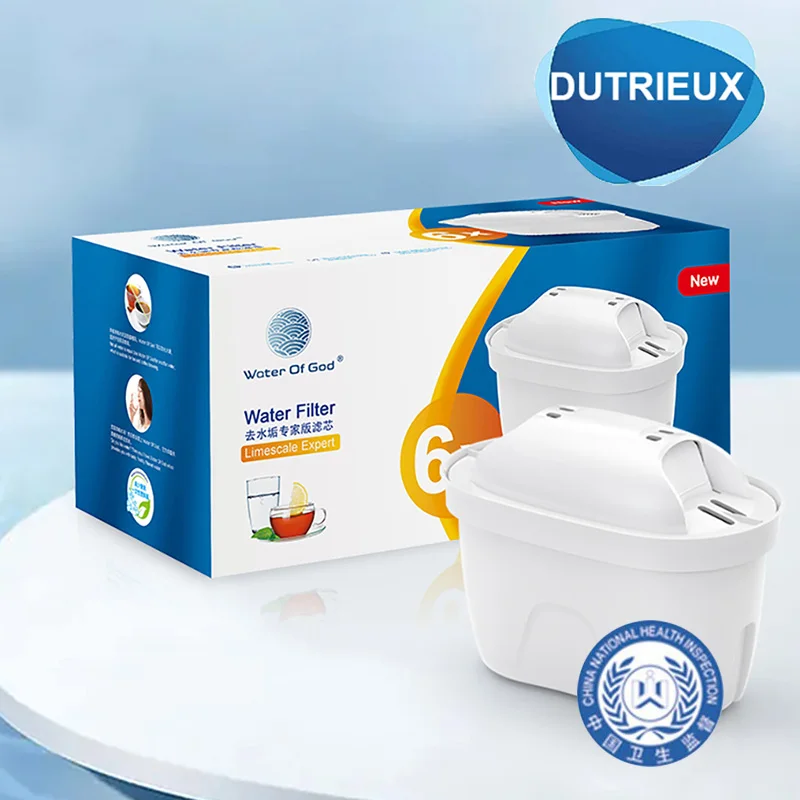
For those using Brita-style pitchers, this 6-pack of compatible carbon cartridges represents outstanding value. At just $11.19 for six filters, you’re paying under $2 per cartridge—a fraction of the cost of branded alternatives. These filters are designed to be fully compatible with Brita Maxtra pitchers and effectively reduce limescale, chlorine, and other common contaminants that affect taste. With a 90.2% positive rating, they’re a proven budget-friendly option for everyday water improvement.
- Exceptional value—six filters for $11.19
- Compatible with popular Brita Maxtra pitchers
- Effective limescale and chlorine reduction
- High positive rating (90.2%)
- Third-party compatibility (not official Brita)
- Shipping times may be longer
- Performance may vary slightly from branded filters
Frequently Asked Questions
- How often should I replace my carbon water filter?
- Most carbon filters should be replaced every 3–12 months, depending on the specific filter, your water quality, and how much water you use. Always follow the manufacturer’s recommended replacement schedule. Signs that your filter needs replacing include reduced water flow, return of chlorine taste or odor, and reaching the rated capacity (e.g., 30,000 liters).
- What’s the difference between adsorption and absorption?
- Absorption is when a substance penetrates into another material (like a sponge soaking up water). Adsorption is when contaminants stick to the surface of a material without being absorbed into it. Carbon filters work through adsorption—contaminants bind to the vast surface area of the activated carbon rather than being absorbed into it.
- Can carbon filters remove bacteria and viruses?
- Standard carbon filters cannot reliably remove bacteria or viruses. Some advanced systems combine carbon filtration with ceramic elements that can physically filter out bacteria (typically rated at 0.2–0.5 microns), but pure carbon filtration alone is not sufficient for microbiological safety. If you need bacteria/virus removal, consider adding UV purification or choosing a system specifically certified for cyst removal.
- Are carbon block filters better than granular activated carbon (GAC)?
- For most drinking water applications, yes. Carbon block filters generally provide better contaminant removal because the compressed carbon creates longer contact time and eliminates channeling issues. However, GAC filters offer higher flow rates and may be preferable in applications where water volume is more important than maximum filtration performance.
- Do carbon filters remove healthy minerals from water?
- No, this is actually one of the advantages of carbon filtration. Unlike reverse osmosis, which removes virtually all dissolved substances including beneficial minerals, carbon filters primarily target organic chemicals, chlorine, and sediment. Healthy minerals like calcium and magnesium pass through carbon filters unaffected.
- What does the micron rating mean on a carbon filter?
- The micron rating indicates the smallest particle size the filter can physically capture. A 0.5-micron filter can capture particles as small as 0.5 micrometers, including cysts like Giardia and Cryptosporidium. Lower micron ratings mean finer filtration but also typically result in slower flow rates. For reference, a human hair is about 70 microns in diameter.
- Can I use a carbon filter with well water?
- Carbon filters can be used with well water, but well water often requires more comprehensive treatment than municipal water. Well water may contain bacteria, heavy metals, sediment, or other contaminants that carbon alone cannot address. We recommend testing your well water first and potentially combining carbon filtration with sediment pre-filtration, UV purification, or other treatment methods as needed.
Final Thoughts
Carbon water filters remain one of the most practical, effective, and accessible water treatment technologies available in 2026. Their ability to remove chlorine, improve taste, and reduce a wide range of chemical contaminants—while preserving beneficial minerals and requiring no electricity—makes them an excellent choice for most households.
The key to getting the most from carbon filtration is choosing the right type for your needs and maintaining it properly. For the best performance, we generally recommend carbon block filters over GAC, look for NSF/ANSI certifications, and never skip scheduled filter replacements. Whether you opt for a simple pitcher setup or a dedicated undersink system, the improvement in water quality is immediately noticeable and well worth the investment.
Remember that carbon filtration works best as part of a comprehensive approach to water quality. If your water has specific challenges like bacterial contamination or very high TDS, consider combining carbon with other technologies for complete protection. The products we’ve highlighted above represent excellent starting points across different budgets and applications.
Here’s to cleaner, better-tasting water in 2026!
