


Alkaline water treatment has become one of the most talked-about topics in home water filtration. From simple mineral pouches to advanced multi-stage purification systems, there are now more ways than ever to produce alkaline drinking water at home. But what does alkaline water treatment actually involve, is it worth the investment, and which approach is right for you?
This guide covers everything you need to know — the science behind alkaline water treatment, honest benefits and limitations, the different treatment methods available, and our top product picks for 2026.
What Is Alkaline Water Treatment?
Alkaline water treatment refers to any process that raises the pH of drinking water above the neutral level of 7.0, typically to between 8.0 and 9.5. This can be achieved through several methods including mineral remineralization, electrolysis (ionization), or chemical addition. The goal is to produce water that contains higher concentrations of alkaline minerals such as calcium, magnesium, and potassium.
Unlike standard water filtration that focuses solely on removing contaminants, alkaline water treatment adds a step that actively changes the mineral composition and pH of the water. This distinction is important — a good alkaline treatment system should first purify the water and then enhance it with beneficial minerals.
If you are specifically interested in how electrolysis-based systems produce alkaline water, our guide to ionizing water filters covers the science behind electric ionizers in detail, including how platinum-titanium plates separate water into alkaline and acidic streams.
How Alkaline Water Treatment Works
There are three primary methods used in alkaline water treatment, each with different mechanisms, costs, and effectiveness:
Method 1: Mineral Remineralization
The most common approach in home systems. Water passes through media containing natural minerals — typically calcite (calcium carbonate), corosex (magnesium oxide), tourmaline, or alkaline ceramic balls. As water flows through these materials, trace amounts of minerals dissolve into the water, raising the pH and adding nutritional value. This method is passive, requires no electricity, and produces a gentle pH increase of 0.5 to 2.0 points.
Method 2: Electrolysis (Ionization)
Electric water ionizers pass filtered water over charged platinum-coated titanium plates inside an electrolysis chamber. An electrical current causes mineral ions to migrate — calcium, magnesium, and potassium concentrate on the alkaline side, while acidic by-products are diverted to a separate output. This method offers the widest pH range (3.0 to 11.0) and also produces dissolved molecular hydrogen, which has antioxidant properties.
Method 3: Chemical Addition
Some bottled water brands and home systems use chemical additives like sodium bicarbonate (baking soda), potassium hydroxide, or calcium chloride to raise pH. While effective at changing pH, this method does not provide the same breadth of minerals as remineralization and can affect taste. It is the least recommended approach for long-term home use.
Key Benefits of Alkaline Water Treatment
Here are the established and evidence-based benefits:
- Mineral Enrichment: Alkaline treatment adds calcium, magnesium, and potassium to your water. The World Health Organization has noted that long-term consumption of demineralized water (such as pure RO water) may have negative health effects, making remineralization a valuable addition to any filtration system.
- Improved Taste: Most users report that mineral-enriched alkaline water tastes smoother and more refreshing than plain filtered or RO water. The minerals add a subtle sweetness that eliminates the “flat” taste common with highly purified water.
- Potential Acid Reflux Relief: A frequently cited 2012 study found that water with pH 8.8 can denature pepsin, the enzyme responsible for acid reflux symptoms. While more research is needed, some individuals report improvement in reflux symptoms after switching to alkaline water.
- Hydration Support: A 2017 study found that athletes consuming alkaline, low-mineralized water showed better hydration status after high-intensity exercise compared to those drinking standard water.
- Bone Health Indicators: Some research suggests alkaline mineral water consumption may reduce markers of bone resorption, though the long-term clinical significance requires further study.
- Cost Savings: Home alkaline water treatment typically costs 2 to 5 cents per litre, compared to $2 to $4 per bottle for commercial alkaline water. A home system pays for itself within months.
Potential Drawbacks
A balanced view of what to consider before investing:
- Overstated Health Claims: The alkaline water industry is plagued by exaggerated marketing. Claims about curing cancer, detoxifying the body, or dramatically slowing aging are not supported by robust clinical evidence. Harvard Health and the Mayo Clinic both note that there is insufficient evidence to recommend alkaline water as a treatment for any health condition.
- Your Body Regulates pH: Your kidneys and lungs maintain blood pH within a very strict range of 7.35 to 7.45 regardless of what you drink. Alkaline water cannot significantly change your internal pH — and this is by design, as even small deviations can be dangerous.
- Medication Interactions: When consumed in large quantities, alkaline water may interfere with the absorption of certain medications by altering stomach pH. If you take regular medication, consult your doctor before making alkaline water your primary drinking water.
- Variable Water Quality: The effectiveness of alkaline treatment depends heavily on your source water. Systems that work well with municipal water may underperform with very soft water, bore water, or tank water.
- Ongoing Maintenance: All alkaline treatment systems require regular maintenance — mineral cartridges deplete over time, electrolysis plates need cleaning, and filters need replacing. Neglecting maintenance leads to declining water quality and pH drift.
- Cost Range Is Huge: From $30 portable pouches to $4,000+ electric ionizers, the market is broad. More expensive does not always mean better results for the average household.
Types of Alkaline Water Treatment Systems
Understanding the different approaches will help you choose the right system for your needs and budget:
1. Gravity-Fed Bench Top Dispensers
Large countertop units (8 to 20+ litres) that use gravity to push water through multi-stage filter cartridges including activated carbon, KDF media, ceramic plates, and alkaline mineral stones. They require no plumbing, electricity, or water pressure. Ideal for families wanting a simple, high-capacity solution. For a comprehensive comparison of these multi-stage systems, our alkaline filtration system guide covers undersink and countertop options in detail.
2. Alkaline Water Filter Pitchers
Compact, portable jugs with built-in mineral filter cartridges. They produce mildly alkaline water (pH 8.0 to 8.5) and remove basic contaminants. Low cost ($30 to $80) and zero installation, but limited capacity (1.5 to 3.5 litres) and slower filtration. Best for individuals or as a travel option.
3. Inline Alkaline Cartridges
Add-on filters that connect to existing water filtration systems, particularly reverse osmosis units. They contain calcite, corosex, and mineral balls that remineralize water as it passes through. The most affordable way to add alkaline treatment to an existing setup ($20 to $50 per cartridge).
4. Reverse Osmosis with Alkaline Remineralization
Complete 5 to 7 stage undersink systems that combine comprehensive RO purification with an alkaline post-filter. These remove up to 99% of contaminants before adding minerals back. The most thorough treatment method available, but requires plumbing and produces some wastewater.
5. Portable Alkaline Filter Pouches
Small mineral pouches that drop into any water bottle or container. They use natural ionizing minerals to gently raise pH over 15 to 30 minutes. Extremely portable and affordable, but offer the mildest treatment effect. Good for on-the-go use.
6. Electric Water Ionizers
Premium countertop or under-counter devices that use electrolysis to produce alkaline water with adjustable pH levels. They offer the most control and highest molecular hydrogen output, but at significant cost ($1,000 to $4,000+). Best for committed users who want maximum customization.
What to Look For: Buying Guide
When choosing an alkaline water treatment system, evaluate these key factors:
- Filtration Quality First: The most important function of any water treatment system is contaminant removal. Ensure the system effectively removes chlorine, sediment, and heavy metals at minimum. For maximum protection, choose systems that also address fluoride, VOCs, and microplastics. Third-party certifications (NSF/ANSI, WaterMark, SGS) provide reliable verification.
- Target pH Range: For daily drinking, pH 8.0 to 9.0 is the sweet spot. Be cautious of systems or marketing that promote pH above 10 — excessively alkaline water can taste soapy and is unnecessary for health benefits.
- Total Cost of Ownership: Calculate the purchase price plus 2 to 3 years of replacement filters. A $100 system with $80/year cartridges costs $340 over 3 years. A $250 system with $40/year cartridges costs $370. Consider the long-term math before deciding.
- Capacity and Flow Rate: Match the system to your household size. A gravity-fed 16L dispenser suits a family of four. A 1.5L pitcher suits one person. Undersink RO systems provide on-demand flow for any household size.
- Installation Requirements: Renters and those wanting simplicity should choose bench top, pitcher, or portable options. Homeowners can invest in undersink systems for permanent, space-saving installations.
- Mineral Quality: Look for systems using calcite, corosex, Maifan stone, or food-grade ceramic balls. These natural minerals dissolve slowly and provide a balanced mineral profile. Avoid systems that rely solely on chemical pH adjustment.
- Warranty: Quality manufacturers offer at least 1 to 2 year warranties. Premium electric ionizers typically come with 5 to 15 year or lifetime warranties. Avoid products with no warranty or less than 12 months coverage.
Top 5 Recommended Alkaline Water Treatment Products
We have selected five products spanning different budgets and treatment approaches, from budget-friendly portable options to comprehensive bench top systems.
| Product | Type | Key Feature | Price | Links |
|---|---|---|---|---|
 |
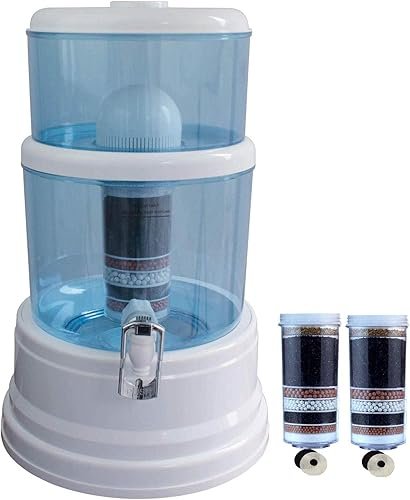
Gravity-Fed Bench Top | 8-stage filtration, SGS certified | $190 | Buy on AmazonBuy on eBay |
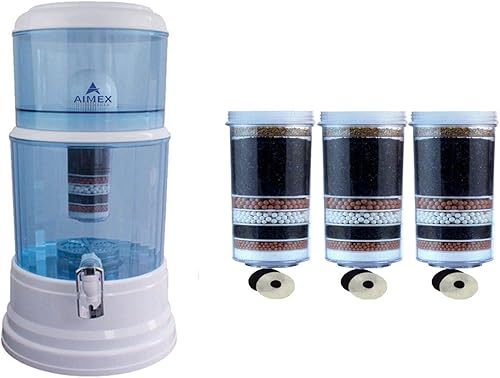 |
Gravity-Fed Bench Top | 20L capacity, 8-stage, Maifan stone | $171 | Buy on AmazonBuy on eBay |
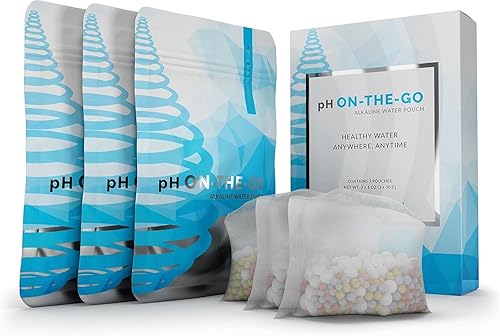 |
Portable Pouches (3-Pack) | 98L capacity per pouch, travel-friendly | $73 | Buy on AmazonBuy on eBay |
 |
Inline Add-On Cartridge | Calcite + corosex, fits any RO system | $42 | Buy on AmazonBuy on eBay |
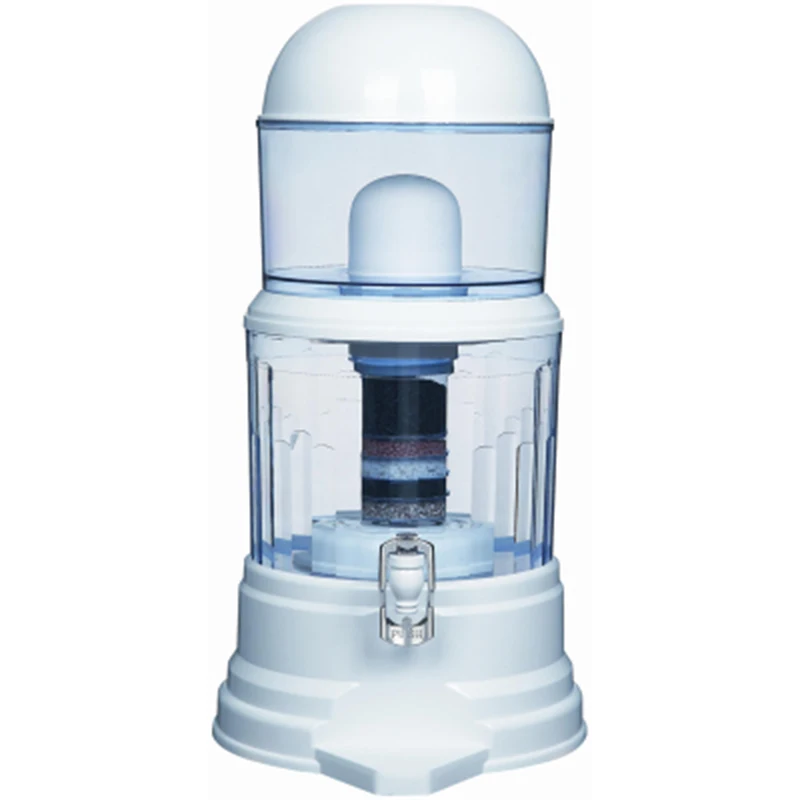 |
Gravity-Fed Mineral Pot | Budget option, mineral alkaline treatment | $27 USD | Buy on AliExpress |
1. Aimex 16 Litre Bench Top Alkaline Purifying System
The Aimex 16L is a comprehensive gravity-fed system that uses 8-stage filtration including activated charcoal, KDF media, ceramic plates, and alkaline mineral stones. It produces balanced pH water while removing chlorine, heavy metals, and sediment. The 16-litre capacity serves families well, and the BPA-free food-grade construction has been third-party tested by SGS. No plumbing or electricity needed — simply fill the top chamber and let gravity do the work.
- 8-stage comprehensive filtration
- SGS third-party certified
- No installation required
- Gravity-fed means slower flow
- Takes up countertop space
2. 20L BPA-Free Bench Top Water Dispenser with 8-Stage Filtration
This larger 20-litre dispenser offers the same comprehensive 8-stage filtration as its 16L counterpart but with greater capacity — ideal for larger households or offices. The filtration includes fast felt dome, activated carbon, bio-ceramic infrared balls, KDF, mineral balls, ceramic plate, and Maifan stone. It restores essential minerals (calcium, magnesium, potassium) while producing mildly alkaline water. Filters should be replaced every 6 months or 5,000 litres.
- 20L capacity for larger households
- Complete 8-stage filtration with Maifan stone
- BPA-free food-grade materials
- Slower flow rate (~0.3 L/min)
- Requires regular filter soaking and rinsing
3. pH On-The-Go Portable Alkaline Water Filter (3-Pack)
For those who want alkaline water on the move, these portable filter pouches deliver high pH alkaline water anywhere. Simply drop one into your water bottle, jug, or container and the multi-stage mineral media raises pH while adding zinc, magnesium, selenium, and iron. Each pouch filters approximately 98 litres (26 gallons), and the 3-pack provides months of use. The filters also reduce fluoride, chlorine, chloramine, and heavy metals including arsenic, mercury, and lead.
- Extremely portable — fits any bottle
- Multi-mineral enrichment
- 3-pack lasts several months
- Slower treatment (15-30 min soak time)
- Limited contaminant removal vs plumbed systems
4. iSpring FA15 Inline Alkaline Replacement Cartridge
If you already own a reverse osmosis or undersink filtration system, the iSpring FA15 is the most cost-effective way to add alkaline treatment. This 10-inch inline cartridge contains mineral stones, calcite, and corosex that raise pH by 0.5 to 0.8 points while improving taste. It connects to any standard undersink system using 1/4-inch quick-connect fittings. At just $42, it transforms flat-tasting RO water into mineral-rich alkaline water without replacing your entire system.
- Affordable add-on at $42
- Compatible with any undersink/RO system
- Calcite + corosex for balanced minerals
- Raises pH by only 0.5-0.8 points
- Requires existing filtration system
5. 16L Mineral Pot Water Treatment Filter (Budget Pick)
For budget-conscious buyers, this 16-litre mineral pot dispenser offers alkaline water treatment at a fraction of the cost of premium systems. The gravity-fed design uses mineral filtration media to produce alkaline drinking water suitable for daily use. While it lacks the multi-stage certification of pricier options, it delivers the core alkaline treatment function at an unbeatable price point of around $27 USD. A solid entry-level option for those wanting to try alkaline water treatment without significant investment.
- Extremely affordable at ~$27 USD
- 16L capacity for family use
- No installation or electricity needed
- Less comprehensive filtration than premium options
- No third-party certification
Frequently Asked Questions
- Is alkaline water treatment the same as water softening?
- No. Water softening removes hardness minerals (calcium and magnesium) using ion exchange, replacing them with sodium. Alkaline water treatment does the opposite — it adds or concentrates beneficial minerals to raise pH. They address completely different water quality issues.
- Can alkaline water treatment remove fluoride?
- Standard mineral-based alkaline treatments do not remove fluoride. Only reverse osmosis systems with an alkaline remineralization post-filter effectively remove fluoride (up to 95%) while still producing alkaline water. If fluoride removal is a priority, choose an RO-based system.
- How long do alkaline filter cartridges last?
- It varies by system type. Inline alkaline cartridges (like the iSpring FA15) last 6 to 12 months. Gravity-fed bench top filters last approximately 6 months or 5,000 litres. Portable pouches last 2 to 3 months depending on usage. Always follow the manufacturer’s recommended replacement schedule.
- Is alkaline water safe for cooking?
- Yes, mildly alkaline water (pH 8.0 to 9.0) is safe for cooking and may even improve the taste of rice, soups, and tea. Some users report that vegetables retain more colour when cooked in alkaline water. Avoid using very high pH water (above 10.0) for cooking as it can affect flavours and textures.
- Do I need alkaline water treatment if my tap water is already pH 7.5?
- If your primary goal is alkaline water, a pH of 7.5 is already near neutral and healthy. The greater value of most alkaline treatment systems is their multi-stage filtration — removing chlorine, heavy metals, and other contaminants. The alkaline enhancement is a bonus, not the sole reason to invest.
- Can I use alkaline-treated water for my pets?
- Most veterinarians consider mildly alkaline water (pH 8.0 to 8.5) safe for dogs and cats. However, avoid giving pets water above pH 9.0, and always ensure the water has been properly filtered for contaminants first. If your pet has kidney issues, consult your vet before switching.
- What is the difference between alkaline water and hydrogen water?
- Alkaline water has a raised pH due to mineral content. Hydrogen water contains dissolved molecular hydrogen (H2) gas, which has antioxidant properties. Electric ionizers produce both simultaneously. Mineral-based alkaline systems raise pH but do not produce significant dissolved hydrogen. They address different properties of the water.
Final Thoughts
Alkaline water treatment is a legitimate way to improve your drinking water quality, provided you approach it with realistic expectations. The genuine benefits lie in mineral enrichment, improved taste, and the comprehensive filtration that accompanies most quality systems — not in the exaggerated health claims that sometimes dominate the marketing.
For most households, the Aimex 16L Bench Top System at $190 offers the best combination of thorough 8-stage filtration, generous capacity, and genuine alkaline treatment without any installation hassle. If you already have an RO system, simply adding the iSpring FA15 inline cartridge for $42 transforms your existing setup into an alkaline water treatment system. And for those wanting to try alkaline water on a minimal budget, the 16L Mineral Pot from AliExpress at $27 provides a low-risk entry point.
