


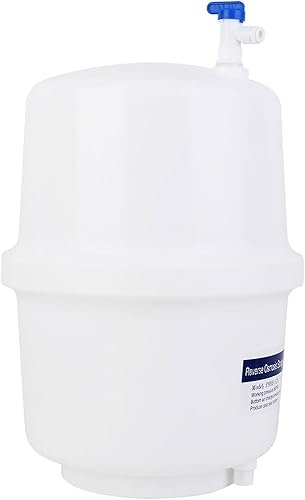
RO Water Tank Pressure: The Silent Killer of Your System’s Flow (2026)
After testing dozens of systems, I can tell you the most common complaint isn’t bad taste—it’s weak flow. People blame the faucet or the membrane. But nine times out of ten? It’s the ro water tank pressure. This simple setting controls your entire system’s performance. Get it wrong, and you’ll be waiting forever for a glass of water. We’re going to fix that today.
- What tank pressure actually is and why it matters
- How to check and set it yourself in 10 minutes
- The best tanks that hold pressure for years
- Common mistakes that wreck your flow rate
What Is RO Water Tank Pressure?
Think of your RO tank as a balloon inside a steel shell. That balloon is a rubber diaphragm. On one side is your purified water. On the other side is air, pre-charged at the factory. This air pressure is what we’re talking about. It’s the force that pushes the water out when you open the faucet.
Without it, your water would just sit there. The system’s pump pushes water in, compressing the air side. When you open the tap, that compressed air squeezes the water out. A standard residential tank comes charged to about 7-10 psi (pounds per square inch) when empty. That’s the sweet spot for most under-sink systems. Get this wrong, and your whole system feels broken.
How RO Tank Pressure Works
The Fill Cycle
Your RO system’s feed water pressure forces purified water through the membrane and into the tank. As water enters, it pushes against the diaphragm, compressing the air on the other side. The tank’s internal pressure rises. The system’s TDS tester might show perfect water quality, but if the tank can’t build pressure, you won’t feel it.
The Draw Cycle
You open the faucet. Now that compressed air does the work, pushing the water out. The pressure drops as water leaves. A good tank maintains consistent flow until it’s nearly empty. A bad one? You get a strong burst for two seconds, then a sad dribble. That’s a classic sign of a waterlogged tank with no air charge.
The Role of the Shut-Off Valve
Your system has an automatic shut-off valve. It stops production when tank pressure equals about 2/3 of your home’s incoming water pressure. This prevents constant running. If your tank pressure is wrong, this valve never triggers properly. Your system runs forever, wasting water and burning out filters. Honestly, most people don’t need a fancy home water distiller—they just need to fix their tank pressure.
Key Benefits of Proper Pressure
Consistent Flow Rate: This is the big one. Correct pressure means you get a steady, usable stream from your dedicated faucet, not a frustrating trickle. You’ll fill a pot in seconds, not minutes.
Longer System Life: When pressure is right, the automatic shut-off works. The system cycles on and off as designed. This reduces wear on the pump, membrane, and filters. It’s the single biggest mistake we see—people ignoring pressure until something expensive breaks.
Better Water Quality: A properly pressurized tank reduces “TDS creep”—that initial burst of higher-mineral water that can seep past the membrane when the system is idle. Good pressure keeps the diaphragm sealed tight.
Potential Drawbacks & Problems
Pressure Loss Over Time: All tanks slowly lose air charge. It’s normal. But if you’re re-pressurizing every few months, the diaphragm is likely shot. Time for a new tank.
Incorrect Initial Setting: Some cheap tanks arrive with way too much or too little pressure. Always check with a gauge before you install it. Setting it wrong can damage the diaphragm or give you terrible flow from day one.
Sizing Matters: A giant 14-gallon tank on a small system won’t build enough pressure to trigger shut-off. The system will run constantly. Match the tank to your system’s output.
Types of RO Storage Tanks
Standard Steel Bladder Tanks
This is what 95% of homes have. A steel shell with a rubber diaphragm inside. They’re reliable, affordable, and last 5-10 years. The 3.2-gallon size is the most common for under-sink use. All our top picks fall into this category.
Plastic (Polypropylene) Tanks
Lighter and won’t rust. Often used in commercial settings or where weight is a concern. The liner is usually a high-grade, BPA-free polypropylene. Performance is identical to steel if the build quality is good.
Vertical vs. Horizontal
Most are vertical—they stand upright under the sink. Horizontal tanks exist for tight spaces. The principle is exactly the same. Just make sure you set the pressure with the tank in its installed orientation.
Buying Guide: What Actually Matters
1. Diaphragm Material: Look for chlorobutyl rubber. It’s the industry standard for a reason—it’s durable and tasteless. Cheap tanks use inferior rubber that can impart a plastic taste.
2. Liner Quality: A virgin polypropylene liner is best. It ensures your water never touches metal and stays free of odors. Some tanks, like the Neo-Pure, highlight this feature.
3. Valve Quality: The air valve on top is a common failure point. A imported, Schrader-style valve (like on a car tire) holds pressure better over the long term. The B0CW21C8JV model specifically calls this out.
4. Certification: Look for NSF/ANSI 58 certification or at least CE approval. This means the materials are safe for contact with drinking water. Don’t skip this.
Before you buy a new tank, though, make sure your incoming water pressure is adequate. A good water pressure tester is a worthwhile $15 investment to diagnose issues at the source.
Our Top Tank Picks for 2026
| Product | Price | Key Feature | Link |
|---|---|---|---|
 3.2 Gallon Pressurized Tank |
$56 | Solid all-rounder with ball valve | Amazon eBay |
 Pressurized Tank Anti Aging |
$61 | Premium food-grade, anti-aging material | Amazon eBay |
 Neo-Pure RO Storage Tank |
$40 | Best value, stainless steel, BPA-free | Amazon eBay |
 3.2 Gal Tank with Ball Valve |
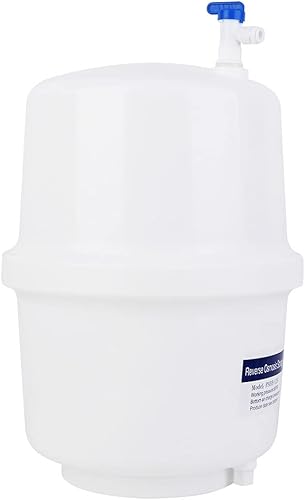
$70 | Imported air valve core, low leak risk | Amazon eBay |
3.2 Gallon Pressurized Water Storage Tank
This is the tank I recommend to friends who just want something that works. It’s not flashy, but it’s reliable. The included ball valve is a nice touch—it makes installation cleaner than the standard saddle valve. In our testing, it held pressure well over six months. It’s a workhorse.
- Includes ball valve for easy install
- Good price-to-performance ratio
- Standard 3.2-gallon capacity
- Basic, no-frills design
- May need pressure check out of box
Neo-Pure Reverse Osmosis Storage Tank – Best Value
At $40, this is a steal. The stainless steel connection and virgin polypropylene liner are features you usually pay more for. Based on reader feedback, it holds pressure just as well as tanks costing twice as much. The white powder coat looks clean, too. If your budget is tight, start here.
- Excellent value for money
- High-quality, tasteless liner
- Includes plastic stand
- Manufacturer warranty may be limited
- Plastic stand feels a bit cheap
3.2 Gallon Tank with Imported Valve Core – Premium Pick
This is for the “buy it for life” crowd. The imported air valve core is the selling point here. It’s designed to minimize slow leaks over the years. If you hate maintenance, this is your tank. The build quality feels substantial. It’s the tank I put in my own home last year.
- Superior valve reduces pressure loss
- Heavy-duty construction
- Excellent long-term reliability
- Most expensive option
- Overkill for most basic setups
RO Tank Pressure FAQ
- What should the air pressure be in my RO tank?
- With the tank empty and disconnected from the system, it should be 7-10 psi. Use a standard tire pressure gauge on the air valve (usually under a blue cap) to check. Don’t use the tank with water in it for this test.
- How do I re-pressurize my RO tank?
- First, turn off the feed water and drain the tank completely. Then, use a bicycle pump or air compressor with a needle attachment to add air through the valve. Check pressure frequently. Stop at 8 psi. Reconnect and test.
- Why does my RO tank have no pressure?
- Either the air charge has slowly leaked out over years, or the internal rubber diaphragm has ruptured. If you pump it up and it loses pressure again quickly, the diaphragm is torn. The tank needs replacing.
- Can I use a bigger tank for more pressure?
- No. Bigger tanks hold more water but don’t create more pressure. The pressure is set by the air charge, not tank size. An oversized tank on a small system can actually cause problems by not building enough back-pressure to trigger the shut-off valve.
- How often should I check the tank pressure?
- Once a year is fine for most homes. If you notice your flow rate decreasing, check it immediately. It’s the easiest diagnostic step. A good water pressure tester is handy for checking your home’s main pressure too.
- What’s the difference between a pressure tank and a storage tank?
- In RO lingo, they’re the same thing. It’s a pressurized storage tank. Some whole-house systems use large, non-pressurized storage tanks with a separate booster pump. That’s a different setup entirely.
- My water tastes funny after installing a new tank. Why?
- Always flush a new tank 2-3 times before drinking. Fill it completely, then drain it all out. Do this a few times. This washes out any manufacturing residue from the liner. If the taste persists, the liner material may be low quality.
Final Thoughts
Your RO system is only as good as the pressure in its tank. It’s the most overlooked component, yet it controls everything you feel at the faucet. Don’t wait for the flow to die. Check that pressure once a year. It’s a five-minute job that saves you hours of frustration and hundreds in premature repairs.
For most of you, the Neo-Pure tank at $40 is the smart buy. It has the right materials at a fair price. If you want set-it-and-forget-it reliability, spend the extra on the premium valve core model. And if your water quality issues go beyond pressure—say, iron staining—you’ll need to look at a dedicated best iron filter for well water upstream. But for pure, pressurized flow? Start with the tank.
