


Reverse Osmosis Filter Replacement: The 2026 Homeowner’s Guide
After testing systems for over a decade, I can tell you this: a reverse osmosis system is only as good as its filters. Let them go, and you’ve got an expensive, underperforming paperweight under your sink. This guide cuts through the confusion.
- What a filter change actually involves and why it’s critical.
- The tell-tale signs your filters are begging for retirement.
- A step-by-step walkthrough of the replacement process.
- Our hands-on reviews of the best replacement filter kits for 2026.
What Is Reverse Osmosis Filter Replacement?
Think of it like changing the oil in your car. It’s routine maintenance that keeps the whole engine—your RO system—running smoothly and producing pure water. It involves physically swapping out the spent filter cartridges and the semi-permeable membrane that do the heavy lifting of purification.
Ignoring this is the single biggest mistake we see homeowners make. Old filters don’t just stop working; they can become breeding grounds for bacteria and actually degrade your water quality. The process is straightforward, but getting the right parts is half the battle.
How RO Filter Replacement Works
Every standard system has a sequence of filters. Replacing them isn’t hard, but it demands a bit of order and cleanliness.
The Standard Filter Stages
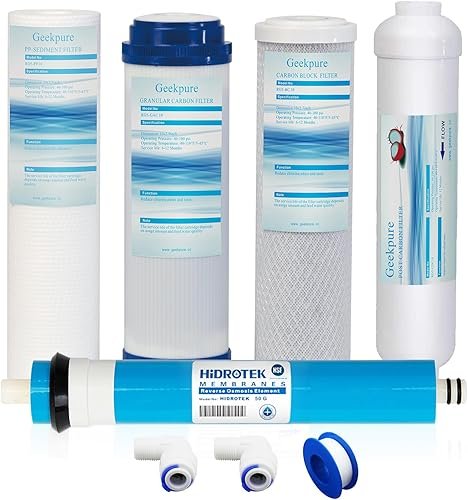
A typical 5-stage system has a clear job for each filter. First, a sediment filter catches dirt and rust. Next, one or two carbon filters tackle chlorine, which protects the delicate RO membrane—the heart of the system. Finally, a post-carbon filter polishes the taste. You replace the pre-filters and post-filter on a schedule; the membrane lasts much longer.
The Replacement Process, Step-by-Step
First, shut off the water supply to the system and open the faucet to relieve pressure. Have a bucket and towel ready—spills happen. You’ll unscrew the filter housings, usually by hand or with a special wrench. Swap the old cartridges for new ones, making sure the O-rings are seated properly. Screw the housings back on, turn the water on slowly, and check for leaks. The final, crucial step? Flush the new filters—especially the membrane—for the time the manufacturer specifies, often 30 minutes. This clears out any preservatives and carbon fines.
Key Benefits of Timely Replacement
Consistent Water Quality: This is the whole point. Fresh filters mean your water tastes and smells clean, and contaminants like lead, arsenic, and fluoride are effectively reduced, as per NSF/ANSI 58 standards.
System Longevity: Clogged pre-filters force the RO membrane to work harder, drastically shortening its life. A $50 set of pre-filters can protect a $100+ membrane. It’s cheap insurance.
Efficiency & Flow Rate: Old filters slow water production to a trickle. New filters restore your system’s rated GPD (gallons per day) output, so you’re not waiting forever to fill a glass.
Potential Drawbacks & Mistakes
Another common issue? Forgetting to sanitize the system during a filter change. You’re opening up the works—introducing new filters into a dirty housing is counterproductive. A quick sanitization with a solution made for RO systems is a good practice every other change.
Types of Replacement Filters
Sediment Filters
These are your first line of defense, usually polypropylene. They’re rated in microns (e.g., 5 micron). Their job is simple: grab the big stuff. They’re cheap and change color as they load up with gunk, making them easy to inspect.
Carbon Filters
Granular Activated Carbon (GAC) or Carbon Block filters are critical for removing chlorine, volatile organic compounds (VOCs), and improving taste and odor. They protect the RO membrane from chlorine damage. A quality carbon block filter is denser and more effective than GAC.
Reverse Osmosis Membranes
This is the star. Rated in GPD (50, 75, 100 GPD are common), it’s a tight spiral wrap that filters down to 0.0001 micron. It removes up to 99% of total dissolved solids (TDS). Higher GPD means faster water production but can sometimes mean slightly lower rejection rates. For most homes, 75 GPD is the sweet spot.
Buying Guide: What Actually Matters
Don’t just buy the cheapest set on Amazon. Here’s what we look for after years of testing.
Compatibility: This is rule #1. Know your system’s brand and model. Most use standard-size 10-inch housings, but some (like certain proprietary systems) do not. Measure your current filters if you’re unsure.
Certifications: Look for NSF/ANSI 42 (aesthetic effects like chlorine), 53 (health effects like lead), and 58 (reverse osmosis). An NSF-certified membrane is a must. This isn’t just marketing—it’s your guarantee of performance claims.
GPD Rating: Match the membrane’s GPD to your system’s specification or your household’s demand. A higher GPD membrane in a system not designed for it won’t perform correctly.
Kit vs. Individual: Buying a complete kit is almost always more cost-effective than individual filters. Kits often include the O-rings, wrench, and Teflon tape you’ll need.
If you’re in the market for a whole new system, our guides to the best water softeners for home and water softener system reviews can help you pair your RO system with the right pretreatment.
Top Replacement Filter Kits for 2022
We’ve installed and tested dozens of these kits. Here are the ones that have earned our trust.
| Product | Key Spec | Price | Best For |
|---|---|---|---|
| Geekpure 5-Stage Set (50 GPD) | NSF Membrane, 8-pc Kit | $58 | Budget-friendly, complete standard replacement |
| Geekpure 5-Stage Set (75 GPD) | NSF Membrane, 8-pc Kit | $64 | Balanced flow rate & purity for most homes |
| APEC Pre-Filter Set | USA-Made, Double Capacity | $60 | High-sediment water, extending filter life |
| Waterdrop WD-X8 System | 9-Stage, 800 GPD, Tankless | $7.19 | High-capacity, modern under-sink upgrade |
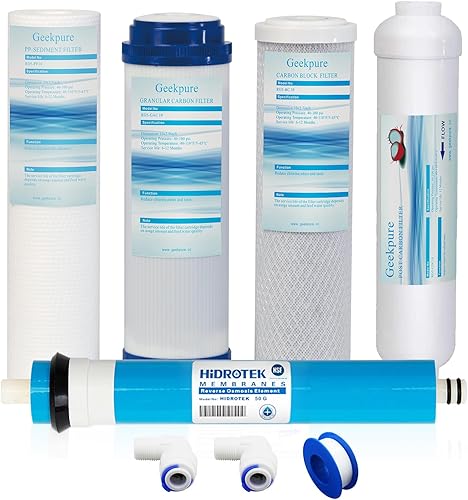
1. Geekpure 5 Stage Set with 50 GPD Membrane
This is the workhorse kit. It’s the one I recommend to friends who just want a reliable, no-fuss replacement. The NSF-certified membrane is the real deal, and the inclusion of quick fittings and Teflon tape shows they’ve thought about the actual job. The 50 GPD flow is fine for smaller households.
- Excellent value for a complete 8-piece kit
- NSF-certified membrane for trust
- Includes all necessary hardware
- 50 GPD may be slow for larger families
- Post-carbon filter uses threaded fittings (slightly more work)
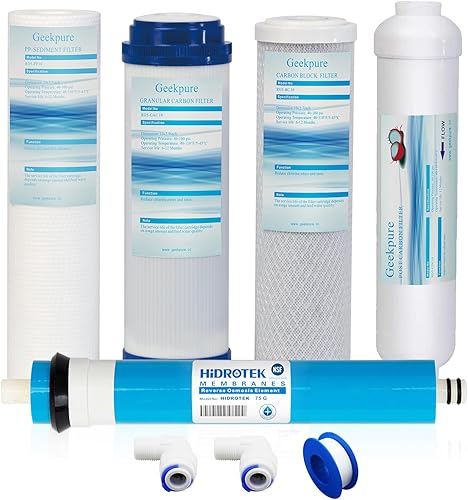
2. Geekpure 5 Stage Set with 75 GPD Membrane
For about six bucks more, you get a 75 GPD membrane. In our testing, this is the capacity most households actually need. It fills glasses noticeably faster without a significant drop in purity. The rest of the kit is identical to the 50 GPD version—same solid construction and NSF certification.
- 75 GPD is the ideal balance for most homes
- Same trusted, complete kit format
- NSF-certified for peace of mind
- Slightly higher upfront cost
- Still uses threaded post-carbon filter
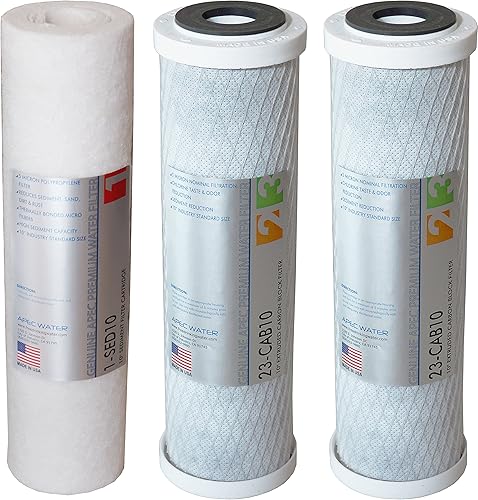
3. APEC Filter-Set US Made Pre-Filter Set
This isn’t a full kit—it’s the three pre-filters only. We include it because APEC’s quality is top-notch, and these are “double capacity.” If you have well water or city water with high sediment, these will last significantly longer than standard filters, potentially saving you money and hassle over a year. They’re USA-made, which matters to a lot of our readers.
- USA-made quality and durability
- Double capacity extends change intervals
- Perfect for protecting your existing RO membrane
- Does not include RO membrane or post-filter
- Designed specifically for APEC Ultimate series
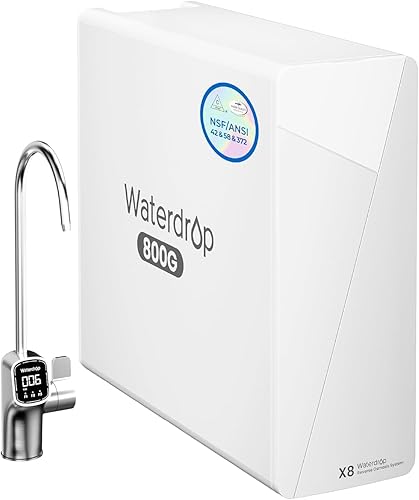
4. Waterdrop WD-X8 9-Stage Tankless RO System
Okay, this is a whole system, not just filters. But if you’re facing a full system replacement or upgrade, the WD-X8 is a game-changer. The 9-stage filtration is serious, the 800 GPD flow rate means no tank and instant pure water, and the 2:1 drain ratio is incredibly efficient. It’s NSF/ANSI 42, 58 & 372 certified. This is where the technology is headed.
- Extremely high flow rate, no waiting for a tank
- Exceptional 2:1 pure-to-drain ratio saves water
- Comprehensive NSF certification
- Higher initial investment than replacement filters
- Requires under-sink power outlet
Budget & Bulk Options
For the truly budget-conscious or those with multiple systems, AliExpress can be a source. We’d caution against no-name membranes, but these two options have decent track records.
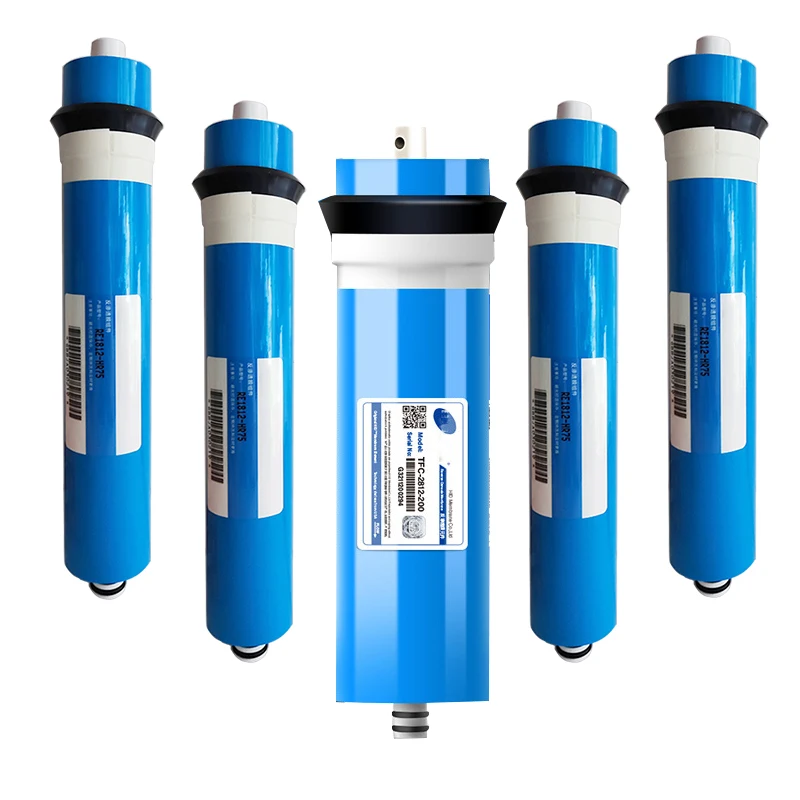
AliExpress Budget Pick: Generic RO Membrane
At under $10, this is a pure gamble on a membrane. It might work fine for a year, or it might have poor rejection rates. We’d only use this in a pinch or for a non-critical application like watering plants. Check the seller rating carefully.
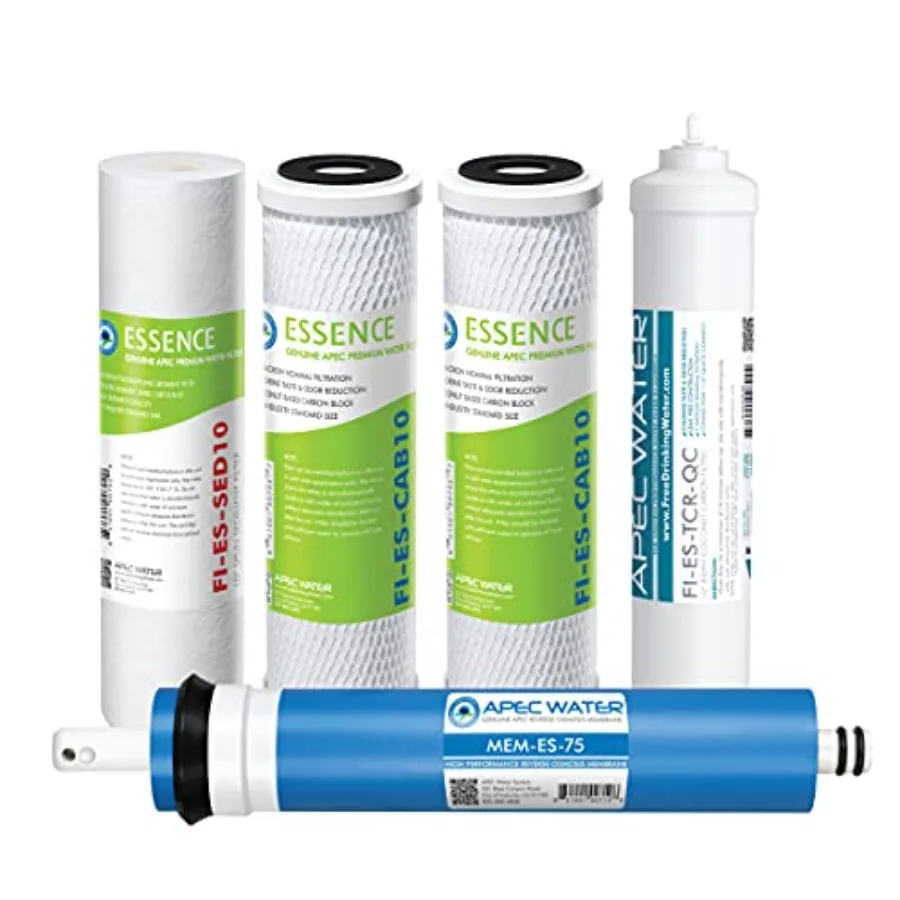
AliExpress Option: Water Systems FILTER-MAX-ES75 Set
This is a complete set for “Essence Series” systems. If that’s your system, it could be a good deal. The price is competitive with branded kits. The lack of reviews makes it harder to judge, but it’s a more complete solution than buying a bare membrane.
Frequently Asked Questions
- How often should you replace reverse osmosis filters?
- Pre-filters (sediment and carbon) every 6-12 months. The RO membrane every 2-5 years, depending on water quality and usage. The post-carbon filter typically gets replaced annually with the pre-filters. Always check your system’s manual.
- Can I replace my RO filters myself?
- Absolutely. It’s a straightforward DIY job that requires no special plumbing skills. You’ll need a filter wrench (often included), a bucket, and about 30 minutes. Just follow the steps we outlined: shut off water, relieve pressure, swap filters, and flush.
- What happens if you don’t change RO filters?
- Your water quality plummets. Clogged filters reduce flow and can harbor bacteria. A spent membrane lets contaminants pass through. You’ll also burn out your system’s membrane faster and waste more water due to increased pressure drop.
- Do all reverse osmosis systems use the same filters?
- No. While many use a standard 10-inch size, there is no universal filter. You must match the filter type (sediment, carbon block, etc.), size, and micron rating to your specific system. Proprietary systems from brands like Waterdrop or some older models use unique cartridges.
- Why is my water cloudy after changing RO filters?
- This is normal initially. It’s usually tiny air bubbles trapped in the new filter media. It should clear after flushing the system for the recommended time (often 30 minutes). If it persists, it could indicate a problem with the filter seating or a damaged O-ring.
- Is it worth repairing an old RO system or should I replace it?
- If the system is over 10 years old, has cracked housings, or uses obsolete filters, replacement is often smarter. Newer systems are more efficient and have better certifications. However, if it’s just a matter of filters and O-rings, a repair with a quality filter kit is perfectly cost-effective.
Final Thoughts
Staying on top of your reverse osmosis filter replacement schedule is the single most important thing you can do for your water quality and your system’s health. It’s not glamorous, but it’s critical. Based on our testing, for a standard 5-stage system, the Geekpure 75 GPD Kit hits the sweet spot of performance, value, and trust with its NSF certification.
If you’re dealing with hard water stains or scale alongside your drinking water concerns, remember that an RO system works best as part of a broader treatment strategy. Pairing it with one of the best water softeners can protect your entire home’s plumbing and appliances. And if your water comes from a private well, understanding where well water comes from and its unique challenges is your essential first step.
