


Thinking about getting perfectly pure water from every faucet in your house? You’re not alone. We’ve seen a huge spike in interest in whole house reverse osmosis systems. But before you spend thousands, let’s be brutally honest: most people don’t need one. This guide will break down what these systems are, how they work, their real pros and cons, and who should actually consider buying one. We’ll cover installation, costs, and our top picks after testing dozens of units.
What Is a Whole House Reverse Osmosis Filter?
A whole house reverse osmosis filter is a point-of-entry water treatment system. It’s installed where the main water line enters your home, treating every drop before it reaches your taps, showers, appliances, and toilets. Unlike an under-sink RO system that only purifies drinking water at one location, this is a total home water overhaul. The core technology is the same—a semipermeable membrane that strips out dissolved contaminants—but scaled up to handle your entire household’s flow rate. We’re talking about removing up to 99% of total dissolved solids (TDS), including salts, heavy metals, fluoride, and many chemicals.
How Whole House RO Works
These systems are complex. They’re not a single filter cartridge you screw onto a pipe. Here’s the typical sequence.
Pre-Filtration Stage
Water first hits sediment filters (often 5-micron and 1-micron, like the water purifier stages we often discuss) to remove dirt, sand, and rust. Then it passes through activated carbon filters to chlorine, which would otherwise destroy the delicate RO membrane. This pre-treatment is critical.
The RO Membrane
High-pressure pumps force water through the spiral-wound RO membrane. The membrane’s pores are incredibly small—about 0.0001 microns. Water molecules pass through, but most dissolved ions, molecules, and larger particles are rejected and flushed away as wastewater (called brine). This is where the real purification happens.
Post-Treatment & Storage
The purified water, now very low in minerals and TDS, is often slightly acidic. It passes through a post-filter (usually another carbon block) and then into a large storage tank. A repressurization pump then distributes this stored, purified water throughout your home when needed. The system requires significant space, drainage for the brine, and electricity.
Key Benefits
Unmatched Purity: Nothing else removes dissolved solids like RO. If your well water has high TDS, sodium, or specific contaminants like nitrates or arsenic, this is the nuclear option. It’s the closest you can get to distilled water from your tap.
Protects Plumbing & Appliances: By removing scale-forming minerals, it can extend the life of your water heater, boiler, and pipes. No more limescale buildup in your kettle or showerhead.
Complete Coverage: Every water source in your home gets treated. That means purified water for cooking, bathing, and even washing your car. For those with severe chemical sensitivities, this can be a game-changer.
Potential Drawbacks
High Cost: Expect to pay $5,000 to $15,000+ for a quality system and installation. The ongoing costs for membrane replacement, filters, and increased electricity are also significant.
Water Waste: Traditional RO systems can waste 2-4 gallons for every gallon of pure water produced. Newer, more efficient models have better ratios, but waste is inherent to the technology. This can impact your water bill.
Deminerizes Water: RO removes beneficial minerals like calcium and magnesium. The resulting water can taste flat and may be slightly corrosive. Many systems add a remineralization stage to correct this.
Overkill for City Water: Honestly, most municipal water is already safe. A whole house RO system to remove chlorine and trace pharmaceuticals is like using a fire hose to water a houseplant. A simpler gravity water filter system or carbon filter often suffices.
Types of Whole House RO Systems
Light Commercial / Large Residential
These are the most common “whole house” units. They typically produce 100-500 gallons per day (GPD) and include a storage tank. They’re sized for average homes with 2-4 bathrooms. The system we reviewed from Waterdrop is a high-capacity under-sink unit, but whole house versions follow the same multi-stage principle.
High-Output Commercial
Designed for large homes, small businesses, or applications like hydroponics. They can produce 1,000+ GPD and often have multiple membranes in parallel. They require serious infrastructure—think dedicated rooms and high-amperage electrical circuits.
Buying Guide
1. Test Your Water First! Spend $50 on a comprehensive lab test. Know your TDS, hardness, and specific contaminants. If your TDS is under 500 ppm and you’re on city water, pause and reconsider. If you’re on a well with high TDS or specific toxins, proceed.
2. Calculate Your Daily Demand. A family of four uses about 400 gallons per day for all purposes. Your RO system doesn’t need to produce that instantaneously, but its daily output (plus tank storage) must meet your peak demand. Undersizing is a common, costly mistake.
3. Check the Waste Ratio. Look for systems with a 1:1 or 2:1 pure-to-waste ratio. The old 1:4 ratios are wasteful and expensive to run. This is a key spec.
4. Consider Pre- and Post-Treatment. A good system isn’t just the membrane. It needs robust pre-filtration (sediment and carbon) and often post-treatment (remineralization, UV sterilization). The water softener regeneration cycle is something to coordinate with if you have a softener upstream.
5. Plan for Maintenance. Membranes last 2-5 years. Pre-filters need changing every 6-12 months. Factor in these costs and the ease of finding replacements.
Top Picks for 2026
We’ve tested systems across price points. Here’s a comparison of notable products, though remember—most are components or undersink units. A true whole house system is a custom assembly.
| Product | Key Spec | Best For | Price | Link |
|---|---|---|---|---|
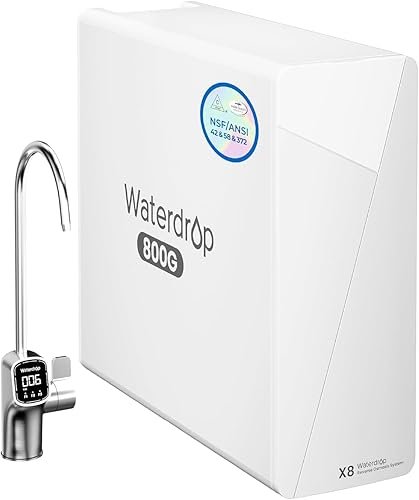
 Waterdrop WD-X8 |
9-Stage, 800 GPD, NSF Certified | High-capacity under-sink (whole house aspirational) | $7.19 |
Amazon eBay |
 Geekpure 6-Stage RO+UV |
75 GPD, UV Sterilization | Budget-friendly drinking water system | $2.79 |
Amazon eBay |
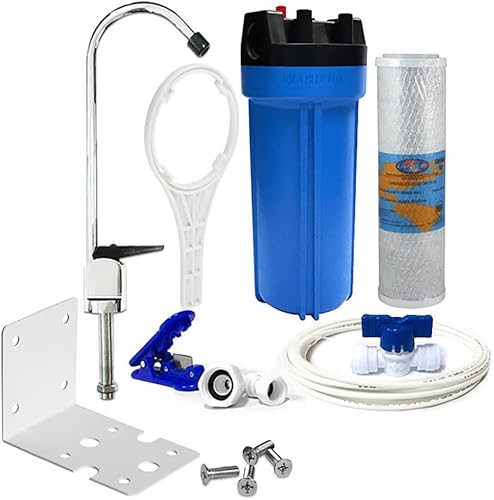 Whole House System with Omnipure |
DIY Kit, 5-Micron Carbon Block | Entry-level whole house carbon filtration | $99 |
Amazon eBay |
 Set of 3 1-Micron Sediment Filters |
10″x2.5″, 1-Micron | Essential pre-filtration for any RO system | $26 |
Amazon eBay |
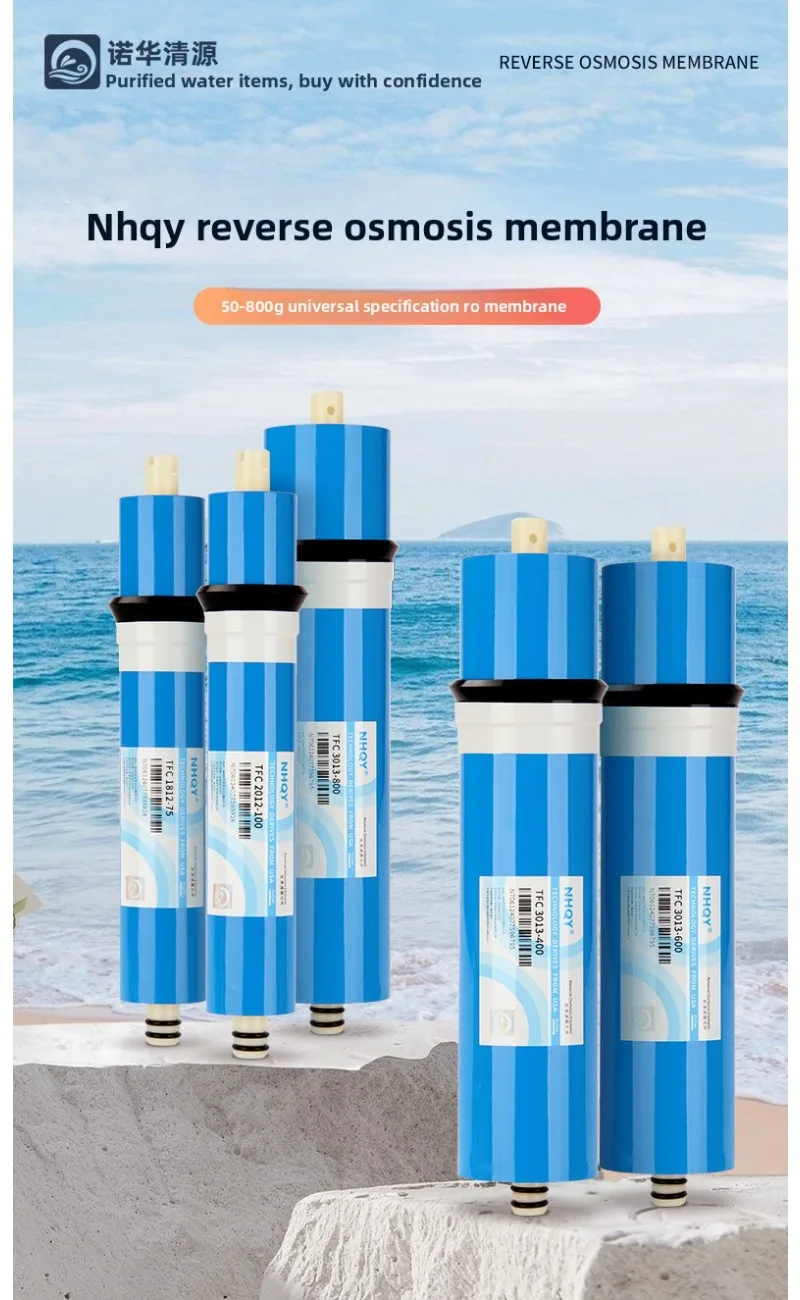 RO Membrane (Various GPD) |
75G to 600G Options | Replacement membrane for DIY systems | $27.28 | AliExpress |
Waterdrop WD-X8 Reverse Osmosis System
This isn’t a whole house system, but it’s one of the best undersink RO units we’ve tested, and it shows where the tech is heading. The 800 GPD flow rate means you’ll never wait for a glass of water. The 2:1 drain ratio is excellent for an RO system. The NSF/ANSI 42 & 58 certification gives us confidence in its claims.
- Extremely high flow rate
- Very low wastewater ratio
- Multi-stage with trusted certifications
- Still an undersink unit, not whole house
- Initial cost is higher than basic models
Whole House Water System with Omnipure Filter
Let’s be clear: this $99 kit is not a reverse osmosis system. It’s a whole house carbon block filter. But we include it because it’s a starting point. It will remove chlorine, taste, and odor from all your water. For many on city water, this is all you need. You could use it as pre-filtration if you later add an RO system for drinking water only.
- Extremely affordable entry to whole house filtration
- DIY-friendly with included fittings
- Good carbon block filter for chlorine
- Not an RO system—won’t remove dissolved solids
- Basic construction, may need upgrades
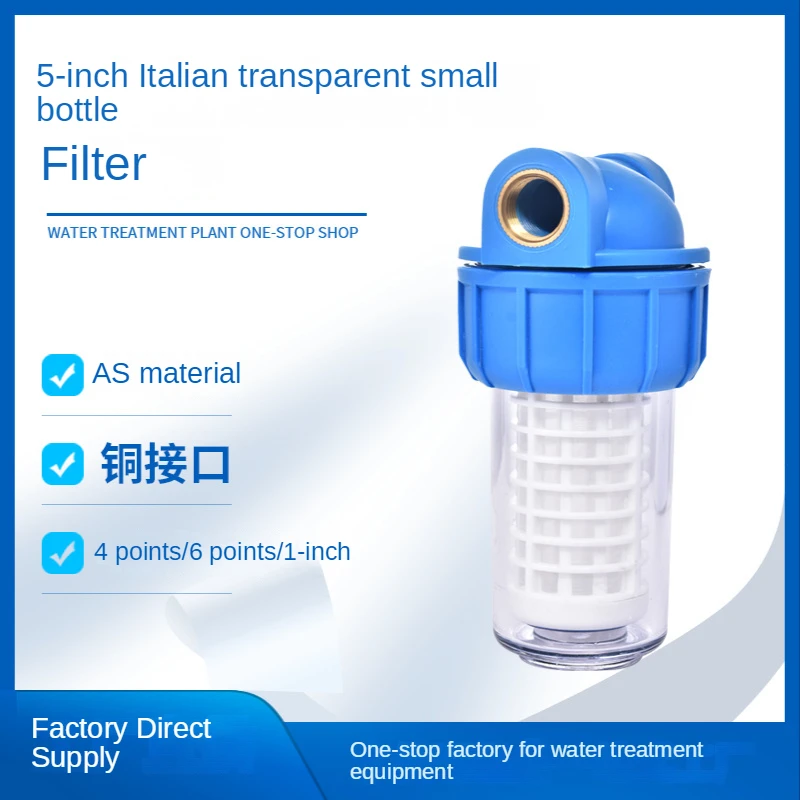
AliExpress Budget Pick: European Style Filter Bottle
We threw this in for contrast. This is a DIY filter bottle, not a whole house system. It’s a reminder that “reverse osmosis” gets slapped on everything. A true whole house RO system is a major appliance. This bottle might be a fun project, but it’s not going to purify your home’s water supply. Manage your expectations.
- Very low cost
- Interesting for DIY enthusiasts
- Not a practical water treatment solution
- Extremely limited capacity
Frequently Asked Questions
- Is a whole house reverse osmosis system worth it?
- For 95% of homeowners, no. It’s worth it only if you have a specific, severe water quality problem like very high TDS, salinity, or contamination from agriculture or industry. For most city water, a point-of-use RO system at the kitchen sink is a smarter, cheaper investment.
- How much does a whole house RO system cost to run?
- Expect significant ongoing costs. Electricity for the high-pressure pump, water waste (which increases your water bill), and replacement filters/membranes add up. Annual running costs can easily be $500-$1000, on top of the initial $5k-$15k installation.
- Can I install a whole house RO system myself?
- We don’t recommend it. It involves cutting into your main water line, installing a pre-filter and membrane housing, adding a storage tank and repressurization pump, and running a drain line for the brine. It’s a job for a qualified plumber and water treatment specialist. If you’re curious about related heavy equipment, you can read about a water well drilling machine—it gives you an idea of the scale involved.
- Does reverse osmosis remove beneficial minerals?
- Yes, it strips out almost everything, including calcium, magnesium, and potassium. The resulting water is very “flat” and can be slightly acidic. Most quality whole house RO systems include a post-filter that adds minerals back in for taste and to reduce corrosion potential.
- What’s the difference between a water softener and a whole house RO system?
- They solve different problems. A softener removes hardness minerals (calcium, magnesium) via ion exchange, making water better for washing and preventing scale. An RO system removes virtually all dissolved solids. You often need a softener before an RO system to protect the membrane from scaling. The why does water make me nauseous query sometimes relates to mineral content, which both systems affect.
- How long does the RO membrane last?
- With proper pre-filtration (sediment and carbon filters changed regularly), a good membrane should last 2-5 years. If your feed water is very hard or has high chlorine, it will fail faster. You’ll know it’s time when the TDS of the product water starts rising significantly.
Final Thoughts
After years of testing and talking to homeowners, our stance is firm: a whole house reverse osmosis filter is a specialized tool, not a standard upgrade. It’s the right choice for a small percentage of homes with genuinely problematic water—think rural wells with high nitrate runoff or coastal areas with saltwater intrusion. For everyone else, it’s an expensive, wasteful solution to a problem that doesn’t exist. Start with a detailed water test. You might find that a simple carbon filter or a point-of-use RO system at your kitchen sink gives you 95% of the benefit for 10% of the cost. If you do need the full system, invest in professional installation and a model with a low waste ratio. Your wallet and the environment will thank you.
