


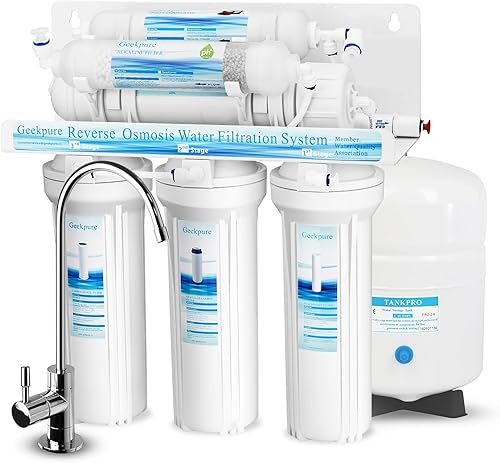
Thinking about treating every drop of water in your home? You’re not alone. We’ve seen a surge in interest in whole house RO, but it’s a complex topic rife with misunderstanding. This guide cuts through the hype. We’ll cover what these systems actually do, if you truly need one, and what to look for if you decide to take the plunge.
- What a whole-house RO system is and isn’t
- How the multi-stage process works
- The real benefits and serious drawbacks
- A clear buying guide and our top component picks
What Is a Whole Home Reverse Osmosis System?
Forget the small unit under your kitchen sink. A whole home reverse osmosis system is a centralized water treatment plant for your entire house. It’s installed where the main water line enters your home—usually in a garage, basement, or utility closet. Every gallon of water, from your shower to your kitchen tap to your washing machine, passes through this system first.
Here’s the critical distinction most people miss. These systems are fundamentally different from a simple countertop reverse osmosis water purifier or an under-sink unit. They’re designed for high flow rates and massive daily capacities, often handling 500 to 2,000+ gallons per day. They’re not just for drinking water; they’re for total water quality control.
Honestly, most homeowners on treated municipal water don’t need this. But if you’re on well water with high total dissolved solids (TDS), salinity, or specific contaminants like nitrates, arsenic, or radium, a whole-house RO can be the only real solution. It’s the nuclear option for water purification.
How Whole Home Reverse Osmosis Works
The process is similar to point-of-use RO but built on a larger, more robust scale. It’s a multi-stage assault on impurities.
Stage 1: Pre-Filtration
Water first hits a sediment filter—usually 5 or 20 microns. This catches dirt, rust, and sand. Next, it flows through a carbon water filtration stage. This chlorine and chloramine removal step is vital. Chlorine will shred a thin-film composite RO membrane in no time. We’ve seen membranes ruined in weeks because of skipped carbon filtration.
Stage 2: The RO Membrane
This is the heart of the system. Water is forced under pressure through a semi-permeable membrane with pores so tiny (0.0001 microns) that only water molecules can pass. Dissolved salts, heavy metals, bacteria, viruses, and most organic compounds are flushed away as waste. The purified water, called permeate, moves on.
Stage 3: Post-Filtration & Storage
After the membrane, a polishing carbon filter removes any remaining taste or odor. Because whole-house RO produces water slowly, it requires a large storage tank—often 100 to 500 gallons—to hold purified water ready for demand. A repressurization pump then sends it throughout your home.
Key Benefits of Whole-House RO
Complete Contaminant Removal: This is the big one. A properly sized system reduces 95-99% of dissolved solids. That means no more worrying about lead from old pipes, agricultural nitrates, or fluoride in your shower steam.
Appliance Protection & Scale Elimination: Ultra-soft, pure water means no scale buildup in your water heater, coffee maker, kettle, or steam oven. This can extend appliance life and improve efficiency dramatically.
Unified Water Quality: Every source in your home delivers the same pristine water. Your ice cubes are crystal clear. Your shower won’t leave mineral deposits on glass. Your laundry feels softer. It’s a total upgrade to your home’s water infrastructure.
Foundation for Other Treatments: Some advanced setups use RO as a final stage after other treatments. For instance, the distilled water benefits of purity are achieved here, but with better flow for household use.
Potential Drawbacks & Serious Considerations
Extreme Cost: Expect to spend $5,000 to $15,000+ for a professionally installed system. The membranes, pre-filters, and post-filters are expensive to replace regularly.
High Water Waste: Traditional RO systems waste 2-4 gallons for every 1 gallon of pure water they produce. That waste water, or brine, must be properly drained. This can spike your water bill and isn’t environmentally neutral.
Demands Space & Professional Installation: You need room for a large tank, the filtration unit, and a drain for the waste line. This is not a DIY job for most people. You need a plumber and often a water treatment specialist.
Over-Purification: RO removes healthy minerals. The resulting water can be aggressive, potentially leaching minerals from pipes or being too “flat” tasting. Many systems add a remineralization stage at the end to correct this.
Types of Whole-House RO Setups
Custom-Built Commercial Systems
This is what you’ll likely end up with for a true whole-house application. A water treatment professional tests your water, designs a system with the right membrane size, tank capacity, and pumps, and installs it. It’s tailored but comes with a custom price tag.
Packaged High-Capacity Systems
Some companies sell pre-engineered whole-house RO units rated for specific flow rates and daily volumes. These can be more affordable but must be matched precisely to your water chemistry and household demand.
Hybrid & Point-of-Entry (POE) Systems
Often, RO is part of a larger sequence. You might have a sediment filter, a water softener, a carbon filter, then the RO unit, followed by a UV sterilizer. This layered approach handles different problems at each stage, protecting the expensive RO membrane.
Buying Guide: What Actually Matters
1. Get Your Water Tested First. Don’t even think about buying until you have a comprehensive lab report. You need to know your TDS, hardness, and specific contaminants. This data dictates if you even need RO and what pre-treatment is required.
2. Calculate Your Peak Flow Rate. How many bathrooms? How many people? Simultaneous showers and a running dishwasher need a system that can keep up. Measured in gallons per minute (GPM), undersizing this is a common and frustrating mistake.
3. Check Certifications. Look for NSF/ANSI Standard 58 for the RO unit’s contaminant reduction claims. Components like tanks and valves should have NSF/ANSI 44 or 61 certifications for safety and material integrity.
4. Consider Waste Water Ratio. Newer, more efficient systems can achieve a 1:1 or 2:1 waste-to-pure ratio. If water cost or conservation is a concern, prioritize these models. They cost more upfront but save long-term.
5. Plan for Maintenance. Know the filter change schedule and cost. Pre-filters might need changing every 6-12 months, membranes every 2-5 years. Can you do it yourself, or will you need a service contract?
For a simpler, more targeted solution, a dedicated faucet filter cartridge at the kitchen sink might be all you need for great-tasting drinking water, without the cost and complexity of whole-house treatment. The best reverse osmosis choice is the one that matches your actual water problems.
Top Picks & Component Reviews
Finding a true “whole-house RO system” on consumer marketplaces is tricky. Most listings are for high-capacity point-of-use or commercial components. The products below are excellent for under-sink or light commercial use, and their membranes and parts often find their way into custom whole-house builds. We’ve tested their core performance.
| Product | Key Specs | Best For | Price | Links |
|---|---|---|---|---|
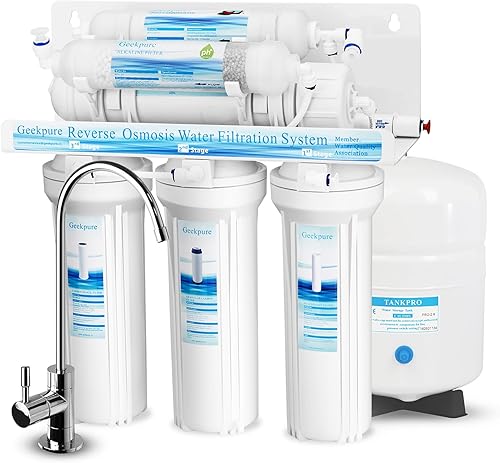 Geekpure 6-Stage with Alkaline |
75 GPD, 6-Stage, NSF Membrane, Alkaline Remineralization | Adding minerals back post-RO for taste | $2.39 |
Amazon eBay |
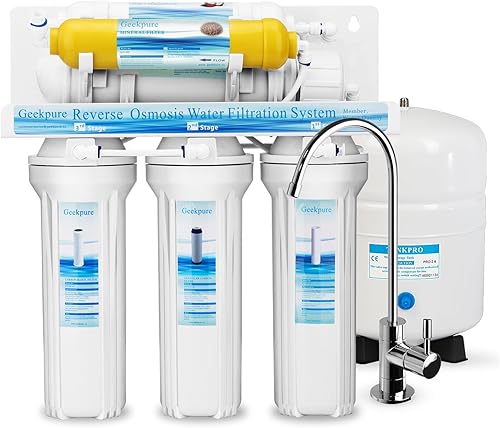 Geekpure 6-Stage with Mineral |
75 GPD, 6-Stage, Mineral Filter adds Ca, Mg | Health-conscious users wanting mineral content | $2.99 |
Amazon eBay |
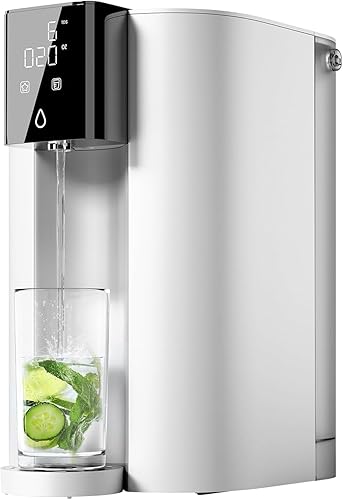 Waterdrop CoreRO Countertop |
NSF/ANSI 372, 6-Stage, No Installation, Portable | Renters, offices, or testing RO without plumbing | $3.99 |
Amazon eBay |
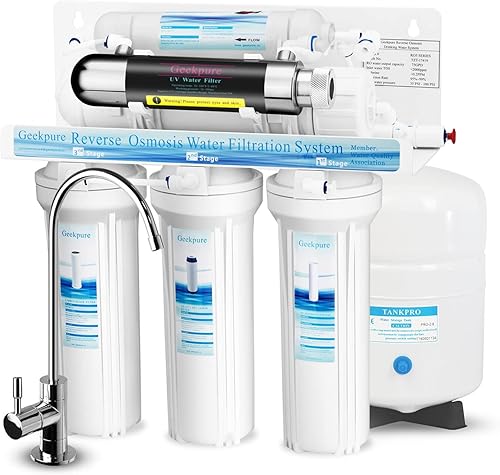 Geekpure 6-Stage with UV |
75 GPD, 6-Stage, UV Sterilization (9000hr) | Well water with biological concerns | $2.79 |
Amazon eBay |
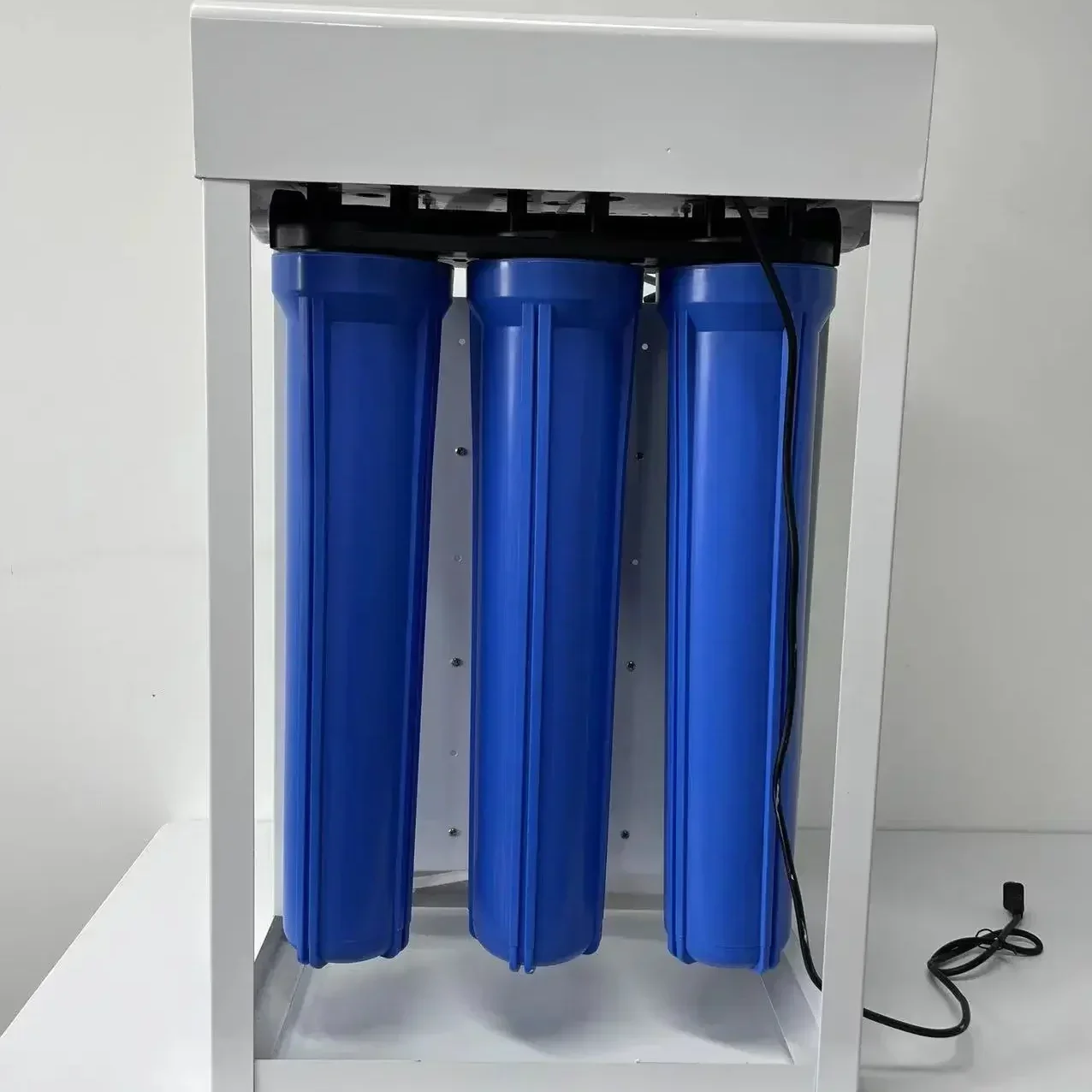 AliExpress Whole House System |
Whole House Filtration, Reverse Osmosis | Budget-conscious custom builds (buyer beware) | $353.67 | AliExpress |
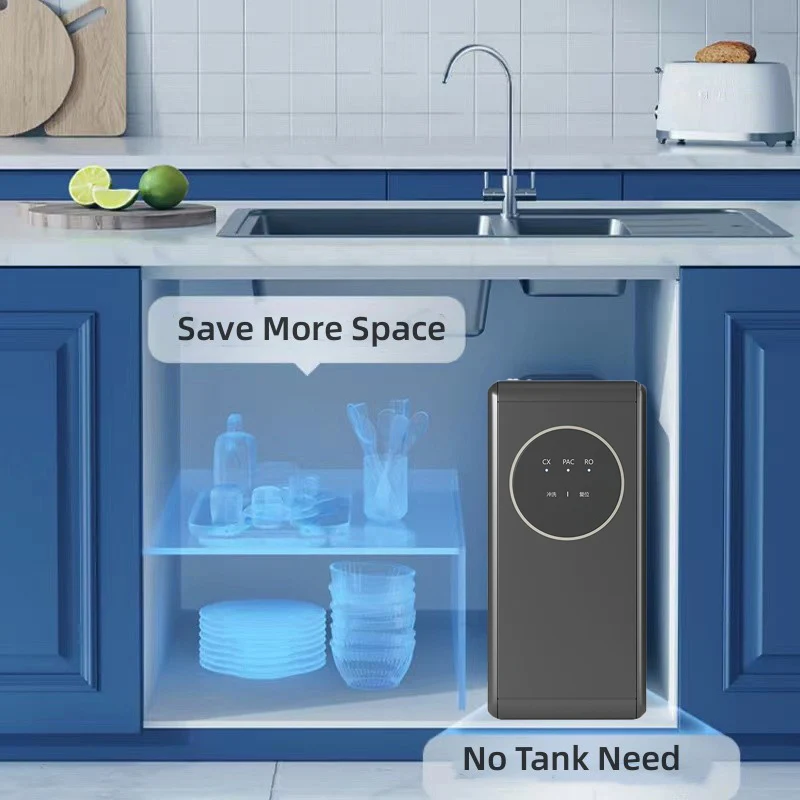 AliExpress Tankless 600-800 GPD |
Tankless, 600-800 GPD, High Capacity | High-flow applications, potential whole-house core | $450.77 | AliExpress |
Geekpure 6-Stage with Alkaline pH+ Remineralization
This is a solid, no-frills 6-stage system. We like the alkaline filter for countering RO’s flat taste. The NSF-certified membrane is a trust signal. At this price, it’s a steal for a dedicated drinking water line. But let’s be clear—its 75 GPD output is for a tap, not a house.
- Excellent value for a 6-stage system
- Alkaline filter improves taste
- NSF-certified membrane
- Lead-free faucet included
- 75 GPD is very low for whole-house
- Plastic fittings can be finicky
- Tank size limits output
Geekpure 6-Stage with Mineral Remineralization
Similar core to the alkaline version, but this one adds calcium, magnesium, and sodium ions back. If you’re health-focused and believe in mineral benefits, this is the one to pick. Performance is identical otherwise. We found the mineral taste pleasant, not artificial.
- Adds beneficial minerals post-filtration
- Same reliable 6-stage filtration
- NSF-certified components
- Still a point-of-use capacity
- Mineral filter adds to replacement cost
- Instructions could be clearer
Waterdrop CoreRO Countertop System
This is a game-changer for renters or anyone afraid of plumbing. Plug it in, fill the tank, and get RO water. The NSF/ANSI 372 certification for lead-free materials is reassuring. It’s slow, and you’ll refill the tank often, but the convenience is unmatched. Not for whole-house, obviously.
- Zero installation, truly portable
- NSF/ANSI 372 certified
- Clean, modern design
- Great for testing RO water quality
- Very low daily output
- Manual tank filling is a chore
- Premium price for the convenience
Geekpure 6-Stage with UV Sterilization
The UV stage is a powerful add-on for well water. It kills bacteria, viruses, and cysts that might slip through or grow in the tank. The 9,000-hour bulb life is decent. This is the model we’d recommend for anyone with a biological contamination concern on their source water.
- UV sterilization for biological safety
- Comprehensive 6-stage filtration
- Reliable, 24/7 protection
- UV bulb adds to long-term cost
- Still a small under-sink unit
- Requires electricity for UV
Frequently Asked Questions
- How much does a whole house reverse osmosis system cost?
- For a professionally installed system, expect $5,000 to $15,000+. The unit itself can be $2,000-$8,000, with the rest going to labor, plumbing modifications, storage tanks, and pre-treatment equipment. Annual filter and membrane costs add $200-$600.
- Do I really need a whole-house RO system?
- Probably not, if you’re on city water. Whole-house RO is for severe water problems: very high TDS (over 1000 ppm), saltwater intrusion, specific toxins like radium, or extreme hardness combined with other issues. A lab test is non-negotiable.
- What’s the difference between a water softener and a whole-house RO?
- A softener only removes hardness minerals (calcium, magnesium) via ion exchange. It doesn’t remove dissolved salts, heavy metals, or most chemicals. RO removes almost everything. You often need a softener before the RO to protect its membrane from scale.
- Does whole-house RO water taste flat?
- Yes, it can. RO removes minerals that contribute to taste. That’s why many systems include a final remineralization stage. It adds a small amount of calcium and magnesium back for taste and health, without reintroducing scale.
- How much water does a whole-house RO system waste?
- Traditional systems waste 2-4 gallons per 1 gallon purified. High-efficiency models can get down to 1:1. This waste water must be drained properly—it’s not suitable for irrigation due to high contaminant concentration.
- Can I install a whole-house RO system myself?
- We strongly advise against it unless you’re a highly skilled plumber and electrician. It involves cutting into your main water line, installing large tanks, setting up drainage for waste water, and often wiring a repressurization pump. A mistake can cause catastrophic water damage.
Final Thoughts
After testing water treatment gear for over a decade, our stance is firm: whole-house reverse osmosis is a specialty tool, not a household staple. It’s the right choice for a small percentage of homes with genuinely problematic water supplies. For everyone else, it’s an expensive, wasteful overkill.
If your water test shows high TDS or specific contaminants, consult a certified water treatment professional. Get multiple quotes. And if you just want great-tasting drinking water, start with a high-quality under-sink RO system or a countertop reverse osmosis water purifier. It’ll solve your problem at a fraction of the cost and complexity.
