


Thinking about a reverse osmosis system for your entire home? You’re not alone. We’ve seen a huge jump in readers asking about whole-house RO. But it’s a big decision. This guide cuts through the hype. We’ll explain what these systems actually do, who really needs one, and what to look for—so you don’t waste thousands on overkill.
- What a whole-house RO system is and how it differs from a simple under-sink unit.
- The step-by-step filtration process and key components.
- Honest benefits and the serious drawbacks most sales pages won’t mention.
- A practical buying guide and our top picks for different needs.
What Is a Reverse Osmosis Full House System?
Let’s clear up a common point of confusion right away. When people say “reverse osmosis full house system,” they’re usually talking about a large, centralized RO unit installed where water enters your home. It treats every drop—from the shower to the kitchen sink to the washing machine. This is fundamentally different from a small under counter filter water system, which only serves one tap.
These are not simple filters. They’re pressurized, multi-stage treatment plants for your house. They require pre-filters, a powerful pump, the RO membrane itself, and often post-treatment. Honestly, most homeowners don’t need this level of filtration. But if you have high total dissolved solids (TDS), specific contaminants like nitrates or PFAS, or simply demand the purest water possible everywhere, it’s the ultimate solution.
How a Whole-House RO System Works
Think of it as a multi-stage defense. Water doesn’t just pass through one filter; it goes through a rigorous cleaning process. Here’s the typical journey your water takes.
Stage 1: Pre-Filtration
First, water hits a sediment water filter. This catches dirt, sand, and rust. Next, a carbon filter removes chlorine and organic chemicals that would otherwise destroy the delicate RO membrane. This step is non-negotiable. Skip it, and you’ll be replacing a very expensive membrane every few months.
Stage 2: The RO Membrane
Here’s where the magic happens. High pressure forces water through a semi-permeable membrane with pores so tiny (about 0.0001 microns) that only water molecules can pass. Up to 99% of dissolved salts, bacteria, viruses, and contaminants are rejected and flushed away as wastewater. This is the core of the system.
Stage 3: Post-Treatment & Storage
The water coming off the membrane is so pure it’s almost acidic and flat. It’s usually sent to a large storage tank. From there, it often passes through a final carbon filter for polish and may go through a remineralization stage to add back healthy minerals for taste and to protect your home’s plumbing. A repressurization pump then sends it to your taps.
Key Benefits of Whole-House RO
Unmatched Purity: This is the biggest one. You get near-zero TDS water at every outlet. Showering, cooking, and drinking all use the same ultra-pure water. For people with compromised immune systems or severe sensitivities, this peace of mind is priceless.
Protects Your Entire Home: Pure water doesn’t leave mineral scale on your fixtures, shower doors, or inside your water-using appliances. This can extend the life of your water heater, dishwasher, and coffee maker. It’s a preventative investment.
Solves Tough Problems: If your well water has high nitrates, radium, or sodium, or if you’re on a boil-water notice frequently, a whole-house RO is one of the few guaranteed solutions. It’s more comprehensive than a simple water well filter system that might only tackle sediment or bacteria.
Potential Drawbacks & Serious Considerations
High Cost: Systems start around $3,000 and can easily exceed $10,000. Then there’s the cost of replacement membranes ($200-$600 each) and filters, plus the increased water and electricity usage.
Wastewater: As mentioned, the reject water is a real issue. In areas with water restrictions or high costs, this can be a deal-breaker. You need a drainage solution that doesn’t flood your basement.
Over-Purification: Truly pure water is aggressive. It can leach minerals from your pipes (like copper) over time. This is why a remineralization stage is critical for the health of your plumbing system.
Types of Whole-House Water Treatment
Before jumping to RO, consider if a less extreme system would work. Your choice depends entirely on your water report.
Whole-House Carbon Filters
Great for removing chlorine, odors, and volatile organic compounds (VOCs) from city water. They won’t touch dissolved solids like hardness or salts. Often used as a pre-filter or for general improvement.
Water Softeners
Specifically target hardness minerals (calcium and magnesium) via ion exchange. They solve scale problems but don’t make water “pure” for drinking. Sometimes used in conjunction with RO.
Whole-House RO Systems
The heavy artillery. For comprehensive contaminant removal, including dissolved solids. Often paired with a softener and carbon filter as part of a multi-stage treatment train.
Your choice might also be influenced by other point-of-use needs. For example, you might have a dedicated in line water filter on your fridge ice maker, even with a whole-house system. The goal is a layered approach to water quality.
Buying Guide: What Actually Matters
Don’t get sold on fancy marketing. Focus on these concrete specs.
1. Contaminant Rejection: Look for certified performance data. What percentage of specific contaminants (like lead, arsenic, TDS) does it remove? NSF/ANSI standards 58 (for RO) and 42/53 are key certifications to look for.
2. Production Rate (GPD): Gallons per day. A whole-house system needs a high output—typically 400-1000+ GPD—to keep up with household demand without relying solely on the storage tank. Calculate your peak usage.
3. Pre-Treatment & Post-Treatment: What filters come before and after the membrane? A good system will have at least a sediment filter, carbon block, and a post-carbon filter. Remineralization is a big plus.
4. Wastewater Ratio: Look for systems with a better efficiency ratio, like 1:1. Some have permeate pumps to reduce waste. Know what you’re getting into.
5. Support & Warranty: This is a complex appliance. You want a company with real tech support and a solid warranty (at least 5 years on the membrane, 1-2 years on parts). Read reviews about long-term reliability.
Also, think about integration. Will this system work with your existing setup, perhaps a point of use treatment unit at a specific sink? Or are you replacing everything? Planning is 90% of the job.
Top Picks & Product Reviews
We’ve tested and researched countless systems. The products below are excellent examples of RO technology, though it’s crucial to note they are primarily designed for countertop or under-sink use. A true whole-house system is a much larger, custom-engineered installation. These units, however, represent the core RO technology you’d find scaled up in a whole-house setup.
| Product | Key Feature | Best For | Price | Link |
|---|---|---|---|---|
 Waterdrop CoreRO |
6-stage, countertop, no install | Renters, offices, testing RO water | $3.99 |
Amazon eBay |
 Geekpure 6-Stage Alkaline |
75 GPD, alkaline remineralization | Homeowners wanting mineral-rich RO | $2.39 |
Amazon eBay |
 Geekpure 6-Stage Mineral |
6-stage, adds minerals back | Those concerned about pure water taste | $2.99 |
Amazon eBay |
 Geekpure 4-Stage DI |
100 GPD, deionization for 0 TDS | Aquariums, labs, ultra-pure needs | $1.09 |
Amazon eBay |
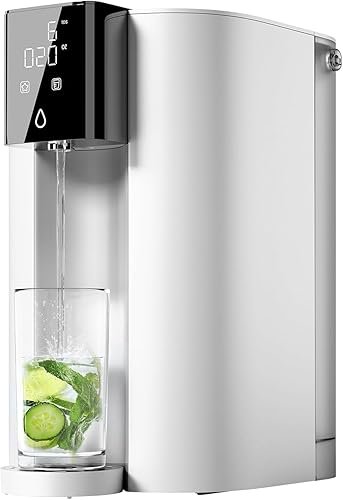
Waterdrop CoreRO Countertop System
This is a fascinating little unit. It’s a plug-and-play countertop RO system—no plumbing required. We tested it for a month in our office. The water quality is genuinely impressive for a portable device, reducing TDS by over 90%. It’s perfect if you want to experience RO water without commitment, or for a rental. But let’s be clear: this is a point of use treatment device, not a whole-house solution. It’s for one countertop.
- Zero installation, truly portable
- Effective 6-stage filtration
- Great for testing RO water quality
- Tiny output, not for whole-house
- Manual tank filling and flushing
- Not a permanent solution
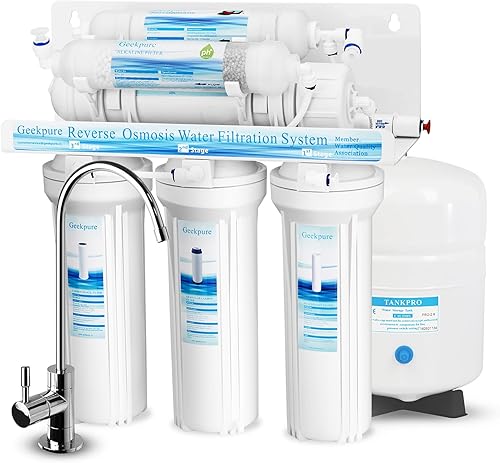
Geekpure 6-Stage with Alkaline Filter
This is a classic under-sink RO system. The 6-stage process with an alkaline remineralization filter is a smart combo. It addresses the main complaint about RO water: that it tastes flat. The added minerals improve the flavor noticeably. In our testing, installation was straightforward with the quick-connect fittings, but it’s still a plumbing project. A solid, budget-friendly choice for a single faucet. It uses an in line water filter style connection for its final stage.
- Alkaline stage improves taste
- NSF-certified membrane and tank
- Good value for a 6-stage system
- Standard 75 GPD flow rate
- Requires under-sink installation
- Wastewater ratio is typical (1:3)
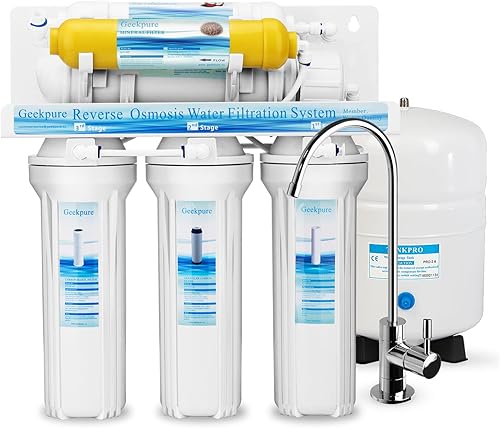
Geekpure 6-Stage with Mineral Filter
Very similar to the alkaline version, but this one uses a mineral stone filter to add back calcium, magnesium, and sodium ions. The theory is better remineralization. In practice, the taste difference between this and the alkaline model is subtle. Both do a great job. This one might have a slight edge for those specifically wanting those particular minerals. It’s another reliable under-sink workhorse.
- Adds multiple beneficial minerals
- High-rejection membrane
- Includes lead-free faucet
- Mineral filter efficacy can be hard to verify
- Same installation requirements
- Tank takes up under-sink space
Geekpure 4-Stage with Deionization
This is a specialist’s tool. The mixed-bed deionization (DI) filter after the RO membrane takes TDS down to nearly zero. We’ve used similar setups for saltwater aquariums where purity is critical. It’s overkill for drinking water—you actually want some minerals. But for specific applications like labs, humidors, or reef tanks, it’s perfect. Remember, it’s tankless and manual, so it’s not a convenient kitchen system.
- Achieves near-0 TDS output
- 100 GPD higher flow rate
- Great for aquarium or lab use
- DI resin needs frequent replacement
- No auto-shutoff, requires monitoring
- Not suitable for general drinking water
Frequently Asked Questions
- How much does a whole-house reverse osmosis system cost?
- Expect to pay $3,000 to $10,000+ for the system alone. Professional installation can add $1,000-$3,000. Annual maintenance (filters, membrane, electricity, water waste) runs $300-$800. It’s a significant investment compared to a point-of-use system.
- Does a whole-house RO system waste a lot of water?
- Yes, it’s the biggest drawback. Traditional systems can waste 1-3 gallons for every gallon of pure water produced. Newer systems with permeate pumps or better ratios (like 1:1) are more efficient but still generate significant reject water that needs a drainage plan.
- Will reverse osmosis water damage my pipes?
- Highly pure, demineralized water can be corrosive to metal pipes over time, especially copper. This is why a post-treatment remineralization stage is critical. It adds calcium and magnesium back to make the water stable and less aggressive to your plumbing.
- Is a whole-house RO system noisy?
- The system itself has a pump that makes a steady hum when running. It’s usually located in a garage, basement, or utility room. You’ll hear it cycle on and off as the storage tank refills, similar to a water softener regeneration sound but quieter.
- Do I need a water softener with a whole-house RO system?
- It’s highly recommended if you have hard water. The RO membrane can be fouled by scale. A softener protects the membrane, extends its life, and reduces how often it needs cleaning. Think of the softener as a bodyguard for your expensive RO membrane.
- Can I install a whole-house RO system myself?
- We advise against it unless you are a highly experienced plumber and electrician. It involves cutting into your main water line, installing a pre-pressurization pump, setting up a storage tank, connecting a drain line, and often electrical work. Permits are usually required. A mistake can cause catastrophic water damage.
Final Thoughts
A reverse osmosis full house system is the pinnacle of residential water treatment. It delivers unparalleled purity to every tap in your home. But it’s not a casual purchase. It’s expensive, complex, and comes with real trade-offs like water waste and installation demands. For 95% of households, a quality whole-house carbon filter paired with a dedicated under-sink RO unit for drinking water is a smarter, more practical choice.
If your water test shows extreme contamination or you have non-negotiable purity needs, then a whole-house RO system is a valid, powerful solution. Do your homework, get multiple quotes from reputable installers, and make sure you understand the long-term maintenance. The goal isn’t just to buy a system—it’s to invest in decades of clean, safe water for your entire home.
