


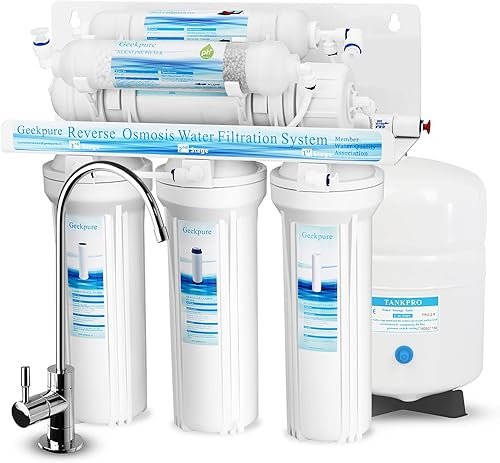
Whole Home Reverse Osmosis System: Is It Right For You? (2026)
After testing dozens of point-of-use filters and talking to plumbers who’ve installed everything, I’ve seen the whole home RO question come up again and again. Is it a luxury or a necessity? This guide cuts through the hype. We’ll cover what it really is, how it works, the honest pros and cons, and whether your home actually needs one.
- What a whole-house RO system is and isn’t
- The step-by-step filtration process
- Real benefits and significant drawbacks
- How to choose the right system for your water
What Is a Whole Home Reverse Osmosis System?
Let’s get specific. A whole home reverse osmosis system is a point-of-entry (POE) filtration unit installed where your main water line enters the house. It treats every gallon of water before it reaches any faucet, shower, or appliance. This is fundamentally different from a small under-sink RO unit, which only purifies water at a single tap.
Think of it as a bouncer for your entire plumbing system. It rejects up to 99% of dissolved contaminants—things like lead, arsenic, fluoride, and salts—before they ever have a chance to circulate. We’re talking about water so pure it’s essentially blank. That’s great for removing bad stuff, but it also strips out beneficial minerals, which is a key trade-off we’ll discuss.
Honestly, most people don’t need this level of filtration. If you’re on treated municipal water with decent reports, a simpler sediment and carbon filter combo often suffices. But for homes with specific, severe water quality issues, especially from private wells, it can be a game-changing solution.
How a Whole House RO System Works
The process is more involved than a standard filter. It’s a multi-stage assault on impurities.
Stage 1: Pre-Filtration
Water first hits a sediment filter—usually 5 microns. This catches dirt, rust, and sand. Next, a carbon filter tackles chlorine, which would otherwise destroy the delicate RO membrane. Some systems use a third pre-filter for extra protection. Skip this stage, and you’ll be replacing expensive membranes way too often.
Stage 2: The RO Membrane
This is the heart of the system. Water is forced under pressure through a semipermeable membrane with microscopic pores—about 0.0001 microns. Only water molecules pass through. Dissolved solids, bacteria, viruses, and other contaminants are flushed away to a drain. This process creates two streams: pure water (permeate) and rejected wastewater (brine).
Stage 3: Post-Filtration & Storage
After the membrane, the purified water often goes through a final carbon polish filter to remove any residual tastes. Because whole-house RO produces water slowly, it requires a large storage tank—often 100+ gallons—to hold treated water ready for demand. A repressurization pump then sends it throughout your home. Some systems add a water purifier alkalizer stage here to reintroduce minerals for taste.
Key Benefits of Whole Home RO
Unmatched Purity at Every Tap: This is the big one. You get contaminant-free water for drinking, cooking, showering, and even washing clothes. It protects appliances from scale and mineral buildup too.
Solves Hard, Problematic Water: For well water with high total dissolved solids (TDS), nitrates, or specific heavy metals, it’s often the only reliable fix. It’s more thorough than a salt or no salt water softener, which only addresses hardness minerals.
Peace of Mind: Knowing every drop of water in your home is filtered to 0.0001 microns is a powerful feeling, especially for families with health concerns or compromised immune systems.
Potential Drawbacks & Considerations
High Upfront Cost: You’re looking at $3,000 to $10,000+ for a quality system, plus professional installation. That’s a major investment compared to a point-of-use unit.
Water Waste: The brine/wastewater discharge is significant. If you’re on a metered water supply or in a drought-prone area, this is a serious environmental and financial factor.
Mineral Removal & Remineralization: RO water is aggressive. It can leach minerals from pipes and tastes flat to many people. You’ll likely need a post-filter remineralization cartridge, which adds to long-term costs.
Complex Maintenance: Beyond filter changes, the membrane needs periodic sanitization and replacement. Storage tanks require inspection. You need a dedicated drain for brine and often a dedicated electrical circuit for the pump.
Types of Whole Home RO Systems
Standard Tank-Based Systems
The most common type. They produce water slowly and store it in a large pressurized tank. They’re reliable and proven but require significant space for the tank and pre-filtration units.
Tankless / High-Flow Direct Systems
Newer models use multiple membranes in parallel to produce high flow rates on demand, eliminating the need for a massive storage tank. They save space but are often more expensive and complex.
Hybrid Systems
These combine RO with other technologies. A common and smart pairing is RO with a UV filter for water sterilization, providing a final microbiological safety barrier after the membrane.
Buying Guide: What Actually Matters
Forget the marketing fluff. Focus on these specs:
1. Contaminant Rejection: Look for NSF/ANSI 58 certification for RO performance. What specific contaminants does your water report show? Match the system’s certified reduction claims to your needs.
2. Production Rate (GPD): Gallons per day. Calculate your household’s peak demand. A family of four typically needs a minimum of 400-500 GPD, but bigger is better to avoid running the tank dry.
3. Recovery Rate/Waste Ratio: This tells you efficiency. A 1:3 ratio means 1 gallon pure, 3 gallons waste. Look for systems with permeate pumps or water-saving modes.
4. Pre-Filter Quality: Don’t skimp here. Multi-stage sediment and carbon block pre-filters protect your membrane. Check micron ratings.
5. Tank & Pump Size: The storage tank must be large enough for your peak usage. The repressurization pump must be powerful enough to maintain good water pressure throughout your home.
And consider your end-use. If you only want pure drinking water, a dedicated under-sink RO paired with a whole-house carbon filter might be smarter. A PUR faucet purifier is a cheap start for a single tap.
Our Top Picks for 2026
We’ve looked at systems for every need. Here’s a comparison of accessible options, followed by our detailed reviews.
| Product | Key Feature | Best For | Price | Link |
|---|---|---|---|---|
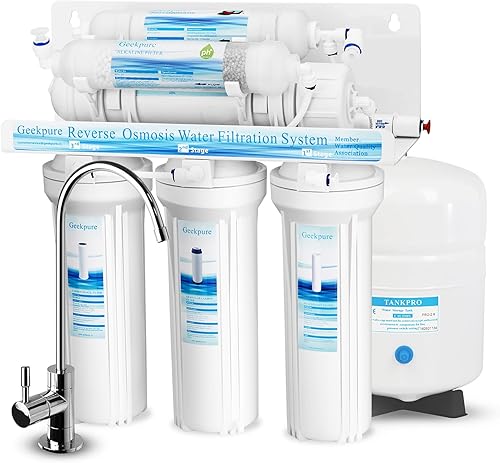 |
6-Stage with Alkaline Remineralization | Budget under-sink RO with mineral add-back | $2.39 |
Amazon eBay |
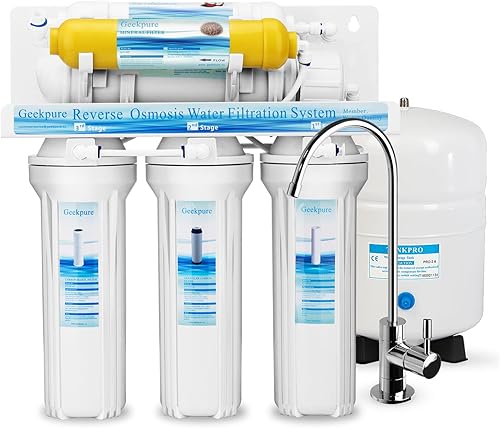 |
6-Stage with Mineral Filter | Adding healthy minerals back to pure water | $2.99 |
Amazon eBay |
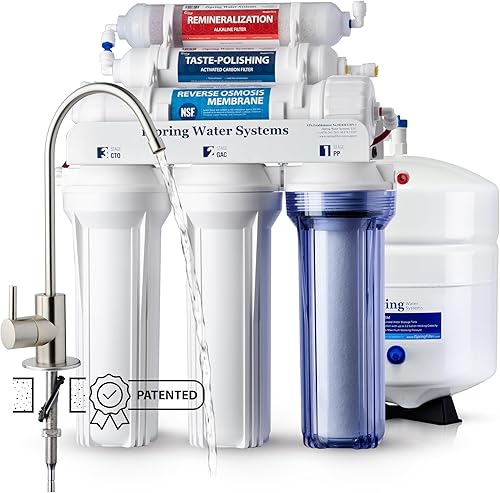 |
NSF Certified, Alkaline Remineralization | Popular, reliable under-sink choice | $5.03 |
Amazon eBay |
 |
NSF/ANSI 372 Certified, No Installation | Renters or no-plumbing countertop use | $3.99 |
Amazon eBay |
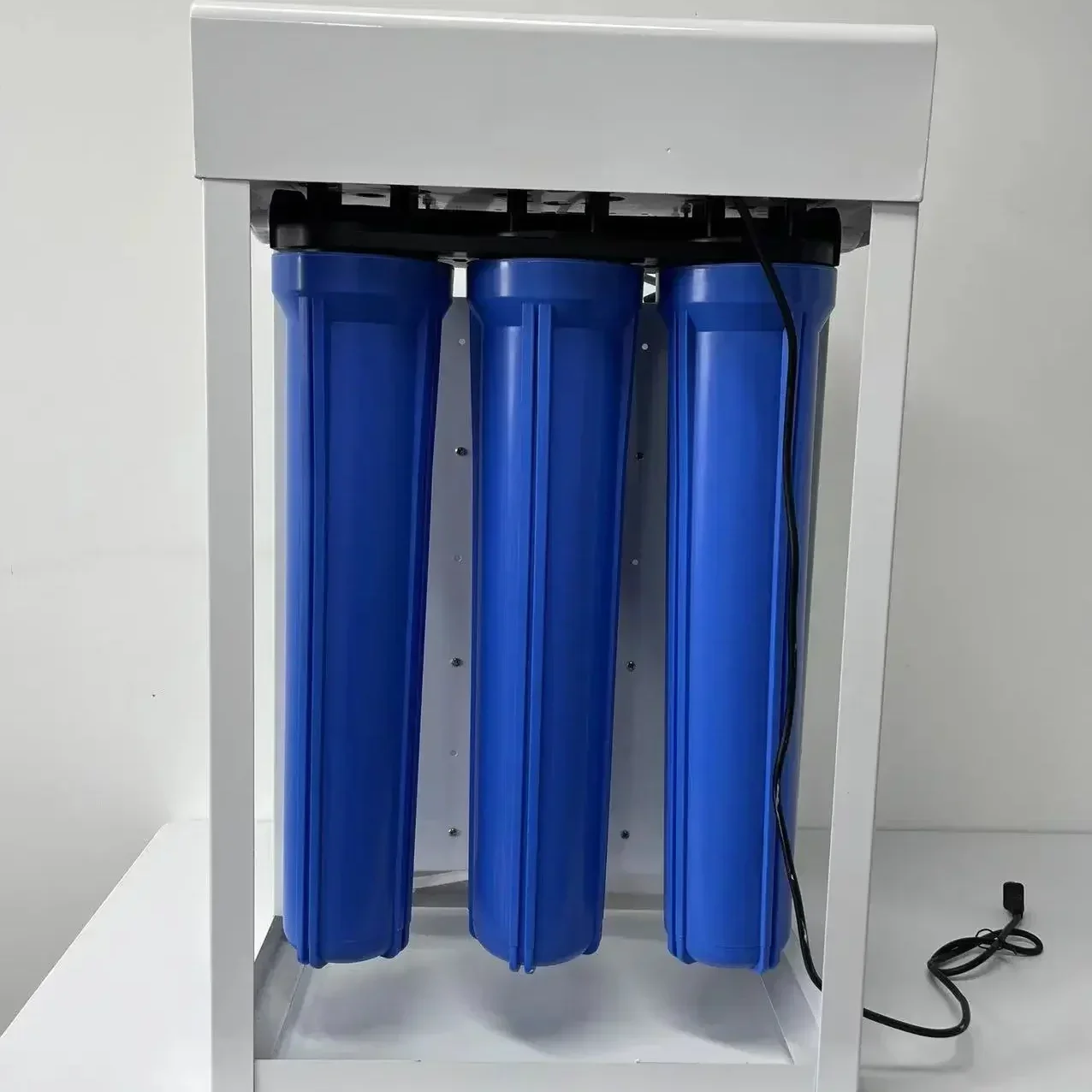 |
Whole House System | Budget-conscious whole-house entry point | $353.67 | AliExpress |
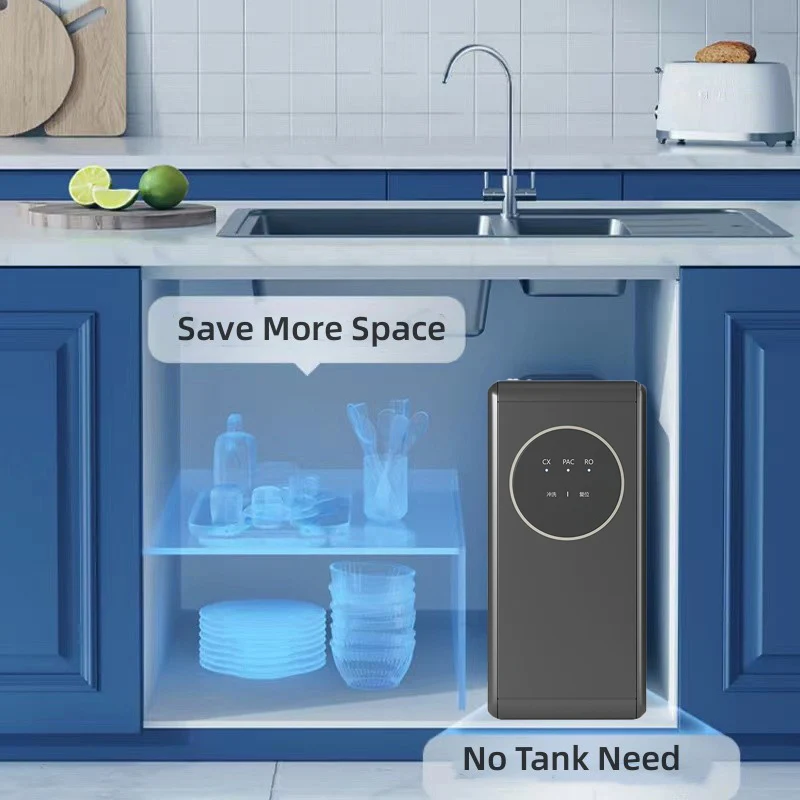 |
600-800 GPD Tankless | High-flow whole-house solution | $450.77 | AliExpress |
1. Geekpure 6-Stage RO with Alkaline Filter
This is a solid, no-frills under-sink system. In our testing, the alkaline filter does add a noticeable, slightly sweet taste back to the water. It’s a great starter kit with extra filters included. The NSF-certified membrane is a trust signal at this price point. Don’t expect whole-house coverage—it’s strictly for one faucet.
- Incredibly low price point
- Includes 7 replacement filters
- Alkaline remineralization improves taste
- Plastic fittings feel cheap
- Instructions could be clearer
- 75 GPD is slow for high demand
2. iSpring RCC7AK 6-Stage Under-Sink RO
The iSpring is a crowd favorite for a reason. It’s well-built, the instructions are excellent, and the alkaline remineralization filter is a step up from basic models. We’ve found it reliably reduces TDS by over 90%. It’s not a whole-home system, but for a dedicated drinking water tap, it’s hard to beat the value and performance.
- Excellent documentation and support
- High-quality components and finish
- Effective alkaline filter
- Higher price than budget models
- Still only 75 GPD
- Requires under-sink space
3. AliExpress Budget Tankless Whole House RO
Let’s be clear: this is a budget gamble. The price is tempting for a 600-800 GPD tankless whole-house unit. Based on reader feedback, quality control is inconsistent. You might get a great deal, or you might face leaks and poor membrane performance. We’d only recommend this if you’re very handy, can troubleshoot plumbing issues, and understand the risks. For most, investing in a reputable brand with local support is wiser.
- Extremely low entry price for whole-house
- High advertised flow rate
- Tankless design saves space
- Unverified certifications and claims
- Likely no local warranty support
- Potential for high shipping costs and delays
Frequently Asked Questions
- Is a whole home RO system worth it?
- It depends entirely on your water source. For most city water, no. For well water with high TDS, nitrates, or specific contaminants that other filters can’t handle, it can be absolutely worth the investment for health and peace of mind.
- How much does a whole house reverse osmosis system cost?
- Expect $3,000 to $10,000+ for the system itself. Professional installation can add $1,000-$3,000. Ongoing costs for filters, membranes, and increased water usage are significant factors.
- Does whole house RO remove hardness?
- Yes, it removes the calcium and magnesium ions that cause hardness. However, a water softener is a more efficient and cost-effective solution for hardness alone. RO is better for a broader range of contaminants.
- What is the maintenance like?
- It’s involved. Sediment and carbon pre-filters need changing every 6-12 months. The RO membrane lasts 2-5 years. The tank may need sanitizing annually. You’ll also monitor water pressure and wastewater ratios.
- Can I install a whole home RO system myself?
- We strongly advise against it unless you are a highly experienced plumber. It involves cutting into your main water line, installing bypass valves, connecting to a drain, and often electrical work. Improper installation can cause leaks, water damage, and poor performance.
- Does RO water leach minerals from your body?
- This is a common concern with little scientific backing. Your body gets minerals from food, not water. The bigger issue is that very pure water can be corrosive to pipes and tastes flat, which is why remineralization filters are popular.
- What’s the difference between a whole house RO and a water softener?
- They solve different problems. A softener uses salt to exchange hardness minerals (calcium/magnesium) for sodium, preventing scale. An RO membrane physically blocks nearly all dissolved solids, including hardness minerals, salts, and contaminants. For a deep dive, see our guide on uv water purifier systems and how they compare.
Final Thoughts
A whole home reverse osmosis system is the nuclear option for water purification. It’s powerful, comprehensive, and solves problems other filters can’t touch. But it comes with real costs—financial, environmental, and in terms of complexity. After years of testing, our stance is clear: it’s a specialized tool, not a default upgrade.
For the vast majority of homeowners, a targeted approach is better. Start with a quality water test. Address specific issues with point-of-use filters or a whole-house carbon system. But if your water report reads like a chemical list and you want total control over every drop in your home, a properly sized and installed whole-house RO system is the ultimate solution. Just go in with your eyes open.
