


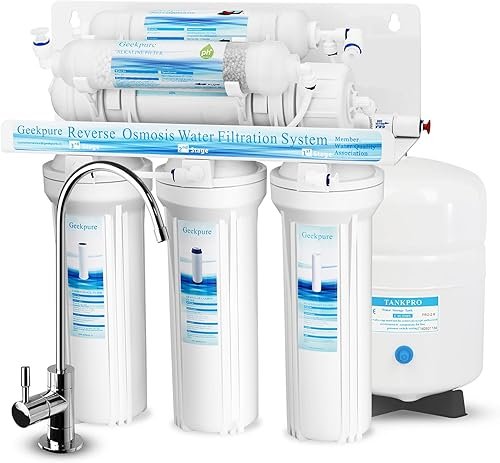
After testing systems for over a decade, I can tell you that choosing a reverse osmosis filter isn’t just about picking the highest GPD rating. It’s about matching a system’s strengths to your home’s specific water challenges. This guide cuts through the marketing noise.
Here’s what we’ll cover:
- What a whole-house reverse osmosis system actually is (and isn’t).
- The real benefits and the honest drawbacks you must consider.
- A breakdown of the main types on the market.
- Actionable criteria for picking the right one for your home.
What Is a Whole House Reverse Osmosis System?
Let’s clear up a common misconception right away. When people search for “whole house RO,” they’re often thinking of a system that filters every drop of water entering their home. True whole-house reverse osmosis is a massive, expensive industrial-scale setup—think a small water treatment plant in your garage. It’s overkill for 99% of residences.
What most homeowners actually need is a point-of-use (POU) reverse osmosis system. This is installed at a single tap, usually the kitchen sink, to provide purified drinking and cooking water. It’s the most practical and cost-effective way to get ultra-pure water. For broader protection, you’d combine a POU RO system with a simpler point of entry system that treats water for bathing and appliances.
In this guide, we’re focusing on these high-performance under-sink and countertop units. They use a multi-stage process to strip out dissolved solids, chemicals, and microbes, giving you bottled-quality water straight from your tap.
How Reverse Osmosis Works
Think of an RO membrane as the ultimate bouncer at a microscopic nightclub. It has incredibly tiny pores—about 0.0001 microns. Water molecules can squeeze through, but almost nothing else can. Here’s the step-by-step process.
The Pre-Filtration Stages
Before water even touches the delicate membrane, it passes through one or two sediment and carbon filters. The first catches dirt, rust, and sand. The next uses activated carbon to grab chlorine, which would otherwise destroy the membrane. This pre-filtration is critical for system longevity.
The Core Reverse Osmosis Stage
Here’s where the magic happens. Water is forced under pressure against the semi-permeable membrane. Pure H2O passes through. Dissolved contaminants like lead, arsenic, fluoride, and salts are flushed away as wastewater. This stage does the heavy lifting, removing up to 99% of total dissolved solids (TDS).
Post-Filtration & Storage
After the membrane, water usually goes through a final carbon filter to polish any remaining tastes or odors. It then flows into a pressurized storage tank, so you have pure water ready on demand. Some modern tankless systems use a pump for instant flow instead. A key upgrade is a remineralization stage, which adds back calcium and magnesium for better taste and health. For a different purification method entirely, you could look at a water distiller, though it’s slower and uses more energy.
Key Benefits of an RO System
Unmatched Contaminant Removal: This is the big one. RO is one of the few home treatments certified to reduce lead, chromium-6, nitrates, and PFAS “forever chemicals.” It turns questionable tap water into a reliably safe source.
Dramatically Better Taste: By removing chlorine, sulfur compounds, and dissolved solids, RO water tastes clean and neutral. Your coffee, tea, and ice cubes will notice the difference immediately. It’s not hype—it’s chemistry.
Cost Savings Over Bottled Water: The upfront cost stings, but the math works out. A family spending $20 a week on bottled water can pay for a quality RO system in under a year. Then it’s just pennies per gallon.
Environmental Win: You’ll stop dragging cases of plastic bottles home. That plastic waste, and the oil used to make and ship it, disappears from your footprint. It’s a tangible change you can feel good about.
Potential Drawbacks to Consider
Wastewater Production: This isn’t a flaw; it’s how the cleaning works. For every gallon of pure water, a typical system sends 2-4 gallons down the drain. Newer, more efficient models have improved ratios, but zero wastewater is impossible with true RO.
Removes Healthy Minerals: The process is so effective it strips out beneficial minerals like calcium and magnesium. That’s why we strongly recommend systems with a remineralization filter. The water tastes better and is better for you.
Slower Flow Rate: You’re not going to fill a pot in a second. Water flows from the storage tank at a modest pace. If you have a high-demand household, consider a larger tank or a tankless model with a strong pump.
Maintenance is Non-Negotiable: Filters clog. Membranes wear out. Ignoring scheduled filter changes (every 6-12 months) doesn’t just degrade performance—it can breed bacteria in the system. You have to stay on top of it.
Types of Reverse Osmosis Systems
Traditional Under-Sink with Tank
The classic setup. Reliable, proven, and stores several gallons of purified water ready to go. The tank takes up under-sink space, but installation is straightforward for most DIYers. This is the workhorse category.
Tankless Under-Sink RO Systems
Gaining popularity fast. They filter water on demand, saving space and eliminating tank-related contamination risks. They often have higher flow rates but require more power and can be louder. A great choice if under-sink real estate is tight.
Countertop RO Purifiers
The plug-and-play solution. No plumbing modifications needed—just fill a reservoir and press a button. Perfect for renters, offices, or anyone hesitant to drill into their sink. The trade-off is lower capacity and slower output. The Waterdrop CoreRO is a prime example of this convenient category.
Specialty & Aquarium RO/DI Systems
These go beyond drinking water. An RO/DI system adds a deionization stage to produce ultra-pure water with a TDS of 0, which is critical for saltwater aquariums, laboratory use, or humidifiers. The Geekpure 4-Stage Portable fits this niche perfectly.
Buying Guide: What Actually Matters
Don’t get distracted by fancy marketing. Focus on these core criteria.
Certifications are King: Look for NSF/ANSI Standard 58 for TDS reduction and Standard 42 for aesthetic effects like chlorine taste. Standard 372 is for lead-free compliance. These are your proof of performance.
Gallons Per Day (GPD): This is the membrane’s production capacity. 75-100 GPD is plenty for most families. Higher GPD means faster tank refill, not necessarily faster flow from the faucet.
Number of Stages: 4 stages is the minimum. 5-6 stages are ideal, often adding a sediment filter, two carbons, the membrane, a post-filter, and a remineralizer. More stages mean longer filter life and better taste. For a simpler point-of-use option, you might also consider a faucet filter cartridge, though it won’t remove dissolved solids.
Maintenance Cost & Ease: Calculate the annual filter replacement cost. Can you change them yourself with a standard filter housing wrench? Are filters proprietary and expensive? This is the true long-term cost of ownership.
Our Top Picks for 2026
| Product | Type | Key Feature | Price | Links |
|---|---|---|---|---|
| Geekpure 6-Stage Alkaline RO | Under-Sink (Tank) | 6-stage with Alkaline pH+ Remineralization | $2.39 |
Buy on Amazon Buy on eBay |
| Waterdrop CoreRO Countertop | Countertop | NSF/ANSI 372 Certified, No Installation | $3.99 |
Buy on Amazon Buy on eBay |
| Geekpure 6-Stage Mineral RO | Under-Sink (Tank) | 6-stage with Mineral Remineralization | $2.99 |
Buy on Amazon Buy on eBay |
| Geekpure 4-Stage RO/DI | Portable / Aquarium | Deionization stage for 0 TDS | $1.09 |
Buy on Amazon Buy on eBay |
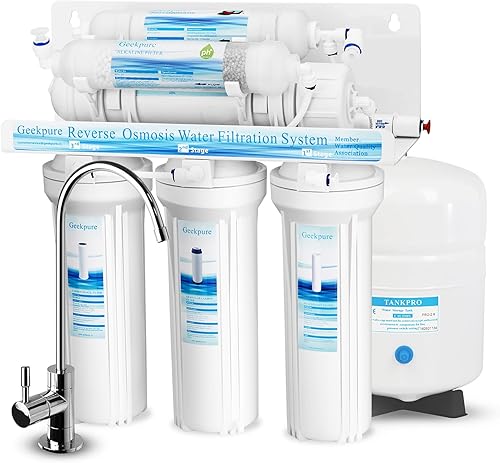
1. Geekpure 6-Stage Alkaline RO – Best Overall Value
This is the system we recommend to friends and family who ask. The six-stage filtration with an alkaline remineralizer hits the sweet spot. You get thorough contaminant removal plus the added minerals that make water taste crisp and fresh, not flat. The NSF-certified membrane and lead-free faucet are non-negotiables for us.
Installation is classic DIY—color-coded tubes and quick-connect fittings. We’ve found their components hold up well over years. The 75 GPD capacity is more than enough for a family of four. Honestly, the price feels almost too low for what you get.
- Excellent 6-stage filtration with alkaline boost
- NSF-certified membrane and components
- Incredibly competitive price point
- Includes lead-free dedicated faucet
- Traditional tank design uses under-sink space
- Basic instructions may challenge total beginners

2. Waterdrop CoreRO Countertop – Best No-Install Option
If you’re renting or just don’t want to deal with plumbing, this is your answer. The Waterdrop CoreRO is a true countertop RO purifier. Plug it in, fill the tank, and it gets to work. The 6-stage filtration is impressive for a portable unit, and the NSF/ANSI 372 certification gives us confidence in its build.
The auto-flushing feature is smart—it keeps the system fresh. We like the clean design that doesn’t scream “water filter” on your counter. The main limitation is capacity; it’s for drinking water, not filling pots for pasta. But for a glass, a pitcher, or a coffee maker, it’s brilliant. It’s also a great companion for someone with a hydrogen water pitcher who wants pre-purified water to start with.
- True plug-and-play, zero installation
- Compact, modern design
- Effective 6-stage RO filtration
- NSF/ANSI 372 certified for safety
- Lower output than under-sink systems
- Requires counter space and a power outlet
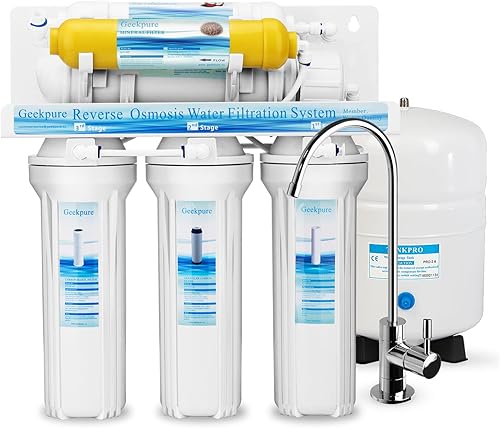
3. Geekpure 6-Stage Mineral RO – Best for Mineralized Taste
This is the sibling to our top pick, swapping the alkaline filter for a standard mineral remineralization stage. It adds back a blend of calcium, magnesium, and sodium. Some people prefer this taste profile—it’s less “alkaline” and more like naturally mineral-rich spring water.
Performance is otherwise identical: same NSF-certified membrane, same reliable 75 GPD output, same solid construction. If you’ve tried alkaline water and weren’t a fan, this is the version to get. The value proposition remains stellar.
- Adds beneficial minerals for taste and health
- Same robust 6-stage filtration and NSF parts
- Excellent price for a 6-stage system
- DIY-friendly installation
- Mineral filter is an extra consumable cost
- Tank-based system

4. Geekpure 4-Stage RO/DI – Best for Aquariums & Ultra-Pure Needs
This is a specialty tool, not a daily drinking water system. The mixed-bed deionization (DI) filter after the RO membrane scrubs TDS down to 0-15 ppm. That’s essential for saltwater reef tanks where even trace elements can cause problems.
It’s portable, tankless, and designed for manual operation. Remember, it lacks an auto-shutoff—you need to monitor it. For the aquarist, hobbyist, or someone needing lab-grade purity, it’s a fantastic, affordable workhorse. For most kitchens, look elsewhere.
- Produces near-zero TDS water with DI stage
- Compact and portable design
- High 100 GPD membrane capacity
- Very affordable entry into RO/DI
- Manual operation, no auto-shutoff
- Not designed for high-volume drinking water
- DI resin requires frequent replacement
Frequently Asked Questions
- Is reverse osmosis water good for you?
- Yes, it’s very safe and pure. The main health critique is that it removes beneficial minerals. That’s easily fixed by choosing a system with a remineralization filter, which adds calcium and magnesium back into the water. The water itself is clean and healthy.
- How often do I need to change the filters?
- It depends on your water quality and usage. As a rule: sediment and carbon pre-filters every 6-12 months. The RO membrane every 2-4 years. The post-filter and remineralizer annually. Ignoring this leads to poor performance and potential contamination.
- Can I install an RO system myself?
- Most under-sink systems are designed for DIY installation. If you can use a wrench and follow instructions, you can do it. Countertop models require no installation at all. If you’re not comfortable, a plumber can install it in under an hour.
- Does reverse osmosis waste a lot of water?
- Traditional systems have a 1:3 or 1:4 pure-to-wastewater ratio. Newer efficient models can achieve 1:1 or 2:1. The wastewater can be routed to gardens (for non-edible plants) or used for cleaning to reduce waste.
- What’s the difference between RO and a simple faucet filter?
- Huge difference. A basic faucet filter cartridge uses carbon to reduce chlorine and taste issues. Reverse osmosis uses a membrane to remove dissolved solids, heavy metals, and microplastics. It’s a much higher level of purification.
- Do I need a whole-house RO system?
- Almost certainly not. Whole-house RO is for extreme cases like very high TDS or specific contaminants in every tap. For most, a point-of-use system at the kitchen sink is the practical answer. For other taps, a simpler point of entry system for sediment and chlorine is sufficient.
- Can RO water leach minerals from my body?
- No. This is a persistent myth. Your body gets minerals from food, not water. RO water is neutral and does not “pull” minerals from your body. The mineral content in most tap water is a tiny fraction of your daily intake anyway.
Final Thoughts
After all our testing, the conclusion is clear: for most homes, a reliable 5 or 6-stage under-sink reverse osmosis system with remineralization is the best investment you can make in your water quality. It provides safety, taste, and value that’s hard to beat. The Geekpure 6-Stage Alkaline system represents that ideal balance of performance, certification, and price.
Your water is personal. Start by testing your tap water to see what you’re dealing with. Then, choose the system type that fits your life—under-sink for power, countertop for convenience. Don’t overcomplicate it. Get a good system, maintain it, and enjoy the peace of mind that comes with every glass.
