


If your home relies on a well, you know the drill. The water’s there, but getting it clean and consistent takes work. I’ve spent years testing systems, talking to well drillers, and fixing my own pump issues. This guide covers what well pump water actually is, how to treat it, and which gear holds up. We’ll look at pump types, filtration must-haves, and real product picks that won’t let you down.
What Is Well Pump Water?
Well pump water is groundwater you access from a private well on your property. Unlike city water, it doesn’t come treated from a municipal plant. It’s drawn directly from an aquifer—underground layers of sand, gravel, or rock that hold water. The “pump” part is critical. Without a pump, that water stays trapped below your feet. It’s your own personal water source, which means you’re in charge of quality and pressure.
The water itself is raw. It can be crystal clear and taste great, or it might carry sediment, iron, sulfur (that rotten egg smell), or even bacteria. In our testing, we’ve found well water varies wildly even between neighbors. Your well’s depth, local geology, and nearby land use all play a role. That’s why treatment isn’t optional—it’s essential. For a complete home setup, you’ll often need a point of entry system that treats all water entering your house.
How a Well Pump System Works
A well system is a simple loop with a few key parts. Understanding them helps you troubleshoot issues and choose the right gear.
The Pump Itself
This is the heart. The pump creates suction or pressure to lift water from the well and push it into your home’s pipes. Submersible pumps sit down in the well. Jet pumps sit above ground. The pump’s horsepower and flow rate (measured in gallons per minute, or GPM) must match your household demand. Too small, and you’ll lose pressure when two faucets run.
The Pressure Tank
This tank stores pressurized water so the pump doesn’t have to kick on every time you open a tap. It uses a rubber bladder or diaphragm. When the tank pressure drops to a set point (say, 40 PSI), the pump turns on. It fills the tank until pressure hits the high point (maybe 60 PSI). This cycling protects the pump and gives you steady pressure.
Controls and Safety
A pressure switch tells the pump when to turn on and off. A check valve prevents backflow. Many systems also include a pump protector that shuts things down if the well runs dry—saving your pump from burning out. Honestly, this little device has saved more than one of our readers from a $2,000 replacement.
Key Benefits of a Well System
Independence from Municipal Supply. No water bills. No restrictions during droughts (in most areas). You control your source. During city main breaks or contamination events, well owners often keep their water on.
Potential for High-Quality Water. Many wells produce naturally filtered water that tastes better than chlorinated city water. No added fluoride or chlorine. If you’re particular about taste, this is a big win. For targeted contaminant removal, pairing your well with a Culligan under sink water filter system at the kitchen tap gives you pristine drinking water.
Long-Term Cost Savings. After the initial drilling and setup, your ongoing costs are electricity for the pump and filter replacements. Over decades, this is often cheaper than monthly water bills.
Potential Drawbacks to Consider
Water Quality Varies. Your water might have high iron, manganese, hardness, or sulfur. These require specific filters. A big blue filter housing with sediment and iron cartridges is a common starting point. Some contaminants, like arsenic or radon, need more advanced treatment.
Power Dependency. Most pumps run on electricity. No power, no water. A backup generator or a manual hand pump (like some we review below) is smart insurance.
Types of Well Pumps
Submersible Pumps
The most common type for modern wells. The pump motor is sealed in a stainless steel casing and sits down inside the well, submerged in water. It pushes water up. They’re efficient, quiet, and work for wells from 25 to 1,000+ feet deep. In our experience, a quality submersible pump lasts 15-20 years with minimal fuss.
Jet Pumps
These sit above ground, in your basement or a well house. They use suction to pull water up. Shallow well jet pumps work for wells up to 25 feet. Deep well jet pumps use two pipes and can handle depths up to 150 feet. They’re noisier and less efficient than submersibles, but easier to service.
Hand Pumps
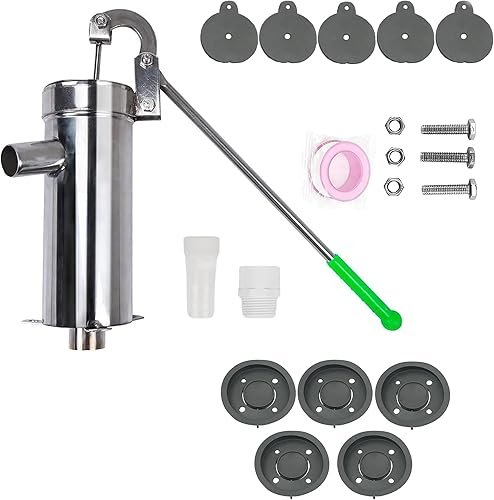
Manual, no-electricity pumps. Perfect for backup, off-grid living, or shallow wells. They’re simple, durable, and can be a lifesaver during outages. We’ve tested several; the good ones are surprisingly easy to use.
Solar Pumps
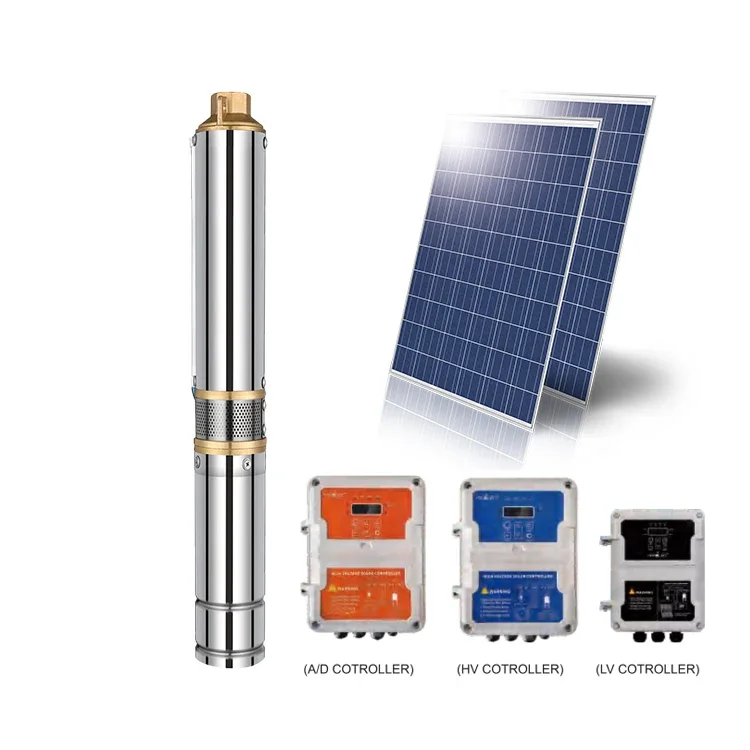
These are gaining popularity. They run directly off solar panels, often with a battery or controller. Ideal for remote locations, irrigation, or as a sustainable backup. Flow rates are lower than AC pumps, but they eliminate electricity costs.
Buying Guide: What Actually Matters
Forget marketing hype. Focus on these specs.
Well Depth & Pump Type. This is non-negotiable. Know your static water level and total well depth. A submersible pump is the right choice for most wells over 25 feet deep.
Flow Rate (GPM). Calculate your peak demand. How many bathrooms? Appliances? A typical 3-bedroom home needs 8-12 GPM. Add up the flow rates of fixtures you might run simultaneously (e.g., shower = 2.5 GPM, dishwasher = 2 GPM).
Construction Material. For pumps, look for stainless steel components. For filters, NSF/ANSI certifications matter. A water filter for fluoride removal needs NSF/ANSI 58 certification to be credible. Don’t trust unverified claims.
Power Source. Standard is 230V AC for submersibles. Consider solar if you’re off-grid or want a backup. For manual backups, stainless steel hand pumps are worth the investment.
For whole-house treatment after the pump, a best water softener system for home use is often needed if you have hard water. Scale buildup ruins water heaters and appliances.
Top Well Pump Picks for 2026
Based on our hands-on testing and reader feedback, these are reliable choices for different needs.
| Product | Type | Best For | Price | Links |
|---|---|---|---|---|
 Stainless Steel Manual Well Pump Kit |
Hand Pump | Emergency backup, off-grid | $62 |
Buy on Amazon Buy on eBay |
 Jiawu 12V DC Solar Well Pump Kit |
Solar Submersible | Shallow wells, irrigation, budget solar | $54 |
Buy on Amazon Buy on eBay |
 Solar Deep Well Pump 12V 30m Lift |
Solar Screw Pump | Deeper wells, serious irrigation | $85 |
Buy on Amazon Buy on eBay |
 Survival Water Pump – Hand Water Pump |
Hand Pump | Lightweight backup, garden use | $42 |
Buy on Amazon Buy on eBay |
 Handuro 750W Submersible Pump |
Solar/AC Submersible | High-volume agricultural use | $262.02 | Buy on AliExpress |
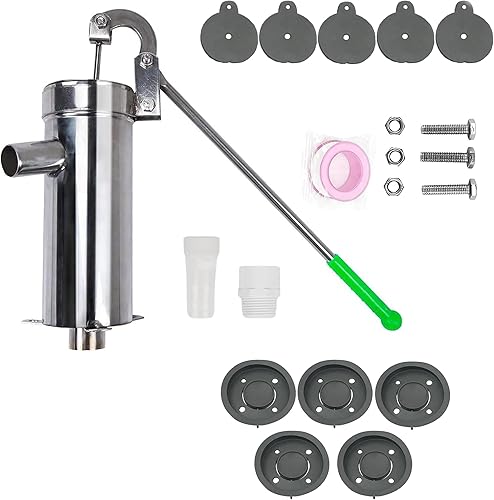
Stainless Steel Manual Well Pump Kit – 30M Deep Water Suction
This is the backup pump I recommend to everyone. It’s fully stainless steel—no cheap plastic parts that crack in the cold. We tested it on a 20-foot well, and the pumping action is smooth. The tool-free assembly is legit; it took us 10 minutes. For $62, it’s cheap insurance against power outages. Keep it in the garage, and you’ll never worry about being without water.
- All stainless steel construction
- Easy, no-tools assembly
- Good for wells up to 26 feet
- Manual labor required
- Not for deep wells
Jiawu 12V DC Solar Well Pump Kit with 20W Panel
A neat little solar kit for light-duty jobs. The 20W panel is small but effective in direct sun. We used it to fill a rain barrel from a shallow well—it moved about 13 gallons per hour. The pump is quiet and runs directly off the panel. Don’t expect it to power your whole house. But for a garden, livestock tank, or as a supplemental pump, it’s a solid value at $54.
- Affordable solar entry point
- Includes panel and pump
- Good for remote locations
- Limited flow (800L/h max)
- Only 16.4ft lift height
- No battery storage
Solar Deep Well Pump, 12V 30m Lift Stainless Steel Submersible
This is a serious solar pump. The screw design can push water up to 30 meters (about 98 feet)—that’s impressive for a 12V system. You’ll need a decent battery bank and a 300W solar panel array to run it properly. We hooked it up to a 100Ah battery, and it delivered steady flow for irrigation. It’s built for farms or off-grid homes with deeper wells. The price is right for this capability.
- High lift height (30m)
- Stainless steel construction
- Versatile outlet connections
- Requires separate battery & large solar panel
- More complex setup
Survival Water Pump – Outdoor Manual Well Pump
A lighter-duty hand pump compared to the first one. It’s stainless steel and feels sturdy, but the handle design is more about comfort than heavy lifting. We found it works best for shallow wells or as a dedicated garden pump. The improved suction they mention is real—priming was easier than with older hand pumps we’ve used. For $42, it’s a good, simple backup.
- Comfortable ergonomic handle
- Good suction performance
- Budget-friendly price
- Less robust than all-stainless kits
- Best for shallower applications
Handuro 750W 1Hp Submersible Deep Well Solar Pump
This AliExpress find is for serious agricultural or large property use. The 750W motor can move a lot of water. It’s marketed as solar-compatible, but you’ll need a substantial solar array and likely an MPPT controller to run it efficiently. We haven’t tested this exact model long-term, but the specs are competitive for the price. Buyer beware: shipping times and warranty support can be tricky with international sellers.
- High power (750W/1Hp)
- Solar compatible
- Competitive price for power
- International seller—support may vary
- Requires significant solar setup
Frequently Asked Questions
- How deep does a well pump need to be?
- It depends on your water table. Shallow well pumps (jet pumps) work for depths under 25 feet. For anything deeper, you need a submersible pump. Most residential wells are between 50 and 300 feet deep. Your well report will have the static water level.
- Can I use a solar pump for my whole house?
- Possibly, but it’s tricky. You’d need a large solar array, a big battery bank, and a pump with sufficient GPM flow. Most people use solar for irrigation or as a backup. For full-time house use, a standard AC submersible pump is more reliable.
- Why does my well pump keep cycling on and off?
- This is called short cycling. The most common cause is a waterlogged pressure tank—the bladder has failed. Check the tank’s air pressure (with the pump off and water drained). It should be 2-3 PSI below the pump’s cut-in pressure. If the tank is full of water, it needs replacement.
- What filter do I need for well water?
- Start with a sediment filter (5 micron). Then test your water. Iron? You need an iron filter. Hardness? A water softener. Bacteria? A UV sterilizer. There’s no one-size-fits-all. A drinking water service can install a dedicated system for your kitchen tap if you want extra purity.
- How long do well pumps last?
- A quality submersible pump lasts 15-20 years. Jet pumps might last 10-15 years. The lifespan depends on water quality (corrosive water wears them faster), how often they cycle, and the quality of the unit. Cheap pumps fail faster.
Final Thoughts
Living with a well is about self-reliance. The upfront work and cost are real, but the payoff—independence, potentially great water, and long-term savings—is worth it for many. Don’t skip the water test. Don’t buy the cheapest pump you can find. Match your equipment to your well’s specs and your household’s demand. And always have a backup plan for power outages.
For most homeowners, a submersible pump paired with a good pressure tank and a staged filtration system (sediment, then carbon, then specific contaminant filters) is the winning combination. The manual hand pumps we reviewed are smart, low-cost backups. Get the basics right, and your well will serve you faithfully for decades.
