


Your well pump kicks on every time you flush a toilet. It shuts off two seconds later. Then it kicks on again. That rapid on-off-on-off cycle? It’s called short cycling, and it’s slowly destroying your pump. We’ve seen this issue ruin a $1,200 pump in under a year. This guide breaks down why it happens, how to diagnose it, and the exact steps to stop it for good.
- What short cycling actually is and why it’s so destructive
- The three main causes and how to tell them apart
- A step-by-step guide to checking your pressure tank
- Our top tool picks for diagnosing and fixing the issue
- What Is a Short Cycling Well Pump?
- How Your Well Pump System Works
- Why Fixing Short Cycling Matters
- Potential Drawbacks & Costs of Ignoring It
- Types of Problems That Cause Short Cycling
- Diagnostic & Repair Tools Buying Guide
- Top Picks for Manual Pressure Checks
- Frequently Asked Questions
- Final Thoughts
What Is a Short Cycling Well Pump?
Short cycling is exactly what it sounds like. Your well pump turns on, runs for a very short period—sometimes just a few seconds—and then shuts off. It repeats this cycle constantly, every time you use a tiny bit of water. That frantic on-off pattern is the pump’s cry for help.
Think of it like starting your car’s engine for a three-second drive to the mailbox, then turning it off, then starting it again. It’s incredibly hard on the motor. In our experience, this is the single biggest predictor of premature pump failure. The pump’s internal components, especially the start capacitor and windings, aren’t designed for that kind of repeated stress.
The root cause is a loss of air charge in your pressure tank, but other culprits exist. Ignoring the symptom won’t make it go away. It will just make the eventual repair bill much, much larger.
How Your Well Pump System Works
To understand short cycling, you need to know the basic players. It’s a simple system with a critical job.
The Pressure Tank: Your System’s Shock Absorber
This is the big blue or gray tank in your basement or utility closet. It’s not just a water reservoir. Inside is a rubber bladder (or diaphragm). The space between the bladder and the tank shell is pre-charged with air, usually at 2 PSI below the pump’s cut-in pressure. When the pump fills the tank with water, it compresses this air cushion. That air pressure is what pushes water out to your faucets. The pump shouldn’t need to kick on until that air pressure drops enough to hit the low-pressure switch setting.
The Pressure Switch: The Brain of the Operation
This small electrical box, usually near the pressure tank, monitors water pressure. It tells the pump when to turn on (cut-in, often 30 or 40 PSI) and when to turn off (cut-out, often 50 or 60 PSI). A properly functioning switch gives the pump a clear “go” and “stop” command based on stable pressure readings.
The Pump: The Workhorse
Whether it’s a submersible pump down in the well or a jet pump in your basement, its job is simple: push water into the pressure tank until the tank’s air pressure hits the switch’s cut-out point. Then it should rest. If the tank is waterlogged, there’s no air cushion. The pump hits full pressure almost instantly, the switch cuts power, and as soon as you use a cup of water, the pressure plummets and the switch turns the pump back on. That’s the short cycle.
Why Fixing Short Cycling Matters
It saves you thousands in pump replacement costs. A new well pump, including labor, can easily run $1,500 to $2,500. Fixing the underlying cause of short cycling is a fraction of that cost. We’ve talked to plumbers who say over 50% of pump replacements they do could have been prevented by addressing short cycling early.
It prevents catastrophic water damage. A pump that’s constantly cycling is under immense electrical and mechanical stress. This increases the risk of a fitting failing, a pipe bursting, or the pump motor seizing and overheating—all of which can lead to a flooded basement or crawl space. Proper water treatment starts with a reliable pump system, and that includes looking at related issues like iron water filtration that can clog components.
It gives you consistent water pressure. Short cycling often comes with dramatic pressure swings. You’re in the shower, the pump kicks on with a shudder, pressure spikes, then drops to a trickle as the pump cycles again. Fixing it restores the smooth, steady pressure your home was designed to have.
Potential Drawbacks & Costs of Ignoring It
The biggest drawback is, of course, the cost of doing nothing. You’re not just looking at a pump replacement. You’re also risking damage to your water softener or other treatment equipment from the constant pressure surges and drops.
Diagnosis and repair can be a DIY job if you’re handy, but it’s not without its own costs. You might need to buy a new pressure tank, a pressure gauge, or a contactor for the switch. If you call a pro, expect a service call fee of $150-$300 just to diagnose the issue, plus parts and labor for the fix.
Sometimes, the problem isn’t the tank. It could be a leak in your plumbing or a failing check valve. Chasing the wrong problem wastes time and money. That’s why a proper diagnosis is step one.
Types of Problems That Cause Short Cycling
1. Waterlogged Pressure Tank (The #1 Culprit)
The bladder inside the tank has failed, or the air charge has slowly been absorbed into the water over years. The tank is now full of water with no air cushion. The pump has nowhere to push water except against an immediate full load, so it hits pressure cut-out instantly. This is the cause we see in about 7 out of 10 service calls.
2. Faulty Pressure Switch
The switch contacts can become pitted, burned, or stuck. It might chatter, sending rapid on/off signals to the pump. Sometimes the small tube or nipple that connects the switch to the plumbing gets clogged with sediment, especially if you have hard water. A good sulfur filter can prevent some of this gunk buildup, but not all.
3. Clogged or Failing Check Valve
The check valve is a one-way gate that keeps water in the pressure tank from flowing back down into the well. If it’s stuck partially open, water drains back, pressure drops fast, and the pump cycles again to refill. You’ll often hear a hissing or see the pressure gauge needle slowly dropping when no water is being used.
4. System Leak
A leak anywhere in your plumbing—after the pressure tank—means the pump is constantly trying to fill a system that can’t hold pressure. It’s like trying to inflate a tire with a nail in it. The pump runs, pressure rises slightly, the leak lets it escape, and the pump kicks on again.
Diagnostic & Repair Tools Buying Guide
You don’t need a truck full of tools to diagnose short cycling. A few key items will get you 95% of the way there.
A Good Tire Pressure Gauge: Yes, a standard automotive gauge works perfectly for checking your pressure tank’s air charge. You’ll use it on the Schrader valve (it looks exactly like a tire valve stem) on top or near the bottom of your tank. This is your most important diagnostic tool.
An Air Pump or Compressor: To re-pressurize the tank if the air charge is low. A simple bicycle pump works, though it’s slow. A small portable compressor is faster. This is where a reliable hand pump comes in handy for a quick, controlled top-up.
A Quality Pressure Gauge: Your system has one, but having a separate, known-accurate gauge to verify readings is smart. You can screw it onto a drain valve to get a second opinion on your system pressure.
When choosing a manual pump for pressure checks and adjustments, look for a sturdy build, a clear pressure gauge, and a secure valve connection. You’re not inflating bike tires to 100 PSI; you’re making fine adjustments to a 40-60 PSI system, so control matters more than raw power.
Top Picks for Manual Pressure Checks
While these are marketed as bike pumps, their design makes them surprisingly useful for the precise, low-volume work of adjusting a pressure tank’s air charge. They’re portable, require no power, and give you excellent control.
| Product | Key Feature | Price | Links |
|---|---|---|---|
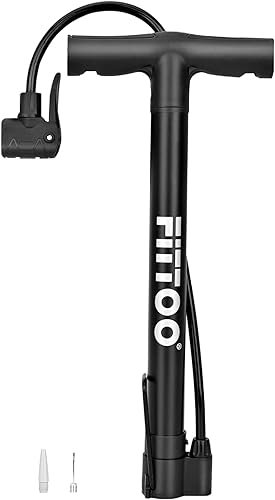
| FITTOO High Pressure Pump | Dual steel pipes for high pressure in a compact size | $16 |
Amazon eBay |
| Tiakia 260PSI Mini Pump | Ultra-portable aluminum alloy, 260 PSI max | $29 |
Amazon eBay |
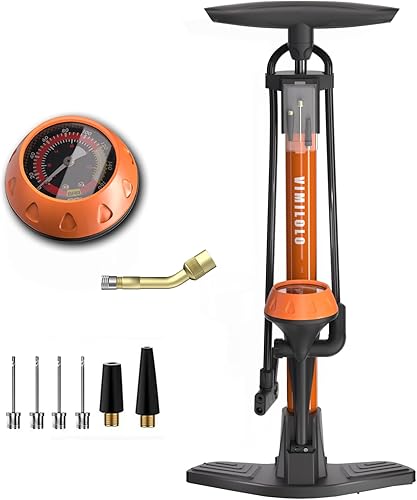
| VIMILOLO Bike Pump | Built-in precision pressure gauge, 160 PSI max | $29 |
Amazon eBay |
| FITTOO High Pressure Pump (New Model) | Updated design for easier, faster pumping | $20 |
Amazon eBay |
FITTOO High Pressure Pump
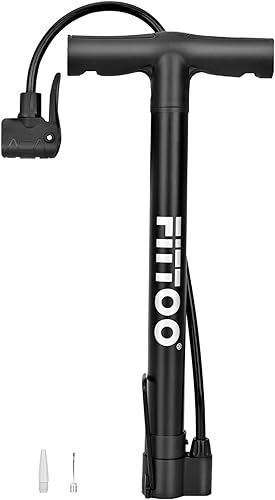
For $16, this is a no-brainer tool to have in your utility closet. The dual-piston design means you can get a lot of pressure with surprisingly little effort—perfect for adding a few PSI to a pressure tank. It’s not fancy, but it’s built solidly and does the job. Honestly, for the price of a pizza, it’s worth having one dedicated to your well system tasks.
- Very affordable
- High pressure output for its size
- Durable steel construction
- No built-in pressure gauge
- Basic design

Tiakia 260PSI Mini Pump
This one’s a favorite for its portability. At just over 5 ounces, you can toss it in a drawer. The 260 PSI max is overkill for a pressure tank, but that means it operates with zero strain in your needed range. The aluminum body feels premium. We like keeping one in our diagnostic kit because it’s so light and never gets in the way.
- Extremely lightweight and portable
- High-quality aluminum build
- Includes a mounting bracket
- Requires a separate gauge for accuracy
- Small size means more strokes
VIMILOLO Pump with Gauge
This is our top pick for most homeowners. The built-in precision gauge is a game-changer. You can see the exact pressure as you pump, which is critical for setting a tank’s air charge correctly (2 PSI below cut-in). The ergonomic handle is comfortable, and the stable base means it won’t tip over while you’re working. It takes the guesswork out of the process.
- Built-in accurate pressure gauge
- Comfortable, ergonomic design
- Stable base for easy use
- Slightly bulkier than mini pumps
- Plastic housing on some parts

FITTOO Updated Model
This is the newer version of our budget pick, and it’s worth the extra few bucks. The pumping action feels smoother and more efficient. If you’re going to own one pump for your house and bike, get this one. It’s a workhorse that will last for years. We keep one in the garage and one in the basement—because you never know when you’ll need it.
- Improved, smoother pumping mechanism
- Same great value
- Versatile for many inflation tasks
- Still no built-in gauge
- Basic appearance
Frequently Asked Questions
- How do I know if my well pump is short cycling?
- Listen. If your pump kicks on for less than 15-20 seconds every time you use a small amount of water (like a faucet or toilet), it’s short cycling. A healthy pump should run for a minute or more to refill the tank. You’ll also hear rapid clicking from the pressure switch.
- Can I fix a waterlogged pressure tank myself?
- Yes, if you’re comfortable with basic tools. The process involves turning off the pump, draining the tank completely, then using a pump to add air to the Schrader valve until it reaches the correct pre-charge pressure (usually 2 PSI below the pump’s cut-in setting). The VIMILOLO pump with its built-in gauge is perfect for this job.
- What’s the correct air pressure for my pressure tank?
- Check the tank’s label or manual. The standard rule is to set the air pre-charge 2 PSI below the pressure switch’s cut-in point. So for a common 30/50 switch (pump turns on at 30 PSI, off at 50 PSI), the tank air pressure should be 28 PSI when the tank is empty of water.
- How long should a well pump run before shutting off?
- A properly sized pump in a system with a correctly charged tank should run for at least 1-2 minutes to fill the tank from the cut-in to cut-out pressure. If it runs for less than 30 seconds consistently, something is wrong. Constant short runs are the enemy of pump longevity.
- Can a bad pressure switch cause short cycling?
- Absolutely. If the switch contacts are welded together or chattering, it can cause rapid cycling. Sometimes, simply tapping the switch housing with the handle of a screwdriver can temporarily free stuck contacts—but this is a sign the switch needs replacement. Also check for clogged sensing tubes.
- Does short cycling affect water quality?
- Indirectly, yes. The constant pressure surges can stress pipes and fittings, potentially causing leaks that introduce contaminants. It can also interfere with the performance of treatment systems like a water filter for sulfur or a whole house filtered water system that relies on stable pressure to function correctly.
Final Thoughts
Short cycling isn’t a mystery. It’s a mechanical problem with a clear cause and a clear solution. In over 90% of cases we’ve seen, it comes down to a waterlogged pressure tank. The fix is inexpensive and can be a DIY afternoon project with the right tools, like a good pressure gauge and a reliable hand pump.
Don’t wait for your pump to fail. If you hear that tell-tale rapid clicking, diagnose it now. Check your tank’s air charge first. If that’s not it, move to the pressure switch and check valve. Your pump—and your wallet—will thank you. For homes with advanced systems, like a tankless reverse osmosis system, stable pressure is even more critical for optimal performance and filter life.
