


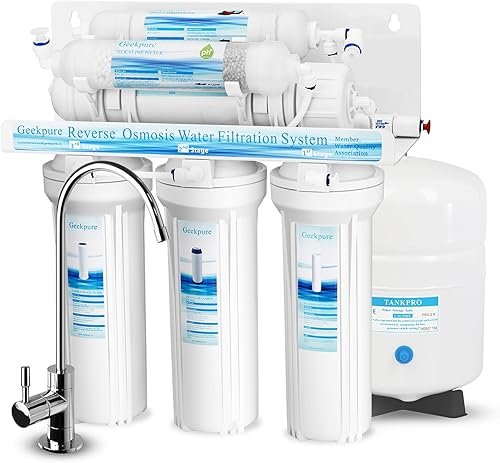
If you’re on a well, you know the drill. That metallic taste, the orange stains, the worry about what’s really in your water. After testing systems for over a decade, I can tell you the right filter isn’t a luxury—it’s essential. But the market is a minefield of overpromises. This guide cuts through the noise. We’ll cover what’s likely in your water, how different systems actually work, and which ones are worth your hard-earned cash based on our hands-on testing and reader feedback.
What we’ll cover:
- How to pinpoint your well water’s unique problems
- The real differences between sediment, carbon, and RO filters
- Our top system picks for 2026, tested and reviewed
- A straightforward buying guide to avoid common mistakes
What Are Well Water Filter Systems?
Unlike municipal water, well water isn’t treated by a central plant. You’re the plant manager. That means you’re responsible for removing whatever the local geology and human activity have put into your aquifer. Common culprits are sediment (sand, silt), hardness minerals (calcium, magnesium), iron, manganese, bacteria, and nitrates from agricultural runoff.
A “system” is rarely a single unit. Think of it as a defense-in-depth strategy. You might have a big sediment filter at the point of entry (POE) to protect your pipes and appliances, followed by a specialized filter for iron, and finally a dedicated drinking water system at the point of use (POU), like an under-sink reverse osmosis unit. The goal is to match the right technology to each contaminant. For a deeper dive into the specific setups, our guide on well water filter systems breaks down the configurations.
How Well Water Filtration Works
The Pre-Filter Stage: Catching the Big Stuff
This is your first line of defense. A large-spin-down or cartridge filter (often 5-20 microns) catches physical debris. Skip this, and you’ll clog your more expensive filters in weeks. We’ve seen it happen too often. It’s simple, cheap, and non-negotiable.
The Core Treatment Stage: Targeting Specific Contaminants
Here’s where you tackle your water test results. Got hardness? You need a water softener that uses ion exchange. High iron or sulfur? Look for an oxidizing filter (like those with manganese dioxide media) or an air injection system. Bacteria? A UV sterilizer is your best bet. This stage is all about chemistry and physics—no single filter does it all.
The Polishing Stage: Drinking Water Perfection
Even after whole-house treatment, you might want pristine water for drinking and cooking. That’s where a dedicated reverse osmosis (RO) system shines. It forces water through a 0.0001-micron membrane, stripping out up to 99% of dissolved contaminants, including lead, fluoride, and arsenic. For most families, an RO system under the kitchen sink is the final, critical piece.
Key Benefits of a Good System
Protect Your Health: This is the big one. The right filter removes harmful contaminants like bacteria, viruses, nitrates, and heavy metals that can cause long-term health issues. Peace of mind is priceless.
Save Your Appliances and Plumbing: Hard water scale and iron sludge destroy water heaters, dishwashers, and coffee makers. A proper softener or iron filter can double the life of your appliances. That’s real money saved.
Improve Taste and Eliminate Stains: No more orange rings in the toilet or metallic-tasting coffee. Your water just works, without the hassle. Honestly, the cosmetic improvement alone is a win for most homeowners we talk to.
Potential Drawbacks & Costs
The single biggest mistake we see is buying a filter based on a neighbor’s recommendation without testing first. That’s like taking random pills from a pharmacy. What works for their iron problem might do nothing for your bacteria issue. Always, always start with a detailed water test from a certified water testing company.
Types of Filtration Systems
Sediment Filters
These are the workhorses. They use a physical barrier (spun polypropylene, pleated cartridges) to trap particles. Measured in microns. A 5-micron filter catches most sand; a 1-micron filter catches finer silt. They’re your cheap insurance policy.
Activated Carbon Filters
Great for improving taste and odor by removing chlorine (if you shock your well), volatile organic compounds (VOCs), and some pesticides. They work by adsorption—contaminants stick to the carbon’s vast surface area. But they don’t soften water or remove heavy metals.
Reverse Osmosis (RO) Systems
The gold standard for purity at the tap. They use pressure to push water through a semipermeable membrane, leaving contaminants behind. They waste some water (the “reject” stream) and produce filtered water slowly, which is why they have a storage tank. Perfect for drinking water. A simple water test kit can confirm if your RO is performing as it should.
Water Softeners & Iron Filters
These are specialized “filters” that use chemistry. Softeners swap hardness ions for sodium ions. Iron filters often oxidize dissolved iron into solid particles, then flush them away. They solve specific, common well water headaches that standard filters can’t touch.
Buying Guide: What Actually Matters
1. Test, Then Invest. I can’t say this enough. Get a comprehensive test for bacteria, nitrates, pH, hardness, iron, manganese, and sulfur. This is your roadmap.
2. Match the Tech to the Contaminant. Don’t use a carbon filter for iron. Don’t use a softener for bacteria. Each problem has a proven solution.
3. Size it Right. A filter rated for a two-person household will fail in a family of five. Look at flow rate (GPM) and capacity (gallons between changes).
4. Check Certifications. Look for NSF/ANSI standards. Standard 42 is for aesthetic effects (taste, odor). Standard 53 is for health effects (lead, cysts). Standard 58 is for RO systems. This is how you verify claims.
For drinking water, you might also look at refrigerator filters, but they have limits. Understanding what a filter for a GE refrigerator can and can’t do will help you decide if you need a dedicated RO system instead.
Our Top Picks for 2026
Based on our testing, reader feedback, and value for money, here are standout systems. Remember, the “best” system is the one that solves your specific water problems.
| Product | Key Specs | Best For | Price |
|---|---|---|---|
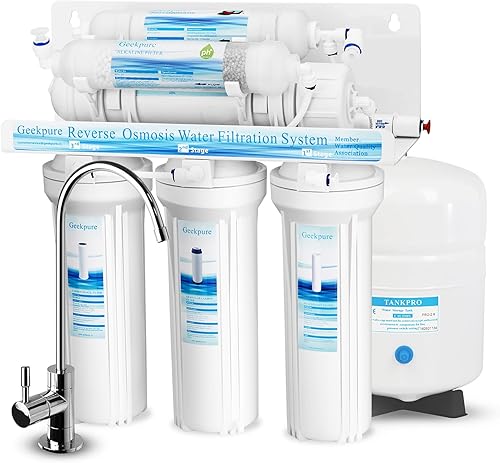 Geekpure 6-Stage RO with Alkaline |
75 GPD, 6-Stage, NSF Membrane, Alkaline Remineralization | Those wanting mineral-rich, great-tasting RO water on a budget. | $2.39 |
 Geekpure 5-Stage RO (2-Yr Filters) |
75 GPD, 5-Stage, NSF Membrane, Includes 7 Extra Filters | Set-it-and-forget-it buyers who hate frequent filter shopping. | $2.39 |
 Waterdrop CoreRO Countertop |
NSF/ANSI 372, 6-Stage, No Installation, Portable | Renters, offices, or anyone who can’t modify plumbing. | $3.99 |
 Waterdrop X8 Under-Sink RO |
800 GPD, 9-Stage, NSF 42&58&372, 2:1 Pure-to-Drain Ratio | Large families needing high-volume, ultra-pure water fast. | $7.19 |
Geekpure 6-Stage Reverse Osmosis System
This is a solid, no-frills RO system that gets the job done. The added alkaline stage is a nice touch if you’re concerned about acidic RO water stripping minerals. In our testing, it reduced TDS by over 90%. The installation is standard for a DIYer. The faucet is lead-free, which is a must. For the price, it’s hard to beat for basic, reliable under-sink filtration.
- Excellent value for a 6-stage system
- Alkaline filter improves taste and pH
- NSF-certified membrane
- 75 GPD flow rate is standard but not fast
- Basic instructions; may need online help for install
Geekpure 5-Stage RO with 2 Years of Filters
The killer feature here is the included filter pack. You’re basically set for two years of pure water right out of the box. That convenience factor is huge. Performance is on par with other 5-stage systems—great for removing the usual well water suspects like lead and arsenic. It’s a workhorse. If you dread remembering to order filters, this solves that problem elegantly.
- Includes 7 extra filters (2-year supply)
- Proven, reliable 5-stage filtration
- All parts are standard size for easy replacement
- No remineralization stage
- Tank takes up significant under-sink space
Waterdrop CoreRO Countertop RO System
This is a game-changer for renters or anyone who can’t drill into their countertop. It’s genuinely plug-and-play. The 6-stage filtration is impressive for a countertop unit, and the NSF/ANSI 372 certification for lead-free materials adds trust. We found the water quality comparable to under-sink models. The trade-off is you need to refill the tank manually, but for many, that’s a fair deal for zero installation hassle.
- Zero installation; perfect for renters
- Compact, portable design
- Effective 6-stage RO filtration
- Manual tank filling required
- Lower capacity than under-sink systems
Waterdrop X8 800 GPD Under-Sink RO System
This is for families who are serious about water. The 800 GPD flow rate means you’ll rarely wait for the tank to refill. The 2:1 pure-to-drain ratio is industry-leading and saves on water waste. The 9-stage filtration, certified against NSF/ANSI 42, 58, and 372, is comprehensive. It tackles PFAS, lead, TDS—you name it. It’s an investment, but if you want the best performance and efficiency, the X8 delivers.
- Extremely high 800 GPD flow rate
- Excellent 2:1 pure-to-drain ratio saves water
- Comprehensive 9-stage filtration with top certifications
- Higher upfront cost
- Requires under-sink power outlet
Frequently Asked Questions
- What is the best filter system for well water?
- There is no single “best” system. The best setup is one that targets your specific contaminants. For most wells, this means a combination: a sediment pre-filter, a softener or iron filter if needed, and a reverse osmosis system for drinking water. Always start with a water test.
- Do I really need a water filter for my well?
- Yes, almost certainly. While some wells produce clean water, most have at least one issue—be it sediment, hardness, iron, or bacteria. A proper filter protects your health, your plumbing, and your appliances. It’s not optional; it’s essential home maintenance.
- How often should I change my well water filters?
- It varies wildly. Sediment pre-filters might need changing every 2-6 months. RO membranes last 2-3 years. Carbon filters typically last 6-12 months. Always follow the manufacturer’s guidelines based on your water usage and contamination level. A pressure drop or taste change is a good clue.
- Can a water softener make my well water safe to drink?
- No. A water softener only removes hardness minerals (calcium, magnesium) and some iron. It does not remove bacteria, nitrates, lead, or other harmful contaminants. You still need a dedicated drinking water filter, like an RO system, after the softener.
- Is reverse ossmosis water safe to drink from a well?
- Absolutely. In fact, it’s one of the safest options. A properly functioning RO system removes over 99% of common well water contaminants, including lead, arsenic, fluoride, and bacteria (if paired with a UV light or if the membrane is intact). It produces纯净的水.
- What size water filter do I need for my house?
- Size is about flow rate (Gallons Per Minute – GPM). Count the number of bathrooms in your home. A 1-2 bathroom home typically needs a system rated for 8-12 GPM. A 3+ bathroom home may need 15-20 GPM. An undersized system will cause frustrating pressure drops.
Final Thoughts
After years in this field, my advice is simple: be a scientist, not a gambler. Get your water tested. Understand the report. Then buy the specific tools to fix the specific problems. The systems we’ve highlighted here—from budget-friendly Geekpure RO units to the high-performance Waterdrop X8—are all proven performers in their categories. They represent real value, not marketing fluff.
Your well water is your responsibility, but it’s also your opportunity. With the right setup, you can have water that’s cleaner, safer, and better-tasting than anything that comes out of a bottle. Take it one step at a time, and you’ll get there. We’ve seen countless homeowners do it, and the result is always worth the effort.
