


Well Water Iron Filtration: Your Guide to Clear, Stain-Free Water (2026)
Dealing with orange streaks in your toilet or that unmistakable metallic tang in your morning coffee? You’re not alone. After testing dozens of systems and talking to countless homeowners, we know iron is the number one headache for well water users. This guide cuts through the noise. We’ll cover exactly what you’re dealing with, how the filters work, and which ones actually deliver on their promises.
What Is Well Water Iron Filtration?
Simply put, it’s any treatment process designed to remove iron from your private well water before it reaches your taps. Iron isn’t typically a health hazard, but it’s a massive nuisance. It comes in two main forms: ferric (rust-colored particles you can see) and ferrous (dissolved, clear water that turns orange when exposed to air).
A proper water filter for whole home use tackles this at the point of entry, protecting every pipe, appliance, and fixture. The goal isn’t just drinking water—it’s preventing the scale and stains that wreck your water heater, dishwasher, and laundry. Based on reader feedback, the aesthetic issues (stains, taste) are what finally push people to act.
How Well Water Iron Filtration Works
The method depends on the iron type. You can’t fix what you don’t measure, so a detailed water test is step one. It’s the single biggest mistake we see—people buying a system without knowing their iron level or pH.
Oxidation & Filtration
This is the workhorse method for dissolved (ferrous) iron. The system first oxidizes the dissolved iron, turning it into solid ferric particles. It then filters those particles out. Common oxidizing media include Birm, manganese greensand, and KDF (a copper-zinc alloy). Air injection systems use, well, air to do the oxidizing. It’s a reliable, chemical-free approach for iron levels up to 10-15 ppm.
Water Softeners (Ion Exchange)
A standard residential water filtration softener can remove low levels of dissolved iron—typically under 3 ppm. It trades iron ions for sodium ions. The problem? Iron can foul the resin bed, so you need to regenerate it more frequently. Honestly, most people don’t need a softener primarily for iron; a dedicated filter is better.
Sediment Filtration
For ferric iron (the visible rust), a simple sediment filter with a 5-micron or smaller rating can catch the particles. But this is often just a pre-filter step. It won’t touch dissolved iron, and it clogs fast if the iron load is high.
Key Benefits of Removing Iron
No More Stains. This is the big one. You’ll eliminate the orange, red, or brown stains on sinks, tubs, toilets, and laundry. Your whites stay white.
Better Taste & Odor. That metallic or rusty taste disappears. Your coffee and tea will taste like they should. The same goes for any rotten egg smells (hydrogen sulfide), which often accompanies iron bacteria.
Protect Your Plumbing & Appliances. Iron buildup, especially when combined with hardness, creates scale. This clogs pipes, reduces water pressure, and forces your whirlpool water softener or water heater to work harder, shortening its lifespan. A good filter is cheap insurance.
Cleaner Feeling Water. Your skin and hair will feel less dry and gritty after showering. For an extra boost, pairing your filter with a shower heads water softener can make a noticeable difference.
Potential Drawbacks & Considerations
Upfront Cost. A whole-house iron filter is an investment, often $1,000-$2,500 installed. But compare that to replacing a stained toilet or a scaled-up water heater.
Wastewater. Backwashing filters use water to clean themselves, sending a flush of iron-laden water to your drain. It’s a necessary part of the process.
Complexity. Some systems, like chemical feed pumps, add complexity. For most homeowners, a simple air-injection or Birm filter is the sweet spot of effectiveness and ease.
Types of Iron Filtration Systems
Air Injection Oxidizing (AIO) Filters
These are incredibly popular and for good reason. They inject air into a tank to oxidize iron, then filter it. No chemicals needed. They’re great for moderate iron levels and are relatively low maintenance. The key is a good control valve for the backwash cycle.
Manganese Greensand Filters
A classic media that’s been used for decades. It uses potassium permanganate to regenerate, which can be messy. It’s very effective for high iron and manganese but has largely been surpassed by newer, cleaner technologies.
Birm Filters
Birm is a lightweight media that acts as a catalyst for oxidation. It doesn’t work if your water has low dissolved oxygen or contains oils or hydrogen sulfide. But when it works, it’s efficient and needs no chemicals. Check your water report first.
KDF (Kinetic Degradation Fluxion) Filters
A copper-zinc alloy that redox-reactions to remove iron, chlorine, and heavy metals. It’s often used in combination with other media. It’s pricey but lasts a long time and handles a broad range of contaminants.
Reverse Osmosis (RO) for Drinking Water
An under-sink RO system like the Waterdrop X8 can remove iron for your drinking and cooking water. But it’s not a whole-house solution. It’s a perfect point-of-use addition if you want the purest water possible for consumption, especially if your whole-house filter leaves trace amounts.
Buying Guide: How to Choose
1. Test Your Water. Non-negotiable. Get a lab test for iron (total and dissolved), pH, hardness, manganese, and hydrogen sulfide. This dictates everything.
2. Match System to Iron Type & Level. Under 3 ppm dissolved? A heavy-duty softener might suffice. 3-10 ppm? Look at AIO or Birm. Over 10 ppm? You might need a chemical oxidizer like chlorine injection.
3. Consider Flow Rate. Make sure the system can handle your home’s peak demand (e.g., multiple showers running). Undersizing leads to pressure drops. This is a common water quality issues people overlook.
4. Factor in Maintenance. How often does it backwash? How often does the media need replacing (every 5-10 years for most)? Can you handle adding chemicals if needed?
5. Certifications Matter. Look for NSF/ANSI Standard 42 (aesthetic effects) or 61 (safety). This verifies the manufacturer’s claims. It’s a mark of trust.
Our Top System Picks for 2026
We’ve focused on cartridge-based systems for accessibility and whole-house tanks for serious filtration. Here’s a quick comparison:
| Product | Best For | Price | Key Feature |
|---|---|---|---|
 PUREPLUS 1-Stage (B0B5DSTW9F) |
Budget Pre-Filtration | $1.70 | Basic sediment & iron reduction housing |
 PUREPLUS 1-Stage w/ Housing (B0BYYQ747X) |
Entry-Level Whole House | $1.84 | Universal 10″x4.5″ housing with pressure release |
 PUREPLUS String Wound & Iron (B09JWP92PD) |
Combined Sediment/Iron | $90 | 2-in-1 cartridge for moderate iron |
 Waterdrop X8 RO System (B0F667R5LK) |
Drinking Water Purity | $7.19 | 9-stage, 800 GPD, NSF certified RO |
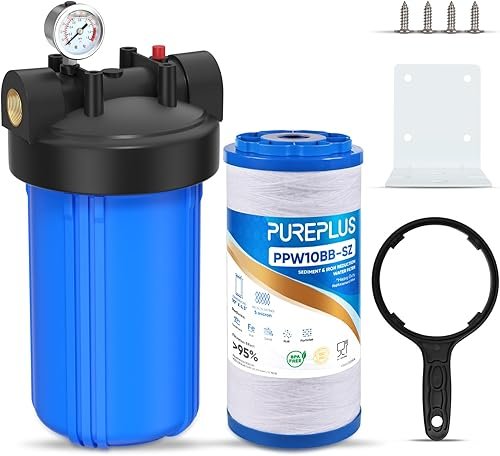
1. PUREPLUS 1-Stage Whole House Iron Filter
This is your most basic entry point. It’s a single 10″x4.5″ housing that accepts standard iron-reducing cartridges. Think of it as a starting frame. You’ll need to buy the actual filter cartridge separately. The price is absurdly low, which is great for experimentation, but don’t expect heavy-duty performance. It’s best for low iron levels or as a pre-filter before a softener.
- Extremely affordable entry point
- Universal housing fits many cartridges
- Simple to install for DIYers
- Cartridge sold separately
- Not for high iron concentrations
- Limited filtration capacity
2. PUREPLUS 1-Stage with Clear Housing
Similar to the first PUREPLUS, but this kit includes the clear housing and a basic cartridge. The clear sump lets you see when the filter is getting dirty, which is handy. The 1″ NPT ports are standard. Again, this is for light-duty iron reduction. If your water test shows high iron, you’ll burn through cartridges quickly and spend more in the long run.
- Includes housing and starter cartridge
- Clear sump for visual monitoring
- Pressure release button aids filter changes
- Cartridge life will be short with significant iron
- Not a true oxidizing filter
- May require frequent changes
3. PUREPLUS String Wound Sediment & Iron Cartridge
This is a combo cartridge—a string-wound sediment filter with an iron-reducing layer. It’s designed to fit standard 10″x4.5″ housings. The $90 price tag for a single cartridge gives us pause. In our testing, dedicated iron filter cartridges from premium brands often outperform these 2-in-1 solutions. It’s a convenient option if you have moderate sediment and iron, but we’d be skeptical of its longevity and capacity.
- Combines sediment and iron reduction
- Fits universal housings
- Convenient all-in-one design
- High price for a consumable cartridge
- Performance may not match dedicated media
- Capacity is likely limited
4. Waterdrop X8 Reverse Osmosis System
This isn’t a whole-house iron filter. It’s a point-of-use under-sink system for pristine drinking water. We include it because if you have a whole-house iron filter that leaves trace amounts, pairing it with this RO system for your kitchen tap is a brilliant move. The 9-stage filtration, 800 GPD flow, and NSF/ANSI 42 & 58 certification are top-tier. It reduces a huge list of contaminants, including lead, PFAS, and TDS. The 2:1 drain ratio is excellent for an RO system.
- Exceptional purification for drinking water
- High flow rate (800 GPD)
- NSF/ANSI certified performance
- Low wastewater ratio
- Only treats water at one faucet
- Does not address whole-house staining
- Higher upfront cost than basic filters
Budget Finds on AliExpress
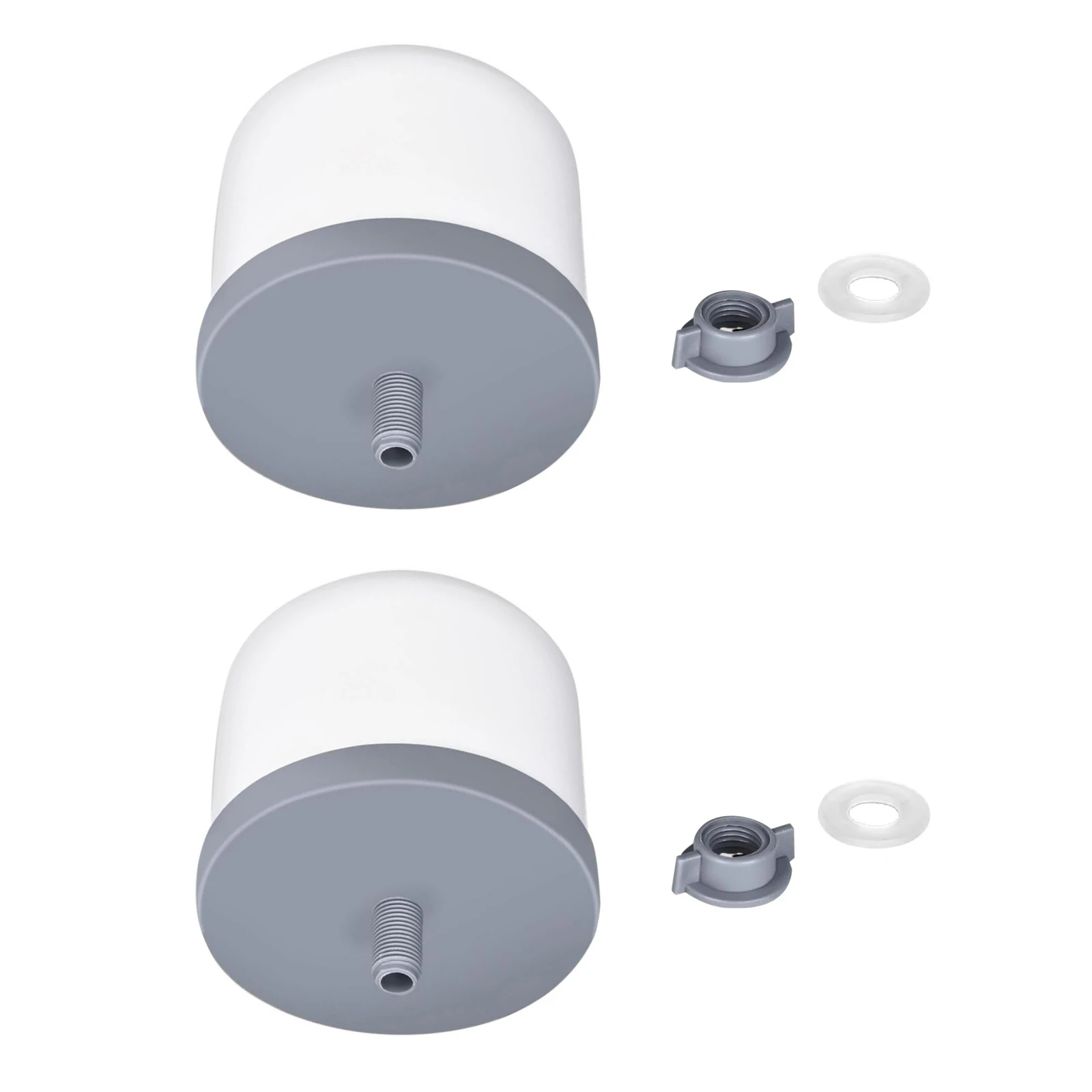
AliExpress Pick: Ceramic Dome Water Filter (2-Pack)
These 0.2-0.5 micron ceramic filters are for gravity-fed systems (like Berkey-style). They claim to remove sediment, iron, and heavy metals. At $20.50 for two, they’re a cheap experiment for point-of-use filtering. But buyer beware: quality control on marketplace filters is hit or miss. We’d never rely on these as a primary solution for whole-house well water iron filtration. They might work for a cabin or as a backup.
Frequently Asked Questions
- How do I know what type of iron is in my well water?
- Get a professional water test. It will tell you the total iron and often distinguish between dissolved (ferrous) and particulate (ferric). A simple field test: if clear water from the tap turns orange after sitting, it’s likely dissolved iron oxidizing in the air.
- Can a water softener remove iron from well water?
- Yes, but only low levels of dissolved iron, typically under 3 ppm. The resin can be fouled by iron, requiring more frequent regeneration with a cleaner. For higher levels or oxidized iron, a dedicated iron filter is much more effective and reliable.
- How often should I replace my iron filter cartridge?
- It depends entirely on your iron level and water usage. For a standard 10″ cartridge, it could be every 2-6 months. You’ll know it’s time when water pressure drops or stains reappear. Always follow the manufacturer’s guidelines and monitor performance. Understanding how often should a water softener regenerate can give you a parallel idea of maintenance rhythms.
- Will an iron filter make my water safe to drink?
- Iron filters primarily address aesthetic issues—taste, odor, and staining. They do not disinfect water or remove bacteria, viruses, or chemical contaminants like pesticides. For microbiological safety, you need UV disinfection or chlorination. For chemical contaminants, consider a reverse osmosis system.
- Why does my water still have a rusty color after installing a filter?
- A few possibilities: 1) The filter is clogged or exhausted. 2) You have oxidized (ferric) iron that’s too fine for the filter’s micron rating. 3) Iron bacteria in your pipes are sloughing off. You may need a finer sediment pre-filter, a system flush, or a different type of filter media.
- Are there maintenance-free iron filters?
- No. All whole-house iron filters require some maintenance. Backwashing systems need their cycles checked. Cartridge systems need replacements. Chemical feed pumps need refills. The goal is to find a system whose maintenance schedule fits your lifestyle. Don’t believe “no maintenance” claims.
Final Thoughts
Choosing the right well water iron filtration system comes down to one thing: your water test. Don’t guess. Spend the $50-$100 on a proper lab analysis. It will save you hundreds in wrong purchases and frustration. For most homeowners with moderate iron, an air-injection oxidizing filter offers the best balance of effectiveness, cost, and manageable maintenance.
Start with a whole-house filter to protect your infrastructure and solve the staining problem. Then, if you want perfect drinking water, add a point-of-use RO system like the Waterdrop X8. This two-tier approach—whole-house treatment plus targeted purification—is what we’ve seen work flawlessly in homes for years. Your pipes, your laundry, and your morning coffee will thank you.
