


Water Well Filter System: The Complete Owner’s Guide (2026)
You’ve got your own water source. That’s freedom. But it also means you’re the water treatment plant manager. After testing systems for over a decade and hearing every horror story from plumbers, I can tell you this: the single biggest mistake well owners make is guessing. A proper water well filter system isn’t a luxury—it’s your home’s frontline defense.
This guide cuts through the noise. We’ll cover what these systems actually are, how they work, the real pros and cons, and how to choose one that won’t let you down. I’ll even show you a few systems we’ve put through their rounds.
What Is a Water Well Filter System?
Think of it as a custom shield for your home’s water supply. Unlike municipal water, which is pre-treated, well water comes straight from the ground. It can pick up everything from sand and silt to bacteria, heavy metals, and dissolved minerals that cause hardness or staining.
A “system” is rarely just one filter. It’s a coordinated set of treatment stages, each designed to tackle a specific problem. The goal is to transform raw, untreated groundwater into clean, safe water for every tap in your house—and especially for your drinking glass.
We’ve seen homes with iron so bad it stained toilets orange in a week. Others had sulfur smells that could clear a room. The right system fixes that. But you can’t fix what you don’t measure. Step one is always a comprehensive water test.
How a Water Well Filter System Works
It’s a multi-stage process. Water enters from your well pump and passes through a series of filters, each with a specific job. No single filter does it all. Here’s the typical flow.
Stage 1: Sediment Pre-Filtration
This is your bouncer. A spin-down or cartridge filter catches sand, dirt, and rust particles down to a specific micron rating—often 5 to 20 microns. It protects all the more expensive filters downstream from clogging. This is where a sturdy plastic filter housing pays for itself, as it needs to withstand constant pressure.
Stage 2: Core Contaminant Removal
Here’s where the heavy lifting happens. Based on your water test, you might have:
- A water softener for hardness minerals (calcium, magnesium).
- An oxidizing filter for iron, manganese, and sulfur.
- A specialized media filter for arsenic, nitrates, or tannins.
This stage often uses a backwashing filter that cleans itself periodically, flushing collected contaminants down the drain.
Stage 3: Polishing & Disinfection
The final polish. This could be an activated carbon filter to remove residual tastes, odors, and organic compounds. For bacteria and viruses, you need disinfection. UV light is a popular, chemical-free option. Some systems integrate a chloramine filter or chlorine injection here for ongoing protection.
Stage 4: Point-of-Use Refinement (Optional)
For the water you drink and cook with, many homeowners add a final under-sink system. Reverse osmosis is the gold standard here, removing virtually everything down to 0.0001 microns. It’s also great for fluoride filtration if that’s a concern from natural deposits.
Key Benefits of a Well Water Filter
Health & Safety: This is non-negotiable. A properly specified system removes pathogens, heavy metals, and chemical contaminants, protecting your family from acute and long-term health risks.
Appliance Protection: Hard water and sediment wreck water heaters, washing machines, and coffee makers. A good filter system can double the lifespan of your appliances. That’s real money saved.
Eliminate Stains & Odors: No more orange rust rings in your toilets or that rotten-egg smell in the shower. Your laundry will come out brighter, and your glassware will be spot-free.
Better Taste & Clarity: Honestly, the difference is night and day. Filtered well water often tastes better than bottled water. You’ll use your tap water for everything—cooking, coffee, ice cubes—with confidence.
Potential Drawbacks to Consider
Upfront Cost: A whole-house system is an investment. You’re looking at several hundred to several thousand dollars, depending on complexity. But consider it against the cost of ruined appliances or bottled water for life.
Space & Installation: You need room near your pressure tank for tanks and filters. Installation isn’t usually a DIY job unless you’re very handy with plumbing. Professional installation is often worth the peace of mind.
Water Waste: Some systems, particularly backwashing filters and reverse osmosis, send water down the drain during cleaning or filtration. In areas with water scarcity, this is a factor to weigh. The efficiency of modern units has improved, though.
Types of Water Well Filter Systems
Sediment Filters
The most basic and essential. They range from simple string-wound cartridges to pleated filters and spin-down separators. Choose the micron rating based on your water’s sediment load. Start with 20 microns if you have heavy sand, then a finer 5-micron filter downstream.
Oxidizing Filters (For Iron & Sulfur)
These use media like greensand, Birm, or catalytic carbon to oxidize dissolved iron and sulfur, turning them into solids that can be filtered out. They’re workhorses for the classic well water problems. The media bed needs periodic regeneration with potassium permanganate or chlorine.
Water Softeners
Specifically for hardness minerals. They use an ion-exchange resin to swap calcium and magnesium for sodium or potassium ions. This stops scale buildup in pipes and appliances. The kinetico water softener cost is higher, but their non-electric, demand-based regeneration is incredibly efficient.
Ultraviolet (UV) Disinfection
A chemical-free way to kill bacteria, viruses, and cysts. Water passes by a UV lamp, which scrambles their DNA. It’s a fantastic final barrier, but the water must be clear for the light to penetrate. Always pair it with a sediment filter first.
Reverse Osmosis (RO) Systems
The ultimate point-of-use purifier. A semi-permeable membrane rejects up to 99% of contaminants. Perfect for drinking water. They produce a small amount of wastewater and require filter changes, but the purity is unmatched for a dedicated faucet.
Buying Guide: How to Choose
Don’t shop by brand first. Shop by your water report.
1. Test Your Water. This is the golden rule. Get a full panel test from a certified lab. It should cover bacteria, nitrates, pH, hardness, iron, manganese, sulfur, and any local contaminants of concern. You can’t fix an unknown problem.
2. Determine Flow Rate. How many bathrooms do you have? A system rated for 10 gallons per minute (GPM) might choke a large home with multiple showers running. Calculate your peak demand.
3. Consider Maintenance. Be honest with yourself. Will you change filters every 6 months? If not, look for systems with longer-life cartridges or automated alerts. A system that’s not maintained is worse than no system.
4. Check Certifications. Look for NSF/ANSI certifications. NSF/ANSI 42 covers aesthetic effects (taste, odor). NSF/ANSI 53 covers health effects (lead, cysts). NSF/ANSI 58 is for reverse osmosis. This is your guarantee of performance.
For drinking water, a multi-stage RO system is often the final, perfect step. They’ve become surprisingly affordable and compact.
Top Picks & Reviews
These are some popular RO systems that serve as excellent final polishing stages in a well water setup, especially for your kitchen tap.
| Product | Key Feature | Best For | Price |
|---|---|---|---|
 Geekpure 6-Stage RO with Alkaline |
6-stage with pH+ remineralization | Those wanting mineral-enhanced, great-tasting water | $2.39 |
 Geekpure 5-Stage RO |
Includes 7 extra filters for 2 years | Budget-conscious buyers who want long-term value | $2.39 |
 Waterdrop CoreRO Countertop |
No installation, countertop, NSF 372 | Renters, offices, or anyone avoiding plumbing | $3.99 |
 Geekpure 6-Stage RO with UV |
6th stage UV sterilization | Well owners wanting extra bacteria protection | $2.45 |
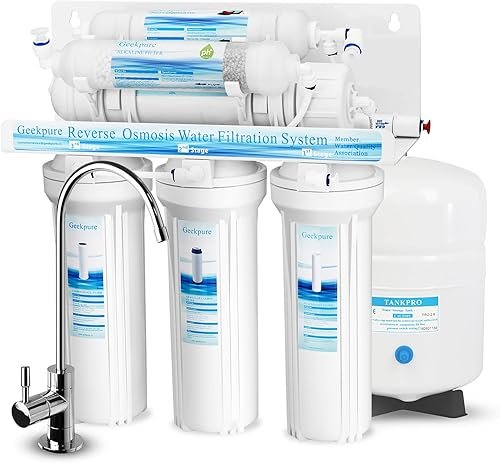
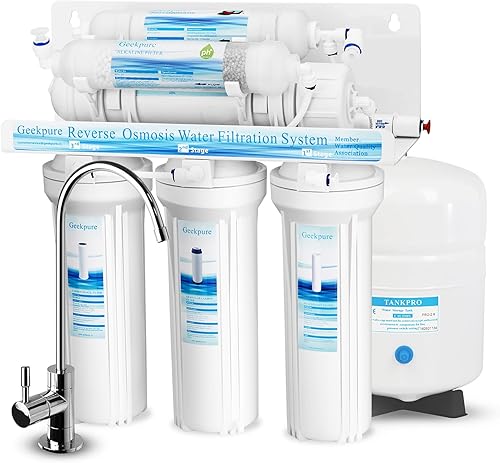
Geekpure 6-Stage Reverse Osmosis with Alkaline pH+ Remineralization
This is a solid, full-featured system. The sixth stage adds calcium and magnesium back into the water after the RO membrane strips everything out. The result? Water that’s pure but doesn’t taste flat. We like the NSF-certified membrane and lead-free faucet. The quick-connect fittings make installation less of a headache.
- Alkaline filter improves taste and adds minerals
- NSF-certified components for reliability
- Includes a lead-free faucet
- More complex with 6 stages to maintain
- Alkaline filter is an extra replacement cost
Geekpure 5-Stage Reverse Osmosis with Extra 7 Filters
This is the value play. You get the core 5-stage RO system plus seven extra filters—that’s potentially two years of pure water without buying another cartridge. The 0.0001-micron membrane tackles arsenic, lead, and fluoride effectively. In our experience, it’s a reliable, no-frills workhorse that gets the job done without breaking the bank.
- Incredible value with 2 years of filters included
- Standard, universal filter sizes are easy to find later
- NSF-certified membrane and tank
- Basic plastic faucet (you may want to upgrade)
- No remineralization stage
Waterdrop CoreRO Countertop Reverse Osmosis System
This changes the game if you can’t install an under-sink unit. It’s a true 6-stage RO system that sits on your counter. Just plug it in. No drilling, no plumbing. We were skeptical, but the performance is legit. It’s certified to NSF/ANSI 372 for lead-free materials and does a fantastic job reducing TDS. Perfect for a rental or a secondary station.
- Zero installation—truly plug and play
- Compact and portable
- NSF/ANSI 372 certified for safety
- Higher upfront cost per gallon of capacity
- Takes up counter space
Geekpure 6-Stage Reverse Osmosis with UV Filter
If bacterial contamination is a worry—and for many well owners it is—this system adds a critical UV sterilization stage. The UV lamp runs 24/7, inactivating bacteria and viruses that might slip past other treatments. It’s like having a security guard for your drinking water. The ISO9001:2015 certified manufacturer gives us confidence in build quality.
- UV stage provides continuous disinfection
- Highly effective against microorganisms
- Well-built with certified components
- UV bulb needs annual replacement
- Slightly higher electricity use
Frequently Asked Questions
- What filter do I need for my well water?
- There’s no one-size-fits-all answer. You need a water test first. Common needs are a sediment filter (5-20 microns), an iron/sulfur filter if you have those issues, and a UV light or RO system for bacteria and total purification. Start with the test.
- How often should you change your well water filter?
- It depends on the filter type and your water quality. Sediment cartridges: every 3-6 months. Carbon filters: every 6-12 months. RO membranes: every 2-3 years. UV bulbs: annually. Always follow the manufacturer’s schedule and watch for pressure drops or taste changes.
- Can a water filter remove bacteria from well water?
- Yes, but you need the right technology. UV light is the most common and effective method, killing 99.99% of bacteria and viruses. Reverse osmosis membranes also physically block bacteria. A standard carbon or sediment filter will not remove bacteria.
- Is a whole house filter worth it for well water?
- Absolutely. It protects your plumbing, water heater, and every appliance from sediment and scale. It also provides clean water for showering and bathing, which is important because your skin absorbs contaminants. A point-of-use RO system can then refine drinking water further.
- Why does my well water smell like rotten eggs?
- That’s hydrogen sulfide gas, produced by sulfur bacteria in your well or naturally occurring in the groundwater. An oxidizing filter (like one with catalytic carbon or a manganese dioxide filter) or a chlorination system will eliminate the smell effectively.
Final Thoughts
Choosing a water well filter system feels overwhelming, but it boils down to a simple process: test, target, and treat. Get your water analyzed by a lab. Identify the specific contaminants. Then build a system that addresses each one in the right order. Don’t buy a fancy RO system if your main problem is iron staining—fix the iron first.
For most well owners, a combination of sediment filtration, a core treatment unit for your specific contaminant, and a final UV or RO stage for drinking water is the winning formula. It’s an investment in your home, your health, and your peace of mind. Start with that water test. You’ll be glad you did.
