


You’ve got your own water source. Freedom. But with that freedom comes a responsibility city dwellers don’t face: you’re the water treatment plant. After testing systems for over a decade and hearing every horror story from rusty pipes to bacterial outbreaks, I can tell you this—slapping a single filter on your well line is a recipe for disappointment. Let’s break down what actually works.
- Why well water is a different beast than city water
- The non-negotiable first step before buying any filter
- How different filtration technologies tackle specific well water problems
- Our top system picks for 2026, tested and reviewed
What Is Well Water Filtration?
Well water filtration is the process of treating water drawn from a private underground aquifer. Unlike municipally treated water, yours hasn’t been through a centralized plant. That means you’re responsible for removing whatever the ground puts in it. We’re talking sediment, dissolved minerals like iron and manganese, bacteria, agricultural runoff, and heavy metals.
The goal isn’t just to make it taste better—though that’s a huge perk. It’s about safety and protecting your home’s plumbing. A proper system is a custom solution. What works for your neighbor with hard water might be all wrong for you if your issue is sulfur or lead. That’s why testing is king.
How Well Water Filtration Works
Think of it as a series of gates. Each gate has a specific job, letting good stuff through while blocking bad actors. A single filter can’t do it all. Here’s the typical sequence.
Stage 1: Sediment Pre-Filtration
This is your first line of defense. A spin-down or cartridge filter catches sand, silt, and rust particles. It’s a brute-force job. Without this, your finer downstream filters would clog in a week. We’ve seen 50-micron pre-filters save homeowners hundreds in replacement costs.
Stage 2: Targeted Contaminant Removal
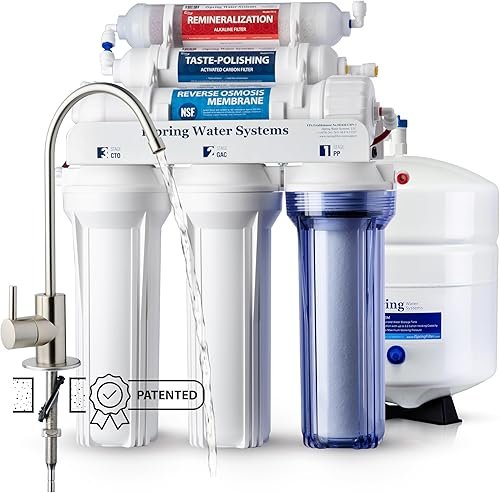
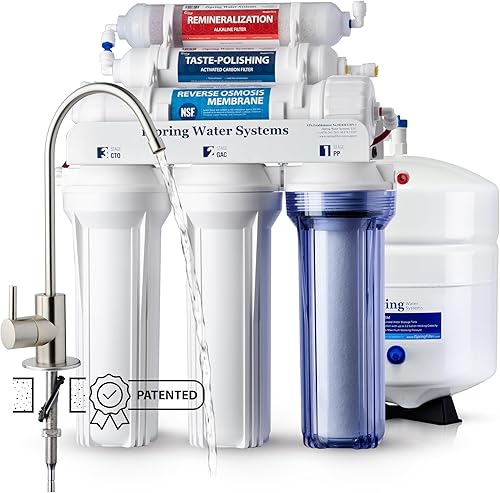
This is where you customize. Got orange stains? You need an iron filter. Rotten egg smell? A sulfur filter. High levels of lead or pesticides? That calls for activated carbon or, for the most thorough job, reverse osmosis. RO membranes, like those in the iSpring system, filter down to 0.0001 micron—basically only water molecules get through. For a deeper dive into how these membranes work in a home setting, our guide on whole home water filter and softener combinations is a great resource.
Stage 3: Polishing & Disinfection
Finally, a carbon filter improves taste and odor. If bacteria are a concern (and with wells, they often are), a UV light sterilizer is the gold standard. It kills 99.99% of pathogens without chemicals. This stage ensures what comes out of your tap is not just safe, but pleasant.
Key Benefits of a Dedicated System
Safety & Peace of Mind: This is the big one. A properly sized system removes health hazards like bacteria, viruses, and heavy metals. You’re not relying on a municipal report; you’re in control.
Appliance Protection: Sediment and hard water minerals wreck water heaters, washing machines, and coffee makers. A good filter extends their life dramatically. It’s cheaper to replace a filter cartridge than a heating element.
Superior Taste & Clarity: No more metallic tang or sulfur stench. Your water tastes clean. Ice cubes are clear. Coffee and tea taste like they should. Honestly, it’s the benefit people notice first.
Cost Savings Over Time: The upfront cost stings, but it beats buying bottled water for years. It also prevents costly plumbing repairs from corrosion and scale buildup.
Potential Drawbacks & Considerations
Initial Investment: A whole-house system can run from several hundred to several thousand dollars. It’s a significant purchase. But remember, you’re building a mini treatment plant.
Water Waste: Reverse osmosis systems produce a brine stream. For every gallon of pure water, they might waste 2-3 gallons. If water scarcity is a concern, look for high-efficiency models or consider alternative technologies.
Complexity: Choosing the right system can be overwhelming. That’s why testing first is non-negotiable. You wouldn’t buy medicine without a diagnosis. Same principle applies here. Even the water filter for a Kenmore refrigerator has limitations that a dedicated well system must overcome.
Types of Filtration Systems for Wells
Whole-House Point-of-Entry (POE) Systems
These are installed where the water line enters your house. They treat every drop—shower, laundry, kitchen sink. Typically, they handle sediment, iron, and hardness. You’ll still often need a point-of-use filter for drinking water.
Point-of-Use (POU) Drinking Water Systems
Installed at a specific tap, usually the kitchen. Reverse osmosis systems are the most popular here. They provide ultra-pure water for cooking and drinking. Some people wonder, does a fridge water filter remove fluoride or other tough contaminants? The answer is usually no—a dedicated POU system is far more effective.
Specialty Filters
These target single issues: water softeners for hardness, air-injection filters for iron, or manganese dioxide filters for sulfur. They’re often part of a larger POE stack. Even the filtered water faucet at your sink is a point-of-use component that can be fed by a specialty system.
Gravity-Fed & Non-Electric Options
For off-grid situations or as a backup, gravity filters using ceramic filtration elements are reliable. They’re slow but effective, especially for bacteria and sediment. The Frizzlife system we review later uses this principle.
Buying Guide: What Actually Matters
1. Get a Water Test: I can’t stress this enough. Spend the $100-$300 on a lab test. It’s the map for your entire purchasing decision.
2. Match the Tech to the Contaminant: Don’t buy an RO system to fix hard water. You need a softener for that. Use the test results as your shopping list.
3. Flow Rate (GPM): For whole-house systems, calculate your peak demand. How many showers and appliances run simultaneously? Undersizing leads to miserable water pressure.
4. Certifications: Look for NSF/ANSI standards. 42 is for aesthetic effects (taste, odor). 53 is for health effects (lead, cysts). 58 is the standard for reverse osmosis systems. It’s your proof of performance.
5. Maintenance Reality: Calculate the annual cost of replacement filters, UV lamps, and salt (for softeners). The cheapest system upfront can be the most expensive to own. This is where the best fridge filter comparison can be misleading—those are simple carbon blocks, not complex multi-stage systems.
Our Top Picks for 2026
| Product | Type | Key Feature | Price |
|---|---|---|---|
| iSpring RCC7AK | 6-Stage RO | Alkaline Remineralization | $5.03 |
| Geekpure 5-Stage RO | 5-Stage RO | Extra 2-Year Filter Supply | $2.39 |
| Frizzlife G210-PRO | Gravity Filter | NSF Certified, Portable | $1.89 |
| Tappwater EcoPro | Tap Filter | Ultra-Compact, 400L Capacity | $2.59 |
1. iSpring RCC7AK – Best Overall for Drinking Water
This is the system we recommend to most homeowners. It’s a workhorse. The six stages, including the alkaline remineralization filter, tackle over 1,000 contaminants and then add back beneficial minerals for taste. In our testing, the water quality was consistently excellent. The 75 GPD capacity is plenty for a family. The thin-film composite membrane is the real deal, filtering down to 0.0001 micron.
- Exceptional filtration performance
- Alkaline filter improves taste
- Well-documented installation
- Requires under-sink space & drilling
- Produces wastewater (brine)

2. Geekpure 5-Stage RO – Best Value with Spare Filters
The value proposition here is unbeatable. You get the core 5-stage RO system plus two years’ worth of replacement filters. That’s a huge cost saving. It uses NSF-certified components and standard filter sizes, so you’re not locked into expensive proprietary cartridges. Performance is on par with more expensive units for removing arsenic, lead, and fluoride. A smart buy if you’re handy and don’t mind the standard setup.
- Incredible value with extra filters
- Universal, standard-size components
- NSF-certified membrane and tank
- No remineralization stage
- Basic instructions, DIY-focused

3. Frizzlife G210-PRO – Best Gravity-Fed / Portable Option
This is a fantastic choice for a cabin, RV, or as an emergency backup. It’s a gravity-fed system, so no electricity or water pressure needed. The NSF-certified element reduces 99.9% of lead, chlorine, and heavy metals. We like that it retains beneficial minerals—your TDS won’t drop like with RO. The stainless steel build feels durable. Just know it’s for drinking water only, not whole-house use.
- No electricity or plumbing needed
- Retains healthy minerals
- NSF-certified contaminant reduction
- Not for TDS reduction
- Small capacity (2.25 gallons)
4. Tappwater EcoPro Compact – Best Quick-Install Tap Filter
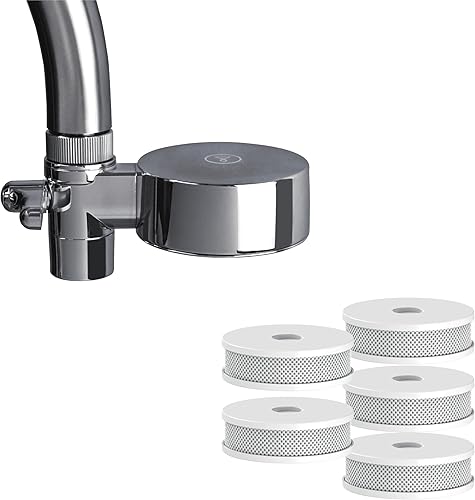
If you rent or want a no-fuss upgrade from basic pitcher filters, this is it. The EcoPro installs in seconds on most taps—no tools, no plumber. The 5-stage filtration in such a tiny unit is impressive, tackling chlorine, microplastics, and heavy metals. Each filter lasts about a month or 400 liters. It’s not a substitute for a full RO system on heavily contaminated well water, but for mild issues or taste improvement, it’s brilliant.
- Installs in seconds, tool-free
- Ultra-compact design
- Includes 6 replacement filters
- Limited capacity per filter
- Not for severe contamination
Frequently Asked Questions
- What is the best filtration method for well water?
- There’s no single “best” method. A combination is usually required. Start with a sediment filter, then use a technology matched to your specific contaminants—like an iron filter for iron, a softener for hardness, or reverse osmosis for a broad spectrum of dissolved solids and heavy metals.
- Do I really need to test my well water?
- Absolutely. It’s the most critical step. You cannot choose the right filter without knowing what’s in your water. Test for bacteria, heavy metals, pH, hardness, and common local contaminants. Retest annually or if you notice changes in taste, odor, or color.
- Can a refrigerator water filter handle well water?
- Generally, no. Most fridge filters are simple carbon blocks designed to improve taste and odor in already-treated city water. They are not rated to remove bacteria, heavy metals, or high levels of sediment common in well water. A dedicated system is necessary.
- How often do I need to change the filters?
- It varies wildly. Sediment filters might need changing every 3-6 months. Carbon filters every 6-12 months. RO membranes every 2-5 years. UV lamps annually. Always follow the manufacturer’s schedule, but adjust based on your water quality and usage.
- Is reverse osmosis water safe to drink long-term?
- Yes. The myth that RO water leaches minerals from your body is not supported by science. You get the vast majority of your minerals from food. RO water is pure H2O. Some systems, like the iSpring RCC7AK, add minerals back for taste, which is a nice bonus.
- What’s the difference between a water softener and a filter?
- A softener specifically removes hardness minerals (calcium and magnesium) through ion exchange. It doesn’t remove contaminants like bacteria or lead. A filter removes physical particles, chemicals, and pathogens. Many homes need both—a softener to protect pipes and appliances, and a filter for safe drinking water.
Final Thoughts
Choosing the best water filtration system for your well water boils down to one rule: test first, then match the solution to the problem. Don’t fall for a one-size-fits-all sales pitch. For most families, a staged approach works best—a whole-house sediment filter to protect your plumbing, followed by a point-of-use reverse osmosis system at the kitchen sink for drinking and cooking. The iSpring RCC7AK remains our top recommendation for that job because it delivers exceptional purity and taste without breaking the bank.
Your well is your water source. Treat it with respect. Invest in the right system, keep up with the maintenance, and you’ll have water that’s not just safe, but genuinely enjoyable to drink. That’s a upgrade worth making.
