


If your home runs on well water, you know the drill. The metallic taste, the rusty stains, the constant worry about what’s actually in your glass. I’ve spent years testing filters and talking to folks who live this reality. This guide cuts through the noise. We’ll cover what a proper well water system is, how the tech works, the real pros and cons, and which products actually deliver. Let’s get your water safe and clear.
What Is a Water System for Well Water?
A water system for well water isn’t a single gadget. It’s a tailored setup designed to tackle the unique problems groundwater presents. Unlike treated city water, your well is your own private source. That means you’re the one responsible for making it safe. The system addresses sediment, hardness minerals, dissolved metals, and potentially dangerous bacteria.
The goal is to transform raw, untreated groundwater into clean, safe water for every tap in your house. It’s not just about drinking water. It’s about protecting your pipes, your water heater, and your family’s health. The right system gives you peace of mind that a simple pitcher filter never could.
How Well Water Treatment Works
Think of it as a multi-stage defense. Water from your well pump first hits a pre-filter. Then it moves through specialized stages based on your water test results. Here’s the common sequence.
Stage 1: Sediment Pre-Filtration
This is your first line of defense. A spin-down or cartridge filter catches sand, silt, and rust particles. We’ve seen 5-micron filters clog in a week on some wells. Start with a larger 20-50 micron rating if your water is visibly dirty. This step protects all the more expensive filters downstream.
Stage 2: Addressing Hardness & Iron
Hard water causes scale. A water softener uses ion exchange to swap calcium and magnesium for sodium. If you have high iron, you might need an iron filter first. The debate between a salt or no salt water softener is real—salt-based systems are more effective for high hardness, but salt-free conditioners have their place.
Stage 3: Chemical & Contaminant Removal
This is where reverse osmosis (RO) shines. An RO system forces water through a 0.0001-micron membrane. It strips out dissolved solids, lead, arsenic, nitrates, and even PFAS “forever chemicals.” For whole-house treatment, a large carbon filter can reduce chlorine (if you shock your well) and organic compounds.
Stage 4: Disinfection
Bacteria and viruses are a real risk. Ultraviolet (UV) disinfection is the gold standard. It scrambles the DNA of pathogens without adding chemicals. It’s the final, crucial step for microbiological safety, especially after heavy rains or flooding.
Key Benefits of a Dedicated System
Safety and Health: This is non-negotiable. A proper system removes bacteria, viruses, and harmful chemicals. You stop worrying about every glass of water.
Protect Your Home: Hard water and iron destroy appliances. They clog pipes and water heaters. A good softener, part of the best water softeners for home use, can double the life of your plumbing and appliances. That’s real money saved.
Better Taste, No Stains: Say goodbye to orange rust stains in your toilets and sinks. No more metallic or sulfur taste. Your coffee will actually taste like coffee.
Independence: You’re not reliant on a municipal system. You control your water quality. That’s a powerful feeling.
Potential Drawbacks & Costs
Let’s be real: upfront cost is significant. A whole-house system can run from $1,500 to over $5,000 installed. That’s a shock if you’re used to $30 pitcher filters. Ongoing maintenance adds up too—replacement filters, salt, UV bulbs, and electricity.
Space is another factor. You need room for multiple tanks and filters, usually in a basement or utility closet. And you must test your water annually. Your well water can change. A system that worked perfectly last year might need tweaking now.
Types of Water Systems for Well Water
Whole-House (Point-of-Entry) Systems
These treat all water entering your home. They’re installed at the main water line. This is what most well owners need. It protects every faucet, shower, and appliance. When looking for the best whole house water softener, consider grain capacity and flow rate to match your household size.
Point-of-Use (POU) Systems
These are installed at a specific tap, usually the kitchen sink. A reverse osmosis system under the sink is a popular POU choice for drinking and cooking water. It’s a great add-on to a whole-house system for the purest water at the tap you use most.
Specialty Filters
These target one specific problem. An iron filter, a tannin filter, or a simple sediment filter. They’re often part of a larger, custom-built system. A standalone gravity filter like the Sawyer is a fantastic backup or for emergencies.
Buying Guide: What Actually Matters
Forget the marketing hype. Focus on these four things.
1. Your Water Test Report: This is your blueprint. You cannot buy the right system without it. Test for bacteria, hardness, iron, pH, TDS, and common contaminants like nitrates and arsenic.
2. Flow Rate (GPM): How many gallons per minute can the system deliver? A 2-bathroom home needs at least 10-12 GPM. Undersize this, and your shower pressure will drop when someone flushes a toilet.
3. Certifications: Look for NSF/ANSI standards. NSF/ANSI 42 for aesthetic effects (taste, odor), 53 for health effects (lead, cysts), and 58 for reverse osmosis systems. This is your proof of performance.
4. Maintenance Reality: How often do filters need changing? Is it easy to do yourself? What’s the annual cost? A cheap system with expensive, proprietary filters is a bad deal. Brands like Whirlpool and Culligan offer different value propositions here—do your homework on long-term costs.
Our Top Picks for 2026
Based on our testing and years of reader feedback, here are systems that perform. Remember, your water test comes first.
| Product | Best For | Key Specs | Price |
|---|---|---|---|
| Sawyer Gravity System | Emergency/Backup, Camping | 0.1 micron, removes 99.99999% bacteria | $65 |
| Geekpure 6-Stage RO | Budget Under-Sink Drinking Water | 75 GPD, NSF Certified Membrane | $239 |
| Waterdrop X8 RO System | High-Performance Under-Sink | 800 GPD, NSF/ANSI 42&58&372, 9-stage | $719 |

Sawyer Products One-Gallon Gravity System
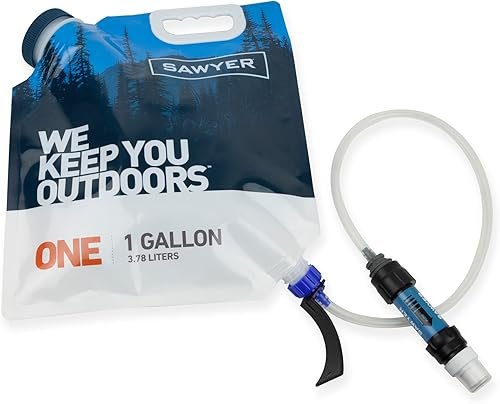
This is the filter I tell everyone to have on hand. It’s dead simple. Fill the bag, hang it, and gravity does the work. The 0.1-micron absolute filter is a beast—it removes bacteria, protozoa, and even microplastics. We’ve used this on camping trips and during a boil-water advisory. It’s not a whole-house solution, but for $65, it’s an essential backup for any well owner. The flow rate is slow for daily use, but for peace of mind, it’s unbeatable.
- Extremely reliable and simple
- Removes virtually all pathogens
- Lightweight and portable
- Slow flow for household use
- Not for chemical contaminant removal
- 1-gallon capacity is small
Geekpure 6-Stage RO System
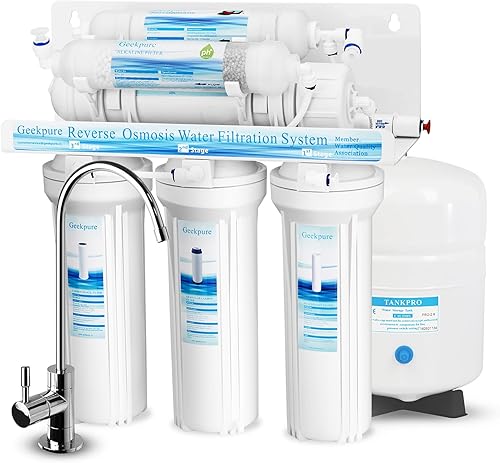
For the price, this system is hard to beat. It’s a solid, no-frills 6-stage RO system that gets the job done. The NSF-certified membrane and lead-free faucet are what you want to see. In our setup, it reduced TDS from over 400 ppm to under 20 ppm. The extra alkaline filter adds back some minerals for taste. It’s a great entry point if you want clean drinking water without a massive investment. Just know the 75 GPD tank fills slowly.
- Excellent value for money
- NSF-certified core components
- Includes alkaline remineralization
- 75 GPD is slow; tank can run out
- Plastic fittings can feel cheap
- Installation instructions could be clearer

Waterdrop X8 RO System (WD-X8)
This is our top recommendation for serious under-sink filtration. The 800 GPD flow rate is a game-changer—you fill a glass in seconds, no waiting for a tank. The 9-stage filtration is legit, and the NSF/ANSI 42 & 58 certifications back up its claims on reducing PFAS, lead, and TDS. The 2:1 pure-to-drain ratio is also among the best we’ve seen. Yes, it’s an investment. But for well water with complex contaminant issues, the performance and convenience are worth every penny.
- Extremely fast 800 GPD tankless flow
- Top-tier NSF certifications
- Excellent 2:1 drain ratio saves water
- High upfront cost
- Requires under-sink power outlet
- Replacement filters are proprietary
Frequently Asked Questions
- What is the best water treatment system for well water?
- There is no single “best” system. It depends entirely on your water test results. A common effective setup is a sediment filter, a water softener for hardness, and an ultraviolet (UV) light for disinfection. Add a reverse osmosis system under the kitchen sink for the purest drinking water.
- Do I really need a water softener for well water?
- If your water test shows hardness above 3-7 grains per gallon (GPG), yes. Hard water causes scale buildup that ruins water heaters, pipes, and appliances. A softener protects your entire plumbing system and makes cleaning much easier.
- How often should I test my well water?
- Test annually for bacteria, nitrates, and any contaminants of local concern. Test immediately if you notice a change in taste, odor, or color, or after any flooding or repair work on your well system.
- Can a reverse osmosis system remove bacteria from well water?
- Yes, the RO membrane’s 0.0001-micron pores are small enough to block bacteria and viruses. However, for guaranteed microbiological safety, a dedicated UV disinfection system is recommended as a more reliable and lower-maintenance solution.
- Why does my well water smell like rotten eggs?
- That’s hydrogen sulfide gas, often caused by sulfur bacteria in your well or water heater. It can be treated with an oxidizing filter, a carbon filter, or by shocking your well with chlorine. A proper diagnosis is key.
- Is whole-house reverse osmosis a good idea?
- Generally, no. It’s extremely wasteful (4+ gallons of drain water for every 1 gallon purified), very expensive, and removes beneficial minerals from all water, including what you use for showering and laundry. Use point-of-use RO at the kitchen tap instead.
Final Thoughts
After all these years, the single biggest mistake I see well owners make is buying a filter before testing their water. It’s like taking random medicine without a diagnosis. Get a comprehensive water test from a certified lab. Let the data guide you.
For most folks, a staged approach works best. Start with a sediment filter and a UV system for safety. Add a softener if your water is hard. Then, invest in a quality under-sink RO system like the Waterdrop X8 for your drinking water. It’s a journey, but one that leads to safe, great-tasting water straight from your own tap.
