


Well Water Filters: The No-Nonsense Guide to Cleaner, Safer Water (2026)
Your well water has a unique personality. It might smell like sulfur, leave orange stains, or just taste… off. After testing dozens of systems and talking to countless homeowners, I can tell you that the right filter changes everything. This guide cuts through the marketing fluff. We’ll cover what these filters actually do, how to pick one, and which ones we’d actually install in our own homes.
- What well water filters are and why you need one.
- The step-by-step process of how they clean your water.
- The real benefits and the honest drawbacks.
- A breakdown of the different types of systems.
- A practical buying guide and our top picks for 2026.
- What Is a Well Water Filter?
- How Well Water Filtration Works
- Key Benefits of Filtering Your Well Water
- Potential Drawbacks & Considerations
- Types of Well Water Filter Systems
- Buying Guide: How to Choose the Right Filter
- Our Top Well Water Filter Picks for 2026
- Frequently Asked Questions
- Final Thoughts
What Is a Well Water Filter?
A well water filter is a treatment system designed specifically for the challenges of private well water. Unlike municipal water, which is treated at a plant, your well water comes straight from the ground. That means it can carry sediment, dissolved minerals like iron and manganese, bacteria, and even agricultural runoff.
These filters are your personal water treatment plant. They’re built tougher than standard pitcher filters because the job is bigger. The goal isn’t just to improve taste—it’s to protect your plumbing, your appliances, and most importantly, your health. A proper system acts as a POE (point-of-entry) filter, treating all the water entering your home.
How Well Water Filtration Works
Think of filtration as a multi-stage bouncer at a club. Each stage has a different job, checking for different problems and kicking them out before the water gets to your tap.
Stage 1: The Sediment Pre-Filter
This is your first line of defense. A pleated or spun polypropylene cartridge catches physical junk—sand, silt, rust flakes. We’re talking particles down to 5 or 20 microns. This step is non-negotiable. Without it, your finer filters would clog in a week. Effective sediment filtration is the foundation of every good well system.
Stage 2: Targeted Contaminant Removal
Here’s where you customize based on your water test. Got orange stains? You need an iron and sulfur filter that uses air injection or manganese dioxide. Bad taste and odors? A quality carbon water filter will adsorb those compounds. Worried about lead from old pipes? You’ll want a dedicated lead filter with certified reduction capabilities.
Stage 3: Polishing & Disinfection (Optional)
For the ultimate safety net, especially if bacteria are a concern, a UV sterilizer lamp or a final polishing filter can be added. This stage doesn’t remove particles but kills or neutralizes microorganisms.
Key Benefits of Filtering Your Well Water
Protect Your Health: This is the big one. A properly chosen filter can remove harmful bacteria (like E. coli), viruses, and chemical contaminants. Peace of mind is priceless.
Save Your Plumbing and Appliances: Iron and manganese cause rust stains and scale buildup. Sediment wears out washing machine valves and clogs faucet aerators. A filter acts as a bodyguard for your entire home’s water system.
Better Taste, Better Life: No more metallic tang or rotten egg smell. Your coffee will taste better, your ice will be clear, and showering won’t leave your skin feeling dry and itchy.
Potential Drawbacks & Considerations
Upfront Cost: A whole-house system is an investment. You’re looking at several hundred to several thousand dollars for equipment and professional installation.
Wastewater: Some systems, particularly reverse osmosis units, produce a brine stream that needs a proper drain. You need to plan for this during installation.
Types of Well Water Filter Systems
Backwashing Filters
These are tanks filled with media (like Birm for iron, or catalytic carbon for sulfur). They automatically clean themselves by reversing water flow on a schedule. Ideal for high levels of dissolved contaminants.
Cartridge-Based Systems
These use replaceable filter cartridges in a housing. They’re simpler and cheaper upfront, best for lower contaminant levels or as part of a multi-stage setup. The 10″x4.5″ “big blue” size is the industry standard for whole-house use.
Reverse Osmosis (RO) Systems
For the highest purity at a single tap (like the kitchen sink), an undersink RO system is unbeatable. It forces water through a 0.0001-micron membrane, removing up to 99% of total dissolved solids. It’s overkill for the whole house but perfect for drinking water.
Buying Guide: How to Choose the Right Filter
Forget brand hype. Focus on these four things:
1. Your Water Test Report: This is your map. It tells you exactly what contaminants you have and their concentrations. Match the filter’s certified capabilities to your report.
2. Flow Rate (GPM): How many gallons per minute can the system handle? A small house needs 5-10 GPM. A large home with multiple bathrooms needs 15+ GPM. An undersized system kills water pressure.
3. Certification: Look for independent certification to NSF/ANSI standards. Standard 42 is for aesthetic effects (taste, odor). Standard 53 is for health effects (lead, cysts). Standard 58 is for reverse osmosis systems.
4. Maintenance Reality: Calculate the annual cost of replacement filters or media. Can you do it yourself, or do you need to call a plumber every time?
Our Top Well Water Filter Picks for 2026
| Product | Best For | Key Feature | Price |
|---|---|---|---|
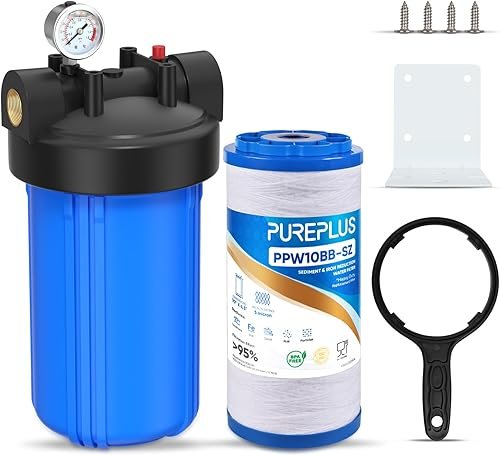
 PUREPLUS 1-Stage |
Budget Sediment/Iron Start | Targets iron & manganese | $1.70 |
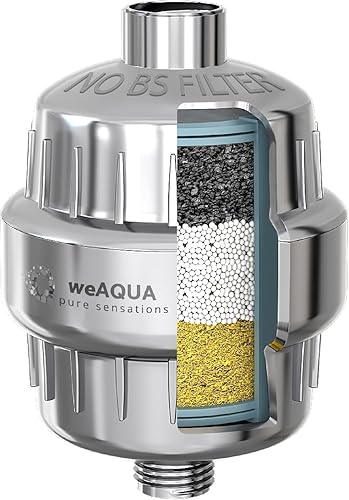 weAQUA Shower Filter |
Shower-Only Hard Water Fix | 99% removal claim, skin/hair benefits | $35 |
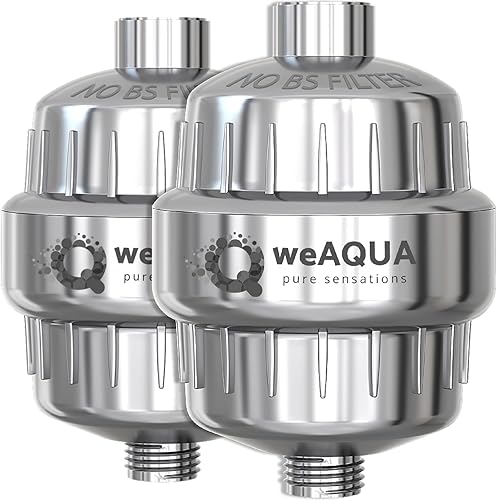 weAQUA 2-Pack |
Multiple Showers | 12 months of filtration | $69 |
 Waterdrop WD-X8 RO |
High-Purity Drinking Water | 800 GPD, NSF certified, low waste | $7.19 |
PUREPLUS 1-Stage Whole House Water Filter
At this price, it’s almost a no-brainer for a first step. We’ve seen this housing and similar iron-reduction cartridges used in DIY setups for years. It’s a basic, no-frills canister that does one job: start filtering sediment and some dissolved iron. Don’t expect miracles, but for a homeowner on a tight budget, it’s a legitimate starting point. The universal 10″x4.5″ size means you can upgrade the cartridge later.
- Incredibly low entry cost
- Standard housing allows cartridge upgrades
- Simple to install for DIYers
- Very basic filtration only
- Cartridge life may be short with heavy sediment
- Manufacturer warranty details are unclear
weAQUA Premium Heavy Duty Shower Filter
Honestly, most whole-house problems need a whole-house solution. But if your main complaint is dry skin and dull hair from hard water minerals, a shower filter can make a real difference. This one packs multiple media types (KDF, carbon, calcium sulfite) which is better than cheap single-stage filters. We like the 6-month lifespan—it’s realistic. It won’t solve iron staining, but for chlorine and hardness in your shower, it’s a solid, targeted fix.
- Multi-stage filtration in a small package
- Chrome finish looks good in most showers
- Claims to maintain water pressure
- Only treats one shower, not the whole house
- “99% removal” claim needs context (flow rate dependent)
- Won’t address severe iron or sulfur smells
weAQUA Premium Heavy Duty Shower Filter Family 2 Pack
This is just the two-pack version of the filter above. The value proposition is simple: if you have two showers you want to treat, buying the bundle saves you a few bucks versus buying them individually. The filtration is identical. We’d recommend this if you’re renting or not ready for a whole-house investment but have multiple bathrooms with hard water issues. The 12-month total coverage is convenient.
- Cost-effective for two bathrooms
- Same multi-stage filtration as single pack
- Year-long coverage for two showers
- Still a point-of-use solution, not whole-house
- Upfront cost is higher for a temporary fix
- Doesn’t address root cause of water problems
Waterdrop WD-X8 Reverse Osmosis System
This is for your drinking water. If your well has high TDS, nitrates, or you just want the purest possible water for cooking and coffee, an undersink RO is the answer. The 800 GPD (gallons per day) rating is massive—no waiting for a tank to refill. The 2:1 pure-to-waste ratio is excellent for an RO system, meaning less water down the drain. The NSF/ANSI 42 & 58 certification gives us confidence in its performance claims. It’s a serious filter for serious water quality.
- Very high daily output (800 GPD)
- Excellent 2:1 waste ratio saves water
- NSF/ANSI certified for material safety and performance
- 9-stage filtration is thorough
- Only treats water at one faucet
- Requires under-sink space and a drain connection
- Initial cost is higher than basic filters
Frequently Asked Questions
- What is the best filter for well water with iron?
- For dissolved iron (clear water iron), an air-injection oxidation filter or a Birm media backwashing filter is most effective. For ferric iron (red water iron), a good sediment filter rated for 5-10 microns will catch the particles. Always match the filter type to the iron form shown in your water test.
- Do I need a whole-house filter or just an under-sink one?
- It depends on the problem. If contaminants affect taste, drinking, and cooking only, an undersink RO system works. If you have staining, odor, or scale issues affecting showers, laundry, and appliances, you need a whole-house (POE) system to protect everything.
- How often should I change my well water filter?
- Sediment pre-filters typically need changing every 3-6 months, or when you notice a pressure drop. Carbon filters last 6-12 months. Reverse osmosis membranes can last 2-3 years. UV lamps need annual replacement. Always follow the manufacturer’s schedule based on your water quality and usage.
- Can a well water filter remove bacteria?
- Yes, but you need the right technology. A UV sterilizer is the most reliable method, killing 99.99% of bacteria and viruses. Some ultrafiltration membranes (not standard RO) can also physically remove bacteria. A standard carbon filter will not remove bacteria.
- Why does my well water still smell after filtering?
- This usually means the filter is exhausted or wasn’t the right type for your odor. Hydrogen sulfide (rotten egg smell) requires a specific oxidizing filter. If you have a carbon filter and the smell returns quickly, your contaminant level may be too high for it, or the flow rate is exceeding its capacity.
Final Thoughts
After years in this field, the single biggest mistake we see is people buying a filter without testing their water first. It’s like taking random medicine without a diagnosis. Get the test. Understand your enemy. Then, build your defense layer by layer: sediment first, then targeted treatment, and maybe a polishing step for drinking water.
For most well owners, a simple two-stage system—a sediment filter followed by a filter for your specific contaminant (iron, sulfur, etc.)—will solve 90% of problems. Start there. You can always add an undersink RO system later for perfect drinking water. The goal isn’t perfection; it’s safe, clean, and usable water from your own private source.
