


Your Complete Guide to Well Water: Testing, Treatment & Safety (2026)
If your home runs on a well, you know the deal. The water is free, but it’s not free of problems. That rotten egg smell, the orange stains in your sink, the scale clogging your coffee maker—it all comes with the territory. We’ve spent years testing filters, pulling pumps, and talking to the folks who deal with this every day. This guide cuts through the noise. We’ll cover what’s actually in your water, how to fix it, and which products are worth your money.
- What well water really is and where it comes from
- The step-by-step process of how a well system works
- The real benefits and the honest drawbacks you’ll face
- A breakdown of the different treatment system types
- A practical buying guide for filters and test kits
- Our top product picks for 2026
What Is Well Water?
Simple answer: it’s groundwater. Rain and snow melt seep down through soil and rock, eventually hitting a water-bearing layer called an aquifer. Your well is basically a straw drilled into that aquifer to bring that water up to your house. Unlike city water, it doesn’t get chlorine added or go through a centralized treatment plant. It’s raw, straight from the earth.
That’s both its biggest appeal and its main challenge. On one hand, you’re not paying a water bill and you’re using a natural resource. On the other, you’re the one responsible for making sure it’s safe to drink. What’s in that water depends entirely on your local geology. Rocky mountains? You might have low pH and metals. Farmland? Nitrates from fertilizers could be a concern. Clay soil? Expect hardness and maybe manganese.
We’ve seen it all. The water from a well 50 feet away from your neighbor’s can be completely different. That’s why the first rule of well water is always: test, don’t guess. A basic test kit will tell you more about your water in 10 minutes than a year of guessing will.
How a Well Water System Works
Think of your well system as a chain with four main links. Break any one, and you’ve got problems.
1. The Well Itself
This is the hole in the ground, lined with a casing (usually PVC or steel) to keep it from collapsing. At the bottom, a screen lets water in but keeps most sand and gravel out. Depth varies wildly—from 30 feet to over 500 feet, depending on where the good water is.
2. The Pump
This is the heart of the system. A submersible pump sits down in the well, pushing water up. Older or shallow wells might use a jet pump above ground. The pump is controlled by a pressure switch. When you turn on a faucet, pressure drops, the switch clicks on, and the pump runs. It’s a simple, reliable cycle—until the pump dies, which is a bad day.
3. The Pressure Tank
This big blue or gray tank in your basement or utility closet acts as a buffer. It holds a reserve of water under pressure (typically 40-60 PSI) so the pump doesn’t have to kick on every single time you wash a hand. It smooths out the water pressure throughout your home.
4. The Treatment System
This is where you come in. Before the water hits your water heater or kitchen sink, it should go through some form of treatment. For many homes, a full house water filter system is the starting point, tackling sediment and basic taste issues right where the water line enters your home.
Key Benefits of Well Water
No Monthly Water Bill: This is the big one. Once the well is drilled and the pump is installed, your water is essentially free. You pay for electricity to run the pump and for treatment, but not for the volume you use. For large families or homes with big gardens, the savings add up fast.
Natural Mineral Content: Well water often picks up beneficial minerals like calcium and magnesium as it filters through rock. This can give it a crisp, satisfying taste that many people prefer over flat, treated city water. You’re drinking what the earth provided.
Independence & Resilience: You’re not tied to a municipal system. If the city water main breaks or there’s a boil-water advisory, your well keeps running. In many rural areas, it’s not a choice—it’s the only option, and that independence is a real advantage.
Potential Drawbacks & Common Problems
You Are the Quality Control: There’s no city water department watching your back. If bacteria creep in or a contaminant level spikes, it’s on you to find it and fix it. This requires diligence and a bit of know-how.
Common Contaminants: Depending on your area, you might battle:
- Hardness: Calcium and magnesium causing scale. A good water softener is often the fix—check out our guide to the top rated water softeners.
- Iron & Manganese: That orange staining on fixtures and laundry. Requires a dedicated iron bacteria filter or oxidizing system.
- Sulfur (H2S): The infamous “rotten egg” smell. Annoying, but treatable with oxidation or specialized filters.
- Sediment & Turbidity: Sand, silt, or rust particles. A simple sediment pre-filter catches this.
- Nitrates/Bacteria: More serious health concerns, often from agricultural runoff or surface seepage. Needs UV light or chlorination.
Types of Well Water Treatment Systems
There’s no one-size-fits-all solution. Your system should be built around your water test results. Here are the main players.
Sediment Filters
The first line of defense. These are simple mechanical filters (spun poly, pleated, or string-wound) that catch dirt, sand, and rust. They’re cheap, essential, and protect all your downstream equipment. Start here.
Water Softeners
If your test shows high hardness (over 3-4 grains per gallon), a softener is likely in your future. It uses ion exchange resin to pull out calcium and magnesium, replacing them with sodium. This stops scale buildup in pipes and water heaters.
Oxidizing Filters (For Iron, Sulfur, Manganese)
These are workhorses for smelly, staining water. The filter media (like Birm, Filox, or greensand) oxidizes dissolved iron and sulfur, turning them into solids that can be filtered out. They often need a pre-treatment oxidant like air or chlorine.
Carbon Filters
The king of taste and odor. Carbon water filtration is fantastic for removing chlorine (if you shock your well), organic chemicals, and that earthy musty taste. It’s often part of a multi-stage system.
UV Purifiers
If bacteria (E. coli, coliform) are a problem, ultraviolet light is a chemical-free way to kill them. Water passes through a chamber where UV light scrambles their DNA. It’s effective, but the water must be clear for the light to penetrate, so sediment filters come first.
Reverse Osmosis (RO)
The ultimate polish. An RO system forces water through a semipermeable membrane, removing up to 99% of dissolved solids, including nitrates, lead, and fluoride. It’s usually installed at a single faucet (like the kitchen sink) for drinking and cooking water, as it wastes some water and can be slow.
Buying Guide: What You Actually Need
1. Test Your Water First. Seriously. Don’t buy a single filter until you know what you’re filtering. A comprehensive test from a lab is best, but a good home test kit gives you a solid starting point for the big issues.
2. Size Matters. A filter rated for a 2-bathroom home will die quickly in a 4-bathroom home with teenagers. Match the system’s flow rate (gallons per minute) and capacity to your household’s peak demand.
3. Look for Certifications. NSF/ANSI standards are your friend. Standard 42 covers aesthetic effects (taste, odor), Standard 53 covers health contaminants (lead, cysts), and Standard 58 is for RO systems. Don’t just trust marketing claims.
4. Consider Maintenance. How often do filters need changing? Does the softener need salt? Is the UV bulb an annual replacement? Factor in the long-term cost and effort. A cheap system with expensive, proprietary filters is no bargain.
Our Top Well Water Product Picks for 2026
Based on our testing and reader feedback, here are solid products for dealing with common well water headaches.
| Product | Best For | Price | Links |
|---|---|---|---|
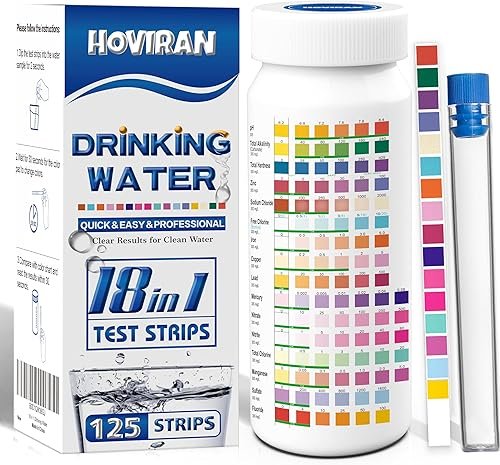
18-in-1 Water Quality Test Strips |
Your essential first step. Quick, broad-spectrum screening. | $27 |
Buy on Amazon Buy on eBay |
Tapping Into Water (Book) |
DIYers and the deeply curious. Low-tech drilling knowledge. | $11 |
Buy on Amazon Buy on eBay |
Handuro 750W Submersible Well Pump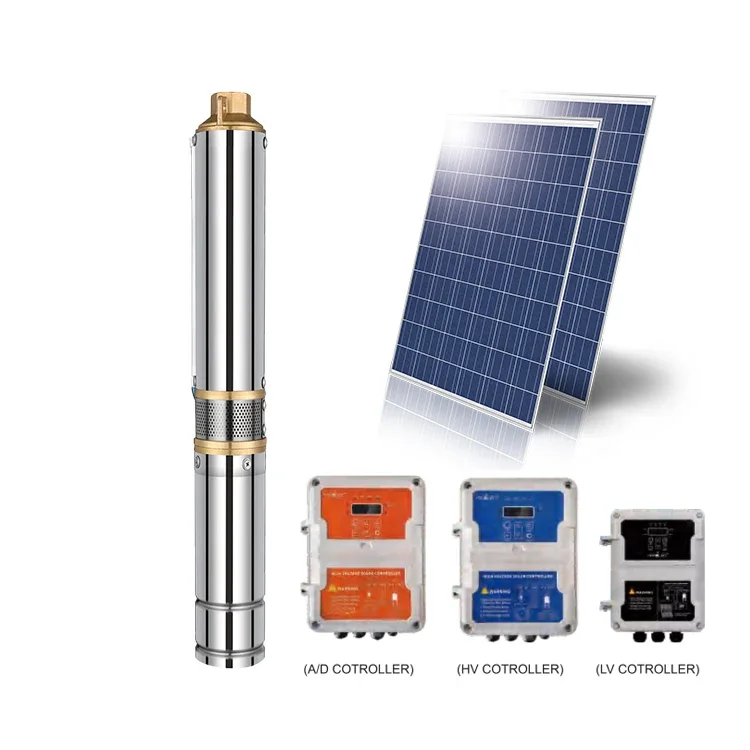 |
Serious DIY or agricultural replacement pump. | $261.84 | Buy on AliExpress |
18-in-1 Water Quality Test Strips, 125ct
This is the kit we tell every new well owner to buy. Dip a strip, wait 30 seconds, and you’ve got a snapshot of 18 parameters—hardness, iron, copper, nitrates, pH, and more. It’s not lab-accurate, but it’s incredibly useful for spotting the obvious problems. We keep a bottle in the office. At $27 for 125 tests, it’s the cheapest insurance you can buy for your water quality.
- Incredibly easy to use—results in under a minute
- Covers all the major well water concerns
- Affordable for regular quarterly testing
- Not a substitute for annual lab certification
- Color matching can be subjective in bad light
Tapping Into Water Low Tech Well Drilling Techniques and Tools
This isn’t a filter, but it’s a fascinating resource. If you’re off-grid, into hardcore DIY, or just want to understand how wells are actually constructed, this book breaks it down. It covers hand drilling, sand point wells, and basic geology. We wouldn’t recommend drilling your own modern household well with just this, but for a shallow irrigation well or pure knowledge, it’s a great read. The price is right, too.
- Practical, hands-on knowledge
- Demystifies the well drilling process
- Very affordable
- Not a substitute for professional drilling for a primary home well
- Techniques are low-yield
Handuro 750W 1Hp Submersible Deep Well Pump
For the serious DIYer or someone needing a powerful backup. This 3-inch submersible pump is built for deeper wells and can handle both water supply and agricultural use. The 750W motor has decent push. We haven’t run this one for a decade, but for the price, it’s a compelling option if you’re comfortable with installation and understand it may not have a local warranty. It’s a tool, not a toy.
- Strong 1HP motor for deep wells
- Solar-compatible for off-grid use
- Significantly cheaper than many local brands
- Warranty may be difficult to claim internationally
- Installation requires electrical and plumbing know-how
Well Water FAQ
- How often should I test my well water?
- At a minimum, test annually for bacteria and nitrates. Test more frequently (every 3-6 months) if you notice changes in taste, odor, or color, or if there’s nearby construction, flooding, or agricultural activity. A basic test strip check quarterly is a smart habit.
- What’s the most common problem with well water?
- Hardness is probably the most widespread, causing scale buildup. But iron and sulfur (the rotten egg smell) are close contenders. The “most common” issue really depends on your local geology, which is why testing is so critical.
- Can I drink well water without a filter?
- Maybe, but it’s a gamble. Even if it looks and tastes fine, it could contain bacteria, nitrates, or heavy metals you can’t detect. We never recommend drinking untreated well water. At the very least, a point-of-use filter for your kitchen tap is a must.
- Do I need a water softener for well water?
- Only if your water is hard. Test for hardness (measured in grains per gallon or GPG). If it’s above 3-4 GPG, you’ll notice scale on fixtures and appliances. A softener will save you money on appliance repairs and soap. Below that, you probably don’t need one.
- What does a “shock” chlorination of a well do?
- It’s a strong chlorine treatment poured into the well and circulated through the pipes to kill bacteria, iron bacteria, and other microorganisms. It’s a common fix for failed bacteria tests. The process involves mixing a strong bleach solution, running it through all taps, letting it sit, and then flushing it out completely. It’s a temporary fix; you need to find and fix the source of contamination.
- Why does my well water smell like rotten eggs?
- That’s hydrogen sulfide gas (H2S). It’s produced by sulfur bacteria in the well, water heater, or plumbing. It’s not usually a health risk, but it’s awful. The fix can be as simple as replacing the magnesium anode rod in your water heater or as involved as installing an oxidizing filter system.
Final Thoughts
Living with a well is a trade-off. You get independence and free water, but you take on the responsibility of being your own water utility. The good news? The solutions are well-understood and reliable. It all starts with knowing what’s in your water. Get a test kit, understand your baseline, and build your treatment system from there. Don’t overbuy, but don’t cut corners on health-related contaminants like bacteria or nitrates.
From our experience, the most satisfied well owners are the ones who stay proactive. They test regularly, maintain their equipment, and don’t wait for a crisis. Your water is your most important resource—treat it that way.
