


Walk into any modern brewery, data center, or hospital, and you’ll find a hidden hero: a sophisticated water treatment system. It’s not just about making water taste better. It’s about protecting million-dollar equipment, meeting strict health codes, and ensuring consistent product quality. We’ve spent years testing systems, from simple chlorination tablets to complex reverse osmosis arrays, and the difference between a good and a bad setup is night and day.
This guide covers:
- What commercial water treatment really means (and who needs it)
- The core technologies and how they work together
- The real benefits and the costly drawbacks to avoid
- A clear breakdown of system types for different applications
- Actionable advice for choosing your first or next system
What Is Commercial Water Treatment?
Think of it as water filtration on steroids. While a home system might handle a few hundred gallons a day for drinking and cooking, commercial treatment is engineered for thousands or even millions of gallons. It’s designed for the specific demands of a business or institution.
This isn’t just one gadget. It’s a tailored sequence of processes. A restaurant might need a softener to protect its dishwashers from scale and a carbon filter for crystal-clear ice. A pharmaceutical plant requires ultrapure water that’s free of every possible microbe and mineral. The goal is always the same: deliver water that meets a precise quality standard for a specific commercial purpose.
The single biggest mistake we see is businesses installing a residential-grade system to save a few bucks. It fails within months under the heavy load. The repair costs and downtime end up being far more expensive than doing it right the first time. If your operation depends on water, you need commercial-grade treatment.
How Commercial Water Treatment Works
There’s no magic bullet. Effective treatment uses multiple stages, each targeting different contaminants. It’s a sequential cleanup crew for your water supply.
Pre-Treatment & Screening
First, you catch the big stuff. Large sediment filters or screens remove sand, rust, and other particles that could clog or damage downstream equipment. This step is all about protecting your investment in the more sensitive, expensive components that come next.
Primary Treatment: The Heavy Lifting
This is where the main contaminant removal happens. The technology used depends entirely on your water report. Common methods include:
- Activated Carbon: A workhorse for removing chlorine, volatile organic compounds (VOCs), and bad tastes/odors. It’s like a magnet for chemical impurities.
- Water Softeners: These use ion-exchange resin to grab hardness minerals like calcium and magnesium. They’re essential for preventing scale buildup in boilers, cooling towers, and coffee machines. Understanding your local water hardness is the first step—a good water hardness chart can tell you what you’re dealing with.
- Reverse Osmosis (RO): The gold standard for purity. It forces water through a semi-permeable membrane, rejecting up to 99% of dissolved salts, bacteria, and viruses. It’s critical for applications needing very low total dissolved solids (TDS).
Disinfection & Final Polish
You’ve removed most contaminants, but you still need to kill any lingering pathogens. Chlorination, UV light, or ozone are common final steps. For ultra-pure applications, additional deionization or electrodeionization (EDI) modules might be the last stop before the water reaches the process.
Key Benefits of a Proper System
Protects Your Expensive Equipment: Scale from hard water is the number one killer of boilers, heat exchangers, and commercial coffee makers. A good softener or scale inhibitor pays for itself by preventing catastrophic repair bills.
Ensures Regulatory Compliance: From food safety to healthcare, industries have strict water quality rules. A documented treatment system is your proof of compliance, keeping you open for business and avoiding fines.
Improves Product Quality & Consistency: Ask any brewer or baker. The mineral content of water directly affects flavor, texture, and appearance. Consistent water means a consistent product, batch after batch.
Reduces Operating Costs: Treated water makes heating and cooling systems more efficient. It also reduces the amount of soap and detergent needed. These savings add up quickly over a year.
Potential Drawbacks & Costs
High Initial Investment: A proper system isn’t cheap. You’re paying for engineering, heavy-duty components, and professional installation. Skimping here is a false economy.
Ongoing Maintenance & Consumables: Filters clog, membranes foul, and UV lamps lose intensity. You need a strict maintenance schedule and a budget for replacement parts. We’ve seen systems fail simply because no one changed the pre-filters.
Wastewater Generation: Some technologies, especially reverse osmosis, produce a reject stream of concentrated contaminants. You need a plan for disposing of this brine responsibly, which can add complexity and cost.
Requires Expertise: These aren’t “set and forget” appliances. They often require trained personnel to monitor performance, adjust chemical feeds, and troubleshoot issues. For some small businesses, this means hiring a service contractor.
Types of Commercial Treatment Systems
Filtration & Separation Systems
This category includes everything from big sediment cartridges to advanced membrane systems. Carbon filters for chemical removal, multimedia filters for sediment, and ultrafiltration for microbial safety without removing minerals. They’re often the workhorses of a treatment train.
Water Softening & Conditioning
Ion-exchange softeners are the classic solution for hardness. They swap calcium and magnesium ions for sodium ions. For places where adding sodium is a concern, template-assisted crystallization (TAC) systems condition the water to prevent scale without actually removing the minerals.
Disinfection & Sterilization
UV systems are fantastic for killing bacteria and viruses without adding chemicals. Chlorine dioxide and ozone are powerful oxidizers used for disinfection and controlling biofilm in pipes. The right choice depends on your contact time, water quality, and whether residual disinfection is needed in the distribution lines.
Specialized & High-Purity Systems
This is where you find multi-stage RO, electrodeionization, and custom-built systems for labs, power generation, or microelectronics. These systems often include extensive pre- and post-treatment to protect the delicate final purification stages. The complexity and cost are high, but the water purity they achieve is unmatched.
Buying Guide: What Actually Matters
Don’t get lost in spec sheets. Focus on these core criteria.
1. Know Your Water: Get that lab report. Identify the contaminants you need to remove. Is it hardness? Chlorine? Sediment? Bacteria? Nitrates? Your system must be designed for your specific water chemistry.
2. Calculate Your Flow & Volume: How many gallons per minute (GPM) do you need at peak demand? What’s your total daily usage? Undersizing a system is the most common and painful mistake—it leads to pressure drops and poor performance.
3. Check Certifications: Look for systems or components certified to NSF/ANSI standards. Standard 42 covers aesthetic effects (taste, odor), Standard 53 covers health effects (lead, cysts), and Standard 58 is for reverse osmosis. This is your proof of performance.
4. Consider Total Cost of Ownership: Factor in installation, energy use, replacement filters, membranes, salt for softeners, and professional service. The cheapest upfront system is often the most expensive over five years.
5. Plan for Maintenance: Who will change the filters? Who will monitor the system? Can you get replacement parts easily? If you’re looking at whole-building solutions, comparing service plans and long-term costs is as important as the initial price—whether you’re looking at a kinetico water softener cost or quotes from other major brands.
Top Product Picks for 2026
These are specialized products we’ve used for specific commercial and emergency treatment scenarios. They’re not whole-building systems, but they solve real problems.
| Product | Best For | Key Feature | Price |
|---|---|---|---|
 |
Emergency & Field Disinfection | Each tablet treats 1-2L with stable NaDCC chlorine | $14 |
 |
Industrial pH & Scale Control | Precision pH adjustment for coagulation & boilers | $61 |
 |
Long-Term Water Storage | Chlorine dioxide preserver, no bad aftertaste | $2.49 |
 |
Lightweight Camping & Travel | Ready to drink in 30 minutes, kills waterborne organisms | $25 |
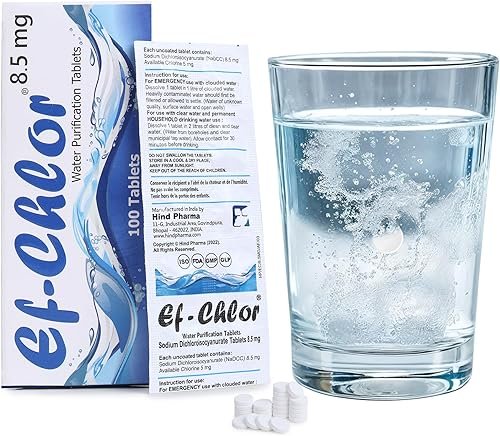
Ef-Chlor Water Purification Tablets 8.5mg – 100 Tablets
These are a staple in our emergency kit. Each tablet uses NaDCC (Sodium Dichloroisocyanurate), a more stable and effective form of chlorine than regular bleach. They’re compact, have a long shelf life, and are dead simple to use—perfect for field operations, disaster relief, or disinfecting tanks. Not for daily commercial use, but absolutely critical for preparedness.
- Proven, reliable disinfection chemistry
- Extremely lightweight and portable
- Clear dosing instructions (1 tab per 1-2L)
- Only disinfects, does not remove sediment or chemicals
- Chlorine taste may require airing out
- Not a substitute for a permanent system
Sulphuric Acid 50% Solution – 20L
This is serious industrial chemistry, not for homeowners. We’ve used this exact type of solution in municipal treatment plants for precise pH adjustment. Lowering pH can optimize coagulation (making particles clump for easier removal) and control scale in cooling towers. Handle with extreme care—it’s corrosive. But for large-scale water purification equipment, it’s a fundamental tool.
- Highly effective for rapid pH reduction
- Supports efficient coagulation/flocculation
- Industrial-grade concentration for bulk use
- Extremely hazardous; requires PPE and training
- Corrosive to skin and metals
- Not for residential or small-scale use
BayTec 128oz 3R Water Treatment Preserver
This is a niche but brilliant product for long-term potable water storage. It uses chlorine dioxide (ClO2), not free chlorine, which means it preserves water without that strong bleach taste. We recommend it for facilities that need to store emergency drinking water in tanks for months or years. It’s non-toxic and biodegradable, which is a big plus for environmental compliance.
- Maintains water freshness and taste over time
- Effective against biofilm in storage tanks
- Easy to dose for large volumes
- Only for stored water, not flowing systems
- Does not remove existing contaminants
- Requires correct dosing to be effective
Aquatabs Water Purification 50 Tablets
A direct competitor to Ef-Chlor, Aquatabs are another trusted name in portable disinfection. The 30-minute treatment time is a bit longer than some, but they’re highly effective against bacteria, viruses, and Giardia. We keep these in travel bags and small emergency kits. For a business, they’re a smart, low-cost addition to a disaster preparedness plan alongside your main commercial water treatment setup.
- Fast-acting (ready in 30 mins)
- Compact, lightweight blister packs
- Kills a broad spectrum of pathogens
- Can leave a slight chlorine aftertaste
- Tablets can degrade if exposed to moisture
- Not effective against chemical contaminants
Frequently Asked Questions
- What’s the difference between commercial and residential water treatment?
- Commercial systems are built for much higher flow rates, heavier contaminant loads, and continuous operation. They use more durable materials, have larger capacities, and often require professional installation and monitoring. A residential filter would fail quickly under commercial demand.
- How often do commercial systems need maintenance?
- It varies wildly. Pre-filters might need changing monthly. RO membranes can last 2-5 years with proper pre-treatment. UV lamps typically need annual replacement. A strict logbook is non-negotiable for commercial operations.
- Can I install a commercial system myself?
- Generally, no. These systems often involve plumbing modifications, electrical connections, and chemical handling. Improper installation can cause leaks, water damage, or ineffective treatment. Always hire a qualified water treatment professional.
- How do I know what contaminants are in my water?
- Start by requesting your municipal water quality report. For a precise picture, especially for well water or specific process needs, hire a certified lab to perform a detailed analysis. This is the essential first step before buying any equipment. For homeowners, residential water testing kits can provide a good baseline.
- Is reverse osmosis always the best choice?
- Absolutely not. RO is powerful but wasteful (it rejects water) and removes beneficial minerals. It’s overkill for many applications. If you just need to remove chlorine and sediment, a simple carbon filter is cheaper and more efficient. Match the technology to the problem.
Final Thoughts
Choosing commercial water treatment isn’t about buying the fanciest system. It’s about buying the right one. It starts with a water test, moves through careful calculation of your needs, and ends with a plan for long-term maintenance. The products we’ve highlighted here solve specific problems—from emergency disinfection to industrial pH control—but they’re pieces of a larger puzzle.
Our strong recommendation? Don’t go it alone. Partner with a reputable water treatment professional who can design a system for your exact situation. The upfront cost of their expertise will save you from expensive mistakes, downtime, and headaches down the road. Your water, your equipment, and your bottom line will thank you.
