


You turn on the tap, fill a glass, and take a sip. Does it taste like a swimming pool? Or maybe it leaves a weird film on your morning coffee. You’re not alone. After testing dozens of systems and talking to hundreds of homeowners, we’ve found that most water quality complaints boil down to one thing: not matching the treatment to the actual problem. This guide will walk you through everything you need to know.
- What residential water treatment actually means and why you might need it.
- How the different technologies work, from simple sediment filters to advanced reverse osmosis.
- The real benefits and the honest drawbacks nobody talks about.
- A clear breakdown of system types and our top product picks for 2026.
What Is Residential Water Treatment?
Simply put, it’s any process or device you install in your home to improve the quality of your water before you drink it, cook with it, or shower in it. It’s not just about taste, though that’s a big driver. It’s about removing specific contaminants—things like chlorine from city treatment, sediment from old pipes, or naturally occurring minerals like iron and manganese that stain your sinks.
The single biggest mistake we see is people buying a filter based on a generic “purifier” label. Your water is unique. A system perfect for a city apartment with chlorinated water is useless for a rural home pulling from a well with high iron. The goal isn’t to buy the most expensive system; it’s to buy the right one. That starts with a simple water test.
How Residential Water Treatment Works
Think of it as a series of gates. Each gate is designed to stop a specific type of contaminant while letting clean water pass through. Your system might have one gate or several in a row.
The Core Mechanisms
Mechanical Filtration: This is the simplest gate. It’s a physical barrier, like a screen, that catches particles. A ceramic filter cartridge is a perfect example—its tiny pores block sediment, rust, and even some bacteria. It’s rated in microns; the smaller the number, the finer the filtration.
Absorption: This is where activated carbon shines. It’s like a sponge for chemicals. Carbon filters are fantastic at grabbing chlorine, volatile organic compounds (VOCs), and bad tastes and odors. They work through adsorption, where contaminants stick to the vast surface area of the carbon.
Ion Exchange: This is the magic behind water softeners. It swaps “hard” minerals like calcium and magnesium for sodium ions, preventing scale buildup in your pipes and appliances. It’s a chemical process, not a physical filter.
Reverse Osmosis (RO): This is the heavy-duty gate. It uses pressure to force water through a super-fine semipermeable membrane, leaving almost everything else behind—dissolved solids, heavy metals, salts, and even some microbes. It’s incredibly effective but also wastes some water in the process.
Key Benefits
Better Taste and Odor: The most immediate payoff. Removing chlorine, sulfur, and organic compounds makes your water taste crisp and clean. Your coffee and tea will thank you.
Protects Your Appliances: A whole-house sediment filter or water softener can dramatically extend the life of your washing machine, dishwasher, and water heater by preventing scale and grit buildup.
Healthier Showers and Baths: Chlorine and other chemicals don’t just get ingested; you absorb them through your skin and inhale them as steam. A dedicated shower filter system can reduce that exposure.
Peace of Mind: Knowing your family is drinking, cooking, and bathing in water that’s been treated for your specific concerns is invaluable. It’s about taking control.
Potential Drawbacks
Cost and Maintenance: This isn’t a “set and forget” purchase. Every system requires upkeep. Filters need regular filter cartridge replacement—miss it, and performance tanks or contaminants can flush through. Factor in the long-term cost of replacement cartridges.
Wasted Water: Reverse osmosis systems are notorious for this. They can send 3-4 gallons of water down the drain for every 1 gallon of purified water they produce. In drought-prone areas, this is a serious consideration.
Over-Treatment: Honestly, most people on municipal water don’t need a full-house RO system. It’s overkill that removes beneficial minerals and wastes money. Target your treatment.
Complexity: Some whole-house systems, especially iron filters that require backwashing, can be complex to install and program. We always recommend professional installation for anything that ties into your main water line.
Types of Residential Water Treatment Systems
Point-of-Entry (POE) / Whole-House Systems
Installed where water enters your home. They treat every drop—from the kitchen sink to the shower to the laundry. These are for broad issues: sediment, hardness (softeners), or specific contaminants like iron. A basic sediment pre-filter is a smart, affordable first step for almost any home.
Point-of-Use (POU) Systems
These treat water at a single tap. The most common are under-sink filters and reverse osmosis systems. They’re perfect for drinking and cooking water. A high-quality kitchen faucet filter can be a great, simple solution if your main concern is taste and chlorine.
Specialty Filters
These target one specific problem. A UV light purifier kills bacteria and viruses. A dedicated arsenic filter or a nitrate filter. These are often added as a final stage to an existing system when a test reveals a particular nasty.
Buying Guide: What Actually Matters
1. Test Your Water First. We can’t say this enough. A $20 test kit from a hardware store is a good start. For well water, a lab test is a must. You’re looking for hardness, pH, iron, manganese, chlorine, and bacteria.
2. Certifications are Key. Look for NSF/ANSI certifications. Standard 42 covers aesthetic effects (taste, odor). Standard 53 covers health effects (lead, cysts, VOCs). Standard 58 is for reverse osmosis systems. Don’t buy a filter that can’t prove what it removes.
3. Flow Rate. Measured in Gallons Per Minute (GPM). A whole-house system needs a high enough flow rate to handle multiple showers and appliances running at once without dropping pressure. Don’t undersize it.
4. Ongoing Cost. Look up the price and frequency of replacement filters. A cheap system with expensive filters is a bad deal. This is where many budget brands get you.
Top Picks for 2026
Based on our testing, reader feedback, and conversations with industry plumbers, here are solid options for different needs.
| Product | Best For | Key Feature | Price |
|---|---|---|---|
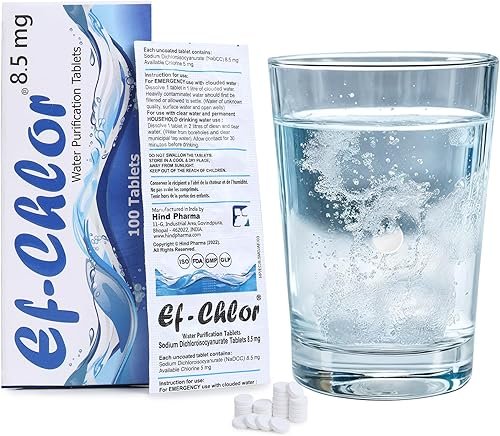
 Ef-Chlor 8.5mg (100 Tabs) |
Emergency & Travel | Treats 100-200L total. NaDCC chlorine tablets. | $14 |
 Alipis Sediment Filter Housing |
Whole-House Pre-Filter | 1/4″ connection, explosion-proof, reusable. | $26 |
 Fleny 7-Stage UF Purifier |
Budget Under-Sink | Ultra filtration, stainless steel housing. | $163.99 |
Ef-Chlor Water Purification Tablets 8.5mg – 100 Tablets
These aren’t for your daily kitchen tap. But for a camping trip, an emergency kit, or treating rainwater in a pinch, they’re brilliant. Each tablet treats 1-2 litres using a stable chlorine formula (NaDCC). We keep a pack in our go-bags. They’re lightweight, have a long shelf life, and work reliably when you need them most.
- Extremely compact and portable.
- Effective against bacteria and viruses.
- Simple to use—drop and wait.
- Leaves a chlorine taste (can be neutralized).
- Not for heavy sediment or chemical removal.
- Only for emergency or outdoor use.
Alipis Sturdy Water Filter Housing Whole House Sediment Filter
This is a no-frills, utilitarian housing for a standard sediment filter cartridge. The dual sealing ring design is a nice touch to prevent leaks. For under $30, it’s a fantastic entry point to whole-house filtration. Install this on your main line, pop in a 5-micron cartridge, and you’ll instantly protect all your downstream appliances and filters from gunk.
- Very affordable first step for whole-house treatment.
- Explosion-proof claim adds durability.
- Simple to install and maintain.
- Housing only—filter cartridge sold separately.
- Basic functionality; won’t remove chemicals or hardness.
- Requires some plumbing skill to install.
7-Stage Ultra Filtration Water Purifier (AliExpress Budget Pick)
For the price, this stainless steel housing system is intriguing. Ultra filtration (UF) is a solid technology—it removes bacteria, cysts, and sediment without wasting water like RO does. The 7-stage claim likely includes sediment and carbon blocks. It’s a budget-friendly under-sink option. But manage expectations: build quality and filter longevity may not match premium brands. A good starter if you’re handy.
- Very low upfront cost for a multi-stage system.
- UF membrane has no water waste.
- Stainless steel housing is durable.
- Long-term reliability and filter availability are unknowns.
- May lack NSF/ANSI certifications.
- Installation instructions might be unclear.
Quick Tip: See that “Residential Water Treatment Equipment World Summary” book? It’s a $2.10 market report. It’s not a guide for homeowners—skip it unless you’re doing industry research. Spend that money on a good water test kit instead.
Frequently Asked Questions
- What is the best residential water treatment system?
- There’s no single “best” system. The best system is the one that targets the specific contaminants in your water. Start with a water test. For most city dwellers, a quality carbon block under-sink filter is excellent. For well water, you often need a staged approach: sediment filter, then an best iron water filter or softener, then a final polisher.
- How often should I change my water filter cartridges?
- Follow the manufacturer’s schedule religiously—typically every 6-12 months for carbon and sediment filters. A saturated filter stops working and can even release trapped contaminants. Set a calendar reminder. It’s the most important thing you can do for system performance.
- Are whole-house water filters worth it?
- Yes, if you have whole-house problems like hard water, sediment, or iron that stains fixtures and damages appliances. They protect your entire plumbing infrastructure. If your only concern is drinking water taste, a point-of-use system is more cost-effective.
- Does reverse osmosis remove healthy minerals?
- Yes, it does. RO removes dissolved solids, which includes beneficial minerals like calcium and magnesium. Some argue this is a drawback. You can remineralize the water with a final stage filter if you’re concerned, or get minerals from your diet.
- Can I install a water treatment system myself?
- For simple pitcher filters, faucet mounts, or under-sink carbon filters, yes—many are designed for DIY. For whole-house systems, reverse osmosis, or anything that requires cutting into your main water line, we strongly recommend hiring a licensed plumber. A leak can cause catastrophic damage.
Final Thoughts
Residential water treatment isn’t about buying the fanciest gadget. It’s a practical, often necessary, step to ensure the water in your home is safe, tastes good, and doesn’t wreck your plumbing. The process is straightforward: test, identify, choose, and maintain. Don’t get sold on fear or fancy marketing claims.
Our parting advice? Start small. If you’re on city water and just hate the taste, try a quality kitchen faucet filter first. If you have well water, get that lab test before you spend a dime on equipment. Control what matters, and ignore the rest. Your water—and your wallet—will be better for it.
