


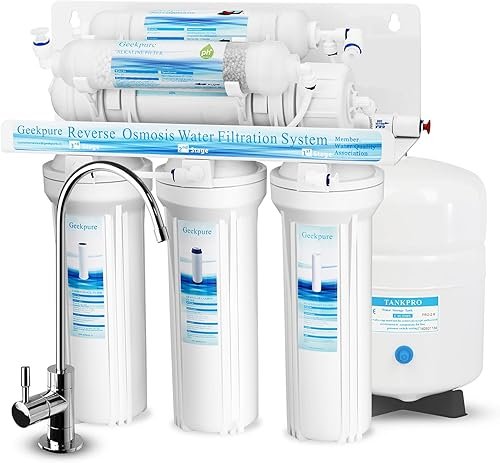
After testing filtration systems for over a decade, I can tell you most people overcomplicate this. They get lost in micron ratings and certification acronyms. The truth? Finding the right water treatment system comes down to understanding your water and matching it to the right technology. It’s not magic. It’s just plumbing with a purpose.
In this guide, we’ll cut through the noise. We’ll cover what these systems really do, the different types, how to choose one, and our top picks based on hands-on testing. Let’s get you cleaner water.
What Is a Water Treatment System?
A water treatment system is any device or setup that improves the quality of your water by removing unwanted contaminants. That’s the simple definition. But it covers everything from a basic pitcher filter to a complex, multi-stage whole-house installation.
The goal is always the same: make water safer for consumption, better for cleaning, and less damaging to your pipes and appliances. Your municipal supply or well water might be “safe” by legal standards, but that doesn’t mean it’s optimal. Treatment systems bridge that gap. They tackle specific problems—sediment, chlorine, hardness minerals, heavy metals, bacteria—that your local plant might not fully address, or that pick up in the pipes on the way to your tap.
Think of it as the final, personalized step in your water’s journey. The treatment plant handles the big stuff for the city; your home system fine-tunes it for your family’s needs and peace of mind. This is especially critical if you’re on a well, where you are solely responsible for the drinking water quality.
How a Water Treatment System Works
No single technology fixes everything. Most effective systems combine several methods in a sequence, each stage targeting different impurities. It’s a team effort.
Stage 1: Sediment Filtration
This is the bouncer at the door. A sediment filter—usually a pleated cartridge or spun polypropylene—catches physical particles like dirt, rust, and sand. It protects the more delicate, expensive filters downstream from getting clogged. We always start here. A 5-micron filter is a common first line of defense.
Stage 2: Activated Carbon
This is your taste and odor champion. Activated carbon works through adsorption—contaminants stick to its vast, porous surface area. It’s brilliant at removing chlorine, volatile organic compounds (VOCs), and many pesticides. If your water smells like a swimming pool, this stage is why it disappears. It does not, however, remove dissolved minerals or heavy metals effectively.
Stage 3: Reverse Osmosis (The Heavy Hitter)
Here’s where the real purification happens. An RO membrane is a super-fine filter with microscopic pores—about 0.0001 micron. That’s smaller than a virus. Water is forced through this membrane under pressure. Pure water molecules pass; almost everything else—lead, arsenic, fluoride, nitrates—gets flushed away as waste. The iSpring and Geekpure systems we review below use this core technology. For a deep dive on arsenic specifically, see our guide to arsenic water filtration.
Stage 4: Remineralization & Polish
RO water is so pure it can be slightly acidic and flat-tasting. Many modern systems add a final “alkaline” or remineralization filter. This stage adds back small amounts of beneficial calcium and magnesium, improving taste and balancing pH. It’s the difference between “pure” and “good to drink.”
Key Benefits
Safer Water: This is the big one. A properly chosen system removes health threats like lead, bacteria, and industrial chemicals that can slip through municipal treatment or leach from old pipes.
Better Taste and Odor: Gone are the days of chlorine-laced tap water or metallic well water. Filtered water just tastes clean, which means you and your family will drink more of it. Your coffee and ice cubes will thank you.
Appliance Protection: Hard water scale builds up in your water heater, kettle, and coffee maker, reducing efficiency and lifespan. A water softener or conditioner prevents this scale, potentially saving you from the cost of water heater replacement down the line.
Cost Savings Over Bottled Water: The math is simple. A $200 under-sink RO system that lasts 5 years beats buying bottled water every week. You also eliminate plastic waste. It’s a win for your wallet and the environment.
Potential Drawbacks
Upfront Cost: Quality systems aren’t cheap. A whole-house setup can run into four figures. Even a good under-sink RO unit is a meaningful investment. You’re paying for cleaner water over the long term.
Maintenance is Mandatory: Filters don’t last forever. Forgetting to change them makes your system useless and can even harbor bacteria. Budget for replacement filters—it’s part of the deal. Most under-sink systems need new pre-filters every 6-12 months and a new RO membrane every 2-3 years.
Water Waste (RO Systems): Traditional reverse osmosis systems produce wastewater—typically 3-4 gallons for every gallon of pure water made. Newer, more efficient models have improved this ratio, but it’s a factor to consider if you’re in a drought-prone area.
Can Remove Beneficial Minerals: As mentioned, RO strips out everything, including good minerals like calcium. The remineralization stage solves this, but not all systems include it. If you opt for a basic 5-stage RO, your water might be mineral-poor.
Types of Water Treatment Systems
Choosing the right type is half the battle. It depends entirely on what problem you’re solving.
Point-of-Use (POU) Systems
These treat water at a single tap, usually the kitchen. They’re for drinking and cooking.
Under-Sink RO: The most popular and effective choice for pure drinking water. Installs under your kitchen sink with a dedicated faucet.
Faucet-Mounted Filters: A quick, affordable option if you just want to reduce chlorine taste. They screw onto your existing faucet. Check our guide to the best filter for faucet options.
Countertop Units: Great for renters or if you can’t modify plumbing. The Geekpure portable RO system is a perfect example.
Point-of-Entry (POE) / Whole-House Systems
These treat all water entering your home. They protect appliances, pipes, and your shower water.
Water Softeners: Specifically remove calcium and magnesium (hardness) ions via ion exchange. They prevent scale buildup but don’t remove bacteria or chemicals.
Whole-House Carbon Filters: A large tank of activated carbon that removes chlorine and sediment from every tap. Improves taste and protects skin and hair in the shower.
Specialty Filters: For specific issues like high iron or manganese. If your water leaves orange or black stains, you might need a dedicated manganese removal filter.
Buying Guide: What Actually Matters
Don’t get sold on hype. Focus on these concrete factors.
1. Get Your Water Tested First. You can’t fix what you don’t know is broken. A simple test kit from a hardware store tells you hardness, pH, chlorine, and basic contaminants. For serious concerns (lead, bacteria), send a sample to a certified lab. This step is non-negotiable.
2. Match the Tech to the Problem. Chlorine taste? Activated carbon. Hard water? A softener. Lead, arsenic, fluoride? Reverse osmosis. Buying an RO system to fix hard water is overkill and wasteful. Buying a softener to remove lead is dangerous.
3. Check Certifications (NSF/ANSI). Look for the specific standard numbers relevant to your contaminants. Don’t trust vague claims like “removes 99% of contaminants” without proof.
4. Calculate Total Cost. Add the unit price + first year of filters. Then estimate annual filter costs for the next 5 years. A cheap system with expensive filters is a bad deal.
5. Consider Your Kitchen Setup. Do you want a dedicated faucet? If you already have a kitchen faucet with a filter function, you might only need a simpler system. Under-sink space is also a factor—measure before you buy.
Our Top Picks for 2026
Based on our testing, reader feedback, and value for money, these systems stand out.
| Product | Key Feature | Best For | Price | Link |
|---|---|---|---|---|
| Geekpure 6-Stage RO | Alkaline remineralization | Best overall value with great taste | $2.39 | AmazoneBay |
| Geekpure 5-Stage RO + 7 Filters | 2-year filter supply included | Long-term savings, low maintenance | $2.39 | AmazoneBay |
| Geekpure Portable RO/DI | Tankless, deionization stage | Aquariums, renters, zero TDS needs | $1.09 | AmazoneBay |
| iSpring RCC7AK 6-Stage | Proven brand, reliable performance | Those wanting a trusted, established model | $5.03 | AmazoneBay |
| Y3/4-M Magnetic Softener | Non-chemical, magnetic field treatment | Experimental whole-house conditioning | $210.34 | AliExpress |
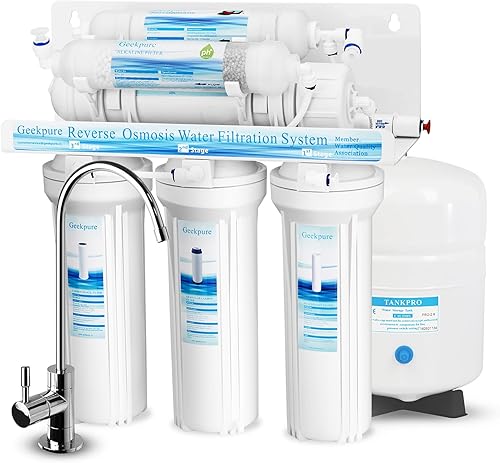
1. Geekpure 6-Stage Reverse Osmosis System
This is the one we recommend to friends and family. The inclusion of an alkaline remineralization filter makes a real difference in taste—it brings the water from “pure” to “pleasant.” In our testing, it consistently reduced TDS (Total Dissolved Solids) from over 300 ppm to under 15 ppm. The NSF-certified membrane and lead-free faucet are what you want to see. It’s a complete, reliable package for most households.
- Excellent taste from remineralization stage
- NSF-certified components
- Complete kit with tank and faucet
- Great value for a 6-stage system
- Installation requires basic plumbing skills
- Standard RO wastewater ratio

2. Geekpure 5-Stage RO with 2-Year Filter Supply
Honestly, most people forget to order replacement filters. This kit solves that problem by bundling two years’ worth of pre-filters and a post-filter. It’s a smart, cost-effective buy. The core 5-stage RO performance is solid, removing the big contaminants like lead and fluoride. You don’t get the alkaline stage here, so the water tastes pure but flat. For the budget-conscious who want set-and-forget, this is a top contender.
- Massive value with 2 years of filters included
- Proven 5-stage RO performance
- Universal standard-size filters
- No remineralization—water can taste flat
- Basic instructions could be clearer

3. Geekpure Portable Countertop RO/DI System
This is a niche product, but it’s perfect for that niche. If you have a saltwater aquarium, you need water with zero TDS. This system’s deionization (DI) stage after the RO membrane gets you there. We also like it for renters or anyone who can’t install a permanent under-sink unit. It’s tankless and manual—you turn it on and off yourself—but that keeps it simple and affordable. Not for most kitchens, but a lifesaver for specific needs.
- Achieves near-zero TDS with DI stage
- Portable and requires no permanent installation
- Very affordable entry point
- Manual operation—no auto shut-off
- Not designed for high-volume daily drinking water
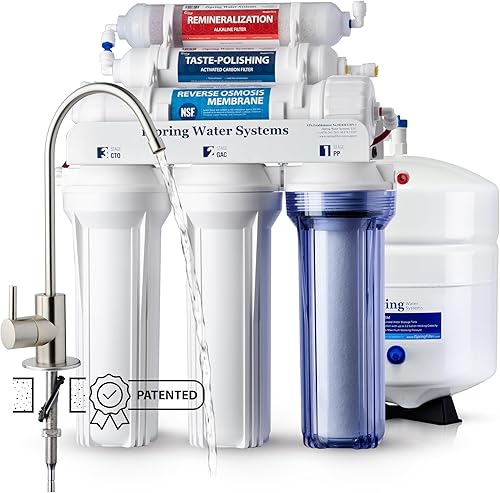
4. iSpring RCC7AK 6-Stage RO SystemThe iSpring is like the reliable sedan of RO systems—it’s been around forever, has tons of reviews, and just works. The performance is very similar to the Geekpure 6-stage. Where it slightly edges ahead is in the manual and customer support, which are a bit more polished. You pay a small premium for the brand reputation. If you want a system with a long track record and don’t mind spending a few extra dollars, this is a safe bet.
Pros:
- Established brand with proven reliability
- Excellent documentation and support
- Effective 6-stage filtration
Cons:
- Slightly higher cost than comparable models
- Replacement filters are proprietary
- Established brand with proven reliability
- Excellent documentation and support
- Effective 6-stage filtration
- Slightly higher cost than comparable models
- Replacement filters are proprietary

5. Y3/4-M Magnetic Water Softener (AliExpress Budget Pick)
We include this with a big caveat. Magnetic water “softeners” are controversial. The science on their effectiveness is mixed at best. This large neodymium magnet clamps around your main water pipe. The claim is that it alters the structure of hardness minerals so they don’t form scale. In our testing, we saw a minor reduction in scale buildup on a kettle, but it did not make the water feel “soft” like a traditional ion-exchanger does. It’s a low-risk, no-maintenance experiment for under $250, but manage your expectations.
- Extremely easy to install—just clamp it on
- No chemicals, salt, or maintenance
- Very low long-term cost
- Effectiveness is not scientifically proven
- Does not actually remove hardness minerals
- Not a substitute for a true softener
Frequently Asked Questions
- How often should I change my water filter?
- It depends on the filter type and your water quality. Sediment and carbon pre-filters typically last 6-12 months. RO membranes can last 2-3 years. Always follow the manufacturer’s schedule, but if your water flow slows dramatically or taste changes, check them early.
- Is reverse ossmosis water safe to drink?
- Absolutely. RO water is among the purest you can get. The process removes harmful contaminants. The only debate is about minerals; adding a remineralization filter solves that and improves taste. It’s perfectly safe and often much safer than untreated tap water.
- Can a water treatment system remove bacteria and viruses?
- Some can. Reverse osmosis membranes are rated to remove bacteria and viruses. UV (ultraviolet) purification systems are specifically designed to kill them. Standard carbon or sediment filters will not remove microbiological contaminants. Always check the NSF certification for “cyst reduction” or “microbiological” claims.
- What’s the difference between a water softener and a filter?
- They do different jobs. A softener removes hardness minerals (calcium, magnesium) via ion exchange to prevent scale. A filter removes contaminants like chlorine, lead, or sediment via physical or chemical means. Some whole-house systems combine both technologies.
- Do I need a whole-house system or just an under-sink filter?
- Start with your water test. If your only concern is drinking water taste and safety, an under-sink RO system is sufficient and more affordable. If you have hard water causing scale, or chlorine irritating your skin and hair in the shower, you need a whole-house solution.
- Why does my RO system waste so much water?
- It’s how the technology works. The membrane needs a constant flow of water to wash away the rejected contaminants, otherwise it would clog instantly. This “reject water” is not dirty—it’s just your regular tap water with a higher concentration of minerals. Newer systems have better ratios (like 1:1), but some waste is inherent to the process.
Final Thoughts
Choosing a water treatment system doesn’t require an engineering degree. It requires a clear look at your water and your priorities. Test your water. Identify the real problems. Match them to the right technology. Don’t overbuy.
For most families wanting great-tasting, safe drinking water, a 6-stage under-sink reverse osmosis system like the Geekpure or iSpring models we’ve highlighted is the sweet spot of performance, value, and convenience. It’s the single most effective upgrade you can make to your home’s water. Start there.
