


Thinking about your water quality? You’re not alone. After testing filters and talking to homeowners for years, I’ve seen a huge shift: people are moving from “is my water safe?” to “what’s actually in my water?” That’s where a water testing company comes in. This guide will cover what they do, when you need one, and how to pick the right service—or a solid DIY kit for regular checks.
- What defines a professional water testing lab
- The step-by-step process from sample to report
- Key benefits and honest limitations
- Our top kit picks for 2026
What Is a Water Testing Company?
A water testing company is a certified laboratory that analyzes water samples for a wide range of contaminants. Unlike a simple home test strip, they use advanced equipment like mass spectrometers to detect substances at very low concentrations—often down to parts per billion. Think of it this way: a home kit is like a thermometer, telling you if you have a fever. A lab test is like a full blood panel, telling you exactly what’s causing it.
These companies serve everyone from municipal water districts to concerned homeowners. Their reports are legally defensible documents, often required for real estate transactions, well certifications, or regulatory compliance. The single biggest reason to use one is precision. If you suspect lead from old pipes or nitrates from agricultural runoff, you need a lab’s accuracy to know for sure and to guide your next step—whether that’s installing a dedicated iron filter for well water or calling your local utility.
How Professional Water Testing Works
The process is more involved than dipping a strip, but reputable companies make it straightforward. It typically breaks down into three phases.
1. Sample Collection
This is the most critical step—and where most DIYers mess up. The lab will send you a sterile collection kit or instruct you on proper technique. You’ll usually need to let the water run for a few minutes, avoid touching the inside of the bottle, and sometimes use special preservatives. For a whole house chlorine filter check, you’d test before and after the system, collecting samples from the same tap.
2. Lab Analysis
Once the lab receives your sample, technicians log it and run it through a battery of tests. They’re looking for specific analytes you requested—common ones include lead, copper, arsenic, bacteria (like E. coli), VOCs, and pH. The methods are standardized, often following EPA protocols. This isn’t guesswork; it’s quantifiable science.
3. Reporting & Interpretation
You’ll get a detailed report, usually within 5-10 business days. It lists each contaminant, the level found, and the EPA Maximum Contaminant Level (MCL). Good labs don’t just dump data on you. They’ll often include a plain-English summary or offer a consultation to explain what it means for your health and your home’s plumbing.
Key Benefits of Using a Lab
Unmatched Accuracy: This is the whole point. Lab equipment detects contaminants at levels home kits simply can’t. If you’re dealing with a health scare or a vulnerable household member (infant, elderly, immunocompromised), this precision is non-negotiable.
Legal & Regulatory Compliance: Need to prove your well water is safe for a mortgage? Selling your home? A certified lab report is the gold standard. A home test strip won’t hold up.
Comprehensive Contaminant Screening: You can test for hundreds of parameters in one go—everything from basic minerals to complex industrial chemicals. This helps pinpoint the exact source of a taste, odor, or staining problem.
Actionable Data for Treatment: The report tells you exactly what to filter out. No more guessing. High sulfate? You might need a specific type of softener. Bacteria present? Time to look at UV disinfection. It takes the mystery out of choosing a filter.
Potential Drawbacks to Consider
Overkill for Simple Checks: If you just want to know if your new chlorine removal filter is working, a $15 test kit for free chlorine is perfectly sufficient. Don’t pay for a full panel when you don’t need it.
Sample Integrity Risk: If you don’t collect the sample correctly, the results are worthless. It’s a common point of failure we’ve seen in reader feedback.
Types of Water Testing Services
Mail-In Lab Kits
The most common option for homeowners. You order a kit online, collect the sample yourself, and mail it back. Companies like Tap Score, SimpleLab, and National Testing Laboratories offer these. They’re convenient but rely on you following instructions to the letter.
On-Site Professional Sampling
For complex situations—like testing a private well after flooding or investigating contamination in a large building—a technician comes to you. They ensure perfect sample collection and can test for parameters that degrade in transit (like certain bacteria). It’s the premium, most reliable option.
Municipal or Utility Testing
Your local water utility is required to test and report on the water they deliver. You can often request their annual Consumer Confidence Report (CCR) for free. However, this only tests the water at the treatment plant, not what comes out of your tap after traveling through potentially old pipes.
Buying Guide: Choosing a Company or Kit
Not all labs are created equal. Here’s what actually matters when picking one.
Certifications are Everything: Look for labs certified by your state’s environmental agency or accredited under the NELAC Institute’s standards. This means they’re audited regularly and their methods are validated. No certification, no business.
Know What to Test For: Don’t just order the “most comprehensive” panel. Start with the basics: bacteria, lead, nitrate, pH, and total dissolved solids (TDS). If you’re on a well, add arsenic, manganese, and radon. City water? Focus on disinfection byproducts and copper. A good company will help you choose.
Understand the Report: Ask for a sample report before you buy. It should be clear, show the MCLs, and ideally offer some interpretation. A jargon-filled data dump is a red flag.
For Ongoing Monitoring: A lab test is a snapshot in time. For regular checks between annual lab tests, a quality home kit is smart. They’re great for tracking trends—like seeing if your TDS is creeping up, signaling it’s time to replace your reverse osmosis membrane.
Our Top Water Testing Kit Picks for 2026
While a lab is best for a definitive answer, these home kits are invaluable for frequent monitoring and initial screening. We’ve tested dozens; these stand out.
| Product | Key Features | Price | Links |
|---|---|---|---|
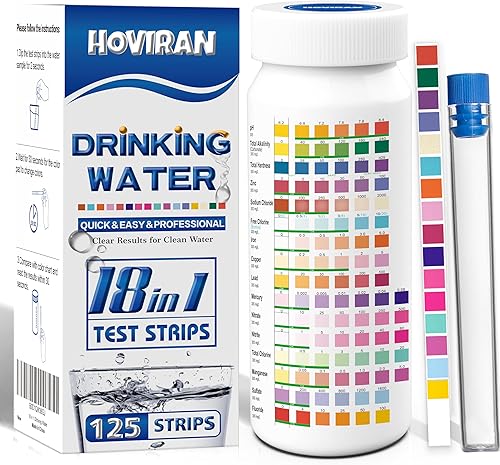 |
18-in-1 Water Quality Test Strips Tests for 18 parameters including lead, mercury, and hardness. 125 strips per kit. Simple dip-and-read in under a minute. |
$27 |
Buy on Amazon Buy on eBay |
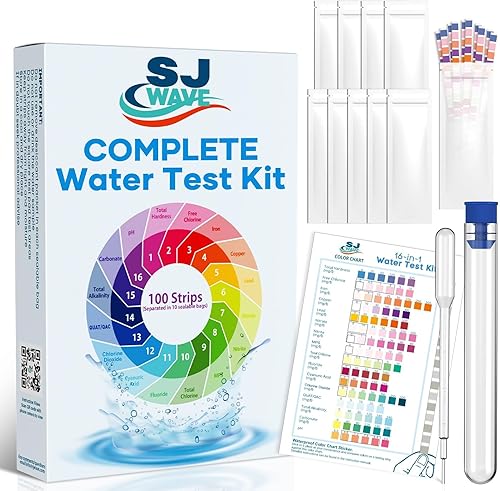 |
16 in 1 Water Testing Kits (SJWAVE) High-sensitivity strips for pH, lead, iron. Includes an exclusive ebook for deeper understanding. Fast 2-minute results. |
$26 |
Buy on Amazon Buy on eBay |
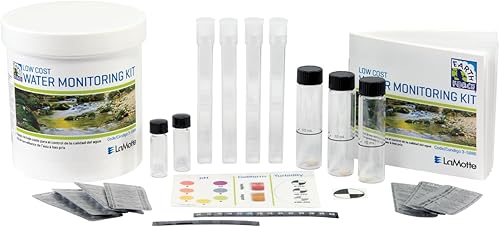 |
Lamotte GREEN Program Low Cost Kit Educational kit for fresh, brackish, or saline water. Tests 10 samples for core parameters. Includes manual and color chart. |
$1.26 |
Buy on Amazon Buy on eBay |
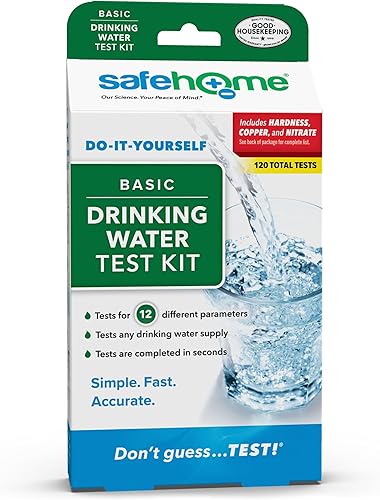 |
Safe Home DIY Test Kit Patented tech for city or well water. Tests 12 parameters (120 total tests). Good Housekeeping Seal. Made in USA. |
$29 |
Buy on Amazon Buy on eBay |
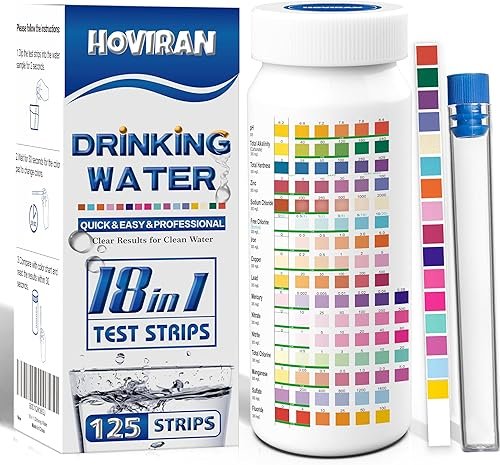
18-in-1 Water Quality Test Strips, 125ct
This is our go-to recommendation for most homeowners wanting a broad initial screen. The 18-parameter list is impressive for the price, covering the big worries like lead and mercury alongside useful metrics like hardness and pH. We’ve found the color chart to be reasonably clear, though comparing some shades can be tricky in low light. Perfect for quarterly checks on city or well water.
- Incredible value—125 tests for $27
- Tests for heavy metals, not just basics
- Fast, simple, no lab wait
- Color matching can be subjective
- Not a substitute for lab-certified results
16 in 1 Water Testing Kits (SJWAVE)
SJWAVE’s kit is a strong contender, especially if you’re new to water testing. The included ebook is actually useful—it explains what each parameter means for your health and plumbing, which most kits skip. Results come in about 2 minutes. In our experience, the lead and iron tests were particularly sensitive, picking up traces our older strips missed. A great educational tool.
- Excellent educational ebook included
- High sensitivity for key metals
- Clear, step-by-step instructions
- Fewer total strips than the 18-in-1 kit
- Some users report inconsistent pH readings
Lamotte GREEN Program Low Cost Water Monitoring Kit
This isn’t your typical home kit. It’s designed for education—think school projects or citizen science groups. You get non-hazardous TesTabs and a solid manual. It won’t test for lead or pesticides, but for learning the basics of dissolved oxygen, nitrate, and pH in a stream or pond, it’s unbeatable at this price. Not for serious home drinking water analysis.
- Extremely affordable entry point
- Safe, non-hazardous reagents
- Excellent for educational purposes
- Limited to basic environmental parameters
- Not designed for comprehensive home testing
Safe Home Drinking Water Test Kit – Basic DIY
Honestly, most people don’t need a 50-parameter test. This Safe Home kit nails the essentials: hardness, copper, nitrate, fluoride, and iron. It’s the only DIY kit with the Good Housekeeping Seal, and you can feel the quality. The patented testing mechanisms are a step up from basic strips. It’s our top pick for focused, reliable monitoring between lab tests.
- Focuses on the most common concerns
- Good Housekeeping Seal of approval
- 120 tests provides long-term monitoring
- Doesn’t test for bacteria or heavy metals
- Slightly more expensive per strip
Sports Water Bottle – $5.94
Water Dispenser Pump – $6.06
Frequently Asked Questions
- How much does a professional water test cost?
- It varies wildly. A basic test for bacteria and nitrates might be $50. A comprehensive scan for 100+ contaminants, including VOCs and heavy metals, can run $300-$500. Well water tests are often more expensive than city water tests.
- Can I test my water myself instead of using a company?
- You can use home kits for routine monitoring and initial screening. But for definitive, legally valid results—especially for real estate or health concerns—you need a certified lab. Home kits are a great first step, not the final word.
- How often should I test my well water?
- At a minimum, test your well annually for bacteria, nitrates, and pH. Test more frequently (every 6 months) if you have pregnant women or infants in the home, notice changes in taste/odor, or live near agricultural or industrial activity.
- What’s the difference between a water test and a water filter test?
- A water test analyzes your raw, untreated water. A filter test checks the water after it passes through your treatment system to verify the filter is working correctly. You need both: a test to know what to buy, and a test to confirm it’s working.
- Do water testing companies also sell filters?
- Some do, which is a conflict of interest. We recommend using an independent lab that only does testing. Their only incentive is to give you accurate data, not to sell you a $3,000 system you might not need.
- What if my test results show high contaminant levels?
- Don’t panic. First, confirm the result with a second test from the same lab (they often offer this for free). Then, consult with a water treatment professional or your local health department. High lead might require a simple point-of-use filter, while bacteria could mean you need to shock your well or install a hydrogen water pitcher with specific filtration capabilities.
Final Thoughts
After years in this space, here’s our take: a professional water testing company is an investment in certainty. It’s not for everyone, every year. But if you’re on a well, have old plumbing, have a specific health concern, or just bought a new home, it’s money incredibly well spent. The peace of mind is worth it. And if you’re dealing with hard water causing lime scale buildup, a lab test can tell you the exact hardness level, so you buy the right softener the first time.
For most people on municipal water, a high-quality home kit like the Safe Home or 18-in-1 strips is perfect for annual checks. Use them to track trends. If anything ever flags high, then—and only then—call in the pros. Stay curious, test your water, and don’t just assume it’s fine because it comes out of a tap.
