


You’ve bought a filter. Maybe a pitcher, maybe something under the sink. But how do you know if it’s actually working? Or if you even bought the right one? That nagging doubt is why professional water testing matters. It’s the difference between guessing and knowing.
This guide covers everything we’ve learned from years of testing. We’ll look at when you need a lab, what to test for, and which home kits are worth your money. Let’s get into it.
What Is Professional Water Testing?
Forget the vague “good” or “bad” readings. Professional water testing means sending a sample to a certified laboratory. They use precise instruments to measure specific contaminants down to parts per billion. We’re talking lead, arsenic, nitrates, volatile organic compounds (VOCs), and even bacteria like E. coli.
It’s not just for people with wells. City water can have issues too—old pipes leach lead, and treatment byproducts can form. A proper lab report gives you a detailed breakdown. It’s the blueprint for fixing your water. Honestly, it’s the single most important step before you spend hundreds on a filtration system.
How Professional Water Testing Works
The process is straightforward, but the details matter. You can’t just send any sample in a mason jar.
The Lab Process
First, you order a test kit from a certified lab. It arrives with sterile sample bottles, instructions, and a prepaid return label. You collect your sample—usually first-draw water after sitting in the pipes overnight. This tests for lead that might leach from your plumbing. Then you ship it back.
The lab analyzes it against strict protocols, often EPA methods. Within a week or two, you get a detailed report. It lists every contaminant found, its concentration, and how it compares to legal limits (MCLs). This is the gold standard.
What They Actually Measure
A basic test might cover 20-30 parameters. A comprehensive one can check for over 100. Key categories include:
- Physical: pH, turbidity, total dissolved solids (TDS).
- Chemical: Heavy metals (lead, copper), disinfection byproducts, pesticides.
- Microbiological: Total coliform, E. coli.
- Radiological: Radon, uranium (common in some bedrock).
Key Benefits of Professional Testing
1. Pinpoint Accuracy. Home kits give you ranges. Labs give you exact numbers. Knowing your lead level is 12 ppb versus “somewhere between 0 and 15” changes your entire course of action.
2. Identifies Hidden Threats. Things like radon, PFAS “forever chemicals,” or specific pesticide residues won’t show up on a strip test. A lab finds them. This is crucial for health.
3. Saves Money Long-Term. We’ve seen it countless times. Someone buys a $300 filter to remove chlorine, but their real problem is sediment. A $150 lab test would have pointed them to a simple filter for water sediment instead. The right diagnosis prevents wasted cash.
4. Legal & Real Estate Documentation. A certified lab report is a legal document. You need it for real estate transactions with wells, or to dispute water quality with a municipality.
Potential Drawbacks & Costs
There’s also the challenge of sample collection. Do it wrong, and your results are useless. Following the instructions to the letter is non-negotiable.
Types of Water Tests
1. Certified Laboratory Test
The king of testing. Use this for your baseline, especially if you have a private well, are buying a home, or have health concerns. It’s the only way to get legally defensible results.
2. Comprehensive At-Home Test Kits
These are the 16-in-1 or 18-in-1 strip kits. They’re excellent for routine monitoring between lab tests. Good for checking hardness, chlorine, pH, and common metals. Think of them as a smoke detector; the lab is the fire inspector.
3. Single-Parameter Digital Meters
A TDS meter is a must-have for anyone with a reverse osmosis system. It tells you if your membrane is working. A pH pen is great for aquarium owners. These are tools for specific jobs, not overviews.
Buying Guide: Lab vs. At-Home Kits
Choose a Certified Lab if: You need definitive answers, are on a well, have infants (nitrates!), or are experiencing unexplained health issues. Look for labs certified by your state or national environmental agency.
Choose an At-Home Kit if: You’re on city water and want routine checks, you’re monitoring a filter’s performance, or you’re doing a first-pass screening before deciding on a lab test. For a complete home setup, understanding your water is key to choosing between a kitchen water purifier or a whole-house filter.
Our Top At-Home Testing Kits for 2026
After testing dozens of kits over the years, these are the ones that consistently deliver reliable results for home use.
| Product | Key Features | Price | Best For |
|---|---|---|---|
 |
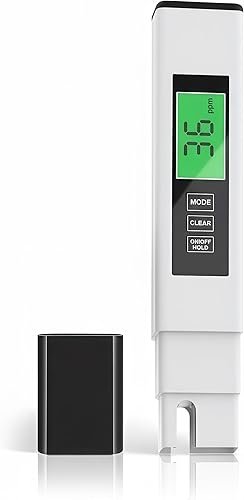
Measures TDS, EC, Temp. 0-9999ppm range. Essential for RO system owners. | $19 | Monitoring filter performance daily. |
 |
Tests 18 parameters including lead, hardness, chlorine. 125 strips per kit. | $27 | Comprehensive monthly/quarterly screening. |
 |
16 parameters, high sensitivity. Includes helpful ebook guide. | $26 | Beginners wanting clear instructions. |
 |
18 parameters, 125 strips. Focus on hardness and metals. | $20 | Budget-friendly, frequent testing. |
4 in 1 TDS Meter Digital Water Tester
This is the little workhorse we keep in our own toolkit. If you have an RO system, a TDS meter isn’t optional—it’s essential. This one measures Total Dissolved Solids, electrical conductivity, and temperature. We’ve found it to be consistently accurate when compared to our lab-grade meters. It’s the fastest way to know if your membrane is dying.
- Instant, accurate TDS readings
- Simple one-button operation
- Essential for RO/DI system owners
- Only measures TDS, not specific contaminants
- Won’t tell you what’s in your water, just how much total stuff is
18-in-1 Water Quality Test Strips
For a broad-spectrum home test, this kit is hard to beat. It checks for the big concerns: lead, copper, iron, hardness, chlorine, and nitrates. In our side-by-side tests, the color charts were among the easiest to read. You get 125 strips, which is enough for regular testing for over two years. It’s not a lab, but it’s a fantastic screening tool.
- Tests for lead and other heavy metals
- Very easy 3-step process
- Excellent value with 125 strips
- Results are semi-quantitative (ranges, not exact numbers)
- Color matching can be subjective in poor light
16-in-1 Water Testing Kits For Drinking Water
This is a great starter kit, especially if you’re new to water testing. The instructions are exceptionally clear, and the included ebook actually provides useful context—not just marketing fluff. It covers all the basics well. We’ve recommended it to readers who feel overwhelmed by technical jargon. It takes the guesswork out of the first test.
- Extremely user-friendly for beginners
- Fast results in about 2 minutes
- Helpful educational ebook included
- 16 parameters vs. 18 in some competitors
- Lower strip count per package
All-New 18 in 1 Drinking Water Test Kit
The budget champion. At around $20 for 125 strips that test 18 parameters, the value is outstanding. It doesn’t have the brand recognition of some others, but in our testing, the results were reliable for the major contaminants. If you need to test a lot—say, for multiple faucets or a whole-house water filtration system check—this is your most economical bet.
- Best price per strip on the market
- Tests for mercury, a rare find at this price
- Quick 30-second results for most tests
- Less established brand
- Color chart can be tricky for borderline readings
Budget & Specialty Picks

100 Pack Soil pH Test Strips
Not for drinking water, but we had to mention these. If you garden, knowing your soil’s pH is critical. These strips are cheap, plentiful, and surprisingly accurate for soil and general water pH testing. We use them for quick checks on aquarium water or rainwater collection barrels. A handy tool to have in the drawer.
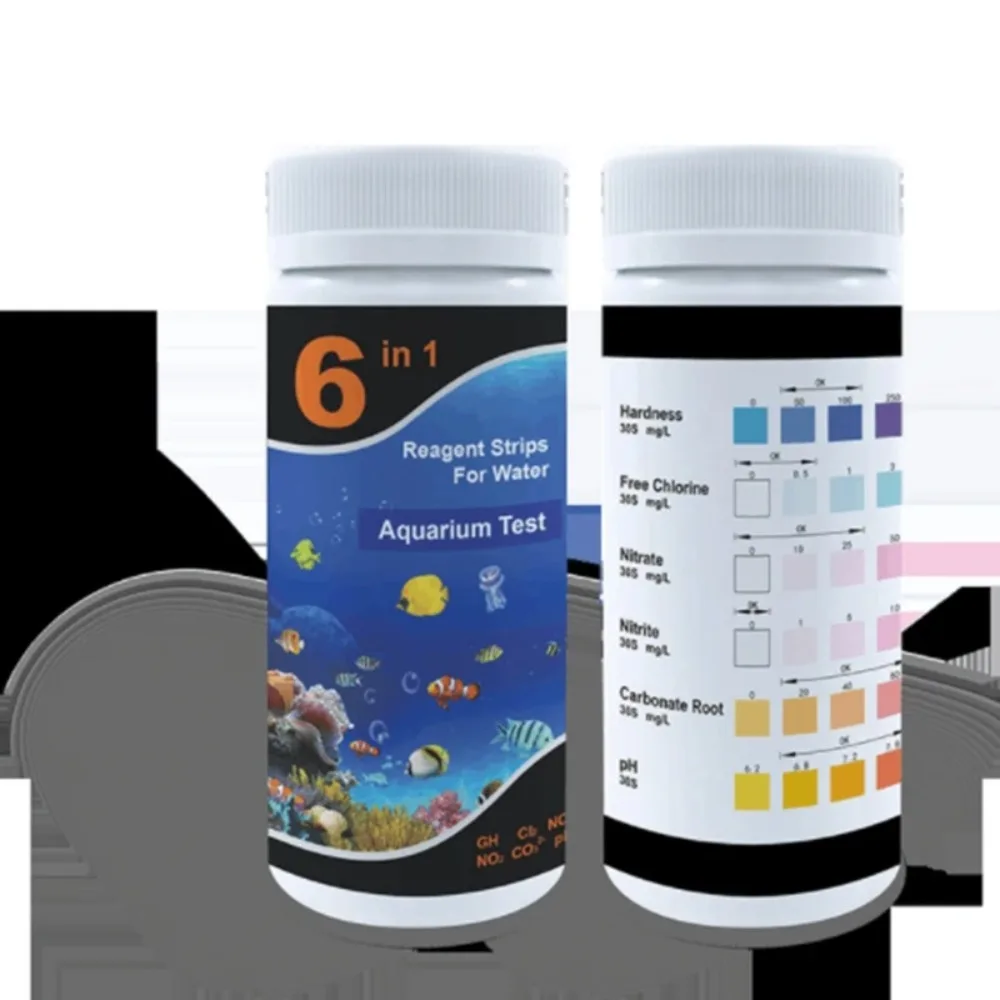
6 in 1 Aquarium Test Strips
Another niche product. For aquarium hobbyists, testing for nitrite, nitrate, hardness, and chlorine is a weekly chore. These strips are dirt cheap and do the job. They’re not lab-grade, but for managing a fish tank’s cycle, they provide all the data you need. Don’t use them for your drinking water, though—they don’t test for metals.
Frequently Asked Questions
- How often should I get my water professionally tested?
- For well water, test annually for bacteria/nitrates and every 3-5 years for a full panel. For city water, every 5-7 years is sufficient unless you have old pipes or notice changes. Always test after any major plumbing work.
- Can I use home test kits instead of a lab?
- Home kits are great for monitoring and screening, but they can’t replace a lab for a complete, legally defensible analysis. Use home kits quarterly and a lab test every few years for the full picture.
- What’s the most important test for a new home with a well?
- A full panel including bacteria (total coliform/E. coli), nitrates, heavy metals (lead, arsenic), and pH. This is non-negotiable for the health of your family. It’s the first thing you should do before moving in.
- My water tastes fine. Do I still need to test it?
- Absolutely. Many of the most dangerous contaminants—like lead, arsenic, and radon—are tasteless and odorless. Taste is a terrible indicator of safety. Testing is the only way to know for sure.
- What does “TDS” actually mean on my meter?
- Total Dissolved Solids measures all inorganic and organic substances dissolved in water. A high TDS doesn’t mean it’s dangerous—it could just be minerals. But a low TDS reading from your RO tap confirms the system is working. It’s a performance metric, not a safety one.
Final Thoughts
Professional water testing isn’t an expense; it’s an investment in your health and your wallet. It stops you from buying the wrong equipment and alerts you to problems you can’t taste or see. Start with a lab test if you’ve never done one. Then, arm yourself with a good at-home kit for regular check-ups.
Your water has a story to tell. A proper test is how you listen. Once you know what’s in it, choosing the right solution—be it a point-of-use filter or a full treatment system—becomes a clear, confident decision. No more guessing.
