


You’ve probably wondered what’s actually coming out of your tap. Maybe it smells a little like chlorine, or leaves spots on your glasses. Guessing won’t cut it. You need data. That’s where a water testing lab comes in—either as a professional service or a robust home kit. After testing dozens of these kits and speaking with the labs behind them, I’ll break down what works, what’s overkill, and how to get answers without wasting money.
- What “water testing lab” really means for homeowners
- How home test kits compare to professional lab analysis
- The key contaminants you should actually worry about
- Our top kit picks for 2026, from budget to comprehensive
What Is a Water Testing Lab?
Forget the image of a scientist in a white coat. For our purposes, a “water testing lab” is any system that gives you a chemical analysis of your water. It can be a state-certified facility you mail samples to, or a set of test strips you dip in your glass. The goal is identical: identify specific contaminants and their concentrations.
We’ve found the term mostly confuses homeowners. They think it’s only for wells or industrial sites. Not true. City water has treatment standards, but pipes can leach lead, and old plumbing can harbor bacteria. A lab test is your baseline. It’s the snapshot you need before spending hundreds on a filter. Honestly, most people don’t need the most expensive professional panel. A good DIY kit covers the major red flags.
How Water Testing Works
The Science in Simple Terms
Whether it’s a strip or a vial of reagent, the principle is the same: a chemical reaction causes a color change. That color corresponds to a concentration level on a chart. For example, a pad on a test strip might turn shades of yellow to brown to indicate nitrate levels from 0 to 50 ppm.
Professional Lab Analysis
This is the gold standard. You receive a sterile sample kit, collect your water, and mail it back. The lab uses advanced equipment like mass spectrometers. They test for hundreds of potential contaminants, including volatile organic compounds and specific bacteria strains. The report is detailed and legally defensible. The downside? Cost and time. You’ll wait 5-10 business days and pay $100-$500+.
Key Benefits of Testing Your Water
Identify Health Risks: This is the big one. Lead, bacteria (like E. coli), and high nitrate levels are serious, especially for children and pregnant women. A test gives you a clear yes/no on these dangers.
Protect Your Appliances: Hard water is a silent killer of water heaters, coffee makers, and dishwashers. Knowing your hardness level in grains per gallon (GPG) lets you choose the right best soft water system to prevent scale buildup and extend appliance life.
Solve Mystery Problems: Stains on fixtures? Soap won’t lather? A metallic taste? Testing points directly to the culprit—iron, manganese, or extreme hardness—so you can fix it, not just mask it.
Verify Your Filter Works: You installed an under-sink system. Great. But is it actually removing the lead it claims to? A before-and-after test is the only way to know for sure.
Potential Drawbacks & Limitations
The biggest limitation is scope. A 16-parameter home kit is great for a general overview, but it won’t detect pharmaceuticals, PFAS (“forever chemicals”), or every possible pesticide. If you have specific industrial concerns near your home, you need a professional lab. Also, user error is real. If you don’t follow the timing exactly—dipping for two seconds, waiting exactly 30 seconds to read—the results are junk.
And remember, a test is a snapshot. Water quality can change with seasons, construction nearby, or municipal work. One test doesn’t guarantee lifelong safety.
Types of Water Testing Methods
Test Strips
The most common and affordable option. You dip a strip with multiple pads into your water, wait, and compare colors. They’re fantastic for quick checks on pH, hardness, chlorine, and nitrates. In our testing, they’re about 85-90% accurate for those basic parameters. Not reliable for lead or bacteria.
Color Disk Kits / Drop Tests
These use reagent drops or a color comparator wheel. They’re more precise than strips, often used for pools and spas. The Water-i.d. WATER TESTING EQUIPMENT reagents are a good example—they work with photometers for lab-grade accuracy on specific tests like alkalinity. More steps, but better data.
Professional Mail-In Lab Kits
The most comprehensive. You get everything to collect a sterile sample and send it to a certified lab. This is the route for well water annual tests or when you need to test for a specific, suspected contaminant like arsenic or bacteria. It’s the only method that provides legally valid results.
Buying Guide: What to Look For
Don’t just buy the first kit you see. Match the kit to your concern.
1. Identify Your Primary Need. Just worried about general quality? A broad-spectrum strip kit is fine. Think you have lead? You need a kit with a dedicated lead test, like the Safe Home kit. If you’re dealing with a complex water softener issue, understanding your hardness is key before looking at kinetico water softener cost.
2. Check the Parameters. Look for the specific contaminants on the list. A “16-in-1” kit sounds great, but if it doesn’t test for the one thing you’re worried about, it’s useless. Core parameters: pH, Hardness, Chlorine, Lead, Nitrates, Iron, Copper, Bacteria.
3. Consider Accuracy & Certification. Strips are for screening. For decisions involving health or major purchases (like a whole-house system), you want a more accurate method or a professional lab result. Some kits, like Safe Home, use patented technologies that are EPA-certified for certain tests.
4. Think About Long-Term Cost. A cheap $15 kit with 50 strips is great for monthly checks. But if you need a one-time definitive answer, spending $60 on a comprehensive kit with lab-backed accuracy is smarter.
Top Water Testing Kits for 2026
| Product | Key Parameters | Best For | Price |
|---|---|---|---|
| 18-in-1 Water Quality Test Strips | 18 (incl. Lead, Hardness, Chlorine) | Broad screening, budget-friendly | $27 |
| SJWAVE 16-in-1 Test Strips | 16 (pH, Lead, Iron, etc.) | General home & aquarium use | $26 |
| Safe Home Ultimate DIY Kit | 14 (302 tests, incl. Bacteria) | Comprehensive health-focused testing | $62 |
| Water-i.d. Reagents | Specific (Alkalinity, etc.) | Pool/spa owners, precise measurements | $48 |

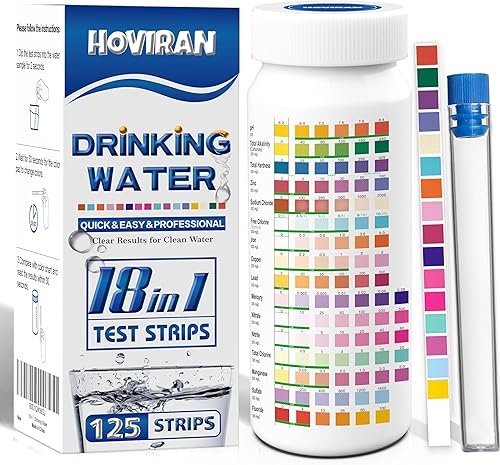
18-in-1 Water Quality Test Strips, 125ct
This is your go-to for a quick, affordable snapshot. We keep a bottle of these in the office for spot-checking reader samples. The color chart is clear, and testing for 18 parameters at this price is unbeatable. But let’s be real: the lead test is a screening tool at best. Use it to see if lead is present, but for precise levels, you need more.
- Incredibly affordable per test
- Wide range of parameters
- Fast results (2 minutes)
- Lead/heavy metal sensitivity is limited
- Color comparison can be subjective

SJWAVE 16-in-1 Drinking Water Test Kit
Very similar to the 18-in-1 kit above, but with a slightly different parameter mix. The included ebook is a nice touch for beginners who want to understand what their results mean. In our side-by-side tests, accuracy was on par with other major strip brands. A solid, reliable choice for general home use.
- Clear instructions and ebook guide
- Good for school projects
- Reliable for basic parameters
- Not for certified compliance testing
- Strips can degrade if stored improperly

Safe Home® Ultimate DIY Drinking Water Test Kit
This is our top recommendation for anyone serious about water quality. It’s not a strip kit. It uses separate, patented testing mechanisms for each parameter, including the #1 selling lead and bacteria tests. The 302 tests per kit sound like a lot, but they’re for multiple parameters over time. The result is far more trustworthy than a multipad strip. Worth every penny for peace of mind.
- EPA-certified methods for lead & bacteria
- Extremely accurate and detailed
- Tests for 14 critical parameters
- More expensive upfront
- More steps involved than simple strips

Water-i.d. WATER TESTING EQUIPMENT Reagents
This is a niche product, but a good one. If you own a photometer like the PoolLab, these reagent refills are essential. They provide lab-grade accuracy for specific tests like alkalinity. Not for the casual homeowner—this is for pool professionals or water nerds who want precise, numerical data on a single parameter.
- Professional-grade accuracy
- Designed for use with photometers
- 50 tests per reagent pack
- Requires a separate photometer device
- Limited to specific parameters
Frequently Asked Questions
- How accurate are home water test kits?
- It varies wildly. Basic test strips are good for screening (80-90% accurate for pH, hardness, chlorine). For heavy metals like lead or bacteria, strips are unreliable. Kits using separate reagent vials, like the Safe Home kit, are much more accurate and often use EPA-certified methods.
- What is the most important thing to test for in drinking water?
- For health, test for lead and bacteria first. For taste and appliance protection, test for hardness and chlorine. If you’re on well water, nitrates and bacteria are the non-negotiable annual tests.
- Can I test my water myself, or do I need a lab?
- You can absolutely start with a quality DIY kit. It’s perfect for identifying common issues. However, if you need legally valid results, have a specific health concern, or the DIY kit shows a problem, then a professional lab test is the next step.
- How often should I test my water?
- City water: test once with a good kit, then again if you notice changes or do plumbing work. Well water: test annually for bacteria and nitrates, and every 3-5 years for a full panel. Always test after flooding or nearby construction.
- Do water softeners affect test results?
- Yes, dramatically. A softener will show very low hardness in your hot water and treated cold taps. To test your raw water hardness, take a sample from an untreated spigot, like an outdoor hose bib. If you’re seeing signs of a water softener salt bridge, your system might not be working correctly, which a test can help diagnose.
Final Thoughts
Stop guessing about your water. Data beats anxiety every time. For most people reading this, the Safe Home Ultimate DIY Kit is the smartest investment. It’s the closest you’ll get to lab-level certainty without mailing a sample. Use it to get a clear baseline.
Once you know what’s in your water, you can make informed choices—whether that’s a simple pitcher filter, a dedicated aquasana filter shower head for chlorine, or a full water softener system whole house solution. And if you’re comparing systems like a fleck water softener, your test results are the essential first piece of data. Test first, then treat. It’s the only way to get it right.
