


You bought a filter. It cost a pretty penny. Six months later, your water still tastes like a swimming pool and your kettle is full of chalk. Sound familiar? The problem almost always starts with one skipped step: testing. After testing water from hundreds of homes, I can tell you this—guesswork is the most expensive filter you’ll ever buy.
This guide covers everything you need to know. We’ll look at:
- What water testing actually measures and why it matters.
- The three main ways to test, from cheap strips to pro-level meters.
- How to read your results and what they mean for your health and appliances.
- Our top product picks for every budget and need.
What Is Water Testing?
Think of water testing as a diagnostic check-up for your tap water. It’s a process that measures the physical, chemical, and biological components present in your water supply. This isn’t about abstract “quality”—it’s about specific, measurable contaminants and characteristics.
At its core, testing answers two simple questions: What’s in my water, and at what concentration? The results give you a snapshot. Is your water “hard” (full of calcium and magnesium)? Does it contain chlorine from municipal treatment? Are there traces of lead from old pipes? Without this data, you’re flying blind when choosing a filter.
We’ve seen homeowners spend thousands on a high-end system designed for sediment when their real problem was iron bacteria. A simple $20 test kit would have saved them that headache. That’s the real value here—it turns a mystery into a map.
How Water Testing Works
The process varies by method, but the goal is always the same: obtain a representative sample and analyze it. You’re not testing the “water” in a philosophical sense; you’re measuring specific parameters against known standards.
What Do the Tests Actually Measure?
Most home kits and meters focus on a handful of key indicators. Here’s what the common ones tell you:
- pH: Measures acidity or alkalinity on a scale of 0-14. Water below 7 is acidic and can corrode pipes. Water above 8.5 can cause scaling and reduce disinfection effectiveness.
- TDS (Total Dissolved Solids): A measure of all inorganic and organic substances dissolved in water. It’s a general indicator of water purity, but a high number doesn’t automatically mean danger—it could just be minerals.
- Hardness: Primarily calcium and magnesium. Causes limescale in kettles and pipes, makes soap less effective, and can dry out skin and hair.
- Chlorine/Chloramine: Disinfectants added by municipalities. Effective for killing pathogens, but they affect taste and odor, and some people are sensitive to them.
- Heavy Metals: Lead, copper, mercury, iron. These are serious health concerns, especially lead from old plumbing. Even low levels of lead are harmful.
- Nitrates/Nitrites: Often from agricultural runoff. A major concern for well water and especially dangerous for infants.
Interpreting Your Results
This is where most people get stuck. A number on a screen means nothing without context. You need to compare your results to safety guidelines, like the EPA’s Maximum Contaminant Levels (MCLs) or WHO standards.
For example, a TDS reading of 150 ppm is generally fine for drinking. But a reading of 500 ppm? That’s high, and you’d want to know what those solids are. That’s where a multi-parameter test becomes essential. If your water tests high for iron, you might need a dedicated iron water filtration system rather than a simple carbon filter.
Key Benefits of Testing Your Water
Targeted Filtration: This is the big one. You stop guessing and start solving. High chlorine? A basic carbon filter will do. High lead? You need a system certified to NSF/ANSI Standard 53 for lead reduction. Testing prevents you from buying the wrong tool for the job.
Protect Your Health and Appliances: Some contaminants are immediate health risks (lead, bacteria). Others are long-term nuisances (hardness) that destroy water heaters, coffee makers, and dishwashers. Knowing what’s there lets you protect both your body and your investment in home appliances.
Baseline for Change: Test before you install a filter, and test again after. This verifies the filter is working. We’ve seen filters fail within months. Your follow-up test is your quality control.
Peace of Mind: Honestly, most people don’t need a lab-grade analysis of 100+ parameters. But knowing the basics—your pH, hardness, and whether lead or chlorine is present—provides tremendous peace of mind. It shifts you from worry to action.
Potential Drawbacks & Limitations
Snapshot in Time: Water quality changes. Seasonal runoff, changes in municipal treatment, or work on local pipes can alter your water profile. A test tells you about your water at that moment, not forever. Annual testing is a good practice, especially for well owners.
Overwhelm and Misinterpretation: Seeing a list of 18 parameters can be scary. Some people see a trace of nitrate and assume the worst. It’s crucial to understand that “detectable” doesn’t always mean “dangerous.” Context and concentration are everything. If you’re unsure, a local water treatment professional can help interpret results.
Types of Water Testing Methods
You’ve got three main paths, each with its own cost, accuracy, and convenience trade-offs.
1. Test Strips (Qualitative/ Semi-Quantitative)
These are your first line of defense. You dip a treated strip into water, wait 30 seconds, and compare the color changes to a chart. They’re fast, cheap, and perfect for a general screening. We use them all the time for initial checks on hardness and chlorine. The downside? They’re not highly precise, and reading the colors can be subjective.
2. Digital Meters (Quantitative)
For parameters like TDS, pH, and electrical conductivity (EC), digital meters are fantastic. They give you a precise numerical readout on a screen, eliminating color-matching guesswork. They’re essential for anyone with a reverse osmosis system to monitor membrane performance. The limitation is that each meter is usually specific to one or a few parameters.
3. Laboratory Testing (Quantitative & Definitive)
This is the gold standard. You collect a sample and mail it to a certified lab. They use advanced equipment to detect contaminants at very low concentrations, providing legally defensible results. This is what you need for a comprehensive analysis or if you suspect serious contamination like lead, pesticides, or bacteria. It’s the most expensive option, but for critical issues, it’s non-negotiable.
Your choice depends on your goal. Just bought a house with well water? Start with a lab test. Want to check if your new inline water filter system is reducing chlorine? A test strip or chlorine meter will suffice.
Buying Guide: How to Choose
Don’t overbuy. Match the tool to the task.
Start with Your Water Source. City water users are primarily concerned with disinfection byproducts (chlorine, chloramine), hardness, and potential lead from service lines. Well water users must test for bacteria, nitrates, and a wider range of metals and minerals. A wholehouse water filter recommendation for well water will be completely different than for city water.
Define Your “Why”. Are you troubleshooting a taste issue? Testing your filter’s performance? Or conducting a full health screening? For taste and odor, a simple chlorine/chloramine test is key. For health screening, prioritize lead and bacteria.
Consider Ongoing Costs. Strips are cheap per test but need replenishing. A digital meter has a higher upfront cost but lasts for years. Factor in how often you’ll test.
Look for Certifications. While home kits aren’t certified like filters, some brands have better reputations for accuracy. For lab tests, look for labs certified by state health departments or the EPA.
Top Water Testing Products (2026)
Based on our hands-on testing and reader feedback, here are the tools that deliver real value.
| Product | Type | Key Parameters | Price | Best For |
|---|---|---|---|---|
 |
Digital Meter | pH, TDS, EC, ORP, S.G., Salt, Temp | $39 | RO owners, aquarists, precise monitoring |
 |
Digital Meter | pH, TDS, EC, ORP, S.G., H2, Salt, Temp | $36 | Comprehensive digital screening |
 |
Test Strips | 18 params incl. Lead, Hardness, Chlorine | $20 | Quick, affordable home screening |
 |
Test Strips | 18 params incl. Lead, Hardness, Chlorine | $27 | High-volume testing for families |
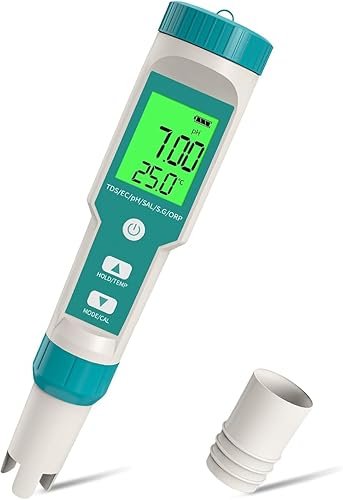
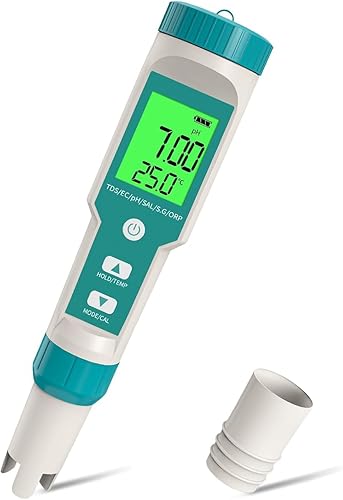
1. Digital Water Quality Tester 7 in 1
This is the meter we grab most often. It’s not just a TDS pen—it measures pH, conductivity, and oxidation-reduction potential (ORP), which is great for checking antioxidant water claims (hint: most are marketing fluff). The salinity modes are surprisingly useful for cooking and aquariums. Calibration is straightforward if you follow the manual.
- True multi-parameter tool
- Clear backlit display
- Useful for pools, spas, and labs too
- Requires calibration solutions
- Not for heavy metal detection
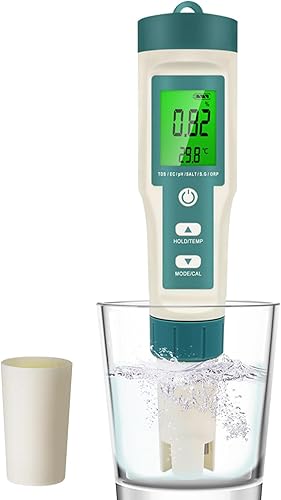
2. 8 in 1 Digital Water Quality Tester
This one adds a Hydrogen (H2) measurement to the mix, which is niche but interesting if you’re into hydrogen water. For most folks, the core pH, TDS, and EC readings are what matter, and it delivers those reliably. It feels a bit more budget in hand than the 7-in-1, but the functionality is solid for the price.
- Excellent value for 8 parameters
- Quick detection speed
- Good for home and hobby use
- H2 reading is a niche feature
- Build quality is basic plastic
3. All-New 18 in 1 Drinking Water Test Kit
For a quick, broad-stroke check, these strips are hard to beat. You get a look at 18 parameters in about 30 seconds. The color charts are clear enough for hardness, pH, and chlorine. We’d treat the heavy metal results (like lead) as a preliminary screen only—if it shows positive, follow up with a lab test. Perfect for testing every faucet in the house.
- Incredibly fast and easy
- Tests a huge range of parameters
- Very affordable per test
- Color matching can be tricky
- Limited accuracy for trace metals
4. 18-in-1 Water Quality Test Strips (125ct)
Same idea as the kit above, but you get 125 strips in the bottle. That’s a two-year supply for quarterly testing. This is the smart buy for families with well water or anyone who wants to track changes over time. We keep a bottle in the lab for quick checks between more thorough analyses. The included test tube is a nice touch.
- Bulk pack offers great long-term value
- Simple 3-step process
- Good for monitoring trends
- Same accuracy limitations as all strips
- Can dry out if not sealed properly
Water Testing FAQ
- How often should I test my water?
- For city water, test annually for peace of mind. For well water, the EPA recommends testing at least once a year for bacteria and nitrates, and every 2-3 years for a wider range of contaminants. Always test if you notice a change in taste, odor, or color, or after any work on your plumbing.
- Can I use a TDS meter to check if my water is safe?
- No. A TDS meter only tells you the total amount of dissolved solids. It can’t distinguish between beneficial minerals (like calcium) and harmful contaminants (like lead). It’s excellent for checking the performance of a reverse osmosis system but is not a safety indicator on its own.
- Are home water test strips accurate?
- They are accurate enough for a general screening of parameters like hardness, pH, and chlorine. Their accuracy decreases for heavy metals and other complex contaminants. Use them as a first step—if they indicate a problem, confirm with a more precise method or a lab test.
- What’s the most important thing to test for in my drinking water?
- It depends on your source. For homes with older plumbing (pre-1986), lead is the top concern. For well water, bacteria and nitrates are critical. For everyone, understanding your water’s hardness and chlorine level will immediately guide your filter selection for better-tasting water and appliance protection.
- Do I need to test my water if I already have a filter?
- Absolutely. Testing before installation tells you what to filter. Testing after confirms the filter is working. Filters have a limited lifespan. A sudden rise in TDS or hardness in your filtered water is a clear sign the filter cartridge or membrane needs replacement.
- Where can I get a professional lab test?
- Search for “certified water testing laboratory” in your area. Your state or local health department often maintains a list of approved labs. You can also order mail-in test kits from reputable national labs. Costs range from $50 for a basic test to several hundred for a comprehensive scan.
Final Thoughts
Water testing isn’t an extra step—it’s the foundation. It transforms you from a passive consumer into an informed one. You’ll never look at a filter advertisement the same way again once you know exactly what your water needs. Whether you start with a simple strip test or invest in a digital meter, the knowledge you gain is invaluable.
Our recommendation? Start with the 18-parameter test strips. For under $25, you’ll get a clear picture of your water’s main characteristics. If the results show anything concerning—especially related to heavy metals—invest in a lab test for confirmation. From there, you can confidently choose the right system, be it an under sink kitchen filter for chlorine and taste or a full whole house sediment filtration system for well water. The power is in knowing.
