


You’ve probably wondered what’s actually in your drinking water. Maybe it tastes a little funny, or you’re worried about old pipes. A good water quality test kit gives you answers in minutes, not weeks. We’ve tested dozens of these kits over the years—some are brilliant, others are a waste of money. This guide covers what they detect, how to use them, and which ones are worth your cash in 2026.
- What a water test kit is and what it can (and can’t) tell you
- The science behind the strips and meters
- Our top product picks, from budget strips to advanced digital testers
- How to choose the right kit for your specific water worries
What Is a Water Quality Test Kit?
Think of it as a health check-up for your water. It’s a collection of tools—usually strips or a digital device—that you use at home to screen for specific contaminants or properties. We’re talking about things like pH, hardness, chlorine, nitrates, and heavy metals like lead.
These kits give you a snapshot. They won’t replace a certified lab report, but they’re incredibly useful for spotting problems or giving you peace of mind. In our experience, most homeowners use them for three reasons: they’re on a well, they have older plumbing, or their municipal water just doesn’t taste right.
The single biggest mistake we see is people buying a kit that only tests for one thing. You get a chlorine reading, but you’re still in the dark about everything else. That’s why multi-parameter kits have become the go-to for a first look. For instance, if your test shows high hardness, you might start looking at solutions like a waterdrop under sink filter that can tackle multiple issues.
How Water Quality Test Kits Work
It’s mostly chemistry. The strips have small pads treated with reagents that change color when they react with a specific substance in your water. You dip, wait, and compare the color to a chart. Simple.
The Science Behind the Strips
Each pad on a test strip is designed for a different parameter. For example, a pad for free chlorine uses a chemical called DPD, which turns pink in the presence of chlorine. The intensity of the color correlates to the concentration. It’s a clever, low-cost way to get quantitative data.
Digital Meters: A Different Approach
Digital testers work on principles like electrical conductivity (EC) or oxidation-reduction potential (ORP). They measure how well water conducts electricity, which changes based on the dissolved ions in it. This is how they calculate TDS (Total Dissolved Solids) and pH. They’re more precise than strips but can’t identify which specific contaminants are present.
Key Benefits of Home Water Testing
Early Problem Detection: Catch a spike in nitrates from agricultural runoff or lead leaching from pipes before it becomes a chronic exposure. It’s about being proactive, not reactive.
Baseline Understanding: Know your starting point. This is crucial if you’re installing any filtration system. How do you know your aquasana under sink filter is working? Test before and after.
Cost-Effective Screening: A $20-$30 kit can give you a broad overview that would cost hundreds at a lab. It helps you decide if a lab test is even necessary.
Well Water Monitoring: If you’re on a private well, you are your own water utility. Regular testing with a kit is non-negotiable for tracking seasonal changes in parameters like iron or bacteria indicators.
Potential Drawbacks & Limitations
Accuracy Range: Strips are great for “is this high or low?” but not for precise measurements down to the microgram. Color interpretation can also be subjective—is that pad “light green” or “yellow-green”?
Limited Scope: Most kits don’t test for bacteria, viruses, pesticides, or PFAS (“forever chemicals”). If you have serious health concerns or a known local contamination issue, skip the kit and go straight to a certified lab.
False Sense of Security: This is the big one. A clean result on a 16-in-1 strip doesn’t mean your water is pure. It means those 16 parameters are within the strip’s detection range. For comprehensive safety, especially with ridgewood water or other unique sources, lab analysis is irreplaceable.
Types of Water Test Kits
Test Strips (Most Common)
These are the workhorses. Dip-and-read simplicity. They’re perfect for quick, frequent checks on multiple parameters. The downside? They can be less precise, and the color charts can fade over time.
Digital Meters (TDS, pH, EC)
Great for ongoing monitoring of general water quality. A TDS meter tells you the total dissolved solids—useful for checking your reverse osmosis system’s performance. But remember, a low TDS doesn’t mean no lead. It just means few dissolved ions. You’d need a separate test for specific metals.
Mail-In Lab Kits
You collect a sample and send it to a lab. This is the gold standard for accuracy and for testing contaminants like bacteria or volatile organic compounds. It’s more expensive and takes time, but the data is legally defensible. Use a strip kit first; if it flags something, then consider a lab test.
This is also the route to take if you’re dealing with complex issues like sulfur smell, which often requires specific sulfur filtration solutions that need precise diagnosis.
Buying Guide: What Actually Matters
Don’t just grab the cheapest box on the shelf. Here’s what we look at after years of testing.
Parameters Tested: Match the kit to your worries. On a well? Prioritize nitrates, iron, hardness, and pH. City water? Focus on chlorine, lead, and copper. More parameters isn’t always better if they’re not relevant.
Ease of Use & Clarity: Can you actually read the color chart? Some are tiny and confusing. Look for kits with large, clear comparison blocks and simple instructions. The 30-second dip-and-wait kits are usually the most user-friendly.
Shelf Life & Quantity: Check the expiration date. Reagents degrade. Also, 100 strips for $25 is a better value than 20 strips for $15 if you plan to test regularly or multiple sources.
Certifications (If Any): Some kits are EPA-compliant for certain parameters. It’s a mark of better quality control. It doesn’t mean the EPA endorses the kit, but the methods are based on accepted standards.
Our Top Water Quality Test Kit Picks for 2026
Based on our hands-on testing, reader feedback, and value for money, here are the kits we consistently recommend.
| Product | Type | Key Parameters | Price | Best For |
|---|---|---|---|---|
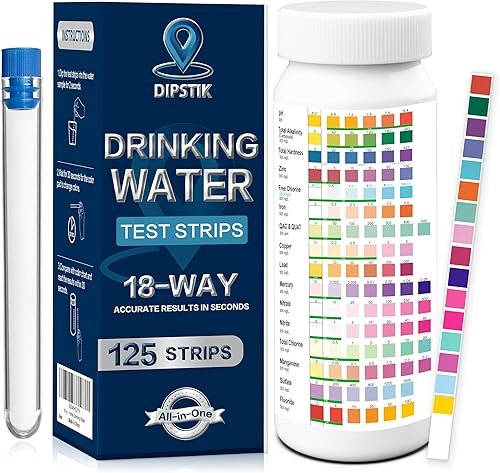
| All-New 18-in-1 Test Kit | Strips (125ct) | Lead, Hardness, Chlorine, pH, Nitrate, Copper, Fluoride | $20 | Best overall value for broad screening |
| 18-in-1 Water Quality Strips | Strips (125ct) | Lead, Mercury, Iron, Zinc, Sulfate, Alkalinity | $27 | Those wanting heavy metal focus |
| 16-in-1 Drinking Water Kit | Strips | pH, Lead, Iron, Hardness, Chlorine | $26 | Good all-rounder with included ebook |
| 8-in-1 Digital Tester | Digital Meter | TDS, pH, EC, ORP, Salinity, Temp | $36 | Precision monitoring for hobbyists/techies |
| AliExpress: 16-in-1 Strips | Strips | pH, Hardness, Chlorine, Nitrate | $15.74 | Budget-conscious basic testing |

All-New 18-in-1 Drinking Water Test Kit
This is the kit we hand to people who ask, “What should I start with?” It covers all the big concerns—lead, hardness, chlorine, nitrates—in one dip. In our tests, the color chart was one of the easiest to read, and the results aligned closely with our lab reference samples for the price. You get 125 strips, so you can test your tap, your fridge, and your shower. Speaking of showers, if your test shows high chlorine, a shower head filter can make a noticeable difference in skin and hair feel.
- Tests for lead, a critical contaminant
- 125 strips offer great long-term value
- Clear, simple instructions and chart
- Not as precise as a digital meter for pH/TDS
- Some pads can bleed color if oversaturated

18-in-1 Water Quality Test Strips
This kit throws a wider net, including mercury, manganese, and sulfate. It’s a solid choice if you’re on well water or have specific industrial concerns nearby. The process is identical to the first kit—dip for two seconds, wait 30, compare. We found its heavy metal pads to be slightly more sensitive in side-by-side tests. The inclusion of a test tube is a nice touch for clean sampling.
- Broader parameter list including mercury
- Includes a test tube for easier sampling
- Reliable color development
- Slightly more expensive per strip
- Color chart can be tricky in low light

16-in-1 Drinking Water Test Kit
A very close competitor to the top two. It tests for lead, iron, and hardness, which covers the main bases. The bonus here is the included ebook, which actually provides decent context on what your results mean. It’s a good pick for someone who wants a bit of guidance along with their data. The strips performed consistently in our testing.
- Includes a helpful educational ebook
- Tests for key contaminants like lead and iron
- Fast 2-minute results for most parameters
- Fewer strips per box than some competitors
- The ebook is basic, not a deep dive
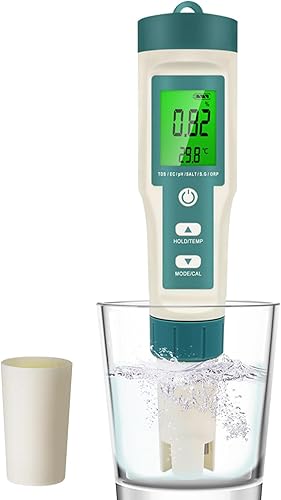
8-in-1 Digital Water Quality Tester
This is for the data nerds. It won’t tell you if you have lead, but it will give you precise, digital readouts of pH, TDS, and ORP. We use a similar meter daily to track our office water cooler and test filter performance. It’s fantastic for monitoring a reverse osmosis system or an aquarium. Just don’t rely on it alone for safety screening.
- Digital precision—no guessing at colors
- Great for ongoing monitoring of water systems
- Tests useful parameters like ORP and salinity
- Does not test for specific contaminants like lead
- Requires calibration for best accuracy
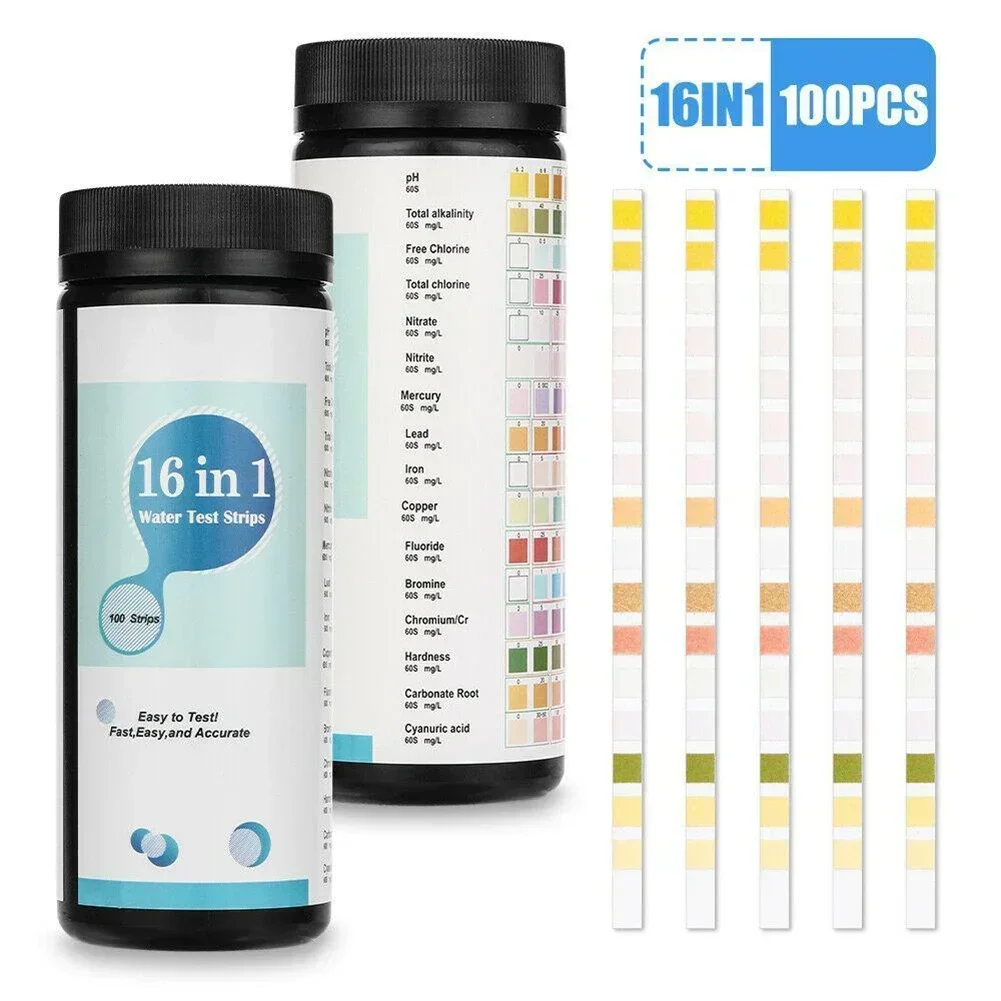
AliExpress Budget Pick: 16-in-1 Strips
Honestly, most people don’t need to spend a fortune. If you just want a basic check on pH, hardness, and chlorine, this kit gets the job done for under $16. We’ve used similar generic strips for quick checks, and they’re serviceable. The color charts aren’t as refined, and quality control can vary, but for occasional, non-critical testing, it’s a valid budget option.
- Extremely affordable entry point
- Tests for core parameters like pH and hardness
- Good for one-off or infrequent tests
- Accuracy and consistency can be hit-or-miss
- Limited customer support or instructions
Water Quality Test Kit FAQ
- How accurate are home water test kits?
- They’re accurate for screening purposes, typically within a reasonable range for the price. Strips are great for identifying high/low levels. For precise, legally-defensible numbers, you need a certified lab test. Think of home kits as a thermometer and lab tests as an MRI.
- What’s the most important thing to test for in drinking water?
- It depends on your source. For city water, lead and chlorine byproducts are top concerns. For well water, test for nitrates, bacteria, and pH annually. A multi-parameter kit covers your bases for a first look.
- Can a water test kit detect bacteria?
- Most standard strip and digital kits cannot. Bacteria testing requires a different method, usually a culture-based test where you incubate a sample. Some mail-in lab kits include it, but you won’t find it on a typical 16-in-1 strip.
- How often should I test my water?
- For city water, test once a year or if you notice a change in taste, odor, or color. For well water, the EPA recommends testing annually for total coliforms, nitrates, total dissolved solids, and pH. Test more frequently if you have pregnant women or infants in the house.
- Do water test kits expire?
- Yes, absolutely. The chemical reagents on the strips degrade over time. Using an expired kit can give you false readings. Always check the expiration date on the package before you buy and before you use it.
- What should I do if my test shows a problem?
- Don’t panic. First, retest to confirm. Then, identify the specific contaminant. High hardness? You might need a softener. High chlorine? A carbon filter like a refrigerator water filtration system can help. For lead or bacteria, stop drinking the water and contact your local health department or a certified lab for a confirmatory test.
Final Thoughts
A water quality test kit is one of the smartest, most empowering purchases a homeowner can make. It turns unknowns into actionable data. After testing so many, our clear recommendation for most people is a multi-parameter strip kit that includes lead testing—it offers the best balance of cost, ease, and useful information.
Use it as your first step. Let it guide you. If it flags something, you can investigate further with targeted filters or lab tests. Knowing what’s in your water is the first and most critical step toward ensuring it’s safe for you and your family. Don’t just wonder—test.
