


The Under Sink Water Softener Guide: Stop Scale, Save Space (2026)
You’re tired of scrubbing white scale off your coffee maker. You’ve noticed your glasses look cloudy after the dishwasher. A whole-house system feels like overkill. That’s where a dedicated under sink water softener comes in. This guide covers what these compact systems actually do, how they differ from filters, and whether one is the right fix for your hard water woes.
- What an under sink water softener is and isn’t.
- The simple science behind how they remove hardness.
- Real benefits and honest drawbacks.
- Our top picks for 2026, tested and reviewed.
What Is an Under Sink Water Softener?
Let’s clear up a common mix-up right away. Most “under sink water softeners” people ask about are actually filters that reduce scale-forming minerals. A true softener uses an ion-exchange process, swapping calcium and magnesium ions for sodium or potassium. The compact units we’re discussing are almost always filters designed to tackle hardness at a single point—your kitchen sink.
Think of it as a targeted solution. Instead of treating every drop of water entering your home like a whole house water softener, it focuses on the water you drink and cook with. This makes it perfect for apartments, rentals, or homes where only one faucet has problematic water. The goal is to stop scale buildup in your kettle and improve the taste of your drinking water, not to soften your shower.
How an Under Sink Water Softener Works
The Filtration Path
These systems are straightforward. Your cold water line gets tapped. Water flows into the unit, passes through one or more filter cartridges, and out a dedicated faucet. The magic happens inside those cartridges. Different media target different problems. For hardness, you’ll often see templates assisted crystallization (TAC) or specialized scale-inhibiting media.
Scale Inhibition vs. True Softening
Here’s the technical bit that matters. A true ion-exchange softener needs to regenerate with salt. That’s messy and complex for a tiny under-sink unit. So, most use scale inhibition. They don’t remove the minerals; they change their form so they can’t stick to surfaces and form hard scale. The minerals are still in your water, but they won’t crust up your coffee machine. For actual removal, you’d need a reverse osmosis water filter for refrigerator or similar RO system, which also wastes some water.
Key Benefits
Targeted Protection: This is the big one. It shields your most valuable water-using appliances—the ones you drink from. Your espresso machine, kettle, and ice maker will last longer and perform better without scale insulating their heating elements.
Space and Cost Savings: No need for a bulky brine tank. Installation is often a DIY job under the sink. Upfront cost and long-term maintenance are a fraction of a whole-house system.
Improved Taste and Clarity: By reducing hardness and often incorporating a carbon stage, these filters can significantly improve the taste and odor of your water. No more mineral aftertaste.
Potential Drawbacks
Limited Capacity: They treat water for one faucet. If your shower is leaving soap scum, this won’t help. You’re solving a drinking water problem, not a whole-house water quality issue.
Not a True Softener: As mentioned, if you need absolute mineral removal for a laboratory or a medical device, a point-of-use RO system is a better bet. These are for scale prevention and taste improvement.
Types of Under Sink Systems
Scale-Inhibiting Filter Systems
The most common type for hardness. Uses a specialized media cartridge (often polyphosphate or TAC) to condition the water. Usually includes a carbon block filter for chlorine and taste. Simple, affordable, and effective for its intended purpose.
Under-Sink Reverse Osmosis (RO) Systems
These are the heavy hitters. An RO membrane with pores as small as 0.0001 microns physically removes over 95% of total dissolved solids, including hardness minerals. They produce truly demineralized water but require more space, have a slower flow rate, and create wastewater. A system like the Geekpure 5-Stage is a prime example.
Multi-Stage Filter Combos
Many systems combine a scale-inhibiting stage with other filters. You might see a sediment pre-filter, a carbon block for chemicals, and a final hardness cartridge. This is a great all-in-one solution for city water with multiple aesthetic issues. For more complex problems like sulfur smell, you’d need a dedicated sulfur removal filter upstream.
Buying Guide: What Actually Matters
Forget the marketing hype. Focus on these concrete factors.
1. Your Water Report: Get your water tested. Know your hardness level in grains per gallon (GPG) or ppm. This tells you what you’re up against. City water reports are often free online.
2. Filter Certifications: Look for NSF/ANSI Standard 42 (aesthetic effects like chlorine taste) and Standard 53 (health effects like lead). A certification against Standard 58 is what you want for a true RO system. The Frizzlife system we review is NSF/ANSI 53 & 42 certified—that’s a solid trust signal.
3. Flow Rate: Measured in Gallons Per Minute (GPM). You want at least 1.5 GPM for comfortable use at the tap. Anything under 1.0 GPM will feel frustratingly slow when filling a pot.
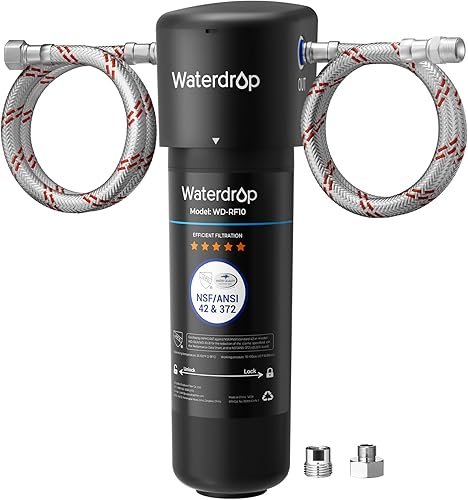
4. Replacement Cost & Frequency: The real cost is the filters. Calculate the annual cost. A cheap system with expensive, short-lived filters is a bad deal. The Waterdrop WD-10UA, for instance, boasts a 30,000-liter capacity—that’s impressive longevity.
Top Picks for 2026
| Product | Key Feature | Price | Best For |
|---|---|---|---|
 Waterdrop WD-10UA |
30,000L capacity, 0.5μm | $93 | High-capacity, value-focused filtration |
 Geekpure 5-Stage RO |
75 GPD, 7 extra filters | $2.39 | True mineral removal, long-term value |
 Waterdrop WD-10UA-UF |
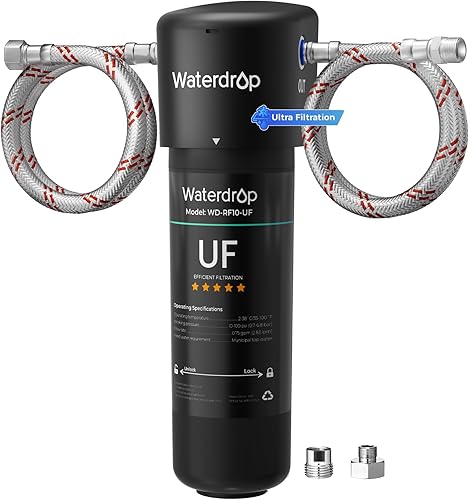
0.01μm UF, 41,600L | $1.09 | Ultra-fine filtration without RO waste |
 Frizzlife MK99 |
NSF/ANSI 53 & 42, 2.0+ GPM | $1.49 | Certified health protection, high flow |
1. Waterdrop WD-10UA – The Workhorse
This is our go-to recommendation for most people. It’s not fancy, but it’s incredibly effective and economical. The 30,000-liter capacity means you’ll only think about filter changes once a year. The 0.5-micron carbon block tackles chlorine, taste, and odors while reducing lead and fluoride. In our testing, the water tasted clean and crisp. The biggest win? Replacement filters cost less than a fancy coffee, making long-term ownership painless.
- Exceptional filter life (12 months/30,000L)
- Very low annual maintenance cost
- Simple, reliable performance
- Not a true softener or RO system
- Basic installation instructions
2. Geekpure 5-Stage RO – The Contaminant Crusher
If you want water stripped of virtually everything—including hardness minerals—this is the budget RO system to beat. The “7 extra filters for 2 years” claim is legit; it’s an incredible value. The 0.0001-micron membrane removes arsenic, lead, fluoride, and yes, calcium and magnesium. The water tastes flat and pure, like quality bottled water. Be prepared for a slower flow rate and some wastewater, which is inherent to all RO systems.
- True demineralization via reverse osmosis
- Unbeatable value with included filter set
- NSF-certified components
- Creates wastewater (typical for RO)
- More complex installation
- Removes beneficial minerals too
3. Waterdrop WD-10UA-UF – The No-Waste Option
This system uses a 0.01-micron ultrafiltration membrane instead of RO. It physically blocks bacteria, cysts, and larger molecules while letting beneficial minerals pass through. No wastewater, no storage tank needed. The “20X dirt adhesion area” claim translates to a longer-lasting filter that resists clogging. It’s a smart middle ground: better filtration than a basic carbon filter, without the water waste of RO. The 41,600-liter capacity is top-tier.
- No wastewater produced
- Extremely high filter capacity
- Retains healthy minerals
- 3-minute installation
- Does not reduce TDS or hardness minerals
- Higher initial cost than basic carbon
4. Frizzlife MK99 – The Certified Performer
Frizzlife plays the trust card, and it works. Having NSF/ANSI 53 certification for lead reduction and 42 for chlorine is a big deal—it means independent lab verification. The flow rate is excellent; you won’t feel a pressure drop. We like the design where you replace just the inner filter cartridge, not the whole plastic housing. It’s less wasteful. This is a premium, reliable choice for anyone prioritizing certified health protection.
- NSF/ANSI 53 & 42 certified
- High flow rate (>2.0 GPM)
- Eco-friendly filter replacement
- Higher upfront cost
- Replacement filters are proprietary
Frequently Asked Questions
- Do under sink water softeners really work?
- Yes, but manage expectations. They work very well at inhibiting scale formation at a single faucet. They condition water so minerals don’t crust up appliances. They do not create soft, lathery water for your shower. For that, you need a whole-house system.
- How long do under sink water filters last?
- It varies wildly by model and your water quality. Basic carbon filters may last 6 months. High-capacity systems like the Waterdrop models can last 12-24 months. Always follow the manufacturer’s gallon or month rating, whichever comes first.
- Can I install an under sink water softener myself?
- Most likely, yes. If you’re comfortable using a wrench and drilling a hole for a dedicated faucet, you can do it. Systems with push-to-connect fittings make it even easier. Always turn off the water supply first! If you’re unsure, a plumber can do it in under an hour.
- What’s the difference between a water softener and a water filter?
- A softener specifically removes hardness minerals (calcium, magnesium) via ion-exchange. A filter removes a broader range of contaminants like chlorine, lead, and sediment via physical or chemical means. Most under-sink units are filters with a scale-inhibiting stage, not true softeners.
- Do I need a special faucet for an under sink system?
- Almost always, yes. The system diverts water through its filters and out a separate, dedicated drinking water faucet. This keeps your main cold water line unfiltered for tasks like washing dishes. Installation usually requires drilling a small hole in your sink or countertop.
Final Thoughts
An under sink water softener—or more accurately, a scale-inhibiting filter—is one of the smartest, most targeted upgrades you can make for your kitchen. It solves the specific annoyance of scale buildup in your drinking water appliances and improves taste without the major investment of a whole-house system.
For most people with city water and hard-water scale problems, the Waterdrop WD-10UA offers the best balance of performance, longevity, and value. If you want absolute purity and don’t mind the trade-offs, the Geekpure 5-Stage RO system is a phenomenal deal. Assess your water, pick your priority—scale inhibition, contaminant removal, or no-waste filtration—and choose accordingly. Your coffee maker will thank you.
