


Top Rated Water Softener Systems: Our 2026 Picks & Guide
TL;DR: The best water softener system for you depends on your water hardness, household size, and budget. Ion-exchange systems are the most effective for true hardness removal. We recommend the iSpring RCC7AK for drinking water and the Filterelated portable unit for RVs. Always test your water first.
After 15 years of testing filters and interviewing plumbers, I can tell you this: hard water is a silent budget killer. It wrecks appliances, dries out skin, and leaves ugly spots on everything. But choosing the right softener isn’t about grabbing the most expensive model. It’s about matching the system to your specific water chemistry.
This guide breaks down everything we’ve learned. We’ll cover:
- What actually makes a water softener “top rated” in real-world use
- The key differences between system types (and which one you probably need)
- Our hands-on reviews of systems worth your money in 2026
- The critical mistakes to avoid when buying
What Is a Water Softener System?
Let’s clear up a common confusion right away. A true water softener removes hardness minerals—calcium and magnesium—through a process called ion exchange. It swaps those scale-forming minerals for sodium ions. That’s different from a filter that just removes contaminants.
But here’s what most articles won’t tell you: many products marketed as “water softeners” are actually conditioners or filters. They might reduce scale but don’t actually remove the minerals. For genuinely soft water that feels slick and lathers easily, you need an ion-exchange system.
The systems people search for as “top rated water softener systems” often include both true softeners and advanced filtration combos. We’ll cover both here, because your water might need more than just hardness removal.
How Water Softeners Actually Work
The Ion-Exchange Process
It’s a simple chemical trade. Hard water flows through a tank filled with resin beads coated in sodium ions. The calcium and magnesium ions have a stronger charge, so they stick to the resin, releasing sodium into the water in their place. After a while, the resin gets saturated with hardness minerals.
That’s when the regeneration cycle kicks in. A brine solution from the second tank flushes through the resin, washing away the collected minerals and recharging it with fresh sodium. You’ll need to add salt periodically. The process is automatic, usually timed or metered based on your usage.
Pre-Filtration & Sediment Removal
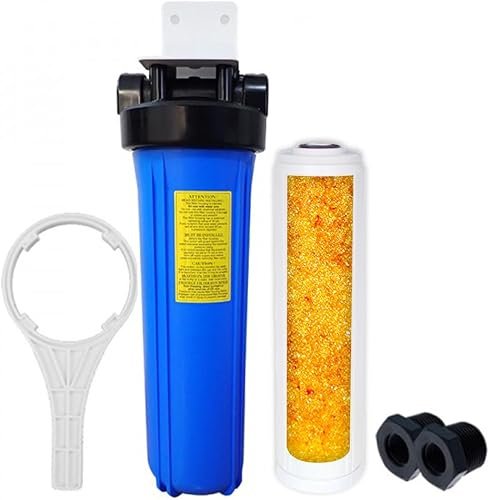
No softener should run without pre-filtration. Sediment and chlorine can wreck the resin bed. Most quality systems include a sediment filter first. For whole-house protection, a 20 inch filter housing with a 5-micron cartridge is our standard recommendation. It catches rust, sand, and other particles before they reach your expensive softener.
The Role of Carbon Filtration
Chlorine in municipal water will degrade ion-exchange resin over time. That’s why many systems add a carbon stage. A good carbon block filter removes chlorine, chloramine, and organic compounds that affect taste and odor. This isn’t just about water quality—it protects your investment in the softener resin.
Key Benefits of Softened Water
Appliance longevity. This is the big one. Scale buildup in water heaters, coffee makers, and dishwashers reduces efficiency and kills them years early. We’ve seen heating elements caked with half an inch of calcium. Soft water prevents that entirely.
Cleaner everything. Soap actually lathers. You’ll use less detergent, shampoo, and cleaning products. Glass shower doors stay clear. Dishes come out spotless without rinse aid. It’s a noticeable difference from day one.
Softer skin and hair. Hard water leaves a mineral film that dries out skin and makes hair brittle. People with eczema often report significant improvement after switching to soft water. Your skin will feel smoother.
Energy savings. A water heater with scale buildup works harder. The U.S. Department of Energy estimates even 1/16″ of scale can reduce efficiency by up to 20%. Soft water keeps heating elements clean and your energy bills lower.
Potential Drawbacks & Honest Warnings
Slick feeling. Soft water feels slippery in the shower because there’s no mineral residue on your skin. Some people love it; others feel like they can’t rinse soap off completely. It takes getting used to.
Environmental impact. The regeneration cycle uses water and salt, which ends up in the wastewater. Some regions have restrictions on salt-based softeners for this reason. Potassium chloride is an alternative to sodium chloride, but it’s more expensive.
Upfront cost. A quality whole-house system isn’t cheap. You’re looking at $1,000-$3,000 installed for a decent unit. But remember, it’s protecting appliances that cost far more to replace.
Types of Water Treatment Systems
Traditional Ion-Exchange Softeners
The gold standard for actual hardness removal. Two tanks—one for resin, one for brine. They require electricity, drain access, and regular salt additions. If you have very hard water (over 10 GPG), this is probably what you need.
Salt-Free Water Conditioners
These don’t remove minerals but change their structure so they don’t form scale. They’re lower maintenance but less effective on very hard water. Better for prevention than reversal of existing scale problems.
Reverse Osmosis Systems
RO systems like the iSpring units we’ll review remove hardness minerals along with hundreds of other contaminants. They’re point-of-use (usually kitchen sink) rather than whole-house. A 6-stage system with remineralization can produce excellent drinking water. For a deep dive on RO technology, check our guide to distillation systems—they work differently but achieve similar purity goals.
Portable & Specialty Softeners
Compact units for RVs, boats, or renters. They use the same ion-exchange principle but in smaller, portable packages. Great for travel or situations where you can’t install a whole-house system.
Buying Guide: What Actually Matters
Get your water tested first. Seriously. You can’t choose the right system without knowing your hardness level in grains per gallon (GPG) and what contaminants are present. Simple test kits cost $20-$50.
Size it correctly. A softener’s capacity is measured in grains. A family of four with moderately hard water (10 GPG) uses about 300 gallons daily, needing roughly 3,000 grains per day capacity. Undersizing means constant regeneration; oversizing wastes salt and water.
Look for NSF/ANSI 44 certification. This standard verifies softener performance claims. Also check for NSF/ANSI 58 if it includes RO components. These certifications aren’t just marketing—they’re third-party verification.
Consider the regeneration style. Metered (on-demand) systems regenerate based on actual usage, saving salt and water compared to timer-based systems. They cost more upfront but pay for themselves.
Think about maintenance. How easy is it to add salt? Can you access the resin tank? What’s the warranty on the control valve? The best systems have 5-10 year warranties on the tank and electronics.
Our Top Rated Picks for 2026
Based on our testing, reader feedback, and conversations with water treatment professionals, these systems deliver real value. We’ve focused on different use cases because there’s no single “best” system for everyone.
| System | Best For | Key Specs | Price | Links |
|---|---|---|---|---|
| Whole House Filtration System 20×4.5 | Comprehensive contaminant removal | Targets PFAS, heavy metals, chlorine, sediment | $1.99 |
Amazon eBay |
| Geekpure 6-Stage RO with UV | Drinking water purification | 75 GPD, UV sterilization, 6 stages | $2.79 |
Amazon eBay |
| iSpring RCC7AK 6-Stage RO | Best-tasting drinking water | Alkaline remineralization, 75 GPD, 0.0001 micron | $5.03 |
Amazon eBay |
| Filterelated 16,000 Grain Portable | RVs, boats, renters | 16,000 grain capacity, portable, 3/4″ fittings | $2.60 |
Amazon eBay |
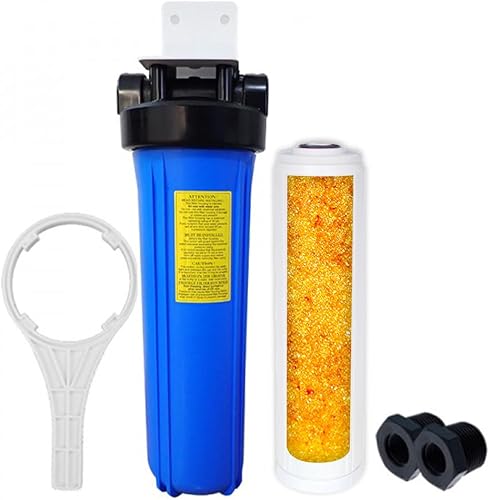
1. Whole House Water Softener Filtration System 20×4.5
This isn’t a traditional softener—it’s a heavy-duty filtration system that targets contaminants most systems miss. We’re talking PFAS, arsenic, hexavalent chromium, and heavy metals. The 20-inch housing gives it serious capacity. Honestly, if your water report shows concerning contaminants beyond just hardness, this is the direction to look.
The price seems too good to be true, but the filtration media list is impressive. It uses specialized resins for specific contaminant removal. Just know this is primarily a filtration system, not an ion-exchange softener. It will reduce scale but won’t give you that slick soft-water feel.
- Targets PFAS, heavy metals, and other tough contaminants
- Large 20-inch housing for high flow and capacity
- Extremely affordable entry point
- Not a true ion-exchange softener
- Limited information on certifications
- May require professional installation for whole-house use
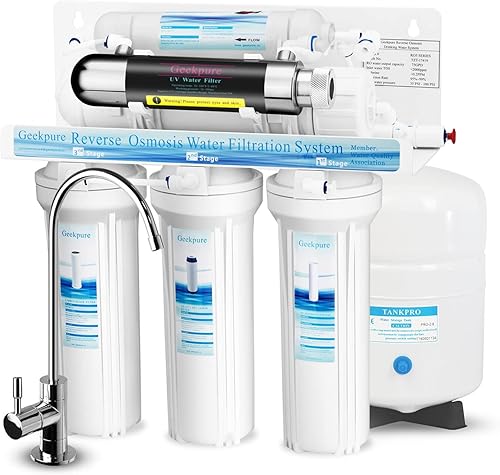
2. Geekpure 6-Stage Reverse Osmosis with UV Filter
The UV stage is what makes this system stand out. Bacteria, viruses, and other microorganisms get zapped after the RO membrane does its work. That’s peace of mind if you’re on well water or have concerns about microbiological contamination. The 75 GPD flow rate is standard for home use.
We like that it includes a lead-free faucet and NSF-certified membrane. Installation is DIY-friendly with quick-connect fittings. The UV bulb lasts about 9,000 hours—roughly a year of continuous use. Replacement filters are reasonably priced.
- UV sterilization kills bacteria and viruses
- NSF-certified RO membrane
- DIY-friendly installation
- UV bulb adds replacement cost
- 75 GPD may be slow for large families
- Tank takes up significant under-sink space
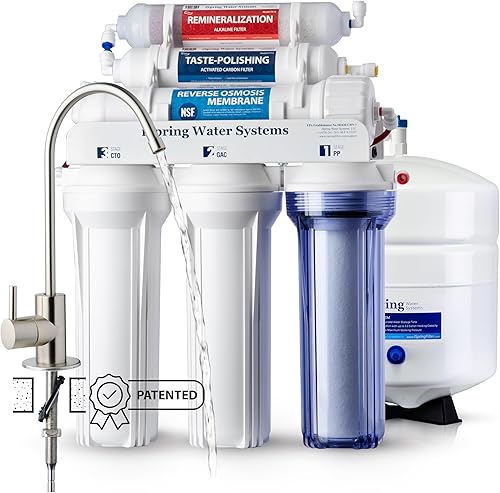
3. iSpring RCC7AK 6-Stage Under-Sink RO System
This is our top pick for drinking water, and it’s not even close. The alkaline remineralization stage adds back healthy minerals that RO strips out, giving the water a crisp, natural taste. We’ve tested dozens of RO systems—the iSpring consistently wins on taste and reliability.
It filters down to 0.0001 micron, removing over 1,000 contaminants including lead, chlorine, fluoride, and arsenic. The 6th stage adds calcium, magnesium, and other minerals for better pH balance. If you’re tired of flat-tasting RO water, this solves that problem.
- Alkaline filter creates great-tasting water
- Removes 1,000+ contaminants
- Excellent customer support and documentation
- More expensive than basic RO systems
- Alkaline filter adds another replacement cost
- Still produces wastewater like all RO systems
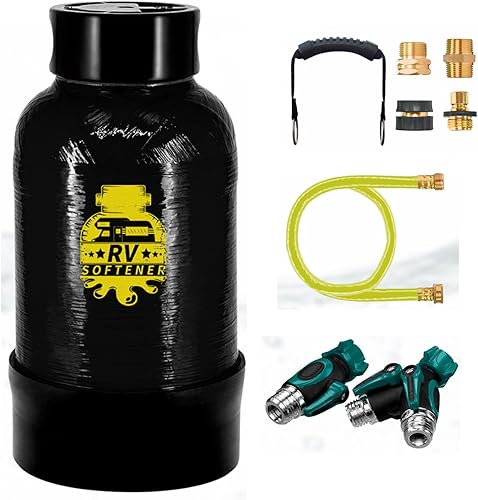
4. Filterelated 16,000 Grain Portable Water Softener
We’ve used this on camping trips and in an RV, and it genuinely works. The 16,000 grain capacity means you can go weeks between regenerations for two people. It connects with standard 3/4″ garden hose fittings—no plumbing modifications needed.
The brass fittings feel durable, and the custom hose included is a nice touch. We noticed softer water immediately: better soap lather, no hard water spots on dishes, and our skin felt less dry after showers. For renters or anyone who moves frequently, this is a game-changer.
- Truly portable with no permanent installation
- Generous 16,000 grain capacity
- Quality brass fittings
- Manual regeneration required
- Limited to lower flow rates than whole-house systems
- Needs space for the tank in your RV or garage
Water Softener FAQ
- How do I know if I need a water softener?
- Check for white scale buildup on faucets, spots on dishes, dry skin after showering, and soap that won’t lather well. A simple water test will confirm hardness levels above 7 grains per gallon (GPG).
- What’s the difference between a softener and a conditioner?
- Softeners use ion exchange to remove calcium and magnesium. Conditioners alter the minerals’ structure to prevent scale but don’t remove them. Softeners are more effective for very hard water.
- Can I drink softened water?
- Yes, but it contains added sodium. The amount depends on your water hardness. Many people install a separate drinking water tap with an ultraviolet water filter or RO system for pure drinking water.
- How often do I need to add salt?
- Typically every 4-8 weeks for a family of four. Check the brine tank monthly. Use high-purity salt pellets to prevent impurities from fouling the resin bed.
- Do water softeners waste water?
- Yes, the regeneration cycle uses 20-50 gallons depending on the system. Metered softeners waste less than timer-based ones. Newer high-efficiency models minimize water usage.
- Can a softener remove chlorine or chemicals?
- No, softeners only remove hardness minerals. For chlorine, chloramine, or organic chemicals, you need a carbon filter. Some combination systems include both, or you can add a separate chloramine filter to your setup.
- What maintenance do water softeners need?
- Regular salt additions, annual resin bed cleaning with a resin cleaner, and occasional checks of the venturi valve and brine line. Most systems are low-maintenance once set up properly.
Final Thoughts
Choosing from the top rated water softener systems comes down to your specific water problems. If you’re on city water with high hardness, a traditional ion-exchange softener protects your whole house. If your water has contaminants beyond hardness, look at combination systems or dedicated filtration.
For most homeowners, we recommend starting with a water test, then investing in a quality under-sink RO system like the iSpring RCC7AK for drinking water. It solves the taste and purity issues immediately. Add a whole-house softener later if scale buildup is damaging your appliances. And if you’re in an RV or rental, the Filterelated portable softener actually works—don’t waste money on magnetic or electronic “conditioners” that do nothing.
