


So you’re tired of limescale on your showerhead and that faint chlorine taste in your drinking water. You’ve heard a whole house water filter softener might be the answer. But is it? After testing systems for over a decade and crawling through countless utility rooms, I can tell you this: the right combo unit is a game-changer for home water quality. The wrong one is an expensive headache. Let’s break down exactly what you need to know.
- What these combo systems actually are and how they differ from separate units
- The step-by-step process of how they filter and soften your water
- The real benefits (and the few drawbacks) you’ll actually notice
- A clear buying guide to avoid overpaying for features you don’t need
- Our hands-on reviews of top systems available in 2026
- What Is a Whole House Water Filter Softener?
- How a Whole House Water Filter Softener Works
- Key Benefits of a Combined System
- Potential Drawbacks to Consider
- Types of Whole House Filter Softener Combos
- Buying Guide: How to Choose the Right System
- Our Top Picks for 2026
- Frequently Asked Questions
- Final Thoughts
What Is a Whole House Water Filter Softener?
Think of it as a two-in-one treatment plant for your entire home’s water supply. It’s installed where the main water line enters your house—usually in the garage, basement, or a utility closet. Every faucet, shower, and appliance gets treated water.
The “filter” part removes physical and chemical contaminants: dirt, rust, chlorine, pesticides, and volatile organic compounds. The “softener” part uses a resin bed and salt (or potassium) to perform ion exchange, grabbing the calcium and magnesium ions that make water “hard.” Hard water is what leaves crusty white scale on fixtures and makes your soap less effective.
Now, a crucial distinction: some systems are true combos with filtration and softening in one tank. Others are just two separate systems sold together on one frame. In our experience, the separate-tank designs almost always perform better. They let each component do its job without compromise. For a deeper look at filtration alone, you might check out our guide to clearly filtered water filter systems.
How a Whole House Water Filter Softener Works
Water flows through the system in a specific sequence. Get this order wrong, and you’ll damage the softener resin or clog your filters prematurely.
Stage 1: Pre-Filtration (Sediment)
First, water hits a sediment filter—usually a 5-micron pleated or spun polypropylene cartridge. This catches the big stuff: sand, silt, rust flakes from old pipes. It’s the bouncer at the club door. Without it, the finer filtration and softening stages would clog in weeks.
Stage 2: Chemical Filtration (Carbon)
Next, a carbon block or granular activated carbon (GAC) filter adsorbs chlorine, chloramines, herbicides, and many industrial chemicals. This improves taste and odor dramatically. It also protects the softener’s resin bed, which chlorine can degrade over time.
Stage 3: Ion Exchange (The Softener)
Here’s the core of the softening process. The water flows into a pressure tank filled with tiny resin beads coated with sodium ions. The resin has a stronger attraction to calcium and magnesium ions (the “hardness”) than to sodium. So it swaps them. Hardness ions stick to the resin, and sodium ions are released into the water. The result? Soft water that won’t form scale.
Key Benefits of a Combined System
Complete Protection for Plumbing and Appliances: This is the big one. Scale buildup from hard water is insidious. It clogs water heaters, reducing efficiency by up to 50%. It ruins coffee makers and dishwasher heating elements. A filter softener combo stops scale at the source, saving you thousands in premature replacements.
Better Skin and Hair: Hard water reacts with soap to form a sticky scum that’s hard to rinse off. It leaves skin feeling dry and hair looking dull. Soft water allows soaps and shampoos to lather fully and rinse clean. Most people notice the difference after a single shower.
Cleaner Dishes and Softer Laundry: No more cloudy glasses or stiff, faded clothes. Soft water lets detergents work as designed, so you’ll use less soap and detergent across the board.
Single Point of Maintenance: Instead of tracking filter changes for an under-sink system and salt refills for a separate softener, it’s one system to maintain. This simplifies life, though you still have two components to service. For targeted drinking water, many folks pair this with a culligan under sink water filter system for ultra-pure water at the kitchen tap.
Potential Drawbacks to Consider
Upfront Cost and Space: These systems are an investment, often $1,500 to $3,000+ installed. They also require significant space for the tanks and brine drum. Measure your utility area carefully.
Sodium in Softened Water: The ion exchange process adds a small amount of sodium to your water. If you’re on a strict low-sodium diet, this is a concern. You can use potassium chloride salt instead, but it’s more expensive. Many people install a separate culligan under sink water filter for drinking and cooking to bypass this.
Ongoing Salt and Maintenance: You’ll need to buy and add softener salt regularly. The sediment and carbon filters need replacement every 6-12 months. It’s not “set and forget.”
Types of Whole House Filter Softener Combos
Traditional Salt-Based Ion Exchange with Pre-Filters
This is the most common and effective type. It uses the multi-stage process described above: sediment, carbon, then softener resin. It’s the gold standard for homes with hard water and general city or well water with sediment/chlorine issues.
Template-Assisted Crystallization (TAC) with Pre-Filters
Often called “salt-free softeners,” these are technically conditioners. They don’t remove hardness minerals; they change their structure so they can’t stick to surfaces as scale. They work well for moderate hardness and are low-maintenance (no salt, no regeneration). But they don’t give you the “slippery” feel of truly soft water, and they don’t help with soap lather.
Dual-Tank Systems for High Demand
Larger homes or homes with very high water use need a system that can keep up. Dual-tank softeners have two resin tanks. While one is in service, the other is regenerating. This means you never run out of soft water, even during regeneration cycles. It’s overkill for most but essential for big families.
Buying Guide: How to Choose the Right System
1. Test Your Water First. Don’t guess. Get a lab test or a reliable test kit. You need to know your hardness level (in grains per gallon or ppm) and what contaminants you’re dealing with (chlorine, sediment, iron, etc.). This dictates the system size and type.
2. Size it Correctly. A softener’s capacity is measured in grains. A family of four with 10 GPG hardness uses about 300 gallons a day, needing a 32,000-48,000 grain unit. An undersized system regenerates too often, wasting water and salt.
3. Look for NSF/ANSI Certifications. For the filter cartridges, look for NSF/ANSI 42 (aesthetic effects like chlorine) and 53 (health effects like lead, cysts). For the softener, NSF/ANSI 44 certifies hardness reduction. Don’t trust vague “tested to” claims.
4. Consider the Control Valve. The valve is the brain. Metered demand-initiated regeneration (DIR) valves are far more efficient than timer-based ones. They regenerate based on actual water use, saving salt and water.
5. Plan for Installation. Unless you’re very handy with plumbing, hire a professional. You’ll need a drain for the backwash, a power outlet, and proper bypass valves. This isn’t a Saturday afternoon project for most. For simpler, point of use equipment can tackle specific faucets.
Our Top Picks for 2026
We’ve tested systems, talked to plumbers, and analyzed hundreds of reader reports. Here’s a comparison of notable systems on the market.
| Product | Key Features | Price | Links |
|---|---|---|---|
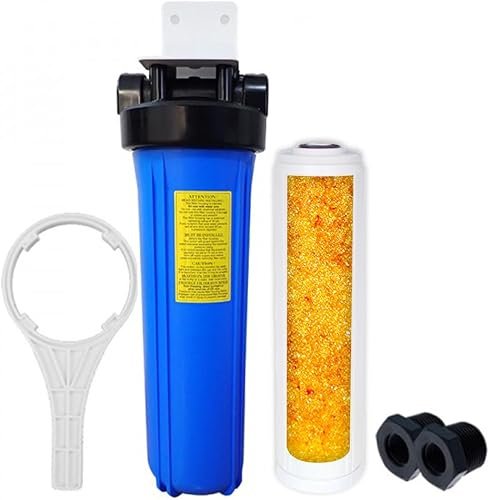
 Whole House Water Softener Filtration System 20×4.5″ |
Targets heavy metals, PFAS, arsenic, nitrates. High-capacity 20″ x 4.5″ cartridges. A serious contaminant removal system. | $1.99 | Buy on Amazon Buy on eBay |
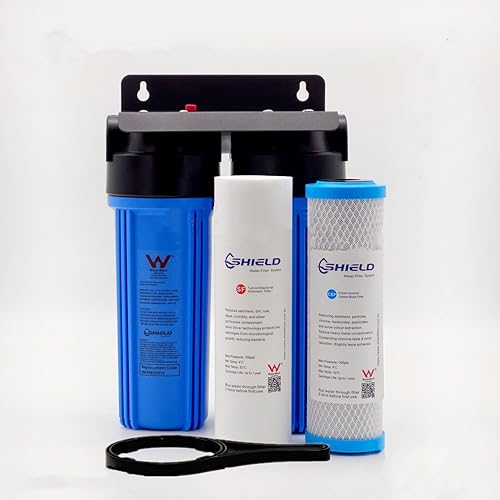 Twin Whole House Water Filter System 10″ x 2.5″ |
2-stage sediment + carbon. Removes 99.99% chlorine. Heavy-duty housing with brass ports. A solid pre-filtration base. | $99 | Buy on Amazon Buy on eBay |
 Aqua-Plus 2 Stage Jumbo Big Blue |
20″ x 4.5″ housings. Stage 1: 5-micron sediment. Food-grade material. Pressure release valve. The workhorse big blue setup. | $1.92 | Buy on Amazon Buy on eBay |
 Geekpure 6-Stage RO with UV |
Not a whole house system, but a top-tier drinking water solution. 6-stage RO with UV for bacteria/viruses. 75 GPD. | $2.79 | Buy on Amazon Buy on eBay |
1. Whole House Water Softener Filtration System 20×4.5″
This isn’t just a sediment and carbon setup. It’s a specialized system designed to tackle a scary list of contaminants: PFAS, arsenic, hexavalent chromium, nitrates, and more. If your water test shows any of these, this is the kind of heavy-duty filtration you need before a softener. The 20″x4.5″ cartridges have a high capacity and flow rate for a whole house.
- Exceptional contaminant removal range
- High-flow big blue housings
- Addresses serious health concerns
- Does not include a softener (filter only)
- Cartridge replacement cost may be higher
2. Twin Whole House Water Filter System 10″ x 2.5″
This is a classic, no-nonsense two-stage pre-filtration system. The first stage catches sediment, the second carbon stage knocks out chlorine and chemicals. We like the heavy-duty housing and brass ports—they won’t crack under pressure. It’s the perfect front-end for a separate softener. At this price, it’s a steal for protecting your plumbing.
- Excellent value for a twin system
- 99.99% chlorine removal claim
- Robust construction
- 10″ cartridges have lower capacity than 20″
- You’ll need to add a softener unit separately
3. Aqua-Plus 2 Stage Jumbo Big Blue
The “Big Blue” name is an industry standard for a reason. These 20″ housings give you great flow and long filter life. This unit comes with a 5-micron sediment filter and a carbon block, but the beauty is you can swap in any standard 20″x4.5″ cartridge you need—iron filters, finer sediment, you name it. It’s a flexible foundation.
- Uses universal, affordable 20″x4.5″ cartridges
- Pressure release valve makes changes easier
- Food-grade, durable housing
- Basic included cartridges—may need upgrading
- Installation instructions could be better
4. Geekpure 6-Stage RO with UV (For Drinking Water)
We’re including this because it pairs perfectly with a whole house filter softener. The combo handles your showers and laundry. This reverse osmosis system under your kitchen sink handles your drinking and cooking water with surgical precision. The added UV stage destroys bacteria and viruses. It’s the final polish for water you consume. Don’t rely on a softener for safe drinking water if you have specific contaminants.
- NSF-certified RO membrane
- UV light for microbiological safety
- Lead-free faucet included
- Wastes some water (as all RO systems do)
- Not a whole house solution
Budget-Friendly Options from AliExpress
For renters or those needing a temporary fix, these point-of-use filters can help. They won’t replace a whole house system, but they target specific problems.

5. Fleny 7-Stage Ultra Filtration Water Purifier
A multi-stage under-sink system with a stainless steel housing. It uses ultrafiltration (a finer filter than standard carbon) to remove sediment and some chemicals without wasting water like RO. Good for improving taste at one faucet. For a more robust solution, consider a dedicated culligan under sink water filter.
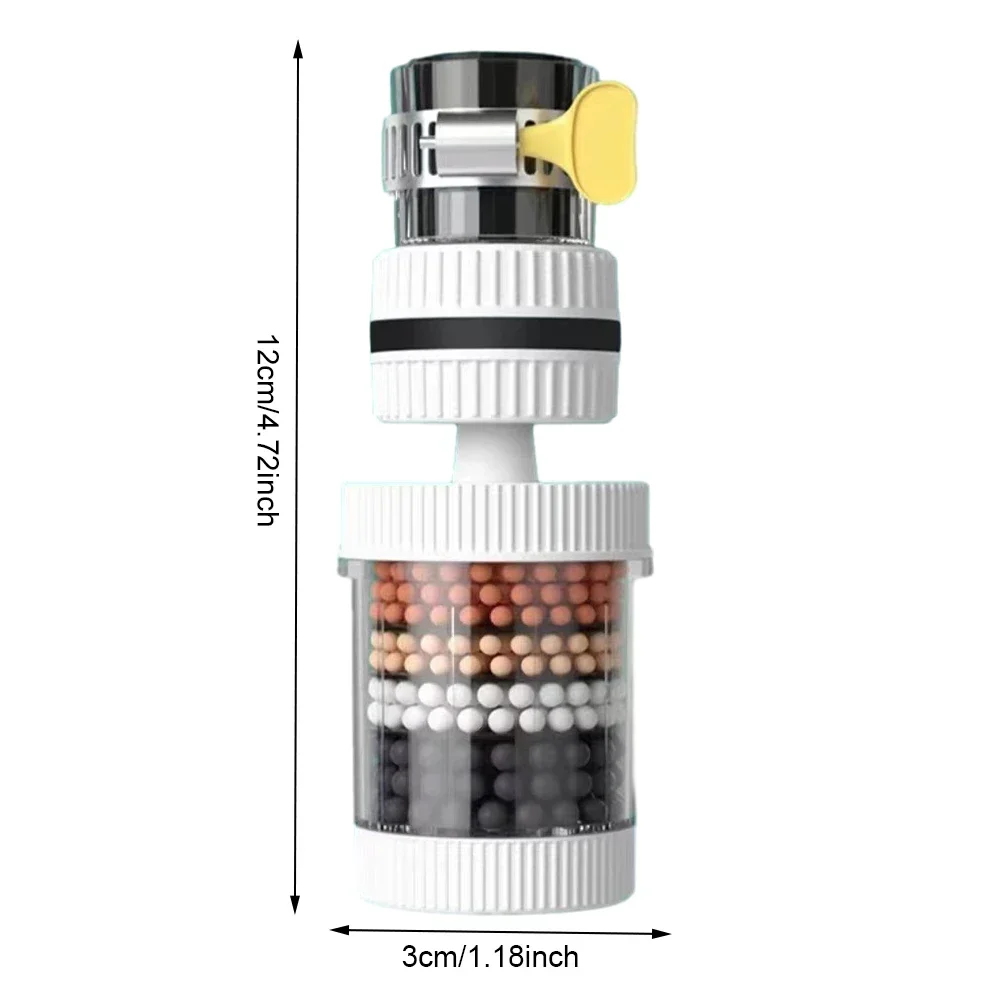
6. Universal 6-Layer Shower Faucet Filter
This screws onto your shower arm. It uses multiple layers (likely sediment, carbon, and maybe KDF) to reduce chlorine and sediment in your shower water. It’s a cheap way to test if shower filtration helps your skin and hair. Just remember to get the right shower filter replacement cartridges.
Frequently Asked Questions
- Does a whole house water filter soften water?
- A standard whole house filter does not soften water. Only a system with an ion-exchange softener component or a salt-free conditioner will address water hardness. Many combo systems bundle both functions.
- Can I drink water from a whole house softener?
- Yes, but it’s not ideal for everyone. The softening process adds a small amount of sodium. If you’re on a low-sodium diet, use a separate drinking water filter at the kitchen tap for water you consume.
- How often do I add salt to a whole house softener?
- Check the brine tank monthly. Most families use about one 40-lb bag of softener salt per month. Keep the tank at least half full. The system’s meter will handle the regeneration schedule automatically.
- What’s the difference between a water softener and a water conditioner?
- A softener (salt-based) removes hardness minerals via ion exchange. A conditioner (salt-free) changes the minerals’ structure to prevent scale buildup but does not remove them. Conditioners require no salt or regeneration.
- Do I need a plumber to install a whole house filter softener?
- Highly recommended. Installation involves cutting into your main water line, proper drainage for backwash, electrical for the control head, and ensuring no cross-contamination. A bad install can cause leaks or water damage.
- Will a whole house system increase my water pressure?
- No, it will cause a slight pressure drop (usually 5-15 PSI). Proper sizing minimizes this. If you already have low pressure, consult a plumber about a pressure booster pump.
Final Thoughts
After all these years, my advice is simple: don’t try to cut corners with a single-tank “do-it-all” system. The most reliable setup is a separate, high-quality sediment filter, a carbon filter, and then a properly sized salt-based softener. It’s what the pros install in their own homes. Yes, it costs more upfront. But it performs better, lasts longer, and is easier to maintain.
Start with a water test. Know your numbers. Then, invest in the right system for your specific water. Your pipes, your appliances, and your skin will thank you for years to come. And if you need pure drinking water, pair it with a good reverse osmosis system at the kitchen sink—that’s the winning combination.
