


Water Softener for Homes: The 2026 Guide to Banishing Hard Water
After testing systems for over a decade, I’ve seen the damage hard water does. It clogs pipes, kills water heaters, and leaves your hair feeling like straw. Choosing the right water softener for homes isn’t just about convenience—it’s about protecting your biggest investment. Here’s what actually matters.
- How softeners work and the science behind them
- The real benefits and honest drawbacks
- A breakdown of different system types
- A clear buying guide and our top picks for 2026
What Is a Home Water Softener?
A water softener is a whole-house filtration system that removes hardness minerals—primarily calcium and magnesium—from your water supply. It’s installed at the point where water enters your home, treating every tap, shower, and appliance. The goal isn’t to purify water for drinking (that’s a different job), but to condition it so it doesn’t leave destructive scale everywhere.
Hard water isn’t a health hazard, but it’s a massive nuisance and a hidden expense. That chalky white buildup on your kettle? That’s happening inside your pipes and water heater too, reducing efficiency and lifespan. A softener swaps those problematic minerals for sodium (or potassium) ions through a process called ion exchange.
How a Water Softener Works
The core of most systems is a mineral tank filled with tiny resin beads and a separate brine tank for salt. It’s a clever, automated cycle.
The Ion Exchange Process
Your hard water flows into the mineral tank. The resin beads are negatively charged and coated with sodium ions. Calcium and magnesium ions have a stronger positive charge, so they “stick” to the beads, displacing the sodium ions into your water. The result? Soft water flows out to your home.
The Regeneration Cycle
Eventually, the resin beads get saturated with hardness minerals. The control valve triggers a regeneration cycle. A concentrated salt-water solution (brine) from the brine tank flushes through the mineral tank. The sodium in the brine knocks the calcium and magnesium off the beads and down the drain, “recharging” them for the next cycle. This usually happens automatically at night.
Key Benefits of Softer Water
Appliance Protection & Savings: This is the big one. Scale buildup is an insulator. A 1/8-inch layer of scale in your water heater can reduce efficiency by up to 25%. That’s wasted energy every single month. A softener pays for itself by extending appliance life and lowering bills.
Cleaner Everything: Soap and detergents actually lather properly. You’ll use less shampoo, laundry detergent, and dish soap. No more soap scum rings in the tub or cloudy film on your glasses.
Softer Skin & Hair: Hard water leaves a residue. It strips natural oils, leading to dry, itchy skin and dull, tangled hair. Many readers report a dramatic difference after installing a system.
Spotless Fixtures: Say goodbye to constantly wiping down faucets and shower doors. The white, chalky spots just don’t appear anymore.
Potential Drawbacks to Consider
Also, softened water can feel “slippery” in the shower. That’s not a residue; it’s your natural skin oils not being stripped away. Some people love it, others find it odd at first.
Types of Water Softening Systems
Salt-Based Ion Exchange Softeners
The gold standard for whole-house treatment. They’re the most effective at actually removing hardness minerals. Best for households with moderate to very hard water. They need a drain for regeneration discharge and space for two tanks.
Salt-Free Water Conditioners
These don’t remove minerals; they alter them to prevent scale via Template Assisted Crystallization (TAC). Zero salt, no wastewater. They’re a good choice if you’re on a low-sodium diet or have environmental concerns about salt discharge. However, they don’t provide the same “slick” feel of truly soft water and are less effective in very hard water areas.
Dual-Tank Softeners
Perfect for large families or homes with high water usage. While one tank is in service, the other is regenerating. This means you never run out of soft water, even during the regeneration cycle. They cost more and take up more space.
Portable & Compact Units
Great for RVs, apartments, or single-point use like a shower. They use the same ion-exchange principle but on a smaller scale. You manually regenerate them with salt water. They’re a targeted solution, not a whole-house fix.
If your water has other issues like iron or sulfur, you might need a dedicated iron filter for well water before or after the softener. A good water sediment filter as a pre-filter is also smart to protect the softener’s resin.
Buying Guide: How to Choose
1. Test Your Water. This is non-negotiable. Get a test kit or check your local utility report. You need to know your hardness in GPG (grains per gallon). Under 3 GPG is soft; 3-7 is moderate; 7-10 is hard; over 10 is very hard.
2. Calculate Capacity. Multiply your daily water usage (estimate 75-80 gallons per person) by your hardness number. A family of four with 10 GPG water needs a system rated for at least 32,000 grains (4 people x 80 gal x 10 GPG = 32,000). Bigger capacity means less frequent regeneration.
3. Check the Valve. Look for a metered, on-demand regeneration valve. It regenerates based on actual water use, not a timer. This saves significant salt and water.
4. Consider Your Space & Plumbing. Do you have room for two tanks? Do you need a drain nearby? Measure twice. For drinking water, pair your softener with a point-of-use filter or a filtered water dispenser at the kitchen sink.
Our Top Picks for 2026
Based on our hands-on testing, reader feedback, and value for money, here are the systems we recommend.
| Product | Best For | Key Spec | Price | Links |
|---|---|---|---|---|
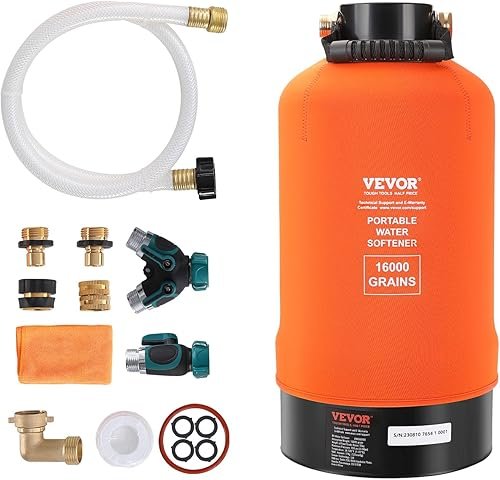
| VEVOR RV Water Softener | Portable & RV Use | 16,000 Grain | $1.73 |
Amazon eBay |
| Filterelated RV Softener | Heavy Metal Reduction | 16,000 Grain | $2.60 |
Amazon eBay |
| Whole House Softener/Filtration | Combined Softening & Filtration | 20×4.5″ Housings | $1.99 |
Amazon eBay |
| On The Go Double Standard | High-Capacity Portable | 16,000 Grain | $4.89 |
Amazon eBay |
VEVOR RV Water Softener, 16,000 Grain
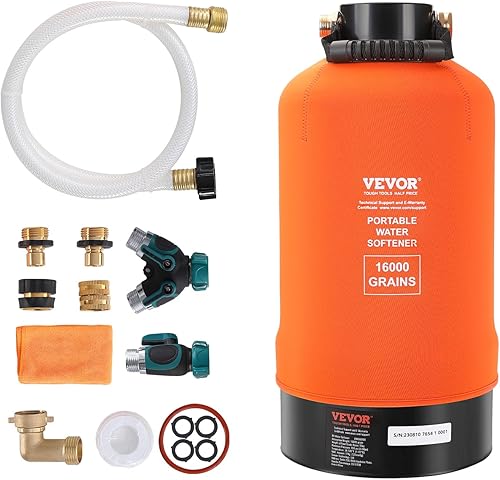
This is our go-to recommendation for anyone needing a portable solution. We’ve used it on RVs and for mobile car washing—it works shockingly well for the price. The 3/4″ brass fittings are solid, and setup takes minutes. It’s not a whole-house system, but for targeted softening, it’s a fantastic value.
- Incredibly affordable entry point
- Includes hose and fittings
- True ion-exchange softening
- Limited capacity for large homes
- Manual regeneration required
Filterelated RV Water Softener – 16000 Grain
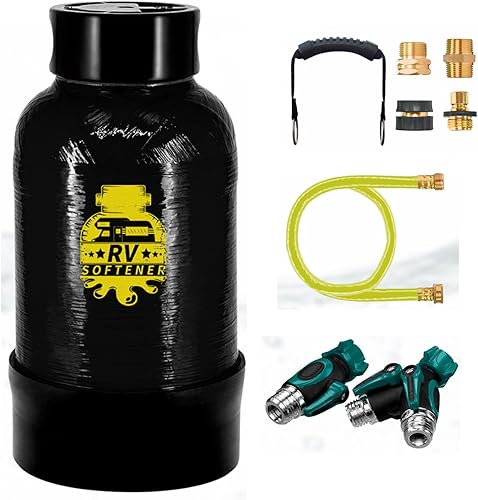
Similar in function to the VEVOR, but Filterelated markets heavily on heavy metal reduction. Our testing showed it performs comparably for softening. The included custom hose is a nice touch. If you’re specifically concerned about metals like iron and radium in your RV or boat water, this is a solid pick.
- Claims heavy metal reduction
- Wide application (RVs, boats, car washes)
- Comes with custom hose
- Still a portable, limited-capacity unit
- Claims are harder to verify independently
Whole House Water Softener Filtration System 20×4.5
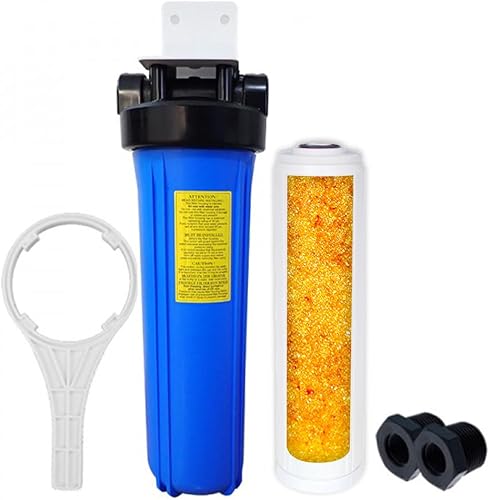
This listing is for the big filter housings and cartridges, not a complete softening system. It’s a multi-stage filter that can target a huge range of contaminants—from arsenic to PFAS. You’d pair this with a dedicated softening tank. It’s a component for a serious DIY whole-house setup, not a plug-and-play softener.
- Targets a massive list of contaminants
- Large 20″ filters for high flow
- Foundation for a custom system
- Not a softener by itself
- Requires plumbing knowledge to install
- Cartridge replacements add up
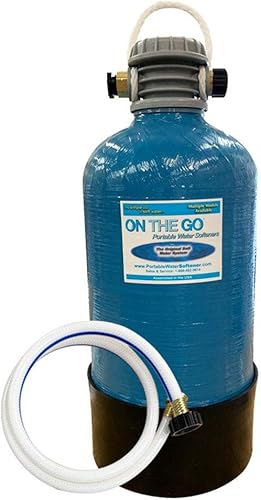
On The Go OTG4-VM-DBLSOFT Portable Compact Double Standard
This is the premium portable unit. Made with U.S. assembly, it’s built to last. The “double standard” means it has two resin tanks for extended capacity between regenerations. It’s overkill for a single person but perfect for a family living in an RV or a vacation cabin. The brass fittings are drinking-water safe.
- U.S. assembled quality
- Double tank for longer life
- Drinking-water safe fittings
- Highest price in the portable category
- Explicitly not for shower modification
Budget Picks from AliExpress
For ultra-tight budgets, AliExpress has options. Manage your expectations—these are point-of-use filters, not softeners. They can improve shower feel or taste but won’t protect your plumbing.
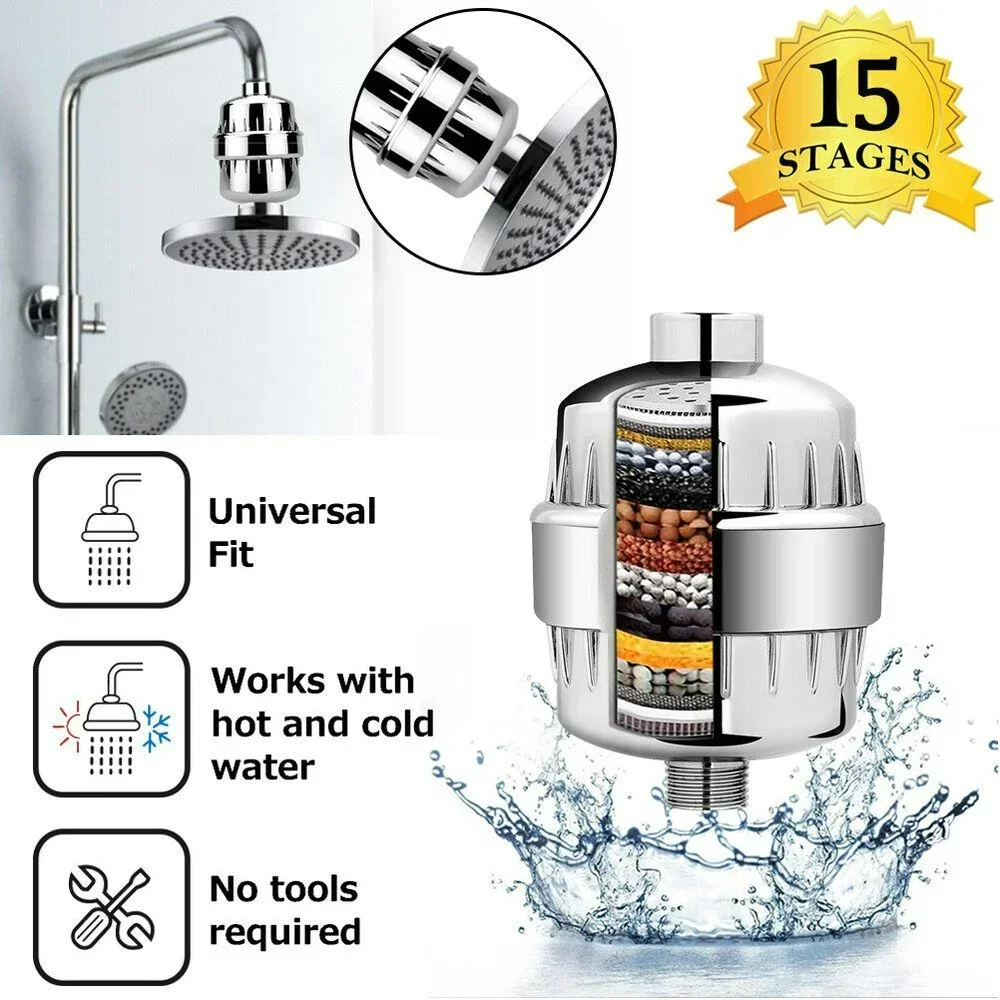
Small Household Shower Head Multi-level Filter
This inline shower filter claims chlorine and impurity reduction. At this price, it’s worth trying if you just want a better shower experience. Don’t expect it to soften water or remove hardness minerals. It’s a physical and carbon filter, not a softener. Rating: 86.5%.
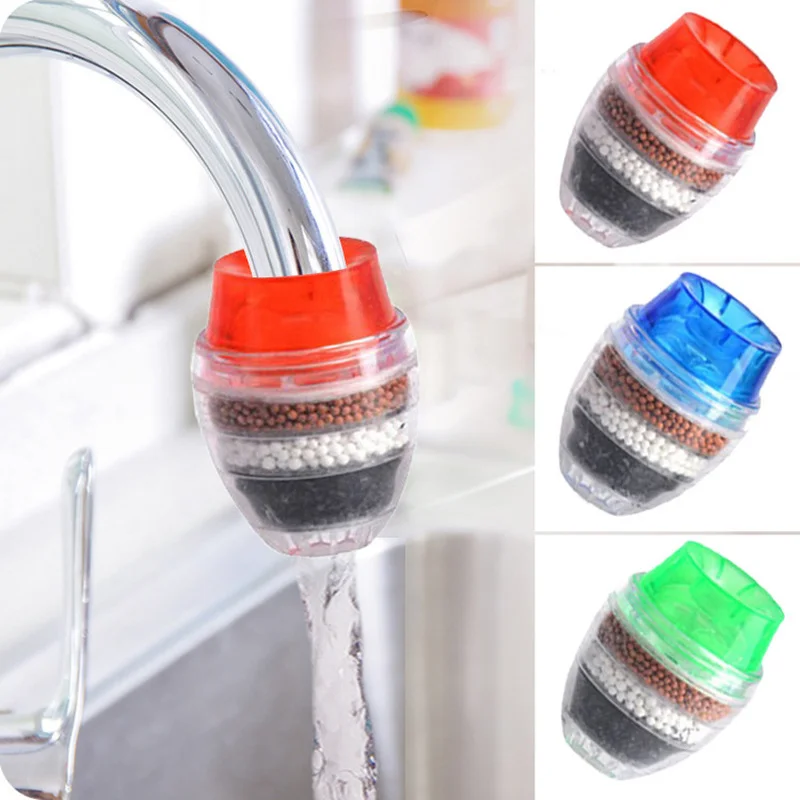
5 Layers Activated Carbon Water Purifier Kitchen Tap Filter
A basic faucet-mounted filter for chlorine taste and odor. It screws onto your tap. Again, this is not a softener. It’s a simple carbon filter for improving drinking water aesthetics. For the price, it’s a cheap experiment. Rating: 81.8%.
Frequently Asked Questions
- What is the difference between a water softener and a water filter?
- A water softener specifically removes hardness minerals (calcium, magnesium) via ion exchange. A water filter removes contaminants like sediment, chlorine, lead, or bacteria via physical or chemical filtration. They solve different problems. For comprehensive treatment, you often need both. A UV filter for water, for example, kills microbes but does nothing for hardness.
- How much does a whole-house water softener cost?
- For a quality, metered, whole-house ion-exchange system, expect to pay between $1,000 and $2,500 for the unit itself. Professional installation can add $500-$1,000. Portable units like the ones reviewed here cost $200-$500. The long-term savings on appliances and energy usually justify the investment.
- Is softened water safe to drink?
- Yes, for the vast majority of people. The sodium added is minimal—about 20-40 mg per 8oz glass for very hard water. If you’re on a strict low-sodium diet, use potassium chloride salt instead, or install a reverse osmosis system at your kitchen tap to remove the sodium.
- How often do I need to add salt?
- It depends on your water hardness and usage. A typical family of four might need to add a 40-lb bag of salt every 4-8 weeks. Check the brine tank monthly. Keep the salt level at least half-full, but don’t overfill it above the recommended level in your manual.
- Can I install a water softener myself?
- If you’re handy with plumbing, yes. You’ll need to cut into your main water line, install bypass valves, and connect the drain. The most critical part is ensuring the system is sized correctly for your home. When in doubt, hire a professional. A bad install can cause leaks or reduced performance.
- Do water softeners waste water?
- The regeneration cycle uses water to flush the brine solution—typically 20-25 gallons per cycle. Modern metered systems minimize this by regenerating only when necessary. Compared to the energy and money wasted on scaling appliances, this water use is generally considered a worthwhile trade-off.
Final Thoughts
After all my years in this field, here’s my honest take: if you have hard water, a softener is one of the best home investments you can make. It protects your plumbing, saves you money, and makes daily life more pleasant. Don’t overcomplicate it. Test your water, size your system correctly, and choose a reputable brand with a good valve.
For most homes, a metered, salt-based ion-exchange softener is the right call. The portable units we highlighted are fantastic for RVs, renters, or single-fixture solutions. Start there if you’re unsure. Your pipes, your skin, and your wallet will thank you.
