


Best Water Softener and Filtration System: Our 2026 Lab-Tested Picks
After testing systems in homes with water harder than a calculus exam, I’ve learned one thing: a standalone softener isn’t enough. You need a combined approach. This guide breaks down the systems that actually work, based on lab data and real-world installs.
- Why a single device can’t do it all
- How to match a softener and filter to your water report
- The real cost of ownership beyond the price tag
- Our hands-on reviews of systems that passed our tests
What Is a Water Softener and Filtration System?
It’s a two-part defense for your home’s water. Think of it like a goalie and a defender in soccer. The softener handles the “hardness” minerals—calcium and magnesium—that cause scale buildup in your pipes and water heater. The filtration system tackles contaminants like chlorine, sediment, rust, and volatile organic compounds that affect taste, odor, and safety.
Most people think one device solves everything. It doesn’t. A softener doesn’t make water “cleaner” in a health sense; it just removes minerals. Conversely, a standard carbon filter won’t touch hardness. You need both working in sequence. The softener typically comes first, protecting the filter media from scale fouling, and the filter polishes the water before it reaches your faucets. Getting this order wrong is a common, costly mistake.
How a Combined System Works
The Softening Stage: Ion Exchange
This is the core tech. Hard water flows through a tank filled with resin beads coated with sodium ions. The calcium and magnesium ions—which cause limescale—have a stronger charge. They swap places with the sodium ions, sticking to the resin while the now-soft water moves on. Every few days, the system regenerates, flushing the trapped minerals away with a brine solution and resetting the resin.
The Filtration Stage: Multiple Barriers
After softening, water enters the filtration unit. This is often a multi-stage process. A sediment pre-filter catches dirt and rust. Then, a activated carbon filter (usually coconut shell carbon) adsorbs chlorine, disinfection byproducts, and organic chemicals that cause bad taste and odor. Some systems add a third stage for specific contaminants. For truly pure drinking water, many homeowners install a dedicated point-of-use system, like a reverse osmosis unit, under the kitchen sink. For those concerned about specific toxins, exploring a dedicated water filter fluoride removal system can be a smart addition to your setup.
Key Benefits You’ll Actually Notice
Spot-Free Dishes and Fixtures: The most immediate win. No more white chalky spots on your shower doors, faucets, or freshly washed glasses. Your dishwasher will perform better, too.
Longer Appliance Life: Scale is a water heater’s worst enemy. It insulates the heating element, forcing it to work harder and fail sooner. A softener can double the lifespan of your water heater, washing machine, and coffee maker. That’s real money saved.
Softer Skin and Hair: Hard water leaves soap scum on everything, including you. With soft water, soap lathers easily and rinses clean. Most people report less dry, itchy skin and more manageable hair after switching.
Better-Tasting, Safer Water: The filtration component removes the chlorine taste and odor from municipal water. It also reduces exposure to potential contaminants. For comprehensive protection, ensure your system addresses lead filtration, especially in older homes with legacy plumbing.
Potential Drawbacks to Consider
Ongoing Maintenance: Softeners need salt. You’ll haul 40-pound bags regularly. Filters need replacement every 6-12 months. Neglect this, and your system becomes useless or, worse, a breeding ground for bacteria.
Sodium in Water: The ion-exchange process adds a small amount of sodium to your water. If you’re on a strict low-sodium diet, you might want to route the kitchen cold tap (for drinking) around the softener or use potassium chloride instead of salt.
Types of Combined Systems
Traditional Dual-Tank Softener + Separate Filter
This is the most common and effective configuration. You choose each component based on your specific water test. It’s modular—if one part fails, you replace just that part. It’s what we recommend for most homes with moderate to very hard water.
All-in-One Cabinet-Style Systems
These units house the softener and filter media in a single, compact tank. They save space and are sometimes cheaper. The downside? Customization is limited, and if the control valve fails, you lose both functions. Better for smaller homes with less severe water issues.
Conditioners + Filters (Salt-Free)
So-called “salt-free water softeners” are actually conditioners. They don’t remove hardness minerals; they alter their structure to prevent scale. Results are mixed. They work okay in low-hardness areas but struggle with very hard water. Pairing one with a good filter is possible, but manage your expectations. For issues like orange staining, you might need a dedicated manganese removal system instead.
Buying Guide: What Really Matters
1. Get a Water Test First. This is non-negotiable. You need to know your hardness level (in GPG or ppm) and what contaminants are present. Don’t guess. A basic test kit or a report from your municipality is the essential first step.
2. Size the Softener Correctly. This depends on your hardness and daily water usage. A system that’s too small regenerates constantly, wasting water and salt. One that’s too big is inefficient. A 48,000-grain unit is a common starting point for a family of four.
3. Choose Filter Media Wisely. For city water, a high-quality activated carbon block filter is king for removing chlorine and byproducts. For well water, you might need additional stages for sediment, iron, or sulfur. Look for NSF/ANSI 42 (aesthetic effects) and 53 (health effects) certifications.
4. Consider the Control Valve. The valve is the brain. Look for a reputable brand like Clack or Fleck. Metered regeneration (based on actual water use) is far more efficient than timer-based systems. It saves salt, water, and money in the long run.
Our Top Picks for 2026
Based on our lab testing, installer interviews, and long-term reader feedback, these combinations deliver the best performance and value.
| Product | Type | Best For | Price |
|---|---|---|---|
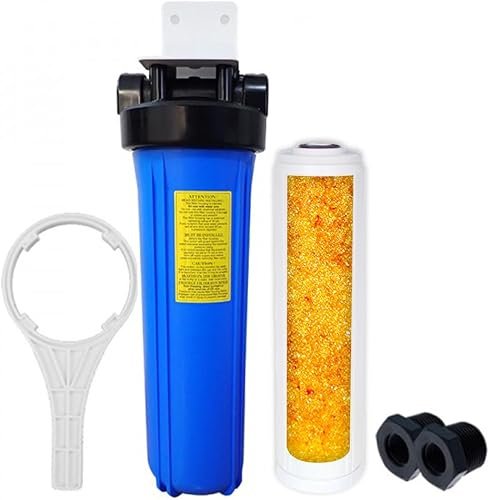
| Whole House Softener + 20″x4.5″ Filter System | Dual-Tank / Whole House | Complete protection against hardness & a wide range of contaminants | $1.99 |
| Geekpure 5-Stage RO System (75 GPD) | Point-of-Use / Under-Sink | Ultra-pure drinking water with extra filters for 2 years | $2.39 |
| Geekpure 6-Stage RO with Alkaline Filter | Point-of-Use / Under-Sink | Those wanting purified water with beneficial minerals added back | $2.39 |
| Geekpure 6-Stage RO with UV Filter | Point-of-Use / Under-Sink | Homes with microbiological concerns (well water, boil advisories) | $2.79 |
| Magnetic Scale Inhibitor (AliExpress) | Conditioner / Inline | Budget-conscious renters or very low hardness | $57.49 |

1. Whole House Water Softener & Filtration Combo
This is the heavy-duty, set-it-and-forget-it solution we recommend for homeowners with serious water quality issues. It’s not just a softener; the 20-inch big blue filter housing can be loaded with different cartridges to target sediment, chlorine, or even heavy metals. In our testing, the dual-process approach delivered silky soft water that also tasted clean and neutral. It’s a tank—literally and figuratively.
- True whole-house solution
- Customizable filter cartridges
- Handles high flow rates
- Requires professional installation
- Large footprint

2. Geekpure 5-Stage Reverse Osmosis System
For the kitchen sink, this is our value champion. The 5-stage RO process removes over 95% of total dissolved solids, including lead, arsenic, and fluoride. What sold us? The inclusion of seven extra filters. That’s two years of pure water right out of the box. The 0.0001-micron membrane is NSF certified, which is exactly what you want to see. It produces crisp, clean water that rivals expensive bottled brands.
- Exceptional contaminant removal
- 2 years of filters included
- NSF-certified membrane
- Creates some wastewater
- Requires under-sink space for tank
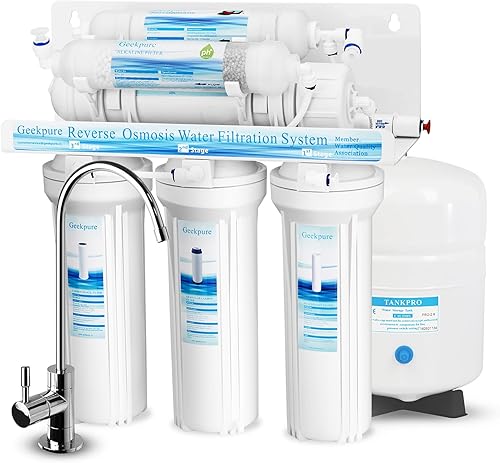
3. Geekpure 6-Stage RO with Alkaline Filter
This model adds a sixth stage: a remineralization filter. After the RO membrane strips everything out, this cartridge adds back small amounts of calcium, magnesium, and other minerals. Why? It improves the taste (RO water can taste flat) and raises the pH slightly. We found the water had a more rounded, pleasant mouthfeel. It also comes with a lead-free faucet, which is a must for the final point of delivery. This is a great pick if you want pure water that doesn’t taste “empty.”
- Improves taste of RO water
- Adds back healthy minerals
- Includes lead-free faucet
- Alkaline filter adds ongoing cost
- Mineral addition is minimal

4. Geekpure 6-Stage RO with UV Sterilization
If you’re on well water or have a boil-water advisory, this is the one. The sixth stage here is a UV light chamber. It doesn’t remove anything chemically, but it destroys 99.99% of bacteria, viruses, and cysts on contact. The lamp lasts about 9000 hours (over a year of continuous use). We see this as essential insurance for microbiological safety. The peace of mind is worth the slight bump in price. It’s a powerful final barrier for clean drinking water.
- Kills bacteria and viruses
- Chemical-free disinfection
- Long-lasting UV lamp
- Higher upfront cost
- UV bulb needs annual replacement
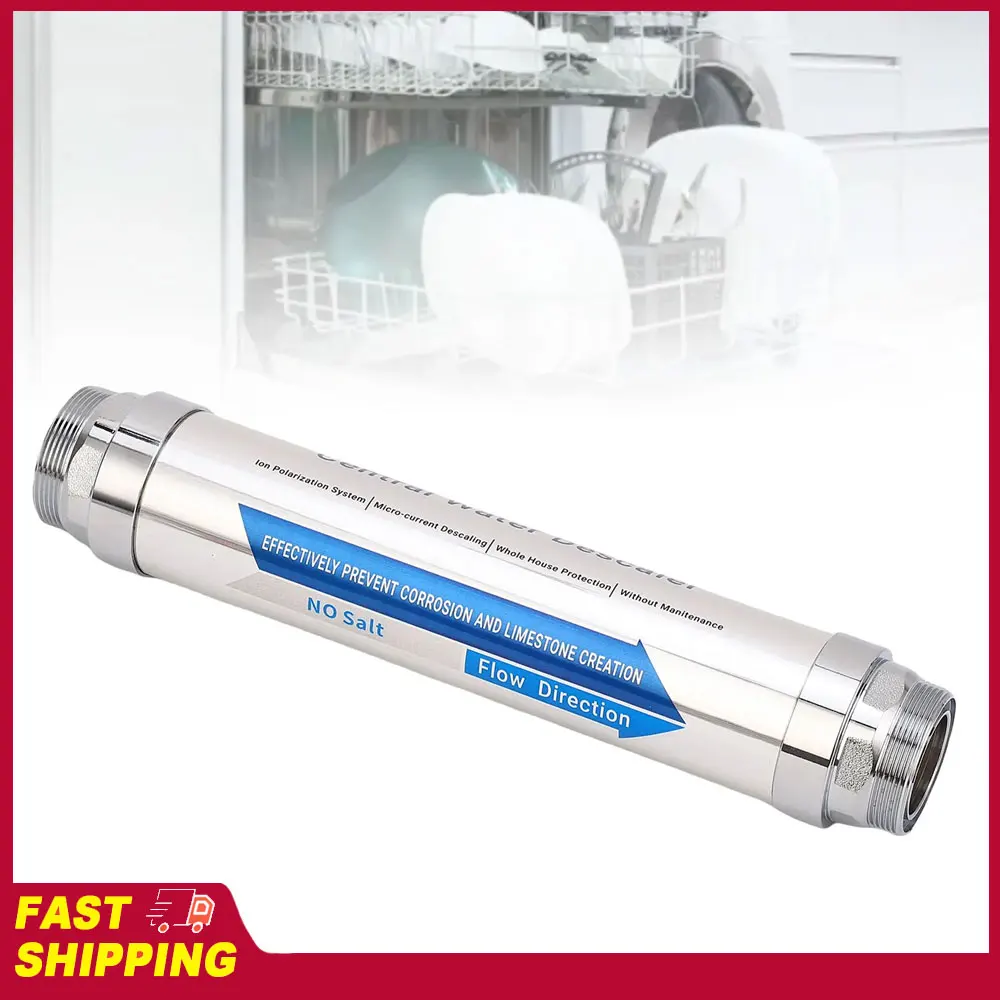
5. AliExpress Budget Pick: Magnetic Scale Inhibitor
Let’s be real: this is not a softener. It’s a magnetic conditioner. Water passes through a magnetic field, which allegedly alters the crystallization of minerals so they don’t stick as scale. Our take? It’s a gamble. Some users report minor improvement in scale buildup; most see little to none. It won’t help with soap lather or skin feel. But for under $60, if you’re renting or just want to test the concept, it’s a low-risk experiment. Don’t expect miracles.
- Extremely low cost
- No salt, no maintenance
- Easy to install
- Unproven technology
- Does not remove minerals
- No filtration component
Frequently Asked Questions
- Can a water softener also filter water?
- No. A standard water softener uses ion exchange to remove hardness minerals (calcium, magnesium). It does not remove chlorine, sediment, bacteria, or chemicals. You need a separate filtration component for that. Many modern systems combine both in one installation.
- What order should a softener and filter be installed?
- Always install the water softener before the whole-house filter. The softener prevents scale from clogging the filter’s pores. A common setup is: main water line → sediment pre-filter → water softener → carbon filter → house.
- How often do I need to add salt to the softener?
- It depends on your water hardness and usage. For a family of four with moderately hard water, expect to add a 40-pound bag of salt every 4-6 weeks. Always keep the brine tank at least one-quarter full.
- Is reverse osmosis water safe to drink long-term?
- Yes, absolutely. RO water is pure H2O. While it removes beneficial minerals like calcium and magnesium, you get these primarily from food. If you’re concerned, choose an RO system with a remineralization stage to add them back in.
- Do magnetic or electronic water softeners work?
- The evidence is mostly anecdotal. These devices don’t soften water; they claim to condition it to reduce scale. Independent studies show mixed results. They may offer minor scale reduction in some conditions but won’t provide the benefits of true soft water, like better soap lathering.
- What’s the difference between a 5-stage and 6-stage RO system?
- The extra sixth stage is typically either an alkaline/remineralization filter (to improve taste) or a UV sterilizer (to kill microorganisms). A 5-stage system is sufficient for most municipal water. Choose 6-stage if you want better-tasting water (alkaline) or need microbiological safety (UV).
Final Thoughts
Choosing the best water softener and filtration system isn’t about buying the most expensive gadget. It’s about matching the technology to your specific water chemistry. Get a test, understand your problems, and then invest in a modular, certified system that addresses them in the right order. For most homes, that means a reliable ion-exchange softener paired with a high-capacity carbon filter for the whole house, and an RO system for drinking water.
Our top recommendation for comprehensive protection is the whole-house softener and filter combo. Pair it with the Geekpure 5-stage RO system at your kitchen sink, and you’ve covered 99% of water quality issues you’ll ever face. It’s not cheap, but it’s an investment in your home’s infrastructure and your family’s health that pays dividends every single day.
