


After testing systems that cost thousands and some that cost less than a nice dinner, I can tell you the market is a minefield of overpromises. This guide cuts through the noise. We’ll cover what actually works, the real pros and cons, and give you our top picks for 2026 based on hands-on experience and reader feedback.
- What a water softener actually does (and doesn’t do)
- The key differences between salt-based, salt-free, and magnetic systems
- How to choose the right size and type for your home
- Our honest reviews of top models at different price points
What Is a Home Water Softener?
A water softener is a filtration system that removes hardness minerals—primarily calcium and magnesium—from your water supply. Hard water isn’t a health risk, but it’s a massive nuisance. It leaves chalky white scale on your faucets, makes soap less effective, and can shorten the lifespan of your water heater, dishwasher, and coffee maker.
The single biggest mistake we see is people confusing softeners with filters. A softener targets hardness minerals. It won’t remove chlorine, sediment, or bacteria. For those issues, you need a dedicated kitchen filter system or a whole-house filter. Softening and filtering are two different jobs.
In our testing, homes with very hard water (over 10 grains per gallon) see the most dramatic benefits. The change in soap lathering alone is night and day. If your glasses are perpetually cloudy and your shower doors look frosted even after cleaning, you’re a prime candidate.
How Water Softeners Work
The Ion-Exchange Process (Salt-Based)
This is the traditional, proven method. The system’s tank contains thousands of tiny resin beads charged with sodium ions. As hard water flows over them, the resin grabs the calcium and magnesium ions and releases sodium into the water in their place. That’s the “exchange.”
Eventually, the resin beads get coated with hardness minerals and need cleaning. The system automatically flushes a brine solution (from the salt tank) through the resin, washing the minerals away and “recharging” it with sodium. This is the regeneration cycle.
Template Assisted Crystallization (Salt-Free)
Salt-free “softeners” don’t actually remove minerals. They change their chemical structure so they can’t stick to surfaces. Think of it as turning sharp crystals into round balls that slide right off. They prevent scale buildup but don’t give you that slippery soft-water feel.
Magnetic or Electronic Conditioners
These wrap around your pipes and claim to alter the electromagnetic properties of minerals. Honestly, the science is shaky. In our experience, results are inconsistent at best. They’re cheap, but you often get what you pay for.
Key Benefits of Softened Water
Spotless Fixtures & Dishes: Say goodbye to scrubbing chalky rings off your shower and faucets. Your dishwasher will finally get glasses clean and clear.
Softer Skin & Hair: Hard water leaves a film that dries out skin and makes hair brittle. Soft water lets soap rinse completely clean. Many readers report less need for lotions and conditioners.
Longer Appliance Life: Scale buildup is an insulator. It forces your water heater to work harder, using more energy and failing sooner. A softener protects that investment.
Cleaning Becomes Easier: You’ll use less soap, shampoo, and detergent. Clothes come out of the laundry softer and brighter. It’s a noticeable difference. If you’re dealing with a sulfur smell, though, that’s a different problem—here’s why your water might smell like rotten eggs.
Potential Drawbacks to Consider
Maintenance & Salt: You have to buy and add salt regularly. It’s not hard, but it’s a chore. The systems also need occasional checks.
Environmental Impact: The regeneration cycle flushes salty brine into your septic or sewer system. This is a concern in some regions with strict regulations.
Not a Filter: I’ll say it again. A softener won’t make your water taste better or remove contaminants. Pair it with a good drinking water filter for complete treatment. This is especially true for apartment dwellers with limited space—a water softener for an apartment often needs to be compact and multi-functional.
Types of Water Softening Systems
Traditional Salt-Based (Ion-Exchange)
The most effective for true softening. Best for homes with moderate to very hard water. Requires a drain, electricity, and space for two tanks (resin and brine). This is the type that gives you that “slippery” feeling in the shower.
Salt-Free Conditioners (TAC)
Great for scale prevention if you don’t mind the hard-water feel. No salt, no electricity, no drain needed. Low maintenance. Ideal for those on sodium-restricted diets or in areas with brine-discharge restrictions.
Dual-Tank Systems
For large households with very high water use. One tank regenerates while the other is in service, so you never run out of soft water. Overkill for most homes, but a lifesaver for big families.
Portable & RV Units
Small, lightweight, and designed for temporary use. Perfect for renters, RVs, or portable filtration needs like mobile car washing. They use the same ion-exchange principle but on a smaller scale.
Buying Guide: How to Choose
1. Test Your Water First. This is non-negotiable. Buy a test kit or get a report from your utility. You need to know your hardness level in grains per gallon (GPG) or parts per million (PPM). Don’t guess.
2. Calculate Your Grain Capacity Need. Multiply your home’s hardness (GPG) by the number of people, then by 80 (gallons per person per day), then by 7 (days between regenerations). A 4-person home with 15 GPG needs about a 33,600-grain system. Round up.
3. Choose Your Type. Use the section above. If you want actual soft water, get salt-based. If you just want scale prevention, salt-free might suffice.
4. Check the Controls. Timer-based controls waste salt by regenerating on a schedule. Metered (on-demand) controls regenerate only when needed, saving salt and water. Always choose metered.
5. Consider Your Space & Plumbing. Measure where it will go. You need access to a drain and power. Check inlet/outlet pipe sizes—most homes are 1-inch, but some are ¾-inch.
Our Top Picks for 2026
| Product | Type | Key Spec | Price |
|---|---|---|---|
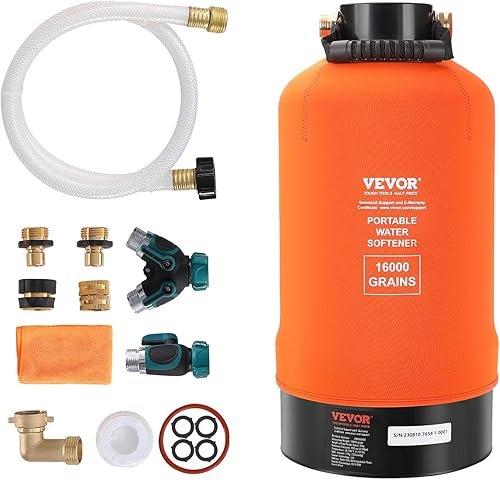
 VEVOR 16,000 Grain |
Salt-Based (Portable) | 16,000-grain, 3/4″ fittings | $1.73 |
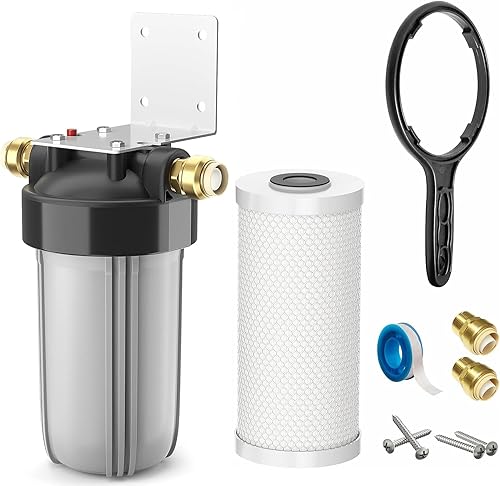 4-Stage Salt-Free |
Salt-Free Conditioner | 25,000-gallon capacity | $2.56 |
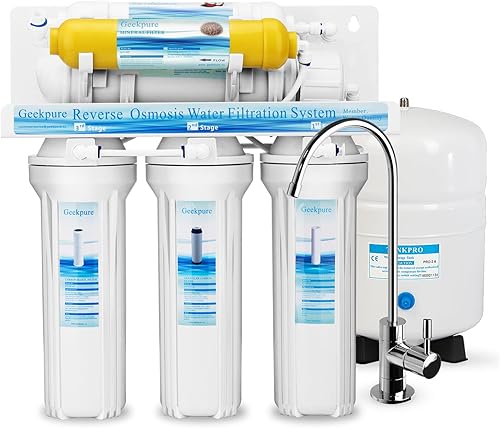 Geekpure 6-Stage RO |
Reverse Osmosis (Drinking) | 75 GPD, remineralization | $2.99 |
 Magnetic Conditioner |
Magnetic | Neodymium magnets | $59 |
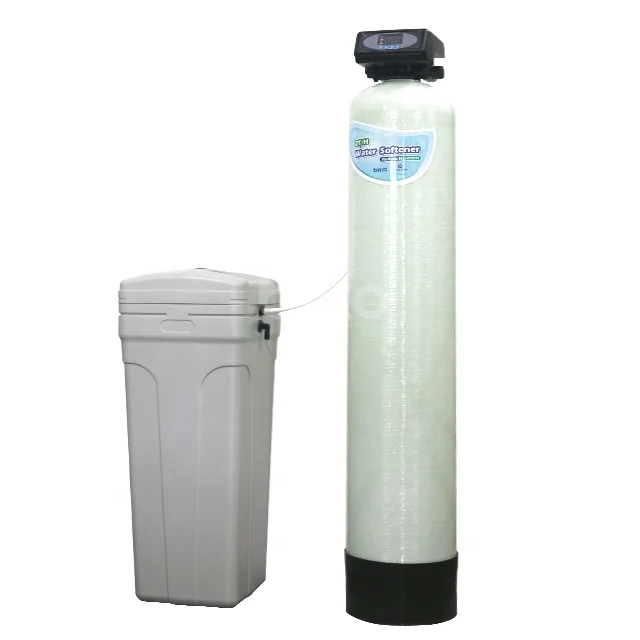 Intelligent Automatic Softener |
Salt-Based (Whole House) | 2CBM/hour capacity | $458.74 |
1. VEVOR RV Water Softener – Best Portable & Budget Pick
This is the little unit that could. We’ve used it for RV trips and even as a temporary solution for a small cottage. The 16,000-grain capacity is modest, but it’s genuinely effective for its size. Setup is a breeze with the included hose and brass fittings. It’s not a whole-house solution for a family of six, but for light use, apartments, or on the go, it’s a fantastic value.
- Incredibly affordable entry point
- True ion-exchange softening
- Portable and easy to install
- Includes necessary fittings
- Small capacity for whole-house use
- Manual regeneration required
- Not for high-flow applications
2. 4-Stage Whole House Salt-Free Softener Alternative
If you’re dead-set on avoiding salt, this is a compelling option. It combines scale-inhibiting TAC media with carbon and sediment filters for broader treatment. The 25,000-gallon claim is for chlorine reduction—the softening media lasts longer. We found it prevents scale decently, but don’t expect the slick feel of true soft water. Good for moderate hardness and those concerned about sodium.
- No salt, no electricity, no brine discharge
- Multi-stage filtration included
- Low maintenance
- Compact 1-inch port design
- Doesn’t remove hardness minerals
- Less effective on very hard water
- Replacement cartridges are a recurring cost
3. Geekpure 6-Stage RO – Not a Softener, But a Great Companion
Let’s be clear: this is a drinking water filter, not a softener. It won’t treat your whole house. But if you install a softener and then want fantastic-tasting water at the tap, this is a brilliant add-on. The 6-stage system with remineralization is a classic RO setup that removes nearly everything, then adds healthy minerals back for taste. We’ve recommended this model for years.
- Exceptional filtration down to 0.0001 micron
- Adds beneficial minerals back
- NSF-certified components
- Reliable and well-tested design
- Not a water softener
- Creates wastewater
- Requires under-sink installation
4. Magnetic Water Softener & Conditioner – The Budget Gamble
We’re skeptical. The science behind magnetic water treatment is controversial, and our tests showed minimal, if any, scale reduction. The neodymium magnets are strong, but that doesn’t guarantee they’ll alter calcium carbonate in a meaningful way as water rushes past. It’s the cheapest option, and some users swear by it. But based on our experience, we can’t recommend it over proven technologies.
- Extremely low cost
- No maintenance or consumables
- Easy DIY install on any pipe
- Evidence of effectiveness is anecdotal
- Does not actually soften water
- May not work on all water chemistries
5. Intelligent Automatic Water Softener – The Import Option
This is a serious, metered, whole-house salt-based system imported via AliExpress. The 2CBM/hour (cubic meters per hour) flow rate is suitable for most homes. It’s a significant investment, and the main risk is support and warranty. If you’re handy and comfortable sourcing parts internationally, it could be a high-capacity bargain. For most homeowners, the peace of mind of a local brand is worth a higher price.
- High flow rate for whole-house use
- Automatic, metered regeneration
- Competitive price for its capacity
- International shipping and support challenges
- Uncertain warranty enforcement
- May require professional installation
Frequently Asked Questions
- Is a salt-based or salt-free water softener better?
- It depends on your goal. Salt-based systems actually remove hardness minerals, giving you true soft water that lathers easily and feels slippery. Salt-free conditioners only prevent scale buildup; they don’t change the water’s feel. For very hard water, salt-based is more effective.
- How much does it cost to install a water softener?
- Professional installation typically runs $200-$$500, depending on plumbing complexity. You can DIY if you’re comfortable cutting and soldering pipes. The softener itself can range from under $100 for a portable unit to over $2,000 for a high-end whole-house system.
- Do water softeners waste a lot of water?
- Salt-based systems use water during their regeneration cycle—typically 20-50 gallons per cycle. Metered systems regenerate less often, minimizing waste. Salt-free and magnetic systems use no extra water.
- Can I drink softened water?
- Yes, it’s safe. However, the added sodium might be a concern for those on strict low-sodium diets. Many people install a separate drinking water tap fed by a reverse osmosis filter to remove the sodium and improve taste.
- How do I know what size water softener I need?
- Calculate your daily softening requirement: (Water Hardness in GPG) x (Number of People) x (80 Gallons per Person per Day). Multiply that by 7 to get the grain capacity needed for weekly regeneration. Always round up to the next available size.
- Will a water softener remove the rotten egg smell from my water?
- No. That smell is usually from hydrogen sulfide gas or sulfur bacteria. A water softener won’t touch it. You’ll need an oxidizing filter or a dedicated carbon filter. Here’s more on why your water might smell like rotten eggs and how to fix it.
Final Thoughts
For most homeowners battling hard water, a traditional salt-based, metered softener is the right call. It’s the only technology that truly removes the minerals causing all the problems. Our top practical pick for 2026 is the VEVOR 16,000-grain unit for its unbeatable value and proven performance in small to medium settings.
Don’t overcomplicate it. Test your water, calculate your grain need, and buy a metered system from a reputable brand. Your pipes, appliances, and skin will thank you. And remember, a softener is just one part of a complete water treatment strategy—it works best when paired with a good filter for your drinking water.
