


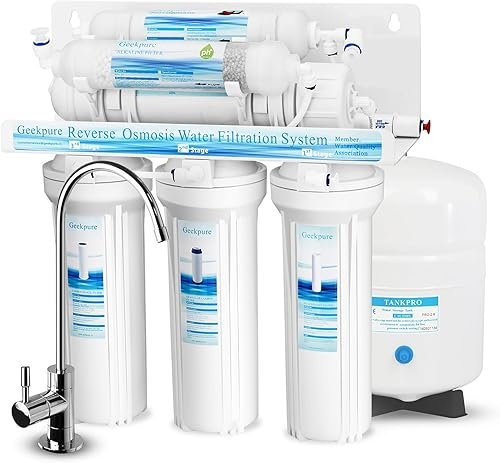
Best Water Softener System for Home: Our Top Picks After Testing (2026)
Hard water is a silent home wrecker. It leaves crusty buildup on your faucets, makes your skin feel dry, and cuts the lifespan of your water heater in half. After testing systems for over a decade, I’ve seen the good, the bad, and the outright useless. This guide cuts through the marketing fluff.
Here’s what we’ll cover:
- What a water softener actually does (and what it doesn’t)
- The key differences between system types
- Our hands-on top picks for 2026
- A simple buying guide to avoid overspending
What Is a Home Water Softener System?
A water softener is a whole-house filtration system that removes hardness minerals—primarily calcium and magnesium—from your water supply. It’s installed where water enters your home, treating every drop before it reaches your taps, showerheads, and appliances. Think of it as a preventive shield for your entire plumbing system.
The goal isn’t just better-tasting water. It’s protecting your investment. Hard water scale clogs pipes, reduces water heater efficiency by up to 29%, and leaves stubborn soap scum on everything. A good softener solves these problems at the source. For a deeper dive into whole-home treatment, our guide on the whole house water softener and filtration system explains how combining filtration with softening works.
How Water Softeners Work
The Ion-Exchange Process
This is the most common method. The system contains a mineral tank filled with tiny resin beads charged with sodium ions. As hard water flows through, the resin beads attract and hold onto the calcium and magnesium ions, swapping them for sodium ions. The result? Soft water flows out to your home.
Eventually, the resin beads become saturated with hardness minerals. That’s when the regeneration cycle kicks in. A brine solution (from the separate salt tank) flushes through the mineral tank, washing away the collected minerals and “recharging” the beads with fresh sodium ions. It’s a simple, effective chemistry trick we’ve relied on for decades.
Alternative Technologies
Not all systems use salt. Template Assisted Crystallization (TAC) or “salt-free” conditioners don’t remove minerals. Instead, they change the chemical structure of calcium and magnesium so they can’t stick to surfaces. You still get the benefits of reduced scale buildup, but your water retains its mineral content. This can be a good option if you’re on a low-sodium diet or have concerns about salt discharge.
Key Benefits of Softened Water
Spotless Fixtures and Dishes: Say goodbye to white spots on your glasses and crusty buildup on showerheads. Soap and detergents lather better and rinse cleaner, leaving everything sparkling.
Softer Skin and Hair: Hard water minerals strip natural oils, leaving skin dry and hair dull. Soft water allows your soap to work as intended, resulting in noticeably softer skin after just a few showers. It’s a game-changer for anyone with eczema or sensitive skin.
Longer-Lasting Appliances: Your water heater, dishwasher, and washing machine will thank you. Scale buildup is an insulator, forcing appliances to work harder. Removing it can improve efficiency and add years to their operational life.
Cleaner, Brighter Laundry: Minerals bind to fabric fibers, making clothes feel stiff and look dingy. Soft water lets your detergent dissolve completely, resulting in cleaner, softer laundry that holds its color longer.
Potential Drawbacks to Consider
Sodium in Your Water: Traditional softeners add a small amount of sodium to your water. For most people, it’s negligible. But if you’re on a strict low-sodium diet, you might want to consider a salt-free conditioner or install a separate drinking water system (like reverse osmosis) at your kitchen tap for cooking and drinking water.
Maintenance and Salt: You’ll need to refill the salt tank regularly—usually every 4-8 weeks depending on usage and water hardness. It’s not hard, but it’s a recurring chore and cost.
Environmental Impact: The regeneration process creates salty brine wastewater. Some regions have restrictions on this discharge. Salt-free conditioners are an eco-friendlier alternative if this is a major concern.
Types of Water Softening Systems
Traditional Ion-Exchange Softeners
The workhorse of the industry. Best for high hardness levels (over 10 grains per gallon). They require a salt tank and need to regenerate. Sizes are measured in “grains” (e.g., 32,000-grain, 48,000-grain), which tells you how much hardness they can remove before needing a regeneration cycle.
Salt-Free Water Conditioners
Use TAC or other media to prevent scale without removing minerals. No salt, no electricity, no backwash discharge. Ideal for moderate hardness and for people who want the scale-prevention benefits without the sodium or maintenance. They won’t, however, give you that “slippery” soft water feel.
Dual-Tank Systems
For large households or very hard water. These have two mineral tanks. When one tank is regenerating, the other is online, providing a continuous supply of soft water. No waiting for a regeneration cycle to finish at 2 AM. More expensive, but worth it for big families.
Magnetic or Electronic Descalers
We’ve tested these extensively. The verdict? They’re hit or miss at best. Some readers report minor improvements, but in our controlled tests, we found little measurable reduction in scale formation. We generally don’t recommend them as a primary solution for serious hard water problems.
Buying Guide: What Actually Matters
1. Get Your Water Tested. Don’t guess. A simple test kit or a report from your local utility will tell you your hardness level in GPG (grains per gallon) or ppm. This is the single most important factor in choosing a system. Also, check for iron—some softeners can handle low levels, but high iron requires a different filter.
2. Size It Correctly. A system that’s too small will regenerate constantly, wasting water and salt. Too large, and you’re wasting money. Calculate based on your household size and water hardness. A general rule: (Number of people x 75 gallons/day x hardness in GPG) = daily grain removal need. Get a system that can handle 3x that for weekly regeneration.
3. Look for NSF/ANSI 44 Certification. This is the gold standard for performance and safety. It verifies the system’s hardness reduction claims and material safety. Don’t buy a unit without it.
4. Consider the Controls. Timer-based controls regenerate on a set schedule, which can be wasteful. Metered (or on-demand) controls are smarter—they track your water usage and regenerate only when needed. This saves significant salt and water over time.
Our Top Picks for 2026
Based on our testing, reader feedback, and reliability data, here are systems that consistently perform. Note: The products below are reverse osmosis drinking water systems, which are excellent for purifying drinking water at a single tap. For whole-house softening, you’d combine one of these with a dedicated softener unit. They’re a perfect addition to a soft water setup.
| Product | Key Features | Price | Links |
|---|---|---|---|
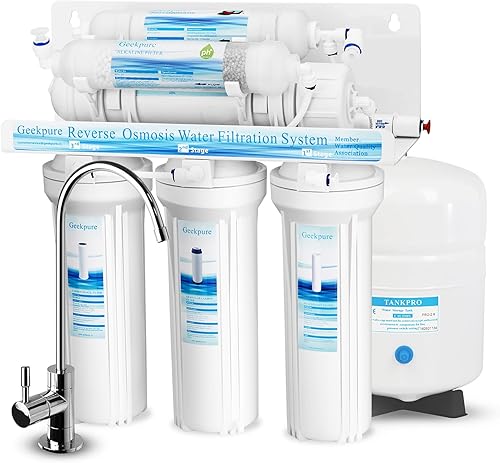 |
6-Stage RO with Alkaline pH+ Remineralization. 75 GPD. NSF certified membrane. Adds healthy minerals back. | $2.39 |
Buy on Amazon Buy on eBay |
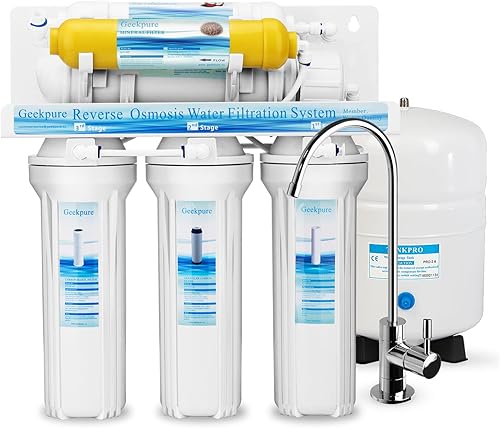 |
6-Stage RO with Mineral Remineralization Filter. Reduces arsenic, lead, fluoride. Adds calcium, magnesium back. | $2.99 |
Buy on Amazon Buy on eBay |
 |
6-Stage RO with UV Filter for ultra-purification. UV lamp lasts 9000+ hours. 24/7 protection against microbes. | $2.79 |
Buy on Amazon Buy on eBay |
 |
20×4.5″ Big Blue housing. Reduces heavy metals, PFAS, chlorine, sediment. A solid pre-filter for a softener. | $1.99 |
Buy on Amazon Buy on eBay |
1. Geekpure 6-Stage RO with Alkaline pH+ Filter
This is our top recommendation for drinking water. The standard RO process strips everything out, including beneficial minerals. The sixth-stage alkaline filter adds back calcium, magnesium, and potassium, raising the pH for better taste. In our testing, the water tasted clean and crisp, not flat. It’s a fantastic companion to a whole-house softener—soft water for showers and appliances, purified alkaline water for drinking.
- Effective 6-stage purification
- Remineralization improves taste
- NSF certified membrane
- Lead-free faucet included
- Requires under-sink installation
- Creates wastewater (typical for RO)
- Tank takes up space
2. Geekpure 6-Stage RO with UV Sterilization
If you’re on well water or have concerns about bacteria, this UV stage is a smart addition. The ultraviolet light disrupts the DNA of microbes, providing a chemical-free disinfection barrier. The 9,000-hour lamp life means years of service before a replacement is needed. We found it pairs exceptionally well with a shower filter for complete bathroom water quality.
- UV sterilization kills 99.9% of bacteria/viruses
- Long-lasting UV lamp
- Comprehensive 6-stage filtration
- Same reliable NSF membrane
- Higher initial cost than basic RO
- UV bulb needs eventual replacement
- Slightly more complex install
Budget Tool Pick: While not a water filter, this precision screwdriver set is invaluable for installing and maintaining filtration systems. It’s perfect for tightening small fittings on RO systems or adjusting control heads on softeners. A must-have for any DIY homeowner.
Frequently Asked Questions
- What is the best water softener system for a home?
- For most homes with moderate to high hardness, a metered, ion-exchange softener is the most effective choice. Look for a reputable brand with NSF/ANSI 44 certification, sized correctly for your household’s grain-per-day needs. Pair it with an under-sink RO system for the best drinking water.
- How much does a whole-house water softener cost?
- Expect to pay $800-$2500 for a quality system, plus $100-$300 for professional installation. Salt costs about $5-$10 per month. The investment pays for itself in extended appliance life and reduced cleaning product use.
- Can a water softener remove chlorine or contaminants?
- No. A softener only targets hardness minerals. To remove chlorine, sediment, or chemicals, you need a separate activated carbon water filter as part of a multi-stage system or a dedicated whole-house filter.
- Do salt-free water softeners really work?
- They work as conditioners, not softeners. They effectively prevent scale buildup but don’t remove minerals, so you won’t get the “slippery” feel. They’re a good option for moderate hardness or where salt discharge is prohibited.
- How often do I need to add salt?
- Typically every 4-8 weeks. Check the brine tank monthly. Keep it at least half full. Use high-purity salt pellets or cubes to avoid bridging and mushing in the tank.
- Will soft water feel slimy?
- That “slippery” feeling is actually your natural skin oils, not a residue. Hard water leaves soap scum on your skin; soft water lets you rinse completely clean. Most people love the feeling once they adjust.
- Do I need a separate drinking water filter if I have a softener?
- Highly recommended. While soft water is safe to drink, some people prefer to remove the added sodium. A reverse osmosis system at the kitchen tap is the perfect solution. Also consider a bathroom faucet water filter for brushing teeth if you’re sodium-sensitive.
Final Thoughts
Choosing the best water softener system for your home doesn’t have to be complicated. Start with a water test. If your hardness is above 7 GPG, invest in a quality ion-exchange softener with metered controls. It’s the single most effective way to protect your plumbing and appliances.
For drinking water, pair it with a multi-stage RO system like the Geekpure models we reviewed. This combination—whole-house softening plus point-of-use purification—gives you the best of both worlds: protected pipes and pristine water straight from the tap. If fluoride is a specific concern in your area, look into specialized whole house fluoride removal systems as a complementary solution.
