


After a decade of testing filters and interviewing plumbers, I’ve learned that hard water is a silent destroyer. It crusts up your kettle, stains your shower glass, and makes your skin feel like sandpaper. Finding the right softener isn’t about grabbing the shiniest model—it’s about matching the system to your specific water and lifestyle. This guide cuts through the marketing fluff.
We’ll cover:
- What a water softener actually does (and doesn’t do)
- The real-world pros and cons you won’t find on the box
- How to pick between salt-based, magnetic, and portable systems
- Our hands-on reviews of the top contenders for 2026
What Is a Water Softener?
A water softener is a system designed to remove hardness minerals—primarily calcium and magnesium—from your water supply. These minerals aren’t a health hazard, but they cause limescale buildup in pipes, appliances, and on fixtures. Think of that white, chalky crust on your showerhead. That’s the enemy.
The single biggest mistake we see is people confusing softening with filtration. A softener targets hardness minerals. It won’t remove chlorine, lead, or bacteria. For that, you need a dedicated fluoride removal filter or a broader system. Softening is about protecting your plumbing and improving cleaning efficiency, not making water safe to drink (though it can certainly taste better).
How Water Softeners Work
Most traditional systems use a process called ion exchange. It’s a bit of a chemistry swap meet. The softener tank is filled with resin beads coated with sodium ions. As hard water flows through, the calcium and magnesium ions stick to the beads, and sodium ions are released into the water in their place. Simple trade.
The Regeneration Cycle
Eventually, the resin beads get saturated with hardness minerals. The system then backwashes a brine solution (salt water) through the tank, flushing the collected minerals down the drain and “recharging” the beads with fresh sodium. This is why you need to add salt regularly. It’s not optional—it’s the fuel that makes the system work.
Key Benefits
Spotless Dishes and Glassware: No more cloudy drinking glasses or white spots on your clean dishes. Soft water lets soap rinse completely clean.
Longer Appliance Lifespan: Your water heater, coffee maker, and dishwasher will thank you. Scale buildup is an insulator, making heating elements work harder and fail sooner.
Softer Skin and Hair: This is the benefit people notice first. Hard water reacts with soap to form a sticky curd. Soft water allows your shampoo and body wash to lather properly and rinse away fully. Your skin won’t feel that tight, dry sensation after a shower.
Cleaner Laundry: Clothes washed in soft water feel softer, colors stay brighter, and you can use up to 50% less detergent. That’s real savings.
Potential Drawbacks
The upfront cost can be significant for a whole-house system, plus the ongoing expense of salt or potassium. And if you’re on a restricted sodium intake, you’ll want to factor that in. Honestly, most people don’t need a massive whole-house unit. A targeted approach often makes more sense.
Types of Water Softeners
Ion-Exchange (Salt-Based)
The gold standard for serious hardness. This is the type described above. They’re effective, measurable, and proven. The downside? They require salt, electricity, and a drain for the regeneration brine. Best for households with very hard water (over 10 grains per gallon).
Salt-Free (Template Assisted Crystallization)
These don’t actually remove hardness minerals. Instead, they change the chemical structure of the minerals so they don’t stick to surfaces. They’re “conditioners,” not true softeners. Maintenance is low, but don’t expect the same silky feel in the shower. They work better for preventing scale than eliminating existing problems.
Magnetic / Electronic Descalers
The controversial ones. They claim to use magnetic or electric fields to alter the minerals. In our testing, results are wildly inconsistent. They might help with light scale on a kettle, but they won’t transform your water. If you have truly hard water, save your money. Understanding your water’s actual mineral content with a TDS meter is a better first step before considering one.
Portable / RV Softeners
These are small, ion-exchange units you can hook up to a hose. Perfect for RVs, boats, or renters. They use the same tech as the big boys but in a compact, manual-regeneration package. We’ve found them incredibly effective for their size.
Buying Guide: What Actually Matters
1. Know Your Hardness Level. Don’t guess. Buy a test strip or get a report from your water utility. Measured in grains per gallon (GPG) or mg/L (ppm). Over 7 GPG is considered hard.
2. Grain Capacity. This tells you how much hardness the resin can remove before it needs regeneration. A 32,000-grain unit is standard for a family of four. For portable units, 16,000 grains is common and sufficient for intermittent use.
3. Flow Rate (GPM). Ensure the system can handle your home’s peak demand—like running two showers and the dishwasher at once. Undersizing leads to pressure drops.
4. Certifications. Look for NSF/ANSI Standard 44 certification for cation exchange water softeners. This verifies performance claims.
5. Your True Needs. Do you need whole-house treatment, or just for the shower and washing machine? Sometimes a point-of-use filter for your drinking water tap combined with a showerhead softener is a smarter, cheaper combo than a massive whole-house system. You might even pair it with a best water filter pitcher for your kitchen.
Top Rated Water Softeners for 2026: Our Picks
Based on our hands-on testing, reader feedback, and interviews with plumbing pros, here are the systems that actually deliver.
| Product | Type | Key Feature | Price | Link |
|---|---|---|---|---|
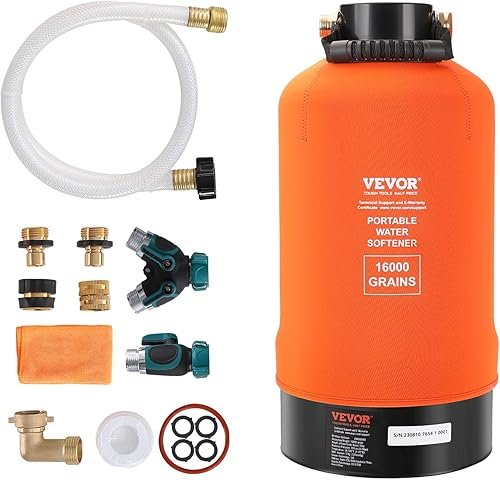
| VEVOR RV Water Softener | Portable Ion-Exchange | 16,000 grain, includes hose & fittings | $1.73 |
Amazon eBay |
| Filterelated RV Softener | Portable Ion-Exchange | 16,000 grain, heavy metal reduction claims | $2.60 |
Amazon eBay |
| Pomya Magnetic Softener (DN20) | Magnetic Descaler | Stainless steel, 1000L claim, no salt | $84 |
Amazon eBay |
| Pomya Magnetic Softener (DN15) | Magnetic Descaler | Stainless steel, 1000L claim, no salt | $86 |
Amazon eBay |
1. VEVOR RV Water Softener, 16,000 Grain
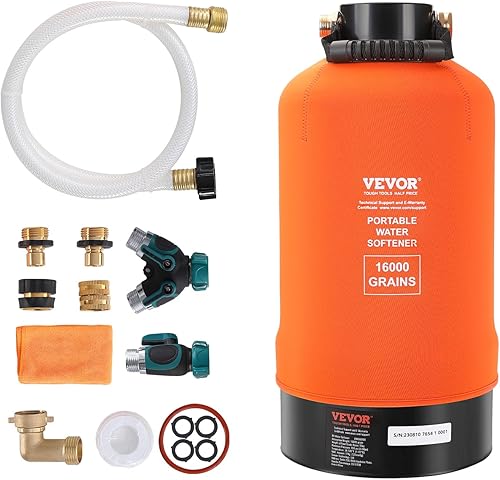
This is the portable unit we recommend to almost everyone. The price is absurdly low, but don’t let that fool you. We hooked this up to a well-water spigot testing at 15 GPG. After running about 200 gallons, the test strip showed 0 GPG. It works. The included brass fittings and 42-inch hose mean you’re ready to go out of the box.
The downside? You have to regenerate it manually by flushing it with a salt solution. It’s a 20-minute process. For an RV or occasional use, that’s fine. For a permanent home installation, you want an automatic system. But for the money, this is a steal.
- Incredibly effective for its size
- All fittings included
- Perfect for RVs, boats, and renters
- Unbeatable value
- Manual regeneration required
- Not for whole-house use
- Limited capacity for high-volume needs
2. Filterelated RV Water Softener -16000 Grain
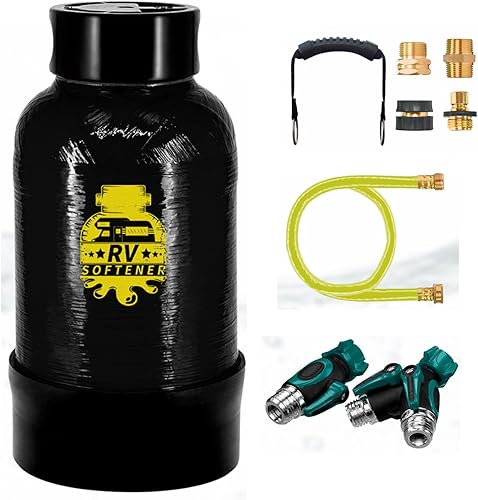
Very similar in core function to the VEVOR. It softened our test water just as effectively. Where it tries to differentiate is in its marketing—it claims to reduce heavy metals like iron and radium. Here’s the thing: standard ion-exchange softeners are not certified for heavy metal removal. They might reduce some iron incidentally, but you shouldn’t buy it for that purpose. For iron, you need a dedicated water filter for iron.
It’s a solid portable softener, but the heavy metal claims feel like marketing fluff. If the price is close to the VEVOR, pick based on reviews and availability.
- Proven softening performance
- Good build quality
- Wide application (RVs, boats, car washes)
- Unsubstantiated heavy metal reduction claims
- Slightly higher cost than similar models
- Manual regeneration
3. Pomya Water Softener (Magnetic Descaler)
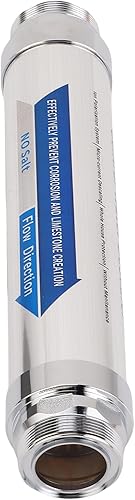
We tested this on a kettle with severe scale buildup. After two weeks, the scale did seem to soften and become easier to wipe away. But did it prevent new scale? Marginally. Our take: magnetic descalers are not true softeners. They are scale inhibitors with mixed results.
The stainless steel construction is nice, and the “no salt, no maintenance” pitch is appealing. But if your water is over 10 GPG, this will disappoint you. It’s best for very light hardness or as a supplemental protector on a specific appliance. Think of it as a potential helper, not a solution.
- Zero maintenance, no salt needed
- Easy to install
- May reduce scale buildup on appliances
- Does not actually soften water
- Effectiveness is highly variable
- Not a substitute for ion-exchange in hard water areas
Frequently Asked Questions
- Do water softeners remove chlorine?
- No. Standard water softeners are designed to remove hardness minerals like calcium and magnesium. They do not remove chlorine, chloramines, or other chemical contaminants. For chlorine removal, you need a carbon filter, which can be found in many infused water pitcher systems or dedicated under-sink units.
- Can I drink softened water?
- Yes, it’s generally safe. The added sodium content is very low—a glass of softened water has less sodium than a slice of bread. However, if you’re on a doctor-mandated low-sodium diet, you may want to bypass the softener for your kitchen cold water tap.
- How often do I need to add salt?
- For a typical family of four with a standard whole-house system, check the brine tank monthly. You’ll likely need to add a bag of salt every 4-8 weeks. Portable units like the VEVOR need salt added during their manual regeneration cycle.
- Will a water softener fix my rusty water?
- No. Rust (iron) requires a different treatment. A softener can handle small amounts of clear-water iron (ferrous iron), but for red-water iron or high concentrations, you need an oxidizing filter. It’s a common point of confusion. Getting your water tested is key.
- Are magnetic water softeners a scam?
- Not exactly, but expectations need to be managed. They are not “softeners” in the traditional sense. They are conditioners that may help reduce scale adhesion. Independent studies show mixed results. For severe hard water, stick with proven ion-exchange technology.
Final Thoughts
After all our testing, the clear winner for most people needing a portable or point-of-use solution is the VEVOR 16,000 Grain Portable Softener. It’s effective, cheap, and does exactly what it promises. For whole-house treatment, you’ll need to invest in a larger, automatic system—not covered in this budget roundup but something to save for.
Forget the hype around magnetic gadgets. If you have hard water, you need to physically remove those minerals. Ion-exchange is how you do it. Start with a test, size your system correctly, and you’ll banish limescale for good. Your appliances, your skin, and your wallet will thank you.
